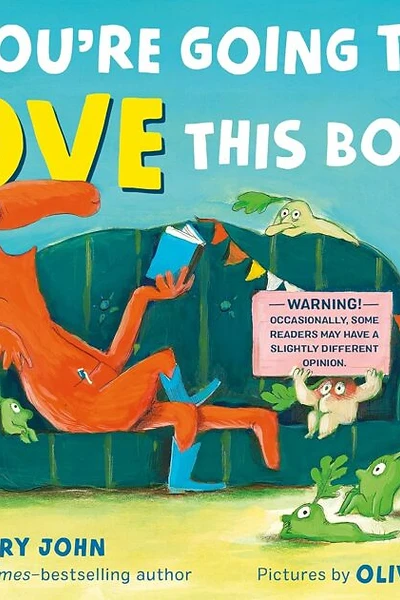
 K-3
K-3P JOHN
You're Going to Love This Book!
by Jory John
Pacing MaterialA delightfully meta picture book in which an unusual creature insists you're going to LOVE this book — while a chorus of small green readers offers a slightly different opinion, creating a hilarious celebration of reading and differing viewpoints.
Big Idea
Reading is an adventure — and it's okay if not everyone loves the same book.
Discussion Questions
- 1.Why does the main character think you'll love this book?
- 2.What do the little green creatures think about the book?
- 3.Is it okay to have a different opinion about a book?
- 4.What makes a book enjoyable for you?
- 5.How does the author use humor to make reading fun?
Classroom Activity
Our Book Reviews
Students create their own playful book review posters, sharing what they love (or don't love) about a favorite book — celebrating that different readers have different opinions.
Lesson Plan
Learning Goals
- Express and support personal opinions about books
- Understand that readers can have different responses to the same text
- Use persuasive language to recommend a book
- Appreciate humor as a literary device
Activity Steps
- 1.Read the book aloud, noting the contrasting opinions of the characters.
- 2.Discuss how it's okay to disagree about books.
- 3.Have each student choose a book they've read and create a review poster.
- 4.Include a star rating, a drawing, and one sentence about why.
- 5.Display reviews and celebrate the diversity of opinions.
Standards Connections
- ELA: RL.K.1 — Ask and answer questions about key details
- ELA: RL.K.2 — Retell stories, including key details
- ELA: RL.K.3 — Describe characters, setting, and events
- ELA: RL.3.6 — Acknowledge differences in characters' points of view
- ELA: SL.K.1 — Participate in collaborative conversations about the text
- ELA: W.K.3 — Write narratives recounting events with descriptive details
- SEL: Self-Awareness
- SEL: Relationship Skills
- Art: VA:Re7 — Perceive and analyze artistic work
Pace-Write-Read Study with Pace-Write It!
Focus question: How does an author make a funny book feel fast, surprising, and exciting from page to page? In You're Going to Love This Book! by Jory John, a bold, unusual creature keeps promising that readers will love the story, while a group of tiny green readers reacts with doubt, worry, and hilarious disagreement. The pacing moves quickly through back-and-forth voices, page-turn surprises, playful interruptions, and visual comedy that keep readers curious about what will happen next.
| Element | How to notice or teach it in the novel |
|---|---|
| Pace | Read: Notice how the story moves quickly because the main creature keeps making big claims and the small green readers interrupt with fast reactions. The pace speeds up through short bursts of dialogue and quick changes in emotion. Classroom Activity: Write 4-5 short lines in which one character confidently introduces a book, game, or snack, and a second group keeps interrupting to change the pace with worried or funny comments. |
| Plot | Read: Notice that the plot is simple but playful: the unusual creature tries to convince everyone that this book will be wonderful, while the little green readers create the real action by resisting, questioning, and reacting. The fun comes from the argument about the book as much as from any outside event. Classroom Activity: Write a beginning-middle-end mini-plot in which one character promises something amazing and other characters slowly reveal a different opinion. |
| Prosody | Read: Listen to the expressive way the lines would sound aloud. The creature's grand, enthusiastic statements have a different sound from the smaller, nervous, skeptical responses of the green readers. Classroom Activity: Choose two lines to write for a boastful speaker and two lines for a doubtful chorus, using words and punctuation that help a reader know how each part should sound. |
| Word pause | Read: Notice where a single word, a short phrase, or a line break makes readers pause before the next joke lands. In this book, pauses often help set up a funny contradiction between the creature's confidence and the green readers' worries. Classroom Activity: Write a 3-line exchange ending with a one-word line that creates a comic pause before the final reaction. |
| Concept | Read: Notice the book's big concept: a story that talks directly about itself and about how people may not agree on what makes a book lovable. The humor grows from the idea that reading can include many opinions at once. Classroom Activity: Write a book idea sentence that begins, 'This is a story about a story where...' and add one line showing two characters who disagree about it. |
| Voice & World View | Read: Notice the strong voice of the creature, who sees the book as exciting and lovable, compared with the green readers, whose worldview is more cautious, suspicious, or overwhelmed. Their clashing world views create energy. Classroom Activity: Write one sentence in the creature's bold voice and one sentence in the voice of a worried green reader about the same event. |
| Setting & Place | Read: Notice that the setting feels like the inside world of the book itself, where the characters seem aware of pages, reading, and being in a story. This unusual story-space helps the pacing feel immediate and playful. Classroom Activity: Invent a setting inside an object, such as inside a map, backpack, or notebook, and write 3 sentences showing how characters move around that place. |
| Point of View | Read: Notice how the book seems to speak right to the reader, while also letting us hear the side comments of the little green readers. This layered point of view makes the reader part of the action. Classroom Activity: Write 4 sentences to a reader using 'you,' then add 2 side comments from another character who disagrees with the narrator. |
| Original Characters | Read: Notice how memorable the cast is: one unusual creature full of confidence and a chorus of tiny green readers with a shared but varied response. Their design and behavior feel fresh and instantly recognizable. Classroom Activity: Create an original pair or group of characters with opposite attitudes, and write a short description of each plus one line they would say. |
| Dialogue | Read: Notice how dialogue drives the whole book. The creature's declarations and the green readers' interruptions create a comic conversation that keeps the pages turning. Classroom Activity: Write a dialogue of 6-8 lines between a proud announcer character and three tiny critics reacting to the announcement. |
| Details | Read: Notice the small reaction details that make the humor stronger, such as the green readers' nervous comments, expressions, or tiny objections. These details deepen the joke without slowing the book down too much. Classroom Activity: Write a scene with one main speaker and add 3 tiny reaction details from listeners in parentheses or separate short lines. |
| Descriptions | Read: Notice that the descriptions are not long, but they are vivid enough to help us picture the creature's confidence and the green readers' concern. Brief description leaves room for fast pacing. Classroom Activity: Describe one character in 3 quick phrases instead of a long paragraph, showing personality through each phrase. |
| Strong First Lines | Read: Notice how the opening promise grabs readers right away by confidently telling them how they will feel about the book. That kind of strong opening starts the pacing at full energy. Classroom Activity: Write 3 possible first lines for a funny story that begin with a bold promise to the reader. |
| Immediacy & Engagement | Read: Notice how the direct address makes readers feel involved right now, not far away from the action. The creature pulls us in immediately, and the green readers make us want to choose a side. Classroom Activity: Write 5 lines that pull in the reader using 'you' and make the reader feel part of a funny disagreement. |
| Story Scenes & Summaries & Unique Structures | Read: Notice that the book relies on a unique structure of claim, interruption, reaction, and escalation rather than a traditional long scene. The structure itself helps create pace and humor. Classroom Activity: Make a 4-part story plan labeled Claim, Interruption, Reaction, and Bigger Reaction, then draft one sentence for each part. |
| Flashback & Flash Forward & Cliffhangers | Read: Notice that this story mostly stays in the present, but it still creates a cliffhanger feeling by making us wonder what the green readers will say next and whether the creature's promise will hold up. Anticipation replaces flashback. Classroom Activity: Write 3 lines ending with a cliffhanger question or unfinished moment before a page turn, such as a character saying, 'Unless...' or 'But then we saw...' |
| Tension & Suspense & Surprise | Read: Notice the tension between the creature's certainty and the green readers' doubts. The surprise comes from each unexpected objection, reaction, or reversal of what we think will happen next. Classroom Activity: Write a short scene where one character says everything is fine, but three other characters reveal reasons it may not be. |
| Page Turns and Chapter Breaks | Read: Notice how page turns likely carry the joke by letting a confident statement sit for a moment before the next visual or verbal response appears. In a picture book like this, the turn becomes part of the timing. Classroom Activity: Plan a two-page joke by writing what appears before the page turn and what surprising response appears after it. |
| Performance | Read: Notice how this book invites a dramatic read-aloud. The creature can be read in a booming, cheerful performance voice, while the green readers can be performed as a squeaky, worried chorus. Classroom Activity: Write a short script with stage directions for two voices: one grand announcer and one chorus of tiny complainers. |
| Personality | Read: Notice how personality is revealed fast. The creature feels showy, positive, and pushy, while the green readers feel anxious, honest, and funny together. Classroom Activity: Write 4 lines that reveal a character's personality only through what they say, without naming the trait. |
| Humor | Read: Notice that the humor comes from exaggeration, contradiction, and the mismatch between what the creature promises and how the green readers respond. The book celebrates different opinions in a silly way. Classroom Activity: Write a funny contrast where one character describes something as amazing and another describes the same thing as a disaster. |
| Pause | Read: Notice how pauses help the jokes land. A pause after a dramatic promise or before a worried interruption gives readers time to predict and then laugh. Classroom Activity: Take a 4-line dialogue and add ellipses, dashes, or line breaks to create two purposeful pauses. |
| Poetry and Poetic Devices | Read: Notice the playful sound of the language, including repeated patterns, energetic phrasing, and lines that may feel almost chant-like when the creature or the chorus speaks. These poetic touches help pacing. Classroom Activity: Write a 4-line chant for the green readers or for the creature using repeated starters or matching sounds. |
| Repetition | Read: Notice how repeating the creature's big assurance and the green readers' recurring objections builds rhythm and comedy. Repetition makes the disagreement funnier each time. Classroom Activity: Write a pattern poem or mini-scene that repeats one key sentence three times, with a different reaction after each repetition. |
| Rhythm | Read: Notice the rhythm created by long confident claims followed by short nervous replies. That alternating rhythm helps the story feel bouncy and quick. Classroom Activity: Write 6 lines that alternate between a long sentence and a short sentence to create a comic rhythm. |
| Punctuation | Read: Notice how punctuation such as exclamation points, question marks, and commas likely shapes the voices of the creature and the green readers. Punctuation controls speed and emotion. Classroom Activity: Write the same sentence three ways using different punctuation to show bold excitement, nervous doubt, and dramatic surprise. |
| Questions | Read: Notice how questions can reveal uncertainty and invite readers to think about whether they agree with the creature or the green readers. Questions keep the interaction alive. Classroom Activity: Write 5 questions that a tiny green reader might ask the creature after hearing a big promise about the book. |
| Compare-Contrast | Read: Notice the contrast between confidence and doubt, big voice and little chorus, promise and reaction. Those opposites make the pacing and humor work. Classroom Activity: Make a T-chart comparing the creature and the green readers, then write 3 compare-contrast sentences using both sides. |
| Objects | Read: Notice any important book-world objects such as pages, the physical book, or visual elements the characters seem aware of. In a meta story, even the book itself can feel like an object in the plot. Classroom Activity: Choose one object from a story world, like a page, bookmark, or sign, and write 3 lines showing how characters react to it. |
| Threes | Read: Notice how humor often gets stronger in patterns of three: a claim, another claim, then a surprising twist; or three reactions from the green readers. Groups of three help timing. Classroom Activity: Write three escalating reactions from tiny audience characters, with the third one being the funniest or most surprising. |
| Whitespace & Negative Space | Read: Notice how open space on the page can spotlight a line, a reaction, or a visual joke. In a humorous picture book, blank space can slow readers down just enough for the next laugh. Classroom Activity: Design a mini page with one bold sentence, one tiny reaction, and lots of blank space to show where the reader should pause. |
| Art & Graphics | Read: Notice how the illustrations and character placement likely carry part of the joke, especially the contrast between the creature and the small green readers. The art helps deliver pace, tone, and surprise. Classroom Activity: Sketch a simple book page showing a large boastful character and three tiny reacting characters, then write captions for each. |
| Interactives & Gamification | Read: Notice how the direct talk to the reader makes the book feel interactive, as if the audience is being invited into the argument about whether they will love the book. That playful challenge turns reading into a kind of game. Classroom Activity: Write a 'reader challenge' page that invites the audience to choose between two reactions, then add a character comment for each choice. |
Pace-Write It!
20-Minute Classroom Flow\nRead (5 min): Read aloud a few key pages from You're Going to Love This Book! by Jory John. Use a big, dramatic voice for the unusual creature and a smaller, worried chorus voice for the tiny green readers. Pause at page turns so students can feel how the humor builds.\n\nNotice (5 min): Ask: What makes this book feel fast and funny? Chart student ideas such as direct talk to the reader, interruptions, repeated promises, contrasting voices, and page-turn surprises. Highlight how the creature says the book will be wonderful while the green readers keep giving a different opinion.\n\nWrite (7 min): Students write their own mini meta-scene with a bold speaker and a skeptical chorus. Writing frame: 'You are going to love this ______!" said ______. "Love it?" said the tiny ______. "Yes, because ______!" "But what about ______?" "Do not worry," said ______. "This will be the best ______ ever!" Then the tiny ______ whispered, "We will see..."' Encourage students to add one repeated line and one funny interruption.\n\nShare (3 min): Partners read their scenes aloud using two different voices. Invite a few volunteers to perform for the class and notice where the pauses, repetition, or punctuation made the writing funnier.\n\nExit ticket: Write one sentence answering: How did you use pacing to make your scene funny?