 K-3
K-3P HOWDESHELL
You Are a Story
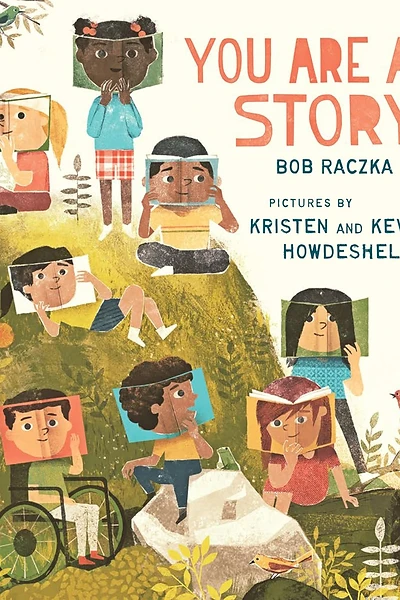
by Bob Raczka, pictures by Kristen and Kevin Howdeshell
Pacing MaterialA celebration of every child as a living story, encouraging readers to recognize their own narrative and share it with the world.
Big Idea
Every person is a story — our experiences, families, and dreams make us who we are, and sharing our stories connects us.
Discussion Questions
- 1.What does it mean that 'you are a story'?
- 2.What parts of your life would be in your story?
- 3.How are everyone's stories different and the same?
- 4.Why is it important to share your story?
Classroom Activity
My Story Page
Students create a 'self-story' page — writing and illustrating one thing that makes them uniquely them.
Lesson Plan
Learning Goals
- Articulate personal identity through storytelling.
- Recognize diversity in classmates' experiences.
- Express oneself through writing and illustration.
- Contribute to a collaborative class project.
Activity Steps
- 1.Read the book, noting how every child holds a story.
- 2.Discuss what makes each person a 'story.'
- 3.Students create a page with one sentence and an illustration about themselves.
- 4.Compile pages into a class 'Our Stories' book.
Standards Connections
- ELA: RL.K.1 — Ask and answer questions about key details
- ELA: RL.K.2 — Retell stories, including key details
- ELA: RL.K.3 — Describe characters, setting, and events
- ELA: RL.3.6 — Acknowledge differences in characters' points of view
- ELA: SL.K.1 — Participate in collaborative conversations about the text
- ELA: W.K.3 — Write narratives recounting events with descriptive details
- SEL: Relationship Skills
- SEL: Social Awareness
- Art: VA:Re7 — Perceive and analyze artistic work
Pace-Write-Read Study with Pace-Write It!
Focus question: How does a writer slow down and speed up a story so readers can feel that every life matters? In You Are a Story by Bob Raczka, with pictures by Kristen and Kevin Howdeshell, the text moves in a gentle, poetic way to show that each child carries a story of identity, belonging, and possibility. The pacing is created through short lines, reflective pauses, and page-by-page reveals that invite readers to stop, think, and see themselves in the book.
| Element | How to notice or teach it in the novel |
|---|---|
| Pace | Read: Notice how You Are a Story moves at a calm, thoughtful pace, giving readers time to think about how each child has a story inside. The short poetic lines and spacious page design help the theme of identity and belonging unfold gently. Classroom Activity: Write 4 short lines about yourself, using one idea per line, to create a slow, reflective pace. |
| Plot | Read: Notice that this book does not follow a big action plot; instead, its movement comes from the growing idea that every child is a living story worth sharing. The book builds from noticing the self to imagining connection with the wider world. Classroom Activity: Make a beginning-middle-end plan for a tiny personal narrative called My Story, showing how you discover, share, and celebrate something about yourself. |
| Prosody | Read: Listen to the way the words in You Are a Story sound when read aloud. Bob Raczka uses smooth, lyrical phrasing so the reading voice feels warm and encouraging, matching the message that every child belongs. Classroom Activity: Read one page aloud with a partner, then write 2 lines about yourself that sound musical when spoken. |
| Word pause | Read: Notice where the wording makes you naturally pause to think, especially when the book names big ideas about being a story. These pauses help the reader reflect on identity instead of rushing past it. Classroom Activity: Write one sentence about yourself and add a line break or dash where you want the reader to pause and think. |
| Concept | Read: The central concept in You Are a Story is that a person is like a story still being written. This big idea shapes the pacing because each page slowly adds another layer to what identity and belonging can mean. Classroom Activity: Finish this idea in writing: I am a story because ___. |
| Voice & World View | Read: Notice the book’s gentle, affirming voice and its world view that every child matters, belongs, and has a story worth telling. The voice never rushes; it sounds patient and full of belief in the reader. Classroom Activity: Write 3 sentences in a kind, encouraging voice as if you are speaking to a younger child about why their story matters. |
| Setting & Place | Read: Notice how the illustrations suggest many places and spaces, helping the message feel universal rather than tied to one single location. This broad sense of place supports the idea that stories live wherever children live, grow, and dream. Classroom Activity: Write about one place that is part of your story, such as home, school, a park, or a grandparent’s house, and explain why it matters. |
| Point of View | Read: The book speaks directly to the reader with the word you, making the experience immediate and personal. This second-person point of view helps every child feel included in the story right away. Classroom Activity: Write 3 lines beginning with You are... to describe a classmate, then rewrite them beginning with I am... to describe yourself. |
| Original Characters | Read: Instead of one named main character, You Are a Story celebrates many children as possible story-holders. The children in the illustrations represent different identities and experiences, helping readers see themselves and others. Classroom Activity: Create a character sketch of yourself as the main character in your own story, including one strength, one feeling, and one hope. |
| Dialogue | Read: This book relies more on poetic reflection than on spoken conversation, which slows the pace and makes the message feel thoughtful. Readers can imagine what they might say if they stepped into the book’s invitation to share their story. Classroom Activity: Write 2 lines of dialogue in which you tell a friend one important part of your story and the friend responds kindly. |
| Details | Read: Notice how small visual and language details help each page feel personal and meaningful. The details in the illustrations by Kristen and Kevin Howdeshell deepen the theme that every child’s life has texture and value. Classroom Activity: List 5 true details about your life that could go into a book about you, then use 3 of them in a short paragraph. |
| Descriptions | Read: Bob Raczka uses simple but meaningful descriptions that leave room for readers to imagine their own lives inside the book. The descriptive style is gentle, open, and welcoming rather than crowded with too much information. Classroom Activity: Write 3 describing words or phrases for your story self, such as curious, brave at recess, or full of questions. |
| Strong First Lines | Read: Notice how the opening quickly invites readers into the big idea that they are a story. A strong first line matters here because it immediately creates wonder, identity, and connection. Classroom Activity: Write your own strong first line for an autobiographical piece that starts with I am... or My story begins.... |
| Immediacy & Engagement | Read: The direct address in You Are a Story makes readers feel spoken to right now. That immediacy keeps the pacing engaging because each page feels like a personal invitation instead of a distant explanation. Classroom Activity: Write 2 sentences that speak directly to your reader, inviting them to understand one important part of who you are. |
| Story Scenes & Summaries & Unique Structures | Read: This picture book uses a poetic, idea-based structure instead of long scenes with full action. It summarizes a child’s unfolding identity in brief, powerful moments, which creates a special pacing pattern. Classroom Activity: Write one scene from your life in 2 sentences, then write a 1-sentence summary of what that moment says about your story. |
| Flashback & Flash Forward & Cliffhangers | Read: While You Are a Story is not built around dramatic cliffhangers, it does suggest that your story has a past and a future. Readers think about where they have been and what chapters may come next. Classroom Activity: Write one flashback sentence about something you remember and one flash-forward sentence about what you hope happens in your story later. |
| Tension & Suspense & Surprise | Read: The tension in this book is emotional rather than scary; the surprise comes from seeing a person described as a story. That fresh comparison helps readers look at themselves in a new way. Classroom Activity: Write about one surprising thing someone might learn about you if they read your story. |
| Page Turns and Chapter Breaks | Read: In this picture book, page turns help pace the ideas so each thought can land before the next one arrives. Because there are no chapters, the turns between pages act like quiet breaks for reflection. Classroom Activity: Fold a paper into 4 pages and plan one idea about your identity on each page so the reader discovers your story bit by bit. |
| Performance | Read: When read aloud, You Are a Story works best with a soft, expressive performance that honors its reflective tone. The pacing depends on the reader slowing down and letting important words settle. Classroom Activity: Practice reading your own 3-line identity poem aloud, deciding where to slow down, smile, or pause. |
| Personality | Read: The book’s personality is tender, hopeful, and welcoming. That personality shapes pacing because the text never hurries; it gently invites children to see themselves as important and connected. Classroom Activity: Write a short piece about yourself that shows your personality through your word choices, such as playful, thoughtful, bold, or calm. |
| Humor | Read: Humor is not the main feature of You Are a Story, but students can notice that a story about identity can still include joyful or light moments. Small smiles in the illustrations help balance the reflective tone. Classroom Activity: Add one cheerful or funny detail to your own story, such as something silly you do, say, or love. |
| Pause | Read: Notice how the book creates space for emotional pause, giving readers time to connect the words to their own lives. These pauses are part of the pacing and make the message feel meaningful. Classroom Activity: Write 3 short lines about yourself and leave a blank line after the most important line to show a pause. |
| Poetry and Poetic Devices | Read: You Are a Story uses poetic language, metaphor, and line breaks to present identity as something living and beautiful. The metaphor of a child being a story gives the whole book its power. Classroom Activity: Write your own metaphor sentence, such as I am a story, a song, a garden, or a path, and explain why it fits you. |
| Repetition | Read: Notice how repeated ideas about story, self, and becoming help unify the book. Repetition slows the pace in a good way because it lets the central message echo in the reader’s mind. Classroom Activity: Write a 4-line piece in which the same beginning words repeat, such as I am... or My story.... |
| Rhythm | Read: The rhythm of the text is steady and gentle, which supports the calm pacing of the book. This rhythm helps the theme of belonging feel safe and reassuring. Classroom Activity: Clap the beat of a few lines from the book, then write 2 lines about yourself that have a matching smooth rhythm. |
| Punctuation | Read: Notice how punctuation helps control the speed of reading in You Are a Story. Periods, commas, and line endings help readers know when to pause and when to keep moving through the thought. Classroom Activity: Write one sentence about yourself, then revise the punctuation to change how fast or slowly it is read. |
| Questions | Read: Even when the book is making statements, it invites inner questions such as Who am I? What is my story? Where do I belong? These silent questions help readers engage deeply with the text. Classroom Activity: Write 3 questions you could ask yourself to help discover your own story. |
| Compare-Contrast | Read: Readers can compare the many children suggested in the illustrations while also noticing that each story is unique. The book balances sameness and difference to support the theme of belonging. Classroom Activity: Write 2 sentences comparing your story to someone else’s and 2 sentences contrasting how your stories are different. |
| Objects | Read: Notice how meaningful objects in the illustrations can suggest parts of a child’s identity, interests, or memories. Objects can carry story without many words. Classroom Activity: Choose one object that represents you, such as a soccer ball, book, backpack, or drawing pencil, and write how it belongs in your story. |
| Threes | Read: Writers often group ideas in threes to create a satisfying rhythm, and students can try that pattern while responding to the book’s themes. The gentle style of You Are a Story works well with trios of descriptive ideas. Classroom Activity: Write 3 things that make you you, 3 places that matter to you, and 3 hopes for your future story. |
| Whitespace & Negative Space | Read: The whitespace in You Are a Story is important because it slows the reader down and leaves room for thinking and feeling. The open design matches the book’s reflective message about identity and possibility. Classroom Activity: Create a one-page identity piece with only a few words and lots of blank space so your most important idea stands out. |
| Art & Graphics | Read: The illustrations by Kristen and Kevin Howdeshell do important pacing work by adding emotion, movement, and visual pauses between lines of text. The art helps children see belonging, individuality, and community. Classroom Activity: Draw a self-portrait or symbolic picture to go with one sentence from your own story. |
| Interactives & Gamification | Read: This book naturally invites participation because every reader can step into the role of story-holder. Its theme of identity makes it easy to turn reading into active reflection and sharing. Classroom Activity: Play Story Pass: each student says one sentence beginning with My story includes..., then passes to the next person, and afterward write your favorite sentence from the game. |
Pace-Write It!
20-Minute Classroom Flow\nRead (5 min): Read You Are a Story by Bob Raczka aloud slowly, showing the illustrations by Kristen and Kevin Howdeshell. Pause briefly after key lines so students can think about how the book treats each child as a living story.\nNotice (5 min): Ask: How did the book make us slow down and think? Chart student observations such as short lines, direct address with you, page turns, repetition, poetic language, and open space on the page.\nWrite (7 min): Students write their own mini identity poem using this frame: I am a story of ____. / In my story, I ____. / I come from ____. / I hope ____. Encourage students to write one idea per line and add one strong detail or meaningful object.\nShare (3 min): Invite students to read their favorite line to a partner or the class, practicing slow, expressive pacing. After each share, listeners respond: That part of your story stood out to me because ____.\nExit ticket: On a small slip, students complete: One way I used pacing in my writing was ____.