 K-3
K-3P HOSFORD
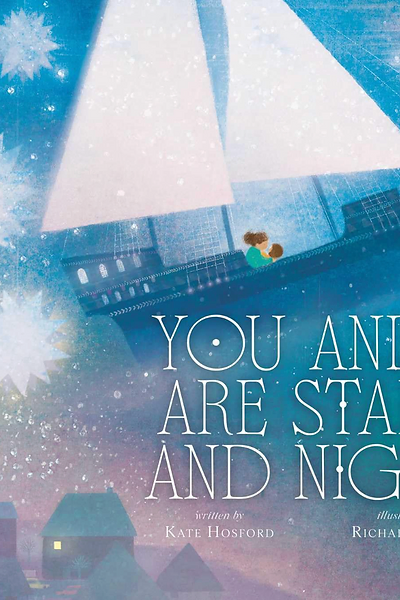
You and I Are Stars and Night
by Kate Hosford
Pacing MaterialA poetic, dreamy picture book about how we are all connected — like stars and the night sky that holds them.
Big Idea
We are all part of something bigger, and our connections to each other are as vast and beautiful as the stars.
Discussion Questions
- 1.What does it mean to be like stars and night?
- 2.How are we all connected?
- 3.What makes you feel like you belong?
- 4.How do the illustrations match the poem?
Classroom Activity
My Constellation
Draw a constellation made of the people you're connected to. Label each star and explain the connection.
Lesson Plan
Learning Goals
- Describe how the stars and night-sky imagery in "You and I Are Stars and Night" suggests that people are connected.
- Identify people who help students feel connected, cared for, or part of a community.
- Create a symbolic constellation with labeled stars representing important people.
- Explain connections using drawings, spoken sentences, or written statements.
Activity Steps
- 1.Read "You and I Are Stars and Night" aloud, pausing to notice its poetic language and star and night-sky imagery. Ask: "How does the book help us imagine being part of something bigger?"
- 2.Discuss what connection means. Invite students to name people they feel connected to, such as friends, relatives, teachers, or neighbors. Explain that students may choose anyone they feel comfortable including.
- 3.Model a personal constellation: draw a star for yourself and several stars for other people. Label each star with a name or role, connect the stars with lines, and explain one connection: "My teacher helps me learn."
- 4.Have students draw their own constellations with a star for themselves and three to five stars for connected people. Students label the stars using names, roles, copied words, or adult-supported dictation.
- 5.Ask students to explain at least two connecting lines through speech, dictation, or writing. Offer the frame: "I am connected to ___ because ___." Older students can add how they support that person in return.
- 6.Invite voluntary partner sharing, then display the drawings as a classroom night sky. Reflect: "How do our separate constellations show that we belong to a larger community?"
Standards Connections
- ELA: RL.K.1–RL.3.1 — Ask and answer questions about the book’s language, illustrations, and meaning, using details as appropriate.
- ELA: SL.K.1–SL.3.1 — Participate in collaborative discussions about connection and community.
- ELA: SL.K.5–SL.3.5 — Use drawings or visual displays to support descriptions and explanations.
- SEL: Relationship skills — Recognize supportive relationships and describe ways people help one another.
- SEL: Self-awareness — Identify meaningful personal connections and a sense of belonging.
Pace-Write-Read Study with Pace-Write It!
Focus question: How does an author slow down a story so readers can feel wonder and connection? In You and I Are Stars and Night by Kate Hosford, the text moves gently and poetically, helping readers pause and notice how people are connected to one another and to the world. The pacing is calm and spacious, with short lyrical lines and reflective page turns that let big ideas settle in a young reader’s mind.
| Element | How to notice or teach it in the novel |
|---|---|
| Pace | Read: Notice how You and I Are Stars and Night moves slowly, with soft poetic lines that give readers time to think about connection, love, and the wide night sky. Classroom Activity: Write 3 short lines about someone you feel connected to, using one idea per line to create a gentle pace. |
| Plot | Read: Notice that this book does not follow a big action plot; instead, it grows through linked ideas about how you, I, stars, and night belong together. Classroom Activity: Make a beginning-middle-end map showing how the book starts with you and I, expands to the world, and returns to connection. |
| Prosody | Read: Listen to the way the words in You and I Are Stars and Night sound when read aloud—the phrasing is smooth, musical, and soothing. Classroom Activity: Echo-read one page, then write 2 sentences meant to sound calm and musical when spoken aloud. |
| Word pause | Read: Notice where single words or short phrases make you stop and reflect in Kate Hosford’s dreamy language. Classroom Activity: Write a sentence about the sky, then revise it by adding a word or phrase that creates a meaningful pause. |
| Concept | Read: Notice that the big concept in this book is connection—that each person can be part of something larger, like stars held by the night. Classroom Activity: Finish this idea in your own way: “We are connected because…” and add 2 supporting lines. |
| Voice & World View | Read: Notice how the voice in You and I Are Stars and Night feels tender, hopeful, and full of wonder about people and the universe. Classroom Activity: Write 3 lines in a gentle voice that show your own worldview about how people belong together. |
| Setting & Place | Read: Notice how the night sky feels like more than a backdrop; it becomes an important place that helps express the book’s message. Classroom Activity: Write a place description of the sky, a bedroom window, or an outdoor evening scene that makes the setting feel peaceful and connected. |
| Point of View | Read: Notice the use of “you” and “I,” which makes the book feel close, personal, and shared between two people. Classroom Activity: Write 4 lines beginning with “You…” and “I…” to show a relationship or shared feeling. |
| Original Characters | Read: Notice that the central ‘characters’ are the speaker and the person being addressed, and they feel universal so any reader can step into their place. Classroom Activity: Create two simple connected characters called “I” and “You,” and write 3 lines showing what they share. |
| Dialogue | Read: Notice that this book does not rely on spoken dialogue; instead, it creates intimacy through direct address. Classroom Activity: Write a tiny dialogue between “I” and “You” about looking at the stars, then rewrite it as poetic direct address without quotation marks. |
| Details | Read: Notice how small details in You and I Are Stars and Night help make large ideas feel real and touchable. Classroom Activity: List 5 tiny details from nighttime or from being close to someone, then use 3 of them in a short paragraph. |
| Descriptions | Read: Notice how Kate Hosford uses dreamy description to compare people and the night sky in ways that feel soft and imaginative. Classroom Activity: Describe a person or feeling by comparing it to something in nature or the sky. |
| Strong First Lines | Read: Notice how the opening quickly invites readers into a reflective mood and introduces the relationship between “you” and “I.” Classroom Activity: Write an opening line that begins with “You and I…” and makes a reader want to keep listening. |
| Immediacy & Engagement | Read: Notice how speaking directly to “you” pulls the reader into the book right away, making the feeling of connection immediate. Classroom Activity: Write 2 sentences that speak directly to a reader and make them feel included in a moment of wonder. |
| Story Scenes & Summaries & Unique Structures | Read: Notice that the book is structured more like a lyrical meditation than a scene-by-scene story, and that unique structure slows the pacing. Classroom Activity: Write one tiny scene of looking at the night sky, then write one summary sentence about what that moment means. |
| Flashback & Flash Forward & Cliffhangers | Read: Notice that You and I Are Stars and Night does not use dramatic flashbacks or cliffhangers; its suspense comes from slowly revealing a big idea. Classroom Activity: Write one line about a remembered nighttime moment and one line imagining a future nighttime moment. |
| Tension & Suspense & Surprise | Read: Notice that the book creates quiet anticipation by building toward the surprising feeling that humans and the universe are deeply connected. Classroom Activity: Write 3 lines that begin with ordinary details and end with a surprising big idea. |
| Page Turns and Chapter Breaks | Read: Notice how each page turn in this picture book gives readers time to pause, wonder, and absorb the next image or idea. Classroom Activity: Plan a 4-page mini-book, putting one connected idea on each page so the page turns slow readers down. |
| Performance | Read: Notice that this book works beautifully as a read-aloud because the pacing invites calm pauses, soft expression, and thoughtful emphasis. Classroom Activity: Practice reading 2 lines aloud with a partner, deciding where to pause and which words to say gently. |
| Personality | Read: Notice the personality of the narrator’s voice—it feels caring, thoughtful, and full of awe. Classroom Activity: Write a few lines about the sky in a voice that sounds like you: playful, calm, curious, or loving. |
| Humor | Read: Notice that humor is not the main purpose of You and I Are Stars and Night; instead, the mood stays sincere and peaceful. Classroom Activity: Write one version of a nighttime line that is serious and one version that is silly, then discuss how the mood changes pacing. |
| Pause | Read: Notice how the book gives space for silence between ideas, helping readers feel the meaning instead of rushing. Classroom Activity: Take a 2-sentence piece of writing and break it into short lines to create pauses for thinking. |
| Poetry and Poetic Devices | Read: Notice the poetic devices in Kate Hosford’s language, including imagery, comparison, and a lyrical pattern that connects people to stars and night. Classroom Activity: Write a 4-line poem comparing people to something in the sky or nature. |
| Repetition | Read: Notice how repeated ideas and patterns help reinforce the theme of connection in You and I Are Stars and Night. Classroom Activity: Choose a phrase such as “We are…” or “You and I…” and repeat it in 3 lines to build meaning. |
| Rhythm | Read: Notice the slow, steady rhythm of the text, which feels almost like breathing or rocking and supports the peaceful tone. Classroom Activity: Clap the rhythm of one page, then write a sentence with a similar slow beat. |
| Punctuation | Read: Notice how punctuation in this book supports gentle pacing, helping readers know when to stop, continue, and reflect. Classroom Activity: Write a 3-line piece, then revise the punctuation to make it read more slowly and softly. |
| Questions | Read: Notice how the book invites readers to wonder, even when it is not asking many direct questions. Classroom Activity: Write 2 wonder questions about stars, night, or human connection, then answer one in a poetic sentence. |
| Compare-Contrast | Read: Notice how the book compares people with stars and night, showing how different things can still belong together. Classroom Activity: Make a T-chart comparing a person and the night sky, then use one similarity in your writing. |
| Objects | Read: Notice how objects and images connected to nighttime can help make abstract feelings more concrete for young readers. Classroom Activity: Choose one object—window, blanket, moon, lamp, or star—and write how it helps show connection. |
| Threes | Read: Notice how grouping ideas in threes can make poetic writing sound complete and memorable, fitting the style of this book. Classroom Activity: Write 3 linked images about night, love, or belonging in a row. |
| Whitespace & Negative Space | Read: Notice how space on the page helps slow the reading and lets the illustrations and words breathe in You and I Are Stars and Night. Classroom Activity: Write a short poem with lots of space between lines so each idea has room to shine. |
| Art & Graphics | Read: Notice how the illustrations work with Kate Hosford’s text to deepen the dreamy feeling of wonder and shared humanity. Classroom Activity: Draw a simple night scene and add 2 lines of text that match the mood of your picture. |
| Interactives & Gamification | Read: Notice that the book invites emotional interaction by encouraging readers to connect the words to their own relationships and nighttime experiences. Classroom Activity: Play “Find the Connection”: name one sky image, one person, and one feeling, then use all 3 in a quick poem. |
Pace-Write It!
20-Minute Classroom Flow Read (5 min): Read You and I Are Stars and Night by Kate Hosford aloud slowly. Pause at page turns so students can notice how the short lines and quiet tone create wonder. Notice (5 min): Ask: “What do you notice about how the words slow us down?” Chart student ideas such as short lines, repeated ideas, direct address with “you” and “I,” calm rhythm, and space to think. Write (7 min): Students write their own short poem about connection using this frame: “You and I are ______. / You are ______. / I am ______. / Together we ______.” Encourage them to use one nature or sky comparison and to put each idea on its own line. Share (3 min): Students read their poem to a partner using a soft, slow read-aloud voice. Partners name one place where they heard a strong pause or felt a sense of wonder. Exit ticket: Write one sentence answering: “How did I use pacing to help my reader feel connection or wonder?”
Pace-Write-Read Connection
Teach this book using the Pace-Write-Read method — Tool 25: Poetry & Poetic Devices.
Open the Mastery Manual