 PreK-2
P FARLEY
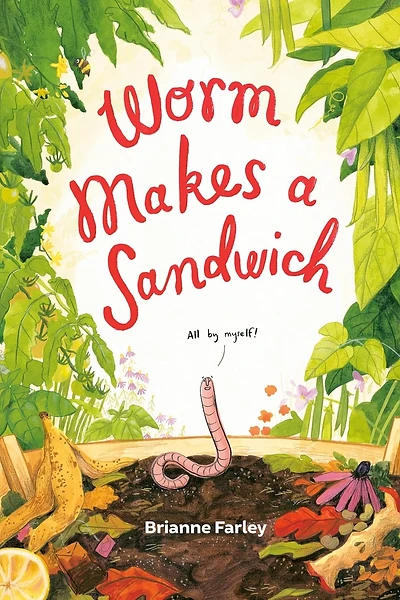
Worm Makes a Sandwich
by Brianne Farley
Pacing MaterialA worm, a seed, and a whole community of garden creatures work together to make one sandwich — from the soil up.
Big Idea
Even the smallest creatures play a part in the food we eat, and teamwork makes everything grow.
Discussion Questions
- 1.How does the worm help make the sandwich?
- 2.What other creatures contribute?
- 3.How does soil connect to our food?
- 4.What part would you play in a garden sandwich?
Classroom Activity
Garden Sandwich Map
Draw the journey from soil to sandwich. Label each creature and what it does.
Lesson Plan
Learning Goals
- Describe how Worm, a seed, and the garden community contribute to making a sandwich in Worm Makes a Sandwich.
- Sequence the journey of a sandwich ingredient from soil and seed to growing plant, harvest, and sandwich.
- Create a Garden Sandwich Map using drawings, arrows, and labels to show each featured creature’s contribution.
- Explain how small creatures and teamwork help a garden grow and provide food.
Activity Steps
- 1.Read Worm Makes a Sandwich aloud. Pause to ask: “How can a worm help make a sandwich?” and “Who else helps along the way?” Use the illustrations to identify the garden creatures and their contributions.
- 2.Together, list the helpers shown in the book. Discuss how worms help soil support plant growth, and distinguish what the story shows each helper doing from what students already know about gardens.
- 3.Model a simple Garden Sandwich Map: soil and seed → growing plant → harvested ingredient → sandwich. Draw Worm beside the soil and add a short label describing its contribution.
- 4.Have students draw their own soil-to-sandwich journeys. Ask them to include Worm and other garden creatures from the book, connect stages with arrows, and label each creature and what it does. PreK students may dictate labels; older students can write words or short sentences.
- 5.Invite partners to explain their maps using “First,” “Next,” and “Finally.” Close by asking: “Why does the sandwich need a whole community of helpers?”
Standards Connections
- ELA: RL.K.3 / RL.1.3 — Identify and describe characters and major events, including how the garden helpers contribute to the sandwich.
- ELA: W.K.2 / W.1.2 — Use drawing, dictation, and writing to explain the soil-to-sandwich journey.
- ELA: SL.K.1 / SL.1.1 / SL.2.1 — Participate in collaborative discussions about the book and students’ maps.
- Science: NGSS K-LS1-1 — Use observations to describe patterns in what plants need to survive, connecting the seed’s growth to its garden environment.
- SEL: Relationship skills — Recognize cooperation and explain how different contributions support a shared goal.
Pace-Write-Read Study with Pace-Write It!
Focus question: How does an author make a simple task feel exciting and full of teamwork? In "Worm Makes a Sandwich" by Brianne Farley, a worm, a seed, and many garden helpers work together to grow the parts of one sandwich. The story uses pacing by stretching out each small step, building anticipation page by page, and showing how work in an ecosystem takes time and cooperation.
| Element | How to notice or teach it in the novel |
|---|---|
| Pace | Read: Notice how Brianne Farley moves the story step by step, from soil work to sandwich making, so one sandwich feels like a big event. The pacing slows down to show each helper's job in the garden ecosystem. Classroom Activity: Write 4 short steps showing how one tiny action grows into a big result, using a pattern like "First..., then..., next..., finally...". |
| Plot | Read: Follow the plot as Worm wants a sandwich, but getting it means a whole community must help grow food from the ground up. The problem and solution are built through teamwork between the worm, seed, and garden creatures. Classroom Activity: Draw and label the beginning, middle, and end of a story about making or growing something with help from others. |
| Prosody | Read: Listen for how the read-aloud voice can change to match the action—slow and careful in the soil, lively when many creatures join in, and proud when the sandwich is ready. The book's pacing supports expressive reading. Classroom Activity: Practice reading one page in two ways, first very slowly and then with excited energy, and choose which sounds more like Worm's journey. |
| Word pause | Read: Notice places where a reader might pause after an important action or discovery, such as when Worm realizes one sandwich needs many helpers. Those pauses help children think about teamwork and process. Classroom Activity: Rewrite one sentence about Worm and add slash marks / where a reader should pause for meaning. |
| Concept | Read: The big concept is that ecosystems and teamwork connect—Worm cannot make a sandwich alone because plants, soil, water, and creatures all matter. The book turns a sandwich into a lesson about interdependence. Classroom Activity: Write or dictate one sentence that starts, "A sandwich needs an ecosystem because...". |
| Voice & World View | Read: Notice the playful, curious voice that treats small garden work like an important mission. The worldview centers on respect for tiny creatures and the idea that every job in nature matters. Classroom Activity: Write 2 sentences in a cheerful voice from a garden creature who believes its work is important. |
| Setting & Place | Read: Pay attention to the garden setting, where soil, seeds, plants, and small creatures create the world of the story. This place shapes the pacing because growing food takes time. Classroom Activity: Make a labeled garden map showing where Worm, the seed, and other helpers work, then write one sentence about why that place matters. |
| Point of View | Read: Notice how the story stays close to Worm's experience, helping readers see a big garden from a tiny creature's point of view. That makes ordinary garden jobs feel adventurous. Classroom Activity: Write a sentence beginning, "From Worm's point of view, the garden is...". |
| Original Characters | Read: Notice how Brianne Farley makes a worm, a seed, and garden creatures feel memorable and important in a sports-like team effort. The characters are original because they turn ecosystem jobs into story roles. Classroom Activity: Invent one new garden teammate for Worm and write what special job that character would do to help make the sandwich. |
| Dialogue | Read: Listen for moments when characters could speak to encourage, explain, or cooperate as they work together. Dialogue can speed up scenes and show teamwork quickly. Classroom Activity: Write 2 lines of dialogue between Worm and Seed about what they need to do next. |
| Details | Read: Notice the small details about dirt, growing, gathering, and making food that help readers understand each part of the process. These details slow the pacing in a helpful way so the ecosystem work is clear. Classroom Activity: List 3 tiny details you might see in Worm's garden, then use them in one sentence. |
| Descriptions | Read: Look for descriptive language that helps the garden feel alive and helps the sandwich ingredients feel worth waiting for. Description helps readers picture the journey from underground work to a finished meal. Classroom Activity: Describe one part of the garden using color, texture, and movement in a sentence frame: "The ___ is ___, ___, and ___." |
| Strong First Lines | Read: Think about how a beginning line in this kind of story needs to hook readers right away by making Worm's goal clear. A strong opening starts the pacing quickly and invites curiosity. Classroom Activity: Write a new first line for a story about Worm trying to make a different food, such as soup or salad. |
| Immediacy & Engagement | Read: Notice how the story makes readers care right away about whether Worm can actually get a sandwich. The clear goal and tiny-scale problem make the action feel immediate. Classroom Activity: Write one sentence that begins with "Worm needs a sandwich now because..." to create urgency. |
| Story Scenes & Summaries & Unique Structures | Read: Notice how some parts can feel like full scenes, while other parts move quickly through steps in the growing process. This structure helps the story cover time while keeping readers interested. Classroom Activity: Write one scene sentence about a single moment in the garden and one summary sentence that covers many days of growing. |
| Flashback & Flash Forward & Cliffhangers | Read: Think about how a reader could pause and predict what will happen next when the sandwich is not ready yet. Even in a simple picture book, waiting for growth can create a mini-cliffhanger. Classroom Activity: Write one flash-forward sentence starting with "Soon Worm will..." and one suspenseful sentence ending with "but not yet." |
| Tension & Suspense & Surprise | Read: Notice that the tension comes from waiting—can all the parts of the ecosystem do their jobs so Worm gets the sandwich? Surprise can come from how many creatures are needed for one simple lunch. Classroom Activity: Write 2 sentences about a problem in the garden and a surprising helper who appears. |
| Page Turns and Chapter Breaks | Read: In a picture book like "Worm Makes a Sandwich," page turns help build anticipation as each new helper or step is revealed. The turn of the page becomes part of the pacing. Classroom Activity: Plan a 4-page mini-book and write what surprise or new step will be revealed after each page turn. |
| Performance | Read: Notice how this book invites acting—digging like Worm, stretching like a sprout, or proudly presenting the sandwich. Physical performance helps children feel the pacing of each step. Classroom Activity: Act out one garden job, then write a caption sentence telling what your character is doing. |
| Personality | Read: Notice Worm's determination and the helpful spirit of the garden community. Personality makes the teamwork feel warm and keeps the slow growing process interesting. Classroom Activity: Write a sentence describing Worm's personality and another describing the seed's personality. |
| Humor | Read: Look for the humor in taking a worm's wish for a sandwich very seriously and turning garden work into a big team project. The contrast between tiny creatures and a big goal adds playfulness. Classroom Activity: Write a funny line a bug might say while helping make the sandwich. |
| Pause | Read: Notice moments when readers may want to stop and think: Who is helping now? What does the seed need next? Pauses give space for prediction and understanding. Classroom Activity: Put a star next to one moment where you would pause the read-aloud and write one question students could answer there. |
| Poetry and Poetic Devices | Read: Listen for patterns, repeated ideas, and sound play that can make garden work feel musical. A story about growing from the soil up can easily take on a gentle poetic rhythm. Classroom Activity: Write a 3-line poem about Worm, Seed, and the sandwich using one repeating starter such as "In the garden...". |
| Repetition | Read: Notice how repeated actions—planting, waiting, helping, growing—can build the rhythm of the story and reinforce the teamwork theme. Repetition helps young readers follow the sequence. Classroom Activity: Write 3 sentences that repeat the starter "We help..." and name different garden helpers. |
| Rhythm | Read: Hear the rhythm in the sequence of work: dig, plant, water, grow, gather, eat. That steady rhythm matches the teamwork of the ecosystem. Classroom Activity: Create a chant with 4 action words from the story and clap the beat as you read it. |
| Punctuation | Read: Notice how punctuation can change the energy of Worm's journey—periods for careful steps, commas for lists of helpers, and exclamation points for exciting progress. Punctuation supports pacing and feeling. Classroom Activity: Write one sentence about the garden with a comma list and one excited sentence with an exclamation point. |
| Questions | Read: Think about the questions the story invites: How does a sandwich begin? Who helps food grow? Why can't Worm do it alone? Questions keep readers engaged across the slow process of growth. Classroom Activity: Write 2 wonder questions about Worm's garden using the frame "How does...?" or "Why does...?" |
| Compare-Contrast | Read: Compare Worm working alone with Worm working with the whole garden community. Contrast a tiny worm with the big task of making a sandwich. Classroom Activity: Complete a compare-contrast chart with "Worm alone" and "Worm with helpers," then write one sentence using "but". |
| Objects | Read: Pay attention to important objects such as the seed, soil, water, plants, and sandwich ingredients. These objects move the plot and show the ecosystem at work. Classroom Activity: Choose one object from the story and write a sentence explaining why it is important to the sandwich. |
| Threes | Read: Notice if ideas can be grouped in threes, such as three helpers, three steps, or three ingredients, to make the story easy to remember. Groups of three help pacing feel balanced. Classroom Activity: Write 3 things Worm needs and put them in order from first to last. |
| Whitespace & Negative Space | Read: Look at how open space on a page can slow readers down and help them focus on one small creature or one important action in the garden. Space can make waiting feel bigger. Classroom Activity: Make one simple page sketch with lots of blank space around Worm, then write one short sentence that matches the calm pace. |
| Art & Graphics | Read: Notice how the illustrations help show scale, movement, and teamwork among Worm, the seed, and other garden creatures. The art carries part of the pacing by revealing each stage visually. Classroom Activity: Draw one illustration of a garden teamwork moment and add a speech bubble or label. |
| Interactives & Gamification | Read: Think about how readers can join the story by predicting the next helper, naming ecosystem jobs, or tracking the sandwich steps like a game. This makes the pacing active and memorable. Classroom Activity: Create a "Garden Team Checklist" with 5 jobs for making a sandwich and check them off in order. |
Pace-Write It!
20-Minute Classroom Flow Read (5 min): Read aloud "Worm Makes a Sandwich" by Brianne Farley. Pause to emphasize the step-by-step progress from soil to sandwich and to notice each garden helper. Notice (5 min): Ask: "How did the story make one sandwich feel like a big journey?" Chart student ideas under: Goal, Helpers, Steps, Waiting. Revisit how the garden ecosystem and teamwork stretch the story across time. Write (7 min): Students write or dictate their own short paced story about making food with help from nature or a team. Writing frame: "I want to make a ___. First, ___ helps ___. Then, ___ helps ___. Next, we wait while ___. Finally, we make/eat the ___." Encourage students to include one garden creature, one plant part, and one feeling word. Share (3 min): Partners read their stories aloud with expression, pausing after each step. Invite 2-3 students to share how they used pacing words like first, then, next, and finally. Exit ticket: Complete this sentence: "Pacing means the author ___. In Worm's story, it helped me see ___."
Pace-Write-Read Connection
Teach this book using the Pace-Write-Read method — Tool 33: Lists.
Open the Mastery Manual