 4-7
4-7M SCHLITZ
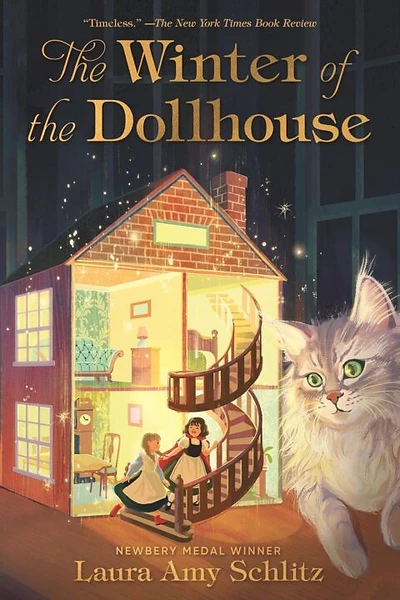
The Winter of the Dollhouse
by Laura Amy Schlitz
Pacing MaterialA magical dollhouse becomes the portal between two worlds as two girls discover a mysterious cat and a hidden history within its miniature walls.
Big Idea
Imagination and memory can transform the smallest spaces into entire worlds.
Discussion Questions
- 1.What role does the dollhouse play in the story?
- 2.How do the two girls' worlds connect through the dollhouse?
- 3.What does the cat symbolize?
- 4.How does the author create a sense of wonder and mystery?
Classroom Activity
Dollhouse Stories
Build a shoebox dollhouse and write a short story about who lives inside it during winter.
Lesson Plan
Learning Goals
- Analyze symbolism in literature
- Explore theme of imagination and memory
- Examine narrative structure
Standards Connections
- ELA: RL.4.1 — Ask and answer questions about key details
- ELA: RL.4.2 — Retell stories, including key details
- ELA: RL.4.3 — Describe characters, setting, and events
- ELA: RL.7.6 — Acknowledge differences in characters' points of view
- ELA: SL.4.1 — Participate in collaborative conversations about the text
- ELA: W.4.3 — Write narratives recounting events with descriptive details
- SEL: Social Awareness
- SEL: Relationship Skills
Pace-Write-Read Study with Pace-Write It!
Focus question: How does an author speed up and slow down a story to make mystery, memory, and imagination feel vivid? In The Winter of the Dollhouse by Laura Amy Schlitz, two girls are drawn into the secrets of a magical dollhouse, where the past seems to press against the present through miniature rooms, a mysterious cat, and hidden history. Schlitz uses careful pacing—lingering on tiny details, then quickening during discoveries and moments of suspense—to help readers feel both wonder and tension.
| Element | How to notice or teach it in the novel |
|---|---|
| Pace | Read: Notice how Laura Amy Schlitz changes the speed of The Winter of the Dollhouse by slowing down around the dollhouse’s tiny rooms and speeding up when the girls begin to uncover its secrets. Watch how the pacing mirrors the themes of imagination and memory, making each discovery feel earned. Classroom Activity: Write two short paragraphs about a mysterious object—one paragraph that moves slowly with close observation, and one that moves quickly as a secret is discovered. |
| Plot | Read: Track how the plot unfolds through layered discoveries about the magical dollhouse, the mysterious cat, and the hidden history connecting two worlds. Notice that each new clue adds momentum while deepening the emotional meaning of memory and connection. Classroom Activity: Create a 5-step plot ladder for an original mystery involving a miniature place, with each step revealing a new piece of the past. |
| Prosody | Read: Listen to the musical flow of Schlitz’s sentences, especially in scenes where wonder and unease exist together. The sentence patterns help readers hear shifts between quiet observation and mounting tension as the girls explore the dollhouse world. Classroom Activity: Choose a description of an eerie room and rewrite it so the sentence lengths create a spooky, musical sound when read aloud. |
| Word pause | Read: Notice where individual words—especially words tied to winter, miniatures, silence, and memory—make you stop and picture the scene. In this book, carefully chosen words create little pauses that heighten mystery. Classroom Activity: Write a 6-sentence scene about opening a tiny door, using three single powerful words in places where you want your reader to pause. |
| Concept | Read: Think about the big idea that a dollhouse can hold more than objects—it can hold memory, history, and imagination. Schlitz paces the story so this concept grows gradually through the girls’ discoveries instead of being explained all at once. Classroom Activity: Write a paragraph beginning with “At first, I thought it was only a toy, but…” to show a simple object becoming meaningful. |
| Voice & World View | Read: Notice how the story’s voice balances curiosity, tenderness, and suspense, inviting readers to see the world as layered with hidden meaning. The worldview suggests that the past is still alive in objects, places, and stories if someone pays attention closely enough. Classroom Activity: Write in a voice that sounds both curious and cautious as a character examines an old family object with a secret history. |
| Setting & Place | Read: Study how the dollhouse setting becomes more than a backdrop—it is a portal, a puzzle, and a memory-container. Schlitz slows down to describe rooms, textures, and winter atmosphere so place shapes the mood and the pacing. Classroom Activity: Design and describe one miniature room that reveals something important about its former owner. |
| Point of View | Read: Notice how point of view controls what readers know and when they know it, especially as the girls piece together clues about the dollhouse and the cat. The limited perspective helps suspense build because readers discover the truth alongside the characters. Classroom Activity: Rewrite one discovery scene from the point of view of the mysterious cat, keeping some secrets hidden from the reader. |
| Original Characters | Read: Pay attention to how the girls feel distinct through their reactions to the magical dollhouse—what they fear, imagine, and notice. Schlitz also makes unusual figures like the mysterious cat memorable by revealing them in careful, suspenseful glimpses. Classroom Activity: Invent a character who would react strongly to a magical miniature world, and write three traits shown through actions instead of a list. |
| Dialogue | Read: Notice how dialogue can speed up the scene when the girls question each other, react to strange events, or test what they believe. Their spoken words help reveal uncertainty, excitement, and growing trust while moving the mystery forward. Classroom Activity: Write 8 lines of dialogue between two characters who disagree about whether a dollhouse is truly magical. |
| Details | Read: Look closely at the small details in the dollhouse—furnishings, objects, signs of use, and tiny traces of a life once lived. These details are not random; they build atmosphere and become clues tied to memory and hidden history. Classroom Activity: Make a list of 6 tiny objects in a miniature room, then write how two of them hint at a secret from long ago. |
| Descriptions | Read: Notice how Schlitz’s descriptions often slow the story at exactly the right moment so readers can feel wonder before danger or surprise arrives. The rich imagery helps the dollhouse feel both beautiful and unsettling. Classroom Activity: Write a description of a miniature staircase using at least three sensory details and ending with a hint that something is wrong. |
| Strong First Lines | Read: Consider how the opening of a mystery must create curiosity quickly, especially in a story about imagination, memory, and a magical object. Think about how Schlitz begins by inviting readers into a world where ordinary things may hold extraordinary histories. Classroom Activity: Write three possible first lines for a story about discovering a secret inside a toy, and choose the one that creates the most questions. |
| Immediacy & Engagement | Read: Notice how the book keeps readers close to the girls’ discoveries so each strange event feels immediate. Schlitz builds engagement by making readers want to know not just what the dollhouse is, but whose memories and losses it contains. Classroom Activity: Write a scene in which a character touches an object and instantly feels that something important is about to happen. |
| Story Scenes & Summaries & Unique Structures | Read: Watch how some moments are fully dramatized as scenes while others are summarized to move readers more quickly toward the next discovery. This balance keeps the mystery tight while still making key dollhouse encounters vivid. Classroom Activity: Write one moment as a full scene and then write a 3-sentence summary of the same event; explain which version creates more suspense. |
| Flashback & Flash Forward & Cliffhangers | Read: Notice how a story about hidden history naturally invites backward-looking storytelling, with the past gradually illuminating the present. Pay attention to moments that end with uncertainty, making readers eager to turn the page and learn more about the dollhouse’s earlier life. Classroom Activity: End a paragraph with a cliffhanger after a character finds a tiny object that clearly belonged to someone from the past. |
| Tension & Suspense & Surprise | Read: Study how tension grows through partial information: the strange behavior of the cat, unexplained connections, and the sense that the dollhouse knows more than the girls do. Schlitz creates suspense by revealing clues in measured amounts and using surprise to shift what readers think is true. Classroom Activity: Write a short suspense scene where a character notices three odd clues before a surprising fourth clue changes everything. |
| Page Turns and Chapter Breaks | Read: Notice where a chapter or scene ends right after a new clue, a strange sighting, or an unanswered question about the magical dollhouse. These stopping points are part of pacing because they pull the reader forward. Classroom Activity: Draft a chapter ending in 4-5 sentences that makes a reader need to know what is behind a miniature door. |
| Performance | Read: Imagine reading the story aloud and notice where your voice would soften, hurry, or pause—especially in eerie or wondrous dollhouse scenes. The book’s mystery and emotional undercurrent become even clearer when performed with attention to pacing. Classroom Activity: Mark a short paragraph with slash marks for pauses and arrows for places to speed up or slow down, then practice reading it aloud. |
| Personality | Read: Notice how each character’s personality shapes pacing: a cautious character lingers over clues, while a bolder one pushes the action forward. In this story, personality affects how the girls enter the world of memory and imagination through the dollhouse. Classroom Activity: Write two versions of the same discovery—one by a timid character and one by a daring character—to show how personality changes pacing. |
| Humor | Read: Even in a mysterious story, small moments of surprise, awkwardness, or lively interaction can provide relief from tension. Notice whether any lighter moments make the girls feel more real and make the darker or stranger moments stand out more sharply. Classroom Activity: Add one gentle humorous line to a suspenseful scene without breaking the mysterious mood. |
| Pause | Read: Notice the larger pauses in the story—moments of looking, thinking, remembering, or wondering before the next action begins. Schlitz uses these reflective pauses to connect mystery with the deeper theme of memory. Classroom Activity: Write a pause moment in which a character stops before opening a tiny drawer and remembers someone important. |
| Poetry and Poetic Devices | Read: Look for language that feels poetic through imagery, sound, comparison, or mood, especially in scenes shaped by winter, silence, and miniature beauty. These poetic touches slow the reader down and deepen the emotional atmosphere. Classroom Activity: Write 4 lines describing the dollhouse using personification or metaphor, as if the house itself remembers its past. |
| Repetition | Read: Notice if images, ideas, or questions repeat—such as returning attention to the cat, the miniature rooms, or the pull of hidden history. Repetition in a mystery can build suspense because each return adds a new layer of meaning. Classroom Activity: Write a paragraph that repeats one phrase three times, each time revealing a stronger feeling about a magical object. |
| Rhythm | Read: Listen for how sentence rhythm changes across the story: slower, fuller sentences for observing the dollhouse and quicker beats for moments of alarm or discovery. This rhythm helps create the emotional pulse of wonder mixed with suspense. Classroom Activity: Write 5 sentences about hearing a sound from inside a dollhouse, using long-short-long-short-long sentence rhythm. |
| Punctuation | Read: Notice how punctuation shapes pacing—dashes for interruption, commas for lingering description, ellipses for uncertainty, and question marks for mystery. In a story like this, punctuation helps control the reader’s breath. Classroom Activity: Write a 6-sentence mystery moment and revise it twice, changing punctuation to make one version slower and one version more urgent. |
| Questions | Read: Pay attention to the questions the girls ask, the questions readers ask, and the questions the story delays answering about the cat, the dollhouse, and the hidden past. Questions are one of the main engines of pacing in this book. Classroom Activity: Make a chart with three columns—Character Questions, Reader Questions, Answered Later—and fill it with ideas from the story before writing your own mystery question chain. |
| Compare-Contrast | Read: Notice contrasts between large and small, present and past, ordinary and magical, safety and unease. Schlitz uses these contrasts to sharpen the themes of imagination and memory while also shaping when the story feels calm or intense. Classroom Activity: Write a compare-contrast paragraph about a regular room and its miniature version, ending with a line that hints the smaller one is more powerful. |
| Objects | Read: In this book, objects matter deeply—the dollhouse itself, its tiny furnishings, and any small item that carries traces of earlier lives. Objects become clues, emotional anchors, and bridges between worlds. Classroom Activity: Choose one object from an imaginary dollhouse and write its “hidden history” in 5-7 sentences. |
| Threes | Read: Notice how writers often group ideas, images, or clues in threes to make them memorable and satisfying. In a mystery about a magical dollhouse, three linked details can build pattern and expectation before a reveal. Classroom Activity: Write a scene where a character notices three signs that a room has been recently used, even though no one should be there. |
| Whitespace & Negative Space | Read: Think about what is left unsaid in the story—silences, missing explanations, and gaps in the dollhouse’s history. These spaces create mystery because readers must imagine what belongs between the clues. Classroom Activity: Write a short scene with one important missing detail that the reader must infer from silence and hints. |
| Art & Graphics | Read: Even if the novel relies mostly on words, readers can still imagine visual design: floor plans, room sketches, object maps, or memory webs for the dollhouse. Visualizing the miniature world can help you see how detail and pacing work together. Classroom Activity: Draw a simple map of a dollhouse floor and label three places where a clue could be hidden; then write a caption for each clue. |
| Interactives & Gamification | Read: Treat the book’s mystery like an investigation game by noticing clues, patterns, and predictions connected to the girls, the cat, and the hidden history inside the dollhouse. This playful approach matches the book’s blend of imagination and suspense. Classroom Activity: Create a 4-clue “mystery hunt” for classmates in which each clue reveals something about a miniature world’s forgotten past. |
Pace-Write It!
20-Minute Classroom Flow\nRead (5 min): Read aloud a short passage in which the girls closely examine the dollhouse or notice the mysterious cat. Ask students to listen for where the scene slows down with detail and where it speeds up with discovery or tension.\nNotice (5 min): Students turn and talk: What words, descriptions, or questions created suspense? Where did Laura Amy Schlitz pause to develop the themes of imagination and memory? Chart 3 craft moves students notice, such as tiny object details, unanswered questions, and chapter-end uncertainty.\nWrite (7 min): Students write their own miniature-world mystery moment. Writing frame: “At first, I noticed ____. Then I saw ____. The room seemed ____ because ____. I wanted to leave, but ____. When I opened/ touched/ lifted ____, I discovered ____. Suddenly, I understood that this object remembered ____.” Encourage students to include one pause moment, three small details, and an ending question or cliffhanger.\nShare (3 min): Partners read their scenes aloud and identify one place where the writer slowed the pacing effectively and one place where the writer created suspense. Invite 1-2 volunteers to share a strong cliffhanger or descriptive line.\nExit ticket: In one sentence, explain how slowing down on details can make a mystery stronger, using The Winter of the Dollhouse as your example.