
 PreK-2
P JENNINGS
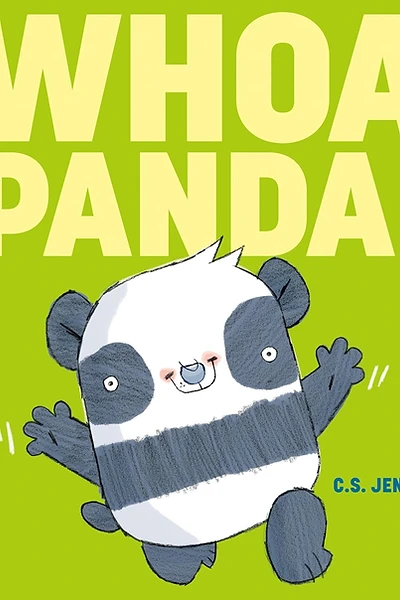
Whoa Panda!
by C. S. Jennings
Pacing MaterialA humorous and heartwarming look at the importance of communicating personal boundaries. Panda gets excited, but learns that 'Whoa!' is a helpful word for knowing when to give friends space.
Big Idea
Personal space is a vital social skill that helps us interact respectfully with others, and learning to recognize when to give someone room is a key part of growing up.
Discussion Questions
- 1.Why does Panda have trouble staying in his own space at the beginning of the story?
- 2.How do the other characters feel when Panda gets too close to them?
- 3.What are some ways we can tell if someone needs more personal space?
- 4.How does Panda change his behavior by the end of the book?
- 5.Why is it important to respect the boundaries of our friends and classmates?
Classroom Activity
The Personal Space Bubble Challenge
Students will explore the concept of personal space through a physical activity where they practice maintaining an 'invisible bubble' around themselves while interacting with peers.
Lesson Plan
Learning Goals
- Identify the importance of personal space in social interactions.
- Demonstrate an understanding of physical boundaries through movement.
- Analyze how Panda's actions affect the feelings of others in the story.
- Practice self-regulation by adjusting proximity to others.
Activity Steps
- 1.Read 'Whoa Panda!' aloud, pausing to discuss how characters react to Panda's lack of space.
- 2.Define 'personal space' as an invisible bubble around each person that we should not pop.
- 3.Have students stand in a circle and extend their arms to find their own 'bubble' space.
- 4.Play a game where students move around the room and must stop or adjust their path whenever they get too close to another student's bubble.
- 5.Reflect on how it feels to have enough space versus feeling crowded, relating it back to the book's characters.
Standards Connections
- ELA: RL.K.3 (Describe characters and their actions)
- SEL: Self-awareness (Recognizing personal boundaries)
- SEL: Relationship Skills (Respecting others)
- Health: Personal Safety and Boundaries
Pace-Write-Read Study with Pace-Write It!
C.S. Jennings uses 'Whoa Panda!' as a masterclass in visual pacing and minimalist storytelling. By limiting the text and relying on the kinetic energy of the illustrations, Jennings teaches students that pacing is not just about word count, but about the rhythm of the page turn and the visual 'weight' of the character's movement across the spread. This book demonstrates how to use white space to create a sense of urgency and chaos, contrasting it with the stillness required for social harmony. For young writers, this book serves as a model for how to use simple, punchy sentences to mirror the frantic energy of a character who hasn't yet learned to slow down.
| Element | How to notice or teach it in the novel |
|---|---|
| Pace | The pace is fast and frantic to match Panda's lack of boundaries, then slows down as he learns to respect space. |
| Plot | The plot follows a simple arc: Panda is too close, others react, and Panda learns to adjust. |
| Prosody | Encourage readers to use an excited, breathless tone for Panda and a firm, corrective tone for the other characters. |
| Word Pause | Use the limited text to create natural pauses that allow the reader to look at the illustrations. |
| Concept | The core concept is the social-emotional lesson of personal space. |
| Voice & World View | The voice is playful and observational, reflecting a world where social rules are being learned. |
| Setting & Place | The setting is sparse, keeping the focus entirely on the interaction between characters. |
| Point of View | The story is told from a third-person perspective that allows us to see Panda's impact on everyone else. |
| Original Characters | Panda is a relatable, high-energy character whose flaws are immediately recognizable to children. |
| Dialogue | Dialogue is minimal, emphasizing that actions often speak louder than words. |
| Details | Notice how the facial expressions of the other animals provide the necessary details to understand the conflict. |
| Descriptions | The illustrations provide the descriptions, showing the 'whoa' moments through physical proximity. |
| Strong First Lines | The title itself acts as the first line, immediately setting the tone of the conflict. |
| Immediacy & Engagement | The book engages the reader immediately by placing the character in a relatable social dilemma. |
| Story Scenes & Summaries & Unique Structures | The structure is episodic, with each spread showing a new attempt by Panda to interact. |
| Flashback & Flash Forward & Cliffhangers | The book avoids these, keeping the narrative strictly in the present moment for maximum impact. |
| Tension & Suspense & Surprise | Tension is built through the anticipation of Panda getting too close to the next character. |
| Page Turns and Chapter Breaks | The page turns act as the 'climax' of each interaction, revealing the reaction of the other character. |
| Performance | This book is perfect for a performance where the reader physically leans in and out to mimic Panda. |
| Personality | Panda's personality is defined by his exuberance and lack of awareness. |
| Humor | The humor comes from the absurdity of Panda's constant, unwanted proximity. |
| Pause | Teach students to pause before turning the page to let the visual joke land. |
| Poetry and Poetic Devices | The book uses repetition as a poetic device to build the rhythm of the story. |
| Repetition | The repeated 'Whoa Panda!' serves as a rhythmic anchor for the reader. |
| Rhythm | The rhythm is staccato and quick, mirroring the movements of a young, energetic child. |
| Punctuation | Exclamation points are used to emphasize the urgency of the characters' reactions. |
| Questions | The book implicitly asks the reader: 'How close is too close?' |
| Compare-Contrast | Compare Panda's behavior at the start versus his behavior at the end. |
| Objects | The characters themselves are the primary objects of focus in the sparse setting. |
| Threes | The story follows a pattern of three interactions before the resolution. |
| Whitespace & Negative Space | The white space emphasizes the isolation of the characters and the need for personal space. |
| Art & Graphics | The art is clean and bold, making the characters' expressions easy to read from a distance. |
| Interactives & Gamification | The book invites the reader to participate in the 'Whoa!' warning, making it an interactive experience. |
Pace-Write It!
Students will write a 3-sentence story about a character who is too loud, using one sentence per page to practice the 'page turn' pacing technique learned from the book.