 K-2
K-2P DERBY
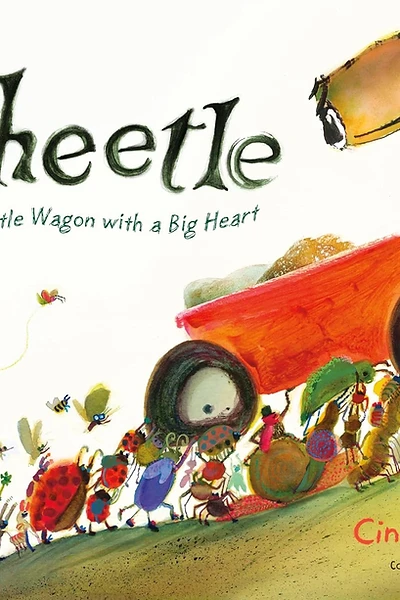
Wheetle: A Little Wagon with a Big Heart
by Cindy Derby
Pacing MaterialBig Idea
Wheetle teaches us that true friendship involves both helping others and having the courage to set healthy boundaries. It reminds readers that even those with the biggest hearts need to take care of themselves.
Discussion Questions
- 1.Why does Wheetle feel like he has to say yes to everyone who asks for help?
- 2.How does Wheetle's body language change when he is tired versus when he is happy?
- 3.What does it mean to have a 'big heart,' and can you have one while still saying no?
- 4.How do Wheetle's friends react when he finally sets a boundary?
- 5.Can you think of a time you felt overwhelmed like Wheetle? What did you do?
Classroom Activity
The Boundary Wagon
Students create a 'Wheetle' craft that features a flip-side: one side shows Wheetle helping others, and the other side shows Wheetle taking a rest, helping students visualize the balance between kindness and self-care.
Lesson Plan
Learning Goals
- Identify the importance of setting personal boundaries in friendships.
- Analyze how an author uses visual cues to show character emotions.
- Practice identifying the sequence of events in a narrative.
- Develop empathy by connecting with the protagonist's internal conflict.
Activity Steps
- 1.Read the book aloud, pausing to discuss Wheetle's changing expressions.
- 2.Discuss the concept of 'filling your own cup' before helping others.
- 3.Provide students with a paper wagon template.
- 4.Have students draw Wheetle helping on one side and Wheetle resting on the other.
- 5.Students share their wagons and explain why it is okay for Wheetle to take a break.
Standards Connections
- CCSS.ELA-LITERACY.RL.K.3: Describe characters, settings, and major events in a story.
- CASEL SEL Competency: Self-Awareness (identifying emotions).
- CCSS.ELA-LITERACY.SL.1.1: Participate in collaborative conversations.
- National Core Arts Standard: Creating (generating and conceptualizing artistic ideas).
Pace-Write-Read Study with Pace-Write It!
Pacing in a picture book is the heartbeat of the story, dictating how quickly a reader moves through the emotional landscape of the narrative. In 'Wheetle,' Cindy Derby masterfully uses the physical constraints of the wagon's journey to mirror the internal exhaustion and eventual relief of the protagonist. By observing how the text and art interact, students can learn how authors manipulate time to build empathy. This study focuses on the 'Pace-Write-Read' method, where we examine how Derby uses white space and page turns to create moments of stillness. By slowing down the reading during Wheetle's moments of overwhelm, we teach students to recognize the rhythm of a story and how that rhythm reflects the character's emotional state.
| Element | How to notice or teach it in the novel |
|---|---|
| Pace | Notice how the pace speeds up as Wheetle takes on more tasks and slows down when he finally stops to rest. |
| Plot | The plot follows a classic arc of a character struggling with a flaw (over-helping) until a breaking point leads to growth. |
| Prosody | Read with a heavy, dragging tone when Wheetle is tired, and a lighter, faster tone when he is feeling helpful. |
| Word Pause | Use intentional pauses after Wheetle is asked for help to let the reader feel the weight of his decision. |
| Concept | The core concept is the balance between altruism and self-preservation. |
| Voice & World View | The voice is gentle and empathetic, reflecting a world where kindness is the primary currency. |
| Setting & Place | The setting is a simple, relatable world that allows the focus to remain entirely on Wheetle's internal state. |
| Point of View | The story is told from a third-person perspective that invites us to look closely at Wheetle's feelings. |
| Original Characters | Wheetle is a unique character because he is an inanimate object with very human emotional struggles. |
| Dialogue | Dialogue is sparse, emphasizing the requests made of Wheetle and his eventual, quiet assertion of his needs. |
| Details | Look for small details in the illustrations, like the items Wheetle carries, which represent his growing burden. |
| Descriptions | Derby uses visual descriptions of Wheetle's physical state to show his exhaustion rather than just telling us. |
| Strong First Lines | The opening establishes Wheetle's helpful nature immediately, setting the stage for his conflict. |
| Immediacy & Engagement | The directness of the requests creates immediate tension for the reader. |
| Story Scenes & Summaries & Unique Structures | The structure follows a repetitive pattern of 'ask-help-exhaustion' that builds toward the climax. |
| Flashback & Flash Forward & Cliffhangers | The story moves linearly, but each page turn acts as a mini-cliffhanger regarding how much more Wheetle can carry. |
| Tension & Suspense & Surprise | Tension builds as the reader wonders if Wheetle will ever say no. |
| Page Turns and Chapter Breaks | Use the page turns to emphasize the accumulation of weight on Wheetle. |
| Performance | Encourage students to act out the 'heavy' feeling of the wagon as the story progresses. |
| Personality | Wheetle's personality is defined by his desire to please, which makes his eventual boundary-setting more powerful. |
| Humor | There is a gentle, ironic humor in how much a small wagon is expected to carry. |
| Pause | The most important pause is the one before Wheetle says 'no'—it is the turning point of the book. |
| Poetry and Poetic Devices | The text has a lyrical quality that mimics the rolling motion of a wagon. |
| Repetition | The repetition of requests reinforces the feeling of being overwhelmed. |
| Rhythm | The rhythm of the text mimics the steady, then strained, movement of the wagon. |
| Punctuation | Notice how ellipses are used to show hesitation or the slowing down of the wagon. |
| Questions | The questions asked of Wheetle drive the plot forward. |
| Compare-Contrast | Compare Wheetle at the beginning of the book to Wheetle at the end. |
| Objects | The objects Wheetle carries are symbols of the emotional labor he is performing. |
| Threes | Look for groups of three requests that escalate the tension. |
| Whitespace & Negative Space | Derby uses white space to isolate Wheetle, emphasizing his loneliness when he is over-burdened. |
| Art & Graphics | The art style is expressive and textured, helping to convey the 'weight' of the items. |
| Interactives & Gamification | The book invites the reader to 'help' Wheetle by turning the pages, making the reader complicit in his journey. |
Pace-Write It!
In 20 minutes, have students draw a 'Weight List'—a list of things that make them feel tired or overwhelmed—and then draw a 'Rest List' of things that help them feel refreshed, mirroring Wheetle's journey to self-care.