
 K-4
K-4P CASTALDO
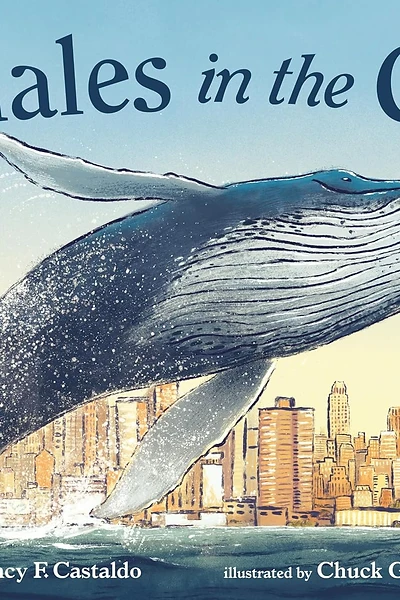
Whales in the City
by Nancy F. Castaldo
Pacing MaterialA breathtaking imagining of whales swimming through a city skyline, celebrating the wonder of urban wildlife and the natural world around us.
Big Idea
Nature is all around us — even in the city — and we can find wonder in the wild places near home.
Discussion Questions
- 1.What would it be like to see a whale in the city?
- 2.What kinds of wildlife live near your home or school?
- 3.How do cities and nature exist together?
- 4.What can we do to protect wildlife in our communities?
Classroom Activity
Urban Wildlife Map
Draw a map of your city or neighborhood and mark all the places where you've seen or might see wildlife.
Lesson Plan
Learning Goals
- Describe how the imagined whales swimming through a city skyline create a sense of wonder in Whales in the City.
- Distinguish the story’s imagined wildlife encounter from real animals students might observe near home.
- Create a neighborhood map with symbols and a key showing places where wildlife has been seen or might be found.
- Explain how neighborhood features such as trees, gardens, parks, and waterways can meet animals’ needs.
Activity Steps
- 1.Read Whales in the City aloud, pausing to examine the whales and city skyline. Ask: “What makes this scene surprising? How does it help us notice nature in a city?”
- 2.Make two class lists: “Imagined in the story” and “Wildlife near us.” Invite students to name local animals, such as birds, squirrels, butterflies, or insects, and describe where they have seen them.
- 3.Model a simple neighborhood map with familiar landmarks, such as the school, streets, a park, trees, and a waterway if one is nearby. Add an animal symbol and a map key. Explain that wildlife needs food, water, shelter, and space.
- 4.Have students draw a map of their neighborhood or the area around school. Mark at least three wildlife locations, using solid circles for animals actually observed and dotted circles for animals that might be found there. Include a key; younger students may dictate labels.
- 5.Invite students to share one mapped location and explain why an animal lives or might live there. Older students can add a sentence connecting the location to an animal’s needs. Discuss observing wildlife quietly and from a safe distance.
- 6.Return to the book’s sense of wonder. On a separate corner of the map, students may add an imagined whale visiting the city, clearly labeled “imagined.” Finish with: “I can find nature near home by looking for…”
Standards Connections
- ELA: CCSS RL.1.7 — Use illustrations and story details to describe the setting and events.
- ELA: CCSS SL.2.1 — Participate in collaborative conversations about the book and local wildlife.
- Social Studies: C3 D2.Geo.1.K–2 — Construct maps of familiar places.
- Science: NGSS K-LS1-1 — Use observations to describe patterns in what plants and animals need to survive.
- Science: NGSS 2-LS4-1 — Make observations of plants and animals to compare the diversity of life in different habitats; extend the mapping activity with direct observations of two nearby habitats.
Pace-Write-Read Study with Pace-Write It!
Focus question: How does an author slow down and speed up a story to help readers feel wonder? In Whales in the City by Nancy F. Castaldo, readers imagine whales moving through an urban skyline as nature and city life blend together in surprising ways. The book uses pacing through dreamy page-to-page movement, vivid descriptive moments, and pauses for observation so readers can linger on the beauty of wildlife in unexpected places.
| Element | How to notice or teach it in the novel |
|---|---|
| Pace | Read: Notice how the story moves gently as the whales glide through the city, creating a calm, wonder-filled pace instead of a rushed action sequence. Classroom Activity: Write 3-4 sentences about an animal moving through your neighborhood, using one slow moment and one quicker moment. |
| Plot | Read: Notice that the plot centers on the surprising idea of whales appearing in a city and the growing sense of discovery as urban space becomes shared with nature. Classroom Activity: Sketch a beginning, middle, and end for a story in which a wild animal visits your town. |
| Prosody | Read: Listen for how the language sounds smooth and flowing, matching the motion of whales swimming between buildings. Classroom Activity: Read one page aloud, then write two lines that sound gentle and wave-like. |
| Word pause | Read: Notice places where a single strong word or short phrase makes readers stop and picture the whales against the skyline. Classroom Activity: Write a sentence about the city, then add a one-word line after it to create a pause. |
| Concept | Read: Think about the big idea that nature is not far away; even a city can become a place of wonder and wildlife. Classroom Activity: Write one sentence naming the book's big idea, then add two details from the story that support it. |
| Voice & World View | Read: Notice the book's awe-filled voice that invites readers to see the city with curiosity and respect for the natural world. Classroom Activity: Rewrite a city scene in a voice that sounds amazed by what the whales are doing. |
| Setting & Place | Read: Study how the city skyline, streets, and buildings become an imaginative ocean-like setting for the whales. Classroom Activity: Describe your school or street as if it were part of an animal's habitat. |
| Point of View | Read: Notice how the story invites readers to observe the whales from a close, wonder-struck perspective, almost as if standing in the city watching them pass. Classroom Activity: Write 3 sentences from the point of view of a child who spots the first whale downtown. |
| Original Characters | Read: Notice that the whales act as unusual, memorable characters because they are placed in a setting where readers do not expect them. Classroom Activity: Invent an original animal character who appears in an unexpected human place and describe it in 4 sentences. |
| Dialogue | Read: Notice whether the book relies more on imagery than conversation, which keeps the focus on atmosphere and movement. Classroom Activity: Add two lines of dialogue between a child and an adult who see the whales in the city. |
| Details | Read: Look for details about the whales' size, motion, and placement near city buildings that help the impossible scene feel vivid. Classroom Activity: Make a list of 5 details you would include if a whale swam past your window. |
| Descriptions | Read: Notice how descriptions help readers picture the contrast between giant sea animals and tall city structures. Classroom Activity: Write a 4-sentence description of one whale moving between buildings, using color, sound, and motion words. |
| Strong First Lines | Read: Pay attention to how the opening quickly invites readers into an unusual world where whales and city life meet. Classroom Activity: Write three possible first lines for your own nature-in-the-city story. |
| Immediacy & Engagement | Read: Notice how the book draws readers in right away with an unexpected image and keeps them engaged by making each page feel newly surprising. Classroom Activity: Write an opening sentence that makes a reader want to turn the page to see the animal in your setting. |
| Story Scenes & Summaries & Unique Structures | Read: Notice how individual scenes focus on visual moments of whales in the city, while the whole book builds a larger feeling of wonder about urban wildlife. Classroom Activity: Write one scene in close detail, then one summary sentence that tells what happens next. |
| Flashback & Flash Forward & Cliffhangers | Read: Notice that the story likely stays in the present moment, which helps readers remain inside the magical city-whale experience. Classroom Activity: Write a cliffhanger ending for a page: 'Then everyone looked up and saw...'. |
| Tension & Suspense & Surprise | Read: Notice how surprise comes from seeing whales in a skyline and wondering where they will go next or who will notice them. Classroom Activity: Write 3 sentences that build suspense before the whale appears. |
| Page Turns and Chapter Breaks | Read: Notice how page turns can reveal a new whale movement, a wider city view, or a fresh surprise, even without chapters. Classroom Activity: Plan a two-page spread by writing what a reader sees before the page turn and what is revealed after it. |
| Performance | Read: Think about how this story could be performed with slow arm motions, whispered reading, and big pauses to show the whales' movement. Classroom Activity: Mark one short passage with arrows, pauses, and expression notes for a read-aloud performance. |
| Personality | Read: Notice how the whales may seem calm, graceful, and majestic, giving them a strong personality without needing much dialogue. Classroom Activity: Write 3 personality traits for the whale, then support each trait with an action from the story. |
| Humor | Read: Notice the playful humor in imagining enormous whales where cars, streets, and skyscrapers usually belong. Classroom Activity: Write a funny but gentle sentence about how city people react to seeing a whale overhead. |
| Pause | Read: Notice the quiet pauses where readers can stop and take in the image of wildlife moving through human spaces. Classroom Activity: Write a short paragraph and include an ellipsis or line break to create a thoughtful pause. |
| Poetry and Poetic Devices | Read: Listen for poetic language, imagery, and comparisons that make the whales feel dreamlike in the city. Classroom Activity: Write two similes comparing a whale in the city to something children know. |
| Repetition | Read: Notice whether repeated words, ideas, or image patterns help build the steady movement of the whales and the ongoing sense of wonder. Classroom Activity: Write 3 lines that repeat the same beginning words, such as 'Above the city...'. |
| Rhythm | Read: Feel the rhythm of the sentences and how they may echo the rise and fall of swimming whales. Classroom Activity: Write one long sentence and one short sentence to create a wave-like rhythm. |
| Punctuation | Read: Notice how punctuation helps slow readers down or highlight amazement as whales move among buildings. Classroom Activity: Rewrite one sentence about the whales in three ways: with a period, an exclamation point, and a dash. |
| Questions | Read: Notice the questions readers might naturally ask: Why are the whales here? Who sees them first? What does the city learn from them? Classroom Activity: Write 3 wonder questions a child might ask while watching the whales. |
| Compare-Contrast | Read: Compare the ocean world of whales with the hard lines and busy life of the city, and notice how the contrast creates beauty. Classroom Activity: Make a T-chart comparing the whale's usual habitat with the city setting in the story. |
| Objects | Read: Pay attention to important objects such as buildings, windows, streets, and skyline shapes that help show the whales' scale. Classroom Activity: Choose one city object and describe how it looks next to a whale. |
| Threes | Read: Notice whether ideas or descriptions can be grouped in threes, such as three motions, three sights, or three feelings, to make the writing memorable. Classroom Activity: Write a sentence with three actions the whale does in the city. |
| Whitespace & Negative Space | Read: Notice how open space on the pages can make the whales feel huge, floating, and peaceful against the city backdrop. Classroom Activity: Plan a page by deciding where you would leave blank space to show sky, water-like air, or quiet. |
| Art & Graphics | Read: Study how the illustrations work with the words to show whales among the skyline and deepen the theme of nature in urban spaces. Classroom Activity: Draw a quick storyboard panel and add one sentence of text that matches the image. |
| Interactives & Gamification | Read: Notice how readers can interact by hunting for visual details, predicting the next city place the whales will pass, or imagining hidden wildlife in their own community. Classroom Activity: Create a 'Spot the Wonder' checklist with 4 things classmates should look for in the book's words or pictures. |
Pace-Write It!
20-Minute Classroom Flow\nRead (5 min): Read aloud a section of Whales in the City by Nancy F. Castaldo, pausing to let students study the images of whales moving through the skyline. Ask students to listen for places where the story feels slow, calm, and full of wonder.\nNotice (5 min): Discuss: How do the words and illustrations make the whales seem graceful? Where does the author slow us down so we can really picture the scene? Chart student observations such as descriptive details, page turns, repetition, and pauses.\nWrite (7 min): Invite students to write their own short 'animal in the city' scene using this frame: 'I looked up and saw a ______ above the ______. It moved ______ past the ______. Everyone ______. For one moment, the city felt ______.' Encourage them to add one pause, one strong detail, and one feeling word.\nShare (3 min): Partners read their scenes aloud with expression, using a slow pace in at least one sentence. Listeners name one place where the writer created wonder.\nExit ticket: Write one sentence answering: 'How did slowing down your writing help readers picture the animal?'
Pace-Write-Read Connection
Teach this book using the Pace-Write-Read method — Tool 29: Questions.
Open the Mastery Manual