
 K-3
K-3P LYALL
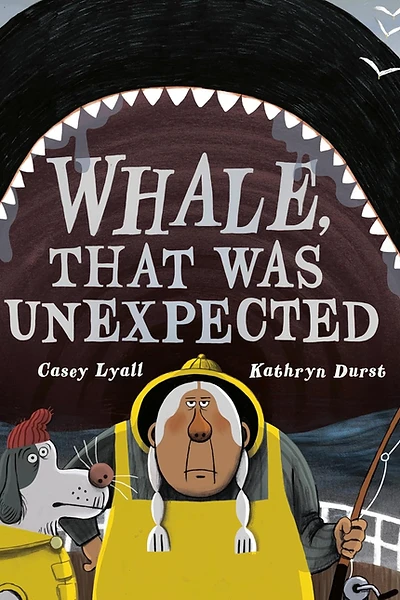
Whale That Was Unexpected
by Casey Lyall
Pacing MaterialAn enormous, unexpected whale appears where it shouldn't — and a community must figure out what to do about it.
Big Idea
When life brings the unexpected, working together turns a problem into something wonderful.
Discussion Questions
- 1.Why is the whale's arrival so surprising?
- 2.How do the characters react?
- 3.What would you do if something unexpected appeared in your town?
- 4.How can a surprise become an opportunity?
Classroom Activity
Unexpected Visitor
Imagine an unexpected animal arrived at your school. Write and illustrate how your class would respond.
Lesson Plan
Learning Goals
- Describe the unexpected whale’s arrival and how the community responds, using details from the read-aloud and illustrations.
- Explain how cooperation can help people respond to an unexpected problem.
- Create an imagined school story with an unexpected animal visitor, a problem, and a cooperative solution.
- Use drawings and grade-appropriate dictation or writing to communicate a clear sequence of events.
Activity Steps
- 1.Read Whale That Was Unexpected aloud. Pause to ask: “Why is the whale’s arrival unexpected?” and “What challenges might an enormous whale create in this place?” Invite students to use the pictures and text as evidence.
- 2.Discuss how the community responds. Make a class chart labeled “Unexpected Problem,” “People’s Responses,” and “Working Together.” Record details students notice, then connect them to the idea that cooperation can turn a surprise into something positive.
- 3.Introduce “Unexpected Visitor”: an animal has arrived at your school where it does not belong. Have each student choose an animal and a school location. Brainstorm safe, kind responses, including giving the animal space and asking trusted adults or wildlife experts for help.
- 4.Have students plan three parts: the animal arrives, the class works together, and the problem has a positive ending. Ask: “What does your visitor need?” and “How can classmates help without approaching or handling a wild animal?”
- 5.Students write and illustrate their stories. Kindergarten students may draw and dictate captions; older students write sentences for each part, using sequence words such as “first,” “next,” and “finally.”
- 6.Invite students to share with a partner or the class. Listeners identify one example of cooperation. Close by comparing students’ solutions with the community’s response to the whale in the book.
Standards Connections
- ELA: RL.K.3–RL.3.3 — Identify characters and major events; describe how characters respond to events and challenges.
- ELA: W.K.3–W.3.3 — Use drawing, dictation, or writing to create narratives with sequenced events and an ending.
- ELA: SL.K.1–SL.3.1 — Participate in collaborative discussions, listen to others, and contribute relevant ideas.
- SEL: Relationship skills — Practice cooperation and recognize how shared effort supports problem-solving.
- SEL: Responsible decision-making — Consider safe, caring responses that protect both people and animals.
Pace-Write-Read Study with Pace-Write It!
Focus question: How does an author slow down and speed up a surprising problem so readers feel the surprise and the solution? In Whale That Was Unexpected by Casey Lyall, an enormous whale appears where it does not belong, and the community must react, wonder, and adapt. The pacing moves between big surprising moments, quick reactions, and slower noticing scenes so readers can feel both the shock of the whale’s arrival and the thoughtful problem-solving that follows.
| Element | How to notice or teach it in the novel |
|---|---|
| Pace | Read: Notice how Whale That Was Unexpected by Casey Lyall moves quickly when the whale first appears and more slowly when the community studies the problem and adapts. The changing speed helps the surprise feel big and the solution feel earned. Classroom Activity: Write 3 short sentences for the moment a huge surprise appears, then 3 longer sentences showing how people slowly figure out what to do. |
| Plot | Read: Track the plot from the unexpected arrival of the whale, to the community’s confusion, to the efforts to respond and adapt. Casey Lyall builds pacing by making the problem clear right away and then unfolding the solution step by step. Classroom Activity: Make a beginning-middle-end chart for a story about an unexpected visitor and add one sentence to each part. |
| Prosody | Read: Listen to how the story sounds when read aloud during moments of alarm, curiosity, and relief around the whale. The read-aloud flow helps students hear when the text wants to rush ahead and when it wants to linger. Classroom Activity: Choose one page idea from the book and practice reading it two ways—fast for surprise and slow for careful noticing—then write one sentence about which sounds better and why. |
| Word pause | Read: Notice where a single important word or short phrase about the whale’s appearance or the community’s reaction creates a pause. Those tiny stops make the surprise stand out. Classroom Activity: Write a 4-sentence mini-scene about seeing something unexpected, and include one one-word line to create a dramatic pause. |
| Concept | Read: The central concept is surprise followed by adaptation: something impossible seems to happen, and people must change their plans. Casey Lyall uses pacing to move from shock to flexible thinking. Classroom Activity: Write about one unexpected change in a classroom, town, or home and explain how people adapt in order. |
| Voice & World View | Read: Notice how the book’s voice feels playful while still caring about how the community responds to the whale. The worldview suggests that surprising problems can be handled with observation, cooperation, and imagination. Classroom Activity: Write 5 sentences in a playful voice about a problem no one expected, ending with a hopeful idea. |
| Setting & Place | Read: Pay attention to where the whale appears and why that place matters so much to the surprise. The mismatch between the whale and the setting creates the story’s central pacing spark. Classroom Activity: Draw and label a place where an animal definitely does not belong, then write 3 sentences explaining why that setting makes the surprise stronger. |
| Point of View | Read: Notice how the story presents the whale and the community’s reactions from a viewpoint that lets readers share the group’s surprise. This perspective keeps readers close to the problem as it unfolds. Classroom Activity: Rewrite the whale’s arrival from the point of view of one community member who sees it first. |
| Original Characters | Read: The whale is the standout original character because it is enormous, unexpected, and changes everyone’s day. The surrounding community also matters because their different reactions help move the story forward. Classroom Activity: Invent an unexpected character that appears in an ordinary place and write 4 sentences showing how others react. |
| Dialogue | Read: Notice how dialogue could capture the community’s surprise, questions, and problem-solving around the whale. Short spoken reactions can make pacing feel quicker and more lively. Classroom Activity: Write a conversation between two neighbors who spot the whale and disagree about what to do first. |
| Details | Read: Casey Lyall uses details about the whale’s size, strangeness, and effect on the community to keep readers focused on the problem. Specific details slow the pace just enough for readers to picture the scene. Classroom Activity: List 5 exact details a character notices when something enormous appears, then use at least 3 in a paragraph. |
| Descriptions | Read: Notice how descriptive language can make the whale feel both funny and overwhelming. Description helps the pacing stretch during the most visual moments. Classroom Activity: Write 3 describing sentences about an unexpected creature using size, sound, and movement words. |
| Strong First Lines | Read: Think about how a strong opening in a story like Whale That Was Unexpected must quickly signal that something unusual is happening. A strong first line grabs readers before the full surprise is revealed. Classroom Activity: Write 3 possible first lines for a story about an impossible animal showing up in town, and circle the most attention-grabbing one. |
| Immediacy & Engagement | Read: The whale’s sudden appearance creates immediate reader engagement because the problem starts fast and feels impossible to ignore. Readers want to know what the community will do next. Classroom Activity: Write an opening that begins with action right away, using the frame: 'All at once, ______.' |
| Story Scenes & Summaries & Unique Structures | Read: Notice which parts of the story feel like full scenes—seeing the whale, reacting, deciding—and which parts likely move more quickly through summary as the community adapts. This balance helps the book keep momentum. Classroom Activity: Write one full scene about spotting the surprise and one 2-sentence summary about what happened later that day. |
| Flashback & Flash Forward & Cliffhangers | Read: Even if the book stays mostly in the present, you can notice places where a writer could hint at what might happen next with the whale. A cliffhanger feeling can come at the end of a page turn or big problem moment. Classroom Activity: End a short paragraph with a cliffhanger sentence about a community looking at something huge and unexpected. |
| Tension & Suspense & Surprise | Read: The major surprise is the whale appearing where it should not be, and the tension comes from not knowing how the community can possibly respond. Casey Lyall keeps suspense alive by delaying the solution and letting readers sit with the problem. Classroom Activity: Write 5 sentences that build from normal, to strange, to surprising, to worried, to hopeful. |
| Page Turns and Chapter Breaks | Read: In a picture book like Whale That Was Unexpected, page turns can reveal the whale more fully or show a new reaction from the community. The turn itself becomes part of the pacing. Classroom Activity: Plan a 4-page picture-book dummy and mark where the biggest page turn surprise should happen. |
| Performance | Read: This story invites expressive reading because the whale’s appearance, the community’s reactions, and the adaptation theme all work well with facial expression and voice changes. Performance helps students feel pacing in their bodies. Classroom Activity: Practice reading a made-up line about the whale in a shocked voice, a whispering voice, and a relieved voice, then write the line that fits each mood. |
| Personality | Read: Notice how personality can show through the way community members respond—some may panic, some may wonder, some may solve. Those different personalities make the pacing richer because reactions vary. Classroom Activity: Create 2 characters with opposite personalities who both see the whale, and write one sentence each showing their reactions. |
| Humor | Read: The very idea of a whale in the wrong place is funny as well as surprising, and Casey Lyall can use that humor to keep the story light even during the problem. Humor helps pacing by giving readers moments of delight between tense questions. Classroom Activity: Write a funny sentence about a very large animal trying to fit into a place that is too small or too ordinary. |
| Pause | Read: Notice where the story seems to stop for a beat so readers can stare, wonder, or gasp at the whale. That pause makes the next action stronger. Classroom Activity: Write a short scene and add an ellipsis or a one-line pause before the biggest reaction. |
| Poetry and Poetic Devices | Read: Listen for repeated sounds, playful word choices, or image-rich lines that make the whale and its unexpected arrival feel memorable. Even in prose, poetic touches can shape pace and mood. Classroom Activity: Write 2 lines about the whale using alliteration, such as repeating the same beginning sound. |
| Repetition | Read: Repetition can emphasize how unusual the whale is and how the community keeps returning to the same big question: what do we do now? Repeated words or structures can create a steady rhythm in a surprising story. Classroom Activity: Write a repeating line for a class story, such as 'But the whale was still there,' and use it 3 times. |
| Rhythm | Read: Notice how sentence length could change the rhythm—shorter lines for the shocking arrival and longer lines for thinking and adapting. Rhythm helps readers feel the story’s emotional shifts. Classroom Activity: Write one fast part using 3 short sentences and one slow part using 2 longer sentences. |
| Punctuation | Read: Exclamation points, commas, question marks, and dashes can help show surprise, interruption, and thinking in a story like Whale That Was Unexpected. Punctuation becomes part of pacing on the page. Classroom Activity: Write 4 lines about seeing the whale, each ending with different punctuation: period, question mark, exclamation point, and ellipsis. |
| Questions | Read: The book naturally raises questions: Why is the whale here? What will happen next? How can the community help? These questions keep readers turning pages. Classroom Activity: Write 3 character questions someone might ask right after spotting the whale, then answer one of them in a complete sentence. |
| Compare-Contrast | Read: Compare the ordinary community setting with the extraordinary whale, and contrast the first shocked reactions with later adaptive actions. These contrasts create movement in the story. Classroom Activity: Make a T-chart labeled 'Before the whale' and 'After the whale' and write 3 details in each column. |
| Objects | Read: Notice which objects in the community might suddenly matter because of the whale—tools, signs, vehicles, or everyday things used in new ways. Objects can help show adaptation. Classroom Activity: Choose one everyday object and write how characters could use it to solve a giant, surprising problem. |
| Threes | Read: Stories often use groups of three for rhythm, and a book like this may build pacing through three reactions, three attempts, or three observations about the whale. Threes help ideas feel complete and memorable. Classroom Activity: Write 3 things the community sees, 3 things they say, and 3 things they try. |
| Whitespace & Negative Space | Read: In a picture book, open space on the page can make the whale feel even bigger and the pause feel longer. Whitespace can slow readers down so they really take in the surprise. Classroom Activity: Sketch a page with one tiny person and one huge unexpected animal, leaving lots of empty space, then write one sentence for that page. |
| Art & Graphics | Read: The illustrations and page design in a story like Whale That Was Unexpected are essential for pacing because the reveal of the whale, the scale of the problem, and the community’s reactions all depend on what readers see. Art can deliver surprise before or after the words do. Classroom Activity: Create a storyboard of 3 panels showing zoomed-out, zoomed-in, and reaction views of an unexpected arrival. |
| Interactives & Gamification | Read: This book invites prediction games because readers can pause and guess how the community will adapt to the whale. Interactive noticing keeps students engaged with pacing choices. Classroom Activity: Make a 'What should they do?' choice chart with 3 possible solutions to the whale problem, then write 2 sentences explaining which choice works best and why. |
Pace-Write It!
20-Minute Classroom Flow\nRead (5 min): Read aloud Whale That Was Unexpected by Casey Lyall, pausing to let students notice when the story feels fast, slow, surprising, or thoughtful. Emphasize the moment the whale appears and the moments when the community adapts.\nNotice (5 min): Ask: 'Where did the story speed up? Where did it slow down?' Chart student noticings under two headings: Surprise and Adaptation. Point out how short reactions, page turns, and big visual moments speed the pacing, while details and problem-solving slow it down.\nWrite (7 min): Students write their own mini story about an unexpected creature appearing in an ordinary place. Writing frame: 'At first, ______ was ordinary. Then, all at once, ______ appeared. Everyone ______. We did not know ______. After that, we ______. In the end, we learned ______.' Encourage students to use one short sentence for the surprise and one longer sentence for the solution.\nShare (3 min): Partners read their stories aloud and identify one place where the pacing feels fast and one place where it feels slow. Invite 1-2 volunteers to share how they created surprise and adaptation.\nExit ticket: Write one sentence answering: 'How did Casey Lyall make the whale feel surprising, and how did the story show adaptation?'