
 K-2
K-2P TABOR
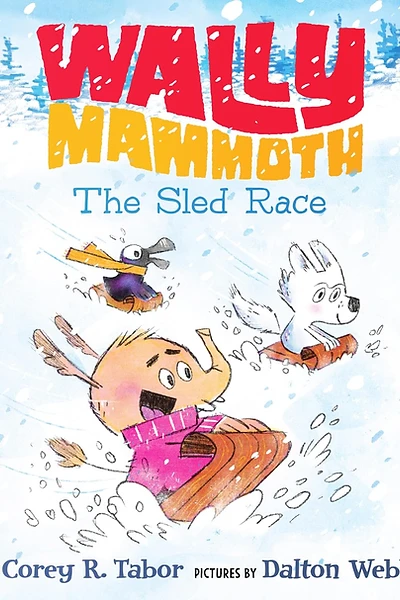
Wally Mammoth: The Sled Race
by Corey R. Tabor
Pacing MaterialWally Mammoth and his friends compete in a snowy, slippery sled race in this hilarious picture book about friendship, speed, and the joy of the journey.
Big Idea
The thrill of the race isn't just about winning — it's about the friends you race with.
Discussion Questions
- 1.How do the characters prepare for the sled race?
- 2.What challenges do they face on the course?
- 3.How does the author build excitement in the race?
- 4.What would your dream sled look like?
Classroom Activity
Sled Build & Race Story
Design and build a sled from recycled materials, then write a story about the sled's first big race.
Lesson Plan
Learning Goals
- Analyze narrative pacing in action scenes
- Explore themes of friendship and competition
- Practice descriptive writing about speed and motion
Standards Connections
- ELA: RL.K.1 — Ask and answer questions about key details
- ELA: RL.K.2 — Retell stories, including key details
- ELA: RL.K.3 — Describe characters, setting, and events
- ELA: RL.2.6 — Acknowledge differences in characters' points of view
- ELA: SL.K.1 — Participate in collaborative conversations about the text
- ELA: W.K.3 — Write narratives recounting events with descriptive details
- SEL: Relationship Skills
- SEL: Social Awareness
- Art: VA:Re7 — Perceive and analyze artistic work
Pace-Write-Read Study with Pace-Write It!
Focus question: How does an author make a race feel fast, funny, and exciting while also showing friendship? In Wally Mammoth: The Sled Race by Corey R. Tabor, readers follow Wally Mammoth and his friends through a snowy sled race full of slips, speed, and playful competition. Tabor uses quick page-to-page action, humorous pauses, and lively illustrations to control pacing so the story feels both energetic and warmhearted.
| Element | How to notice or teach it in the novel |
|---|---|
| Pace | Read: Notice how the race moves quickly when Wally Mammoth and his friends zoom downhill, but slows at funny or important moments so readers can enjoy the friendship and surprise. Classroom Activity: Write 3 short sentences about a race or game, making one sentence fast, one slower, and one exciting at the end. |
| Plot | Read: Notice the clear plot in this book: the friends get ready, compete in the snowy sled race, face slippery problems, and enjoy the journey together. Classroom Activity: Draw and label the beginning, middle, and end of a simple race story starring you and a friend. |
| Prosody | Read: Listen to how the story sounds when read aloud during speedy parts, funny parts, and cheering parts; the rhythm helps the race feel alive. Classroom Activity: Read one page aloud with a partner and decide where your voice should speed up, slow down, or get louder. |
| Word pause | Read: Notice places where a single word, short phrase, or pause can make a moment feel extra funny or suspenseful in Wally Mammoth’s race. Classroom Activity: Write a 2-4 sentence mini-scene and add one line with just one word, such as “Whoa!” or “Slip!” to create a pause. |
| Concept | Read: Notice that the big idea is not only winning a sled race but also friendship, determination, and having fun together. Classroom Activity: Finish this sentence and add a picture: “In my story, the race matters because ________.” |
| Voice & World View | Read: Notice the playful, warm voice that makes the snowy race feel silly and exciting instead of mean or scary. Classroom Activity: Write 2 sentences about a competition using a kind, funny voice like the world is full of adventure. |
| Setting & Place | Read: Notice how the snowy setting shapes everything in the story—slippery hills, cold weather, and winter fun all affect the pace of the sled race. Classroom Activity: Write a setting sentence for a race in snow, mud, sand, or grass and tell how that place changes the action. |
| Point of View | Read: Notice how readers stay close to the race action and experience Wally Mammoth and his friends as they move through each moment. Classroom Activity: Rewrite one race moment from the point of view of a different racer watching Wally zoom by. |
| Original Characters | Read: Notice how Wally Mammoth feels memorable because he is a mammoth in a silly, snowy race, and his friends each help make the competition playful. Classroom Activity: Invent an original animal racer and write 3 details about how that character slides, cheers, or reacts. |
| Dialogue | Read: Notice how dialogue can speed up scenes by letting racers react quickly during the sled race with cheers, warnings, or jokes. Classroom Activity: Write 4 lines of dialogue between Wally and a friend before the race starts. |
| Details | Read: Notice the small details about sleds, snow, slipping, and movement that help the race feel real and funny. Classroom Activity: Make a list of 5 race details you could add to your own winter story. |
| Descriptions | Read: Notice how the descriptions help readers picture the snowy hill, fast sledding, and the expressions on Wally Mammoth and his friends. Classroom Activity: Write one sentence describing a hill and one sentence describing how a racer looks while zooming down. |
| Strong First Lines | Read: Notice how the opening quickly invites readers into the action and mood of a fun competition. Classroom Activity: Write 2 different first lines for a race story—one that sounds exciting and one that sounds funny. |
| Immediacy & Engagement | Read: Notice how the story makes readers feel close to the race right away, as if they are watching Wally Mammoth slide and wobble in real time. Classroom Activity: Write 3 present-tense sentences to make your reader feel inside the action: “I push. I slide. I spin.” |
| Story Scenes & Summaries & Unique Structures | Read: Notice how some parts of the book stretch out important race moments like scenes, while other parts move quickly to keep the story from slowing down. Classroom Activity: Write one detailed scene from a race and one summary sentence that skips ahead to the next part. |
| Flashback & Flash Forward & Cliffhangers | Read: Notice whether the story stays in the now of the race or hints at what could happen next, and how stopping before a result can make readers want to turn the page. Classroom Activity: End a 3-sentence race scene with a cliffhanger line such as “Then the sled hit the bump...” |
| Tension & Suspense & Surprise | Read: Notice how slippery snow, close competition, and unexpected race moments create tension, suspense, and surprise without losing the book’s friendly tone. Classroom Activity: Write 2 sentences that build suspense before a racer slips, bumps, or zooms ahead. |
| Page Turns and Chapter Breaks | Read: Notice how page turns in a picture book can hide the next funny fall, fast move, or race result until the reader flips the page. Classroom Activity: Fold a paper into 2 pages and plan what happens before and after the page turn in your own race story. |
| Performance | Read: Notice how this story invites expressive reading with dramatic gasps, speedy sounds, and excited cheers during Wally Mammoth’s sled race. Classroom Activity: Perform one short part of your writing using a fast voice, a slow voice, and a surprised voice. |
| Personality | Read: Notice how Wally Mammoth’s personality and the personalities of his friends affect the mood of the race and make the competition feel fun. Classroom Activity: Write 3 words to describe your racer’s personality and then use those words in a sentence. |
| Humor | Read: Notice how the story uses silly race mishaps, playful expressions, and the joy of the journey to make the sled race funny. Classroom Activity: Add one humorous moment to a race story, such as a wobble, spin, or silly boast. |
| Pause | Read: Notice how the action may stop for a brief reaction, look, or joke, giving readers time to laugh before the race speeds up again. Classroom Activity: Write a race scene and include one pause where everyone freezes, stares, or gasps. |
| Poetry and Poetic Devices | Read: Notice any sound words, repeated phrases, or playful language that make the snowy race sound musical and energetic. Classroom Activity: Write a 4-line race poem using at least one sound word like “whoosh” or “swish.” |
| Repetition | Read: Notice how repeated words, actions, or race patterns can make Wally Mammoth’s sled adventure feel lively and easy to follow. Classroom Activity: Write a repeating line for a class race story, such as “Down the hill we go!” |
| Rhythm | Read: Notice how short and long sentences together create a rhythm that matches quick sliding and slower funny moments. Classroom Activity: Write one very short sentence and one longer sentence about the same race moment. |
| Punctuation | Read: Notice how exclamation points, commas, and ellipses can change the pace of exciting or suspenseful sled-race moments. Classroom Activity: Rewrite one simple sentence 3 ways using different punctuation: “Wally slid fast.” |
| Questions | Read: Notice how readers may ask what will happen to Wally Mammoth, who will slide fastest, or whether friendship matters more than winning. Classroom Activity: Write 2 questions a reader might ask during your race story and answer one of them at the end. |
| Compare-Contrast | Read: Notice how racers, sled styles, or race moments can be compared and contrasted to make each character stand out. Classroom Activity: Write 2 sentences comparing Wally’s racing style with another racer’s style. |
| Objects | Read: Notice how important objects like sleds, snow, and winter gear help move the plot and shape the action. Classroom Activity: Choose one important race object and write 3 sentences about how it helps or causes trouble. |
| Threes | Read: Notice if actions, attempts, or funny moments come in sets of three, which can make the story feel satisfying and playful. Classroom Activity: Write 3 things that happen during a race: first, next, last. |
| Whitespace & Negative Space | Read: Notice how open space on the page and in the illustrations can make the snowy setting feel big and help the fast action stand out. Classroom Activity: Create a simple picture-book page with just one sentence and lots of blank space around the action. |
| Art & Graphics | Read: Notice how the illustrations help pace the story by showing speed, slipping, expressions, and the snowy hill in ways the words do not say alone. Classroom Activity: Draw one action picture of Wally-like racing and add a caption with no more than 6 words. |
| Interactives & Gamification | Read: Notice how the race structure invites readers to predict winners, cheer for racers, and feel part of the competition. Classroom Activity: Make a class voting chart to predict who will win your imaginary sled race, then write the surprise ending. |
Pace-Write It!
20-Minute Classroom Flow\nRead (5 min): Read aloud a lively section of Wally Mammoth: The Sled Race by Corey R. Tabor. Ask students to listen for parts that feel fast, parts that feel slow, and parts that feel funny.\nNotice (5 min): Chart what the class notices: short action sentences, page-turn suspense, snowy setting details, and friendship moments between Wally Mammoth and his friends. Ask: “How does the author make the race feel exciting but still kind and fun?”\nWrite (7 min): Students write their own mini race scene with a beginning, a problem, and a friendly ending. Writing frame: “Ready, set, go! ________ raced down the ________. First, ________. Then, ________ happened. ‘________!’ said ________. At the end, ________ and ________ felt ________.” Encourage students to use one sound word, one exclamation point, and one funny pause.\nShare (3 min): Students read their favorite sentence to a partner or the class. Listeners name one pacing move they heard, such as a fast sentence, a pause, or a surprising moment.\nExit ticket: Write one sentence answering: “How did I make my race story feel fast, funny, or exciting?”
Pace-Write-Read Connection
Teach this book using the Pace-Write-Read method — Tool 20: Play.
Open the Mastery Manual