
 K-2
K-2P TABOR
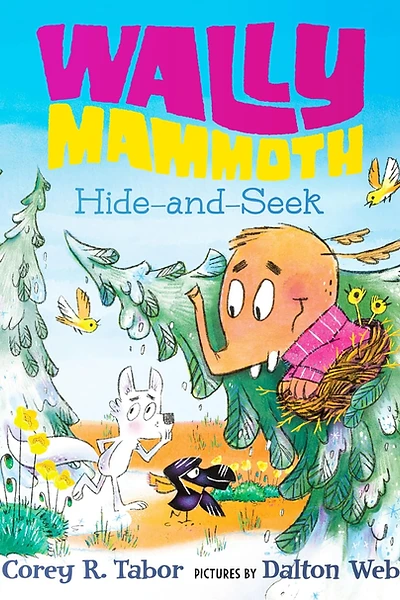
Wally Mammoth: Hide-and-Seek
by Corey R. Tabor
Pacing MaterialA woolly mammoth plays the world's most obvious game of hide-and-seek in this hilarious picture book about friendship, fun, and finding joy in the little things.
Big Idea
Sometimes the best hiding spot is right in front of you — and sometimes being found is the best part.
Discussion Questions
- 1.Why is it funny that a mammoth is playing hide-and-seek?
- 2.How do the illustrations show Wally hiding?
- 3.What makes a good hiding spot?
- 4.Have you ever played hide-and-seek with something big?
Classroom Activity
Hide-and-Seek Stories
Play a classroom hide-and-seek game, then write about the best hiding spot you found and why it worked.
Lesson Plan
Learning Goals
- Explore visual storytelling and humor
- Practice descriptive writing about places
- Build reading confidence through pattern and repetition
Standards Connections
- ELA: RL.K.1 — Ask and answer questions about key details
- ELA: RL.K.2 — Retell stories, including key details
- ELA: RL.K.3 — Describe characters, setting, and events
- ELA: RL.2.6 — Acknowledge differences in characters' points of view
- ELA: SL.K.1 — Participate in collaborative conversations about the text
- ELA: W.K.3 — Write narratives recounting events with descriptive details
- SEL: Relationship Skills
- SEL: Social Awareness
- Art: VA:Re7 — Perceive and analyze artistic work
Pace-Write-Read Study with Pace-Write It!
Focus question: How does an author make a simple game of hide-and-seek feel funny, surprising, and fun to read? In Wally Mammoth: Hide-and-Seek by Corey R. Tabor, a giant woolly mammoth tries to hide even though he is very easy to spot. Tabor uses pacing through page turns, repetition, pauses, and playful illustrations so readers wait, notice, and laugh at each not-so-hidden hiding place.
| Element | How to notice or teach it in the novel |
|---|---|
| Pace | Read: Notice how the story moves quickly because Wally’s hiding attempts are simple, clear, and funny right away, but the pauses before each reveal slow readers down just enough to enjoy the joke. Classroom Activity: Write 3 short sentences about a character trying to hide, with the last sentence revealing the silly problem. |
| Plot | Read: Notice that the plot in this book is built around one small problem—Wally wants to play hide-and-seek—and each hiding place becomes another step in the game. Classroom Activity: Make a beginning-middle-end plan for a funny hide-and-seek story with a character like Wally who keeps choosing obvious places. |
| Prosody | Read: Notice how the book begs to be read aloud with playful expression, especially when readers pause before spotting Wally’s large body, tusks, or trunk. Classroom Activity: Practice reading one page aloud and mark where your voice should get quiet, excited, or surprised. |
| Word pause | Read: Notice where a reader naturally pauses before the funny reveal that Wally is not hidden at all. Classroom Activity: Write 2 sentences about a hiding character and add a dash or ellipsis to create a pause before the reveal. |
| Concept | Read: Notice that the big idea is that friendship and fun do not depend on being perfect at the game; Wally can still enjoy playing. Classroom Activity: Write one sentence telling the lesson of Wally’s game and one sentence showing it in action. |
| Voice & World View | Read: Notice the cheerful, playful voice that treats Wally’s obvious hiding as delightful instead of mean, helping readers see the world as friendly and funny. Classroom Activity: Write 3 sentences in a kind, playful voice about a character making a silly mistake while friends keep the game fun. |
| Setting & Place | Read: Notice how the outdoor places and hiding spots matter because each location gives Wally another chance to try to disappear even though he is a woolly mammoth. Classroom Activity: Draw or list 3 possible hiding places for a huge character and write one sentence for each place. |
| Point of View | Read: Notice that readers watch Wally from the outside, which makes it easy to see what he cannot hide and builds the humor. Classroom Activity: Rewrite one hide-and-seek moment from Wally’s point of view using “I” to show what he thinks about his hiding. |
| Original Characters | Read: Notice that Wally stands out as an original character because he is enormous, shaggy, and earnest, which makes the game funnier. Classroom Activity: Invent a big or awkward character for a game and write 3 details that make the character lovable and funny. |
| Dialogue | Read: Notice how any spoken words in a hide-and-seek story can be short and playful, helping the action move fast and keeping attention on Wally’s attempts. Classroom Activity: Write a 4-line dialogue between Wally and a friend before a hiding place is revealed. |
| Details | Read: Notice the important little details that make the joke work, such as Wally’s mammoth size and the parts of him that still stick out. Classroom Activity: Write a sentence describing a character hiding badly and include 2 visible details that give the character away. |
| Descriptions | Read: Notice how the descriptions are simple but precise so young readers can quickly picture Wally and understand why he cannot really hide. Classroom Activity: Describe one silly hiding spot in 2 vivid sentences using size, shape, or color words. |
| Strong First Lines | Read: Notice how the opening quickly sets up the playful situation so readers are ready for a game and a joke. Classroom Activity: Write an opening line for a hide-and-seek story that introduces the game and hints that something funny will happen. |
| Immediacy & Engagement | Read: Notice how the story feels immediate because readers are invited to look right away for Wally and predict whether he is actually hidden. Classroom Activity: Write 2 sentences that directly pull a reader into a game scene, using words like “look,” “now,” or “can you.” |
| Story Scenes & Summaries & Unique Structures | Read: Notice that the book uses repeated game scenes instead of a long complicated plot, and each scene works like a quick joke with a setup and reveal. Classroom Activity: Plan 3 mini-scenes for a repeated-story structure: hide, pause, reveal. |
| Flashback & Flash Forward & Cliffhangers | Read: Notice that this story stays in the present moment, but the page turns act a little like mini-cliffhangers because readers wait to see Wally’s next hiding try. Classroom Activity: End 2 short scene cards with “But then…” to make readers want to turn the page. |
| Tension & Suspense & Surprise | Read: Notice that the tension is gentle and funny, not scary; readers wonder how Wally will try to hide next and enjoy the surprise of each obvious attempt. Classroom Activity: Write 3 sentences that build light suspense before a silly reveal. |
| Page Turns and Chapter Breaks | Read: Notice how page turns are important in a picture book like Wally Mammoth: Hide-and-Seek because the turn can delay the reveal and make the joke land bigger. Classroom Activity: Fold a paper into 2 pages and write a setup on the first page and the funny reveal on the second. |
| Performance | Read: Notice that this book works like a performance when read aloud, with pointing, pausing, whispering, and big facial expressions during Wally’s hiding game. Classroom Activity: Rehearse reading one part with a partner and choose one gesture and one voice change to match the humor. |
| Personality | Read: Notice Wally’s personality feels eager, sincere, and playful, which makes readers root for him even when he is terrible at hiding. Classroom Activity: Write 3 personality traits for a character in a game and add one action that shows each trait. |
| Humor | Read: Notice that the humor comes from the mismatch between hide-and-seek and Wally’s giant mammoth body, plus the repeated joke that he is still visible. Classroom Activity: Write a funny mismatch sentence such as a huge character trying to do something tiny or sneaky. |
| Pause | Read: Notice how pauses help the humor by giving readers a moment to look closely before laughing at Wally’s not-so-secret hiding place. Classroom Activity: Add brackets that say [pause] into a 3-sentence read-aloud script before the funniest word. |
| Poetry and Poetic Devices | Read: Notice that even in a funny picture book, sound patterns and playful language can make the reading feel musical and memorable. Classroom Activity: Write one alliterative sentence about Wally, such as “Wally waited while…” and one repeating phrase for a game story. |
| Repetition | Read: Notice how repetition helps pacing because each new hiding attempt follows a familiar pattern, letting readers join the joke and anticipate what comes next. Classroom Activity: Write a repeating line for a class hide-and-seek story, such as “Was Wally hidden? Not quite!” |
| Rhythm | Read: Notice the rhythm created by short action beats, pauses, and reveals, which makes the story feel bouncy and playful. Classroom Activity: Clap out a pattern for “hide-pause-find” and then write 3 short lines to match that rhythm. |
| Punctuation | Read: Notice how punctuation like exclamation points, question marks, commas, and ellipses can shape the timing of a funny read-aloud about Wally. Classroom Activity: Write the same reveal sentence 2 ways, once with a period and once with an exclamation point, and compare the effect. |
| Questions | Read: Notice that a hide-and-seek story naturally invites questions like “Where is Wally?” even when readers can clearly see him. Classroom Activity: Write 3 reader questions that could fit before, during, and after one of Wally’s hiding tries. |
| Compare-Contrast | Read: Notice the contrast between what Wally hopes—that he is hidden—and what readers see—that he is obviously still there. Classroom Activity: Make a T-chart labeled “Wally thinks” and “Readers see,” then write 3 paired ideas. |
| Objects | Read: Notice how objects in hiding places can become part of the joke when they are much too small or unsuitable for a mammoth like Wally. Classroom Activity: Choose one object a giant character hides behind and write 2 sentences explaining why it does not work. |
| Threes | Read: Notice how a pattern of three can make humor stronger because readers expect the joke and then enjoy the third try even more. Classroom Activity: Write 3 hiding attempts for a character, making the third one the funniest. |
| Whitespace & Negative Space | Read: Notice how open space on the page can guide your eyes to where Wally is and can make the reveal feel even more obvious and funny. Classroom Activity: Sketch a simple page with lots of blank space and place one large character where readers will spot the joke quickly. |
| Art & Graphics | Read: Notice that the illustrations are essential in this picture book because the art carries much of the humor, especially when readers can see Wally even before the text says so. Classroom Activity: Draw a hide-and-seek scene and add one sentence that lets the picture do most of the funny work. |
| Interactives & Gamification | Read: Notice how the book feels interactive because readers can search for Wally, predict the hiding place, and join the game as if they are playing too. Classroom Activity: Create a “Can you find him?” page with a character hiding badly and write one clue for classmates. |
Pace-Write It!
20-Minute Classroom Flow\nRead (5 min): Read Wally Mammoth: Hide-and-Seek aloud. Pause before page turns and ask students to quietly point when they spot Wally.\nNotice (5 min): Discuss how Corey R. Tabor uses repetition, page turns, pauses, and pictures to make Wally’s hiding attempts funny. Chart student ideas under: “setup,” “pause,” and “reveal.”\nWrite (7 min): Students write their own mini hide-and-seek scene about a large or easy-to-spot character. Writing frame: “___ wanted to hide. He/She hid behind ___. [pause] But I could still see ___!” Encourage students to add one extra detail, such as a tail, trunk, hat, or feet sticking out.\nShare (3 min): Partners read their scene aloud with expression, using a dramatic pause before the reveal. Invite 2-3 volunteers to share with the class.\nExit ticket: Complete this sentence: “The funniest part of pacing is ___ because ___.”
Pace-Write-Read Connection
Teach this book using the Pace-Write-Read method — Tool 20: Play.
Open the Mastery Manual