
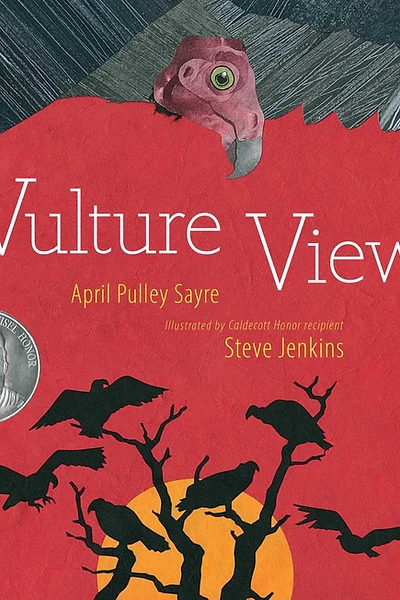
 K-3
K-3P SAYRE
Vulture View
by April Pulley Sayre
Pacing MaterialA poetic look at vultures soaring on warm air currents, appreciating their important role in nature.
Big Idea
Nature gives every creature a special role — even vultures have an important job.
Discussion Questions
- 1.What do vultures do that might seem icky to some people? Why is it actually important?
- 2.How do vultures use warm air to fly? What did you learn about thermals?
- 3.What did you notice about the illustrations? How does the illustrator show the vultures soaring?
- 4.Have you ever seen a vulture or a large bird soaring? What did it look like?
- 5.Why do you think the author chose to write about vultures?
Classroom Activity
Vulture Soar Gliders
Students create a paper-plate vulture glider using a paper plate and simple folds, then test how thermals (warm air rising) help real vultures soar.
Lesson Plan
Learning Goals
- Understand the ecological role of scavengers
- Observe and describe bird behavior
- Learn about thermal currents and how birds use them
- Develop appreciation for all living creatures
Activity Steps
- 1.Give each student a paper plate.
- 2.Help students cut a simple V-shape from the plate.
- 3.Fold the wings slightly upward.
- 4.Have students decorate their vulture with markers.
- 5.In a large open space, students gently toss their vultures and observe how they glide.
- 6.Discuss how real vultures use warm air currents to fly without flapping.
Standards Connections
- ELA: RL.K-3.1 (Ask and Answer Questions)
- ELA: RI.K-3.7 (Informational Text Illustrations)
- Science: LS1.A (Structure and Function)
- Science: LS2.A (Interdependent Relationships in Ecosystems)
Pace-Write-Read Study with Pace-Write It!
Focus question: How does an author make a quiet nature book feel full of motion and wonder? In Vulture View by April Pulley Sayre, readers follow vultures as they ride warm air currents high above the ground. The book uses pacing through short poetic lines, pauses, and page-by-page movement so readers slow down to notice details and then feel the smooth soaring of the birds.
| Element | How to notice or teach it in the novel |
|---|---|
| Pace | Read: Notice how Vulture View moves at the same smooth speed as the soaring vultures, using short lines and calm page-by-page motion to make readers feel the glide of warm air currents. Classroom Activity: Write 3-4 short lines about an animal moving slowly or smoothly, using line breaks to control the pace. |
| Plot | Read: Notice that the book’s plot is simple and observational: the vultures rise, circle, look down, and help nature by cleaning up what is left behind. Classroom Activity: Write a beginning-middle-end sequence about one animal’s day in nature, keeping the action simple but clear. |
| Prosody | Read: Listen to the sound of April Pulley Sayre’s language as the words flow like air under the vultures’ wings, creating a read-aloud rhythm. Classroom Activity: Read one page aloud, then write 2 sentences that sound smooth and musical when spoken. |
| Word pause | Read: Notice where single words or short phrases create little stops, helping readers pause and picture the vultures circling in the sky. Classroom Activity: Write a 3-line description of a bird in flight and include one line with just 1-3 words for a strong pause. |
| Concept | Read: The big concept in Vulture View is that vultures are important helpers in nature, even if some people do not notice their value at first. Classroom Activity: Write a sentence naming an often-misunderstood animal and a second sentence explaining how it helps its habitat. |
| Voice & World View | Read: Notice the respectful, wondering voice that invites readers to admire vultures instead of fear or dislike them. Classroom Activity: Write from a voice of wonder about a creature people sometimes overlook, showing why it matters. |
| Setting & Place | Read: Pay attention to the open sky, warm air currents, and the land far below that together create the world of the vultures. Classroom Activity: Write 4 setting details about a place above, below, or around an animal you are describing. |
| Point of View | Read: Notice how the book gives readers a high, soaring perspective, almost like seeing from the vultures’ view as they scan the earth below. Classroom Activity: Write 3 sentences from an animal’s-eye view, beginning with “From up here, I see…” |
| Original Characters | Read: The vultures are the central characters, and they feel memorable because the book shows their special movements, habits, and role in nature. Classroom Activity: Create an animal character based on a real creature and list 3 traits that make it unique. |
| Dialogue | Read: Notice that Vulture View does not rely on talking characters; instead, the silence helps the soaring mood and keeps attention on nature. Classroom Activity: Write a nature scene with no dialogue at all, using only description to hold the reader’s interest. |
| Details | Read: Look for precise details about how vultures move, look, and work in the ecosystem, helping readers understand them better. Classroom Activity: Write 5 specific details about one animal instead of using general words like nice, cool, or pretty. |
| Descriptions | Read: April Pulley Sayre uses vivid descriptions so readers can picture wings spread wide, birds circling, and the world below. Classroom Activity: Write 2 descriptive sentences about an animal in motion, using color, shape, or movement words. |
| Strong First Lines | Read: Notice how the opening quickly places readers into the soaring experience and creates curiosity about what the vultures are doing. Classroom Activity: Write an opening line for a nonfiction-style nature piece that makes the reader want to keep reading. |
| Immediacy & Engagement | Read: The close attention to movement and the sky-high perspective make readers feel present with the vultures right now. Classroom Activity: Write 3 present-tense sentences that make a reader feel they are watching an animal at this moment. |
| Story Scenes & Summaries & Unique Structures | Read: Notice that the book is not a long traditional story scene; it blends poetic snapshots and informational moments to build understanding. Classroom Activity: Write one sentence that acts like a close-up scene and one sentence that acts like a summary about the same animal. |
| Flashback & Flash Forward & Cliffhangers | Read: This book mostly stays in the present moment, which helps keep the pacing steady and focused on observation rather than dramatic twists. Classroom Activity: Write a present-moment animal description, then add one sentence that hints at what might happen next in nature. |
| Tension & Suspense & Surprise | Read: The surprise in Vulture View comes from learning to see vultures differently and realizing their important job in the natural world. Classroom Activity: Write 2 sentences that first show an animal in a surprising way and then explain why that surprise matters. |
| Page Turns and Chapter Breaks | Read: Notice how each page turn reveals another part of the vultures’ movement, work, or point of view, keeping curiosity alive. Classroom Activity: Plan a 4-page mini-book about an animal and write what new detail will be revealed on each page turn. |
| Performance | Read: This book invites expressive reading with slow, airy pacing, pauses, and a lifted tone that matches soaring vultures. Classroom Activity: Practice reading 4 lines aloud with a voice that sounds calm, smooth, and full of wonder, then write one line meant to be performed that way. |
| Personality | Read: Even without human-like behavior, the vultures seem graceful, purposeful, and patient through the way they are presented. Classroom Activity: Write 3 sentences that show an animal’s personality through actions, not by naming the trait directly. |
| Humor | Read: The book is mostly serious and full of wonder, but students may notice gentle surprise in how a scavenger can also seem majestic. Classroom Activity: Write one respectful, lighthearted sentence about an unusual animal feature without making fun of the animal. |
| Pause | Read: Notice how the text gives readers space to stop, look closely, and think about the vultures and their place in nature. Classroom Activity: Write a sentence, then add a dash or line break to create a pause before an important image. |
| Poetry and Poetic Devices | Read: Vulture View uses poetic language, imagery, and careful line breaks to make factual nature writing feel lyrical. Classroom Activity: Write a 4-line nature poem about an animal using one image that helps the reader see it clearly. |
| Repetition | Read: Notice whether key ideas about soaring, circling, or watching are repeated to strengthen the feeling of motion and the book’s message about vultures. Classroom Activity: Choose one action word such as glide, swoop, or circle and repeat it in 3 lines for effect. |
| Rhythm | Read: The rhythm feels steady and floating, matching the way vultures ride the warm air instead of flapping quickly. Classroom Activity: Write 3 short lines with a rhythm that sounds slow and smooth when read aloud. |
| Punctuation | Read: Pay attention to how punctuation helps shape breath, pauses, and emphasis in the book’s poetic sentences. Classroom Activity: Write one sentence about a bird using commas or a dash to slow the reader down and highlight details. |
| Questions | Read: Readers may naturally ask questions such as why vultures circle or how they help the environment, and the book encourages that curiosity. Classroom Activity: Write 2 wonder questions about vultures or another animal, then answer one with an informational sentence. |
| Compare-Contrast | Read: Compare how vultures may seem scary or strange at first, yet the book presents them as helpful, graceful, and necessary. Classroom Activity: Write 2 sentences that compare what people might think about an animal with what is actually true. |
| Objects | Read: Notice the natural objects in the book’s world, such as wings, air currents, sky, and the land below, and how they support the vultures’ journey. Classroom Activity: Make a quick list of 4 objects connected to an animal and use them in a descriptive paragraph. |
| Threes | Read: Look for places where three images, actions, or details could help readers remember the vultures’ movement and role. Classroom Activity: Write a sentence with three details about an animal, such as “It watches, circles, and glides.” |
| Whitespace & Negative Space | Read: Notice how open space on the page can feel like wide sky, giving the vultures room to soar and giving readers room to pause. Classroom Activity: Write a short poem with extra space or line breaks to show an animal moving through a large place. |
| Art & Graphics | Read: Study how the illustrations work with the text to show the height, movement, and beauty of the vultures and deepen the theme of wonder. Classroom Activity: Sketch an animal from an unusual angle, then write 2 lines that match what your picture shows. |
| Interactives & Gamification | Read: As you read, turn the book into a noticing game by searching for clues about how vultures move, what they see, and how they help nature. Classroom Activity: Create a “Vulture View Noticing Hunt” with 3 boxes to check: movement, sky detail, and helper action, then write one sentence for each box. |
Pace-Write It!
20-Minute Classroom Flow\nRead (5 min): Read Vulture View by April Pulley Sayre aloud. Pause to let students notice the short poetic lines, the soaring movement, and the respectful way the book presents vultures as important helpers in nature.\nNotice (5 min): Ask: How does the author make the book feel slow, smooth, and full of wonder? Chart student noticings such as short lines, page turns, sky-high point of view, repeated movement words, and pauses that feel like gliding.\nWrite (7 min): Invite students to write their own short animal poem or description using pacing like the book. Writing frame: “High above/below, I see ____. / I ____. / I circle/glide/watch ____. / I help by ____.” Encourage them to use one short line for a pause and at least 3 specific nature details.\nShare (3 min): Partners read their pieces aloud with calm, slow expression. Listeners name one pacing move they heard, such as a pause, repetition, or a smooth rhythm.\nExit ticket: Write one sentence answering: How did April Pulley Sayre use pacing to help you feel the vulture’s view?