 K-3
K-3P MILES
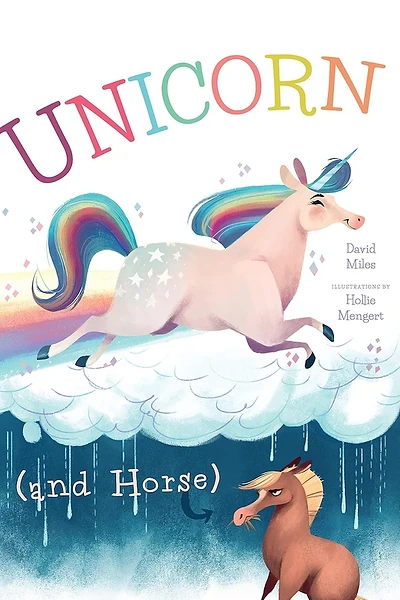
Unicorn and Horse
by David Miles
Pacing MaterialUnicorn is sparkly and beloved; Horse is grumpy and overlooked — until an unexpected moment shows them they need each other.
Big Idea
Even the most different people can become friends, and everyone has something unique to offer.
Discussion Questions
- 1.Why is Horse jealous of Unicorn?
- 2.How are Unicorn and Horse different? How are they alike?
- 3.What changes their relationship?
- 4.When have you been surprised by a friend?
Classroom Activity
Opposite Friends
Draw two characters who are complete opposites. Show one moment where they help each other.
Lesson Plan
Learning Goals
- Identify how differences can strengthen friendship
- Create two contrasting characters who help each other
- Explain what each character learns from the other
Activity Steps
- 1.Read the story, noting when Horse and Unicorn connect.
- 2.Discuss: 'How are they different? Why do they need each other?'
- 3.Model drawing two opposite characters.
- 4.Students create their own opposite-friends pair.
- 5.Share and explain what each character offers the other.
Standards Connections
- ELA: RL.K.1 — Ask and answer questions about key details
- ELA: RL.K.2 — Retell stories, including key details
- ELA: RL.K.3 — Describe characters, setting, and events
- ELA: RL.3.6 — Acknowledge differences in characters' points of view
- ELA: SL.K.1 — Participate in collaborative conversations about the text
- ELA: W.K.3 — Write narratives recounting events with descriptive details
- SEL: Relationship Skills
- SEL: Social Awareness
- Art: VA:Re7 — Perceive and analyze artistic work
Pace-Write-Read Study with Pace-Write It!
Focus question: How does an author slow down and speed up a story to help us feel friendship growing between very different characters? In Unicorn and Horse by David Miles, the story contrasts sparkly, admired Unicorn with grumpy, overlooked Horse, then builds toward a moment when both characters matter. The pacing moves quickly through funny comparisons and reactions, then slows at key emotional and action moments so readers can notice how differences turn into friendship.
| Element | How to notice or teach it in the novel |
|---|---|
| Pace | Read: Notice how the story moves quickly when showing how everyone loves Unicorn and ignores Horse, then slows down when the important moment reveals they need each other. Classroom Activity: Write 3 short sentences that race through a problem between two different characters, then 2 longer sentences that slow down the moment when they help each other. |
| Plot | Read: Track the simple picture-book plot in Unicorn and Horse: introduction to opposite characters, growing frustration, an unexpected event, and a new understanding. Classroom Activity: Make a 4-box plot map and write one sentence for each part using two characters who seem like total opposites. |
| Prosody | Read: Listen to how the read-aloud voice can sound bright and excited for Unicorn and more grumbly or heavy for Horse. The changing sound helps the pacing feel playful and emotional. Classroom Activity: Write two lines to be read aloud—one in a glittery, cheerful voice and one in a grumpy voice. |
| Word pause | Read: Notice places where a reader naturally pauses on important words about Unicorn being beloved or Horse being overlooked. Those small pauses help the contrast stand out. Classroom Activity: Write a sentence about two opposite characters and underline the one word a reader should pause on for emphasis. |
| Concept | Read: The big idea is that friendship can grow between very different characters, and pacing helps readers move from noticing differences to understanding connection. Classroom Activity: Write a 2-sentence mini-story that shows the concept 'different can still fit together.' |
| Voice & World View | Read: Notice the playful, slightly exaggerated voice that presents Unicorn as sparkly and adored while showing Horse as grumpy and left out. The world of the story feels funny but also fair enough to let both characters matter. Classroom Activity: Write 4 sentences in a playful narrator voice about one character everyone notices and one character everyone misses. |
| Setting & Place | Read: Pay attention to how the story world gives space for Unicorn to shine and for Horse to seem ordinary, making their differences feel bigger. Classroom Activity: Write a setting description for a place where one character stands out and another blends in. |
| Point of View | Read: Notice that the story presents both Unicorn and Horse from an outside view, helping readers compare them side by side. This point of view keeps the pacing clear and easy to follow. Classroom Activity: Rewrite one moment from Horse’s point of view using 'I' to show how it feels to be overlooked. |
| Original Characters | Read: Unicorn and Horse are memorable because they are familiar animal types with strongly opposite traits—sparkly and celebrated versus grumpy and ignored. Classroom Activity: Invent two original characters with one big opposite trait each, and write 3 sentences introducing them. |
| Dialogue | Read: Notice how any spoken lines or imagined talk between Unicorn and Horse can speed up the page and show personality quickly. Dialogue can make contrast feel immediate. Classroom Activity: Write a 4-line dialogue between two unlike characters who disagree at first but end with one helpful idea. |
| Details | Read: Look for small details that show Unicorn’s sparkle and Horse’s mood without needing long explanation. These details keep the story moving while building character. Classroom Activity: List 3 details for a character who is admired and 3 details for a character who is ignored, then turn them into 2 sentences. |
| Descriptions | Read: Notice how description helps readers picture the difference between Unicorn and Horse right away. Strong description lets the author set up the contrast quickly. Classroom Activity: Write one describing sentence for each of two opposite characters using vivid adjectives. |
| Strong First Lines | Read: Think about how the opening quickly establishes the funny mismatch between Unicorn and Horse and invites readers into the contrast immediately. Classroom Activity: Write an opening line that introduces two very different characters in a surprising way. |
| Immediacy & Engagement | Read: The book keeps readers engaged by making the unfair difference between how Unicorn and Horse are treated feel obvious right away. Readers want to know if Horse will ever be seen differently. Classroom Activity: Write 2 sentences that make readers care right away about a character who feels left out. |
| Story Scenes & Summaries & Unique Structures | Read: Notice how some parts can be told quickly as summary about how people usually react to Unicorn and Horse, while the important turning point feels more like a full scene. Classroom Activity: Write one summary sentence about a character’s usual day and then 3 scene sentences about the surprising moment that changes it. |
| Flashback & Flash Forward & Cliffhangers | Read: Even if this story stays mostly in the present, you can imagine how a pause before the big change acts a little like a cliffhanger because readers wonder what will happen next for Unicorn and Horse. Classroom Activity: Write a cliffhanger ending for a page where two characters are about to discover they need each other. |
| Tension & Suspense & Surprise | Read: Notice the tension built by Horse’s grumpiness and the unfair attention Unicorn gets, then the surprise of the unexpected moment that changes their relationship. Classroom Activity: Write 4 sentences that build tension between two characters and end with a surprise that helps them connect. |
| Page Turns and Chapter Breaks | Read: In a picture book like Unicorn and Horse, page turns matter because they can hold a joke, a reveal, or the important moment of needing each other. Classroom Activity: Plan 3 pages of a picture book and write the sentence that should come right before a page turn to make readers want to flip. |
| Performance | Read: This book works well in performance because readers can act out Unicorn’s sparkle and Horse’s grumpy energy with face, voice, and movement. Classroom Activity: Write 2 stage directions and 2 spoken lines for a mini read-aloud performance of opposite characters. |
| Personality | Read: Unicorn’s personality feels bright and admired, while Horse’s feels grouchy and overlooked, and those strong personalities help the pacing stay lively. Classroom Activity: Write a character card with 'likes,' 'dislikes,' and 'how others see me' for a character like Horse. |
| Humor | Read: The contrast between magical, popular Unicorn and plain, grumpy Horse creates humor, even while the story explores feelings. Humor helps the pace stay light. Classroom Activity: Write 3 funny comparison sentences about two very different characters. |
| Pause | Read: Notice where a reader might pause before or after the turning point, letting the emotional change between Unicorn and Horse sink in. Classroom Activity: Write a short paragraph and add a dash or line break where the reader should pause before the big realization. |
| Poetry and Poetic Devices | Read: Listen for playful sound and image patterns that could make Unicorn seem glittery and Horse seem stompy or heavy. Those poetic choices shape pacing in small ways. Classroom Activity: Write 2 lines using alliteration—one for Unicorn-like sparkle and one for Horse-like hoofbeats. |
| Repetition | Read: Notice how repeating ideas about Unicorn being loved and Horse being ignored can build rhythm and make the contrast stronger before it changes. Classroom Activity: Write a 4-line pattern poem that repeats 'Everyone noticed...' or 'No one noticed...' and ends with a change. |
| Rhythm | Read: The rhythm of short, patterned sentences can make the story feel bouncy and quick, especially when comparing Unicorn and Horse. Classroom Activity: Write 4 short sentences with the same pattern about two opposite characters. |
| Punctuation | Read: Look for punctuation that can show excitement around Unicorn or frustration around Horse, such as exclamation points, commas, or ellipses for pauses. Classroom Activity: Write the same sentence three ways using different punctuation to show cheerful, grumpy, and surprised feelings. |
| Questions | Read: Readers may naturally ask, 'Why is Horse overlooked?' and 'What will happen to bring Unicorn and Horse together?' These questions pull the pacing forward. Classroom Activity: Write 3 story questions a reader might ask about two characters who do not seem like friends yet. |
| Compare-Contrast | Read: This book strongly uses compare-contrast to show the difference between Unicorn and Horse in appearance, treatment, and mood before showing what they share. Classroom Activity: Make a T-chart for two characters and write one final sentence that explains how their differences can become a strength. |
| Objects | Read: Notice how objects connected to sparkle, plainness, or the surprising event can help tell the story quickly in a picture book. Classroom Activity: Choose one object for each of two characters and write 3 sentences showing how those objects matter in the story. |
| Threes | Read: Picture books often feel satisfying when ideas come in threes, such as three examples of Unicorn’s popularity or three signs of Horse’s grumpiness. Classroom Activity: Write a set of 3 examples that show one character being celebrated and 3 that show another being ignored. |
| Whitespace & Negative Space | Read: In a picture book, empty space on the page can slow readers down and make a lonely or important moment stand out, especially for Horse. Classroom Activity: Plan one page with only a few words and explain what feeling the extra space would show. |
| Art & Graphics | Read: The illustrations likely do major pacing work by showing Unicorn’s sparkle, Horse’s expressions, and the emotional shift when they need each other. Classroom Activity: Sketch or describe one illustration that would show the exact moment the friendship begins to change. |
| Interactives & Gamification | Read: Readers can interact with this story by predicting page turns, acting out character feelings, or sorting details into 'Unicorn' and 'Horse.' Classroom Activity: Create a simple class game with 6 cards—3 for Unicorn-like traits and 3 for Horse-like traits—and then write a final sentence about how the traits could work together. |
Pace-Write It!
20-Minute Classroom Flow\nRead (5 min): Read Unicorn and Horse by David Miles aloud. Pause briefly to let students notice how the story speeds through the funny differences between Unicorn and Horse and slows down at the important turning point.\nNotice (5 min): Ask: 'Where did the story feel fast? Where did it feel slow?' Chart student ideas under Fast Parts and Slow Parts. Guide students to notice compare-contrast, repetition, page turns, and the surprising moment when Unicorn and Horse need each other.\nWrite (7 min): Students write a tiny picture-book scene about two opposite characters. Writing frame: '_____ was ______ and everyone ______. But _____ was ______ and no one ______. Then, when ______ happened, _____ and _____ ______. They learned ______.' Encourage students to make the first two lines quick and the turning point slower with extra detail.\nShare (3 min): Partners read their scenes aloud using two different voices for their characters. Invite 2-3 students to share where they slowed down the action to show the important moment.\nExit ticket: Write one sentence answering: 'How did pacing help show the friendship between different characters?'
Pace-Write-Read Connection
Teach this book using the Pace-Write-Read method — Tool 30: Contrast.
Open the Mastery Manual