 K-2
K-2P BURACH
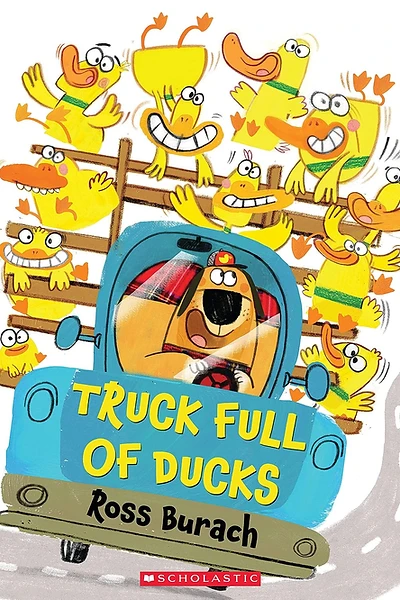
Truck Full of Ducks
by Ross Burach
Pacing MaterialA dog picks up a truck full of ducks — but where are they going, and why are there so many? A hilarious, counting-filled picture book about unexpected deliveries.
Big Idea
The best deliveries are the ones full of surprises — and sometimes the cargo has ideas of its own.
Discussion Questions
- 1.Why is the truck full of ducks?
- 2.How does the driver react to the ducks?
- 3.How does the author use repetition and counting in the story?
- 4.What would you put in the back of a truck?
Classroom Activity
Silly Cargo Stories
Write a silly story about a vehicle carrying something unexpected, then illustrate the cargo and the driver.
Lesson Plan
Learning Goals
- Explore counting and quantities in storytelling
- Analyze humor through absurd situations
- Practice writing descriptive text about vehicles and cargo
Standards Connections
- ELA: RL.K.1 — Ask and answer questions about key details
- ELA: RL.K.2 — Retell stories, including key details
- ELA: RL.K.3 — Describe characters, setting, and events
- ELA: RL.2.6 — Acknowledge differences in characters' points of view
- ELA: SL.K.1 — Participate in collaborative conversations about the text
- ELA: W.K.3 — Write narratives recounting events with descriptive details
- SEL: Social Awareness
- SEL: Relationship Skills
- Art: VA:Re7 — Perceive and analyze artistic work
Pace-Write-Read Study with Pace-Write It!
Focus question: How does an author make a silly counting story feel faster and funnier with every page turn? In Truck Full of Ducks by Ross Burach, a dog drives a truck packed with more and more ducks, and readers keep wondering where they are all going. The pacing moves quickly through repetition, page turns, counting, and surprise, so the humor builds as the delivery gets more ridiculous.
| Element | How to notice or teach it in the novel |
|---|---|
| Pace | Read: Notice how Truck Full of Ducks moves quickly as the dog keeps driving and the number of ducks keeps growing. The short text and fast action make the story feel like it is rolling forward like a truck. Classroom Activity: Write 3 quick pages of a silly vehicle story where something new is added on each page to make the action speed up. |
| Plot | Read: Notice the simple plot: a dog has a truck full of ducks, the ducks keep appearing in funny ways, and readers want to find out the destination and reason for the delivery. The mystery of where they are going keeps the story moving. Classroom Activity: Draw and label a beginning, middle, and end for a funny counting story about an animal delivery. |
| Prosody | Read: Listen to how the words in Truck Full of Ducks sound playful and bouncy when read aloud. Ross Burach uses sounds and phrasing that invite readers to read with expression and energy. Classroom Activity: Practice reading one page aloud like a truck is rumbling faster and faster, then write one line that sounds fun to say. |
| Word pause | Read: Notice where a reader naturally pauses before the next duck appears or before a surprise is revealed. These tiny pauses help the joke land. Classroom Activity: Write a short sentence about a truck carrying animals and add a slash / where a reader should pause for suspense. |
| Concept | Read: Notice that the big concept in this book is counting mixed with humor. The ducks are not just numbers; each increase makes the situation sillier. Classroom Activity: Write a counting idea for your own book using a funny object or animal that keeps increasing from 1 to 5. |
| Voice & World View | Read: Notice Ross Burach's cheerful, goofy voice that treats a truck full of ducks like a totally normal and very funny problem. The world of the story feels playful and exaggerated. Classroom Activity: Write 2 sentences in a silly storyteller voice about a very strange delivery. |
| Setting & Place | Read: Notice how the road, truck, and travel setting help the story keep moving. The sense of going somewhere makes readers curious about the destination. Classroom Activity: Choose a place your vehicle will travel through and write 1 sentence telling how that place adds to the fun. |
| Point of View | Read: Notice how the story lets readers watch the dog, truck, and ducks from the outside, so we can enjoy the growing problem and the jokes. This viewpoint keeps the focus on what we see happening. Classroom Activity: Write 2 sentences telling about a silly animal trip from an outside narrator's point of view. |
| Original Characters | Read: Notice how memorable the dog driver and the many ducks are. Even with a simple setup, the characters feel lively because the ducks are so unexpected and the dog calmly keeps going. Classroom Activity: Invent an original driver and cargo, such as a cat with a bus full of frogs, and write a character idea sentence. |
| Dialogue | Read: Notice any spoken moments or implied speech that make the dog-and-duck situation feel more dramatic or funny. Dialogue can speed up a scene because characters react in the moment. Classroom Activity: Write a line of dialogue a driver might say when too many animals climb aboard. |
| Details | Read: Notice the little details that make the truck, ducks, and trip feel specific instead of plain. Small visual and text details help each page feel fresh even though the pattern repeats. Classroom Activity: Add 3 details to a drawing or sentence about what is in your own silly vehicle. |
| Descriptions | Read: Notice how descriptions in Truck Full of Ducks stay simple but effective so the story never slows down too much. The words give just enough picture before the next joke arrives. Classroom Activity: Write one describing sentence about a noisy, wiggly, crowded vehicle. |
| Strong First Lines | Read: Notice how the beginning quickly introduces the dog, the truck, and the ducks so readers are hooked right away. A strong opening starts the action immediately. Classroom Activity: Write an opening line for a funny counting book that introduces a vehicle and a surprising cargo. |
| Immediacy & Engagement | Read: Notice how the story makes readers feel like they are right there watching the truck and counting ducks as they go. The direct, energetic style keeps children engaged from page to page. Classroom Activity: Write a sentence that begins with 'Here comes...' to pull readers right into the action. |
| Story Scenes & Summaries & Unique Structures | Read: Notice how the book uses a repeated counting structure rather than long scenes with lots of explanation. That pattern is part of what makes the story feel quick and funny. Classroom Activity: Plan a 4-part pattern for your own story where each part adds one more silly problem. |
| Flashback & Flash Forward & Cliffhangers | Read: Notice that this book mainly stays in the present action, but page endings can act like tiny cliffhangers because readers wonder what will happen when there are even more ducks. The suspense comes from what comes next. Classroom Activity: Write a page-ending line that makes readers want to turn the page, such as 'But then I heard...'. |
| Tension & Suspense & Surprise | Read: Notice how the tension is playful: how can one dog manage a truck full of so many ducks, and what is all this leading to? The surprise builds because the situation keeps getting more ridiculous. Classroom Activity: Write 2 sentences that build suspense in a funny way before revealing a silly surprise. |
| Page Turns and Chapter Breaks | Read: Notice how page turns are important in a picture book like Truck Full of Ducks. Each turn can reveal more ducks, a bigger counting moment, or a new joke. Classroom Activity: Fold a paper into 4 pages and plan what surprise will be revealed only after each page turn. |
| Performance | Read: Notice how this book is perfect for performance with big expressions, dramatic counting, and funny pauses when the ducks pile up. Reading it like a mini show helps the pacing shine. Classroom Activity: Rehearse reading one line with a loud, excited voice and one line with a whisper before writing your own performance line. |
| Personality | Read: Notice the personality of the story: cheerful, chaotic, and never too serious. The dog's job and the ducks' abundance create a playful mood. Classroom Activity: Write 3 words to describe the personality of your own funny animal story, then use one in a sentence. |
| Humor | Read: Notice that the humor comes from exaggeration, repetition, counting, and the absurd idea of a truck full of ducks. Ross Burach makes the growing number of ducks the joke itself. Classroom Activity: Write a funny sentence using exaggeration about too many animals in one vehicle. |
| Pause | Read: Notice how a pause before the next number or the next reveal can make children laugh louder. The pause gives readers a second to predict what silly thing is coming. Classroom Activity: Mark one spot in your writing with '(pause)' before the surprise word or number. |
| Poetry and Poetic Devices | Read: Notice the playful sound patterns, repeated phrases, and musical feel that make Truck Full of Ducks fun to hear. Even though it is not a poem, it uses poetic language to help pacing. Classroom Activity: Write a short line with alliteration about the ducks, such as words that begin with d. |
| Repetition | Read: Notice how repetition is one of the strongest pacing tools in this book. Repeating the truck-and-duck idea helps readers join in while each repetition changes a little to keep it funny. Classroom Activity: Write a repeated sentence starter for 3 lines, such as 'In my truck, there are...'. |
| Rhythm | Read: Notice the beat of the language as the counting and action repeat. The rhythm helps young readers predict what might come next and keeps the story moving smoothly. Classroom Activity: Clap the beat of a sentence from your own story, then revise it so it sounds smoother when read aloud. |
| Punctuation | Read: Notice how punctuation can create excitement in a humorous picture book like this one. Exclamation marks, commas, and question marks help shape the speed and tone of the truck-and-duck adventure. Classroom Activity: Write one excited sentence and one wondering sentence about a vehicle full of animals using correct punctuation. |
| Questions | Read: Notice how readers naturally ask questions: Where are the ducks going? Why are there so many? Those questions keep attention high. Classroom Activity: Write 2 questions a reader might ask during your funny counting story. |
| Compare-Contrast | Read: Notice the contrast between an ordinary truck ride and the extraordinary cargo of ducks. The normal setting and ridiculous animals make the humor stronger. Classroom Activity: Write one sentence comparing a normal delivery to your silly delivery using the words 'instead of'. |
| Objects | Read: Notice how the truck is an important object, not just a background item. It holds the ducks, drives the plot, and helps create the counting setup. Classroom Activity: Choose one important object for your own story and write how it helps the problem grow. |
| Threes | Read: Notice how funny stories often group ideas in threes for emphasis, even within repeated patterns. You can think of the dog, the truck, and the ducks as a memorable trio. Classroom Activity: Write 3 funny things that happen on your character's trip and put them in order. |
| Whitespace & Negative Space | Read: Notice how space on the page can make the ducks or the truck stand out and give readers time to take in the joke. In a picture book, empty space can help pacing by not crowding the page with too much text. Classroom Activity: Make a page sketch with one short sentence and lots of blank space around the surprise picture. |
| Art & Graphics | Read: Notice how the illustrations in Truck Full of Ducks carry a huge part of the story's humor and pacing. The visual reveal of the ducks helps readers count, laugh, and anticipate the next page. Classroom Activity: Draw one page of your own silly counting book and decide what the picture shows that the words do not say. |
| Interactives & Gamification | Read: Notice how children can interact with this book by counting ducks, predicting what comes next, and joining in with repeated language. That makes the reading experience feel like a game. Classroom Activity: Create a 'count and predict' prompt for your story, such as 'How many do you think will climb in next?'. |
Pace-Write It!
20-Minute Classroom Flow\nRead (5 min): Read Truck Full of Ducks by Ross Burach aloud. Pause to let students count the ducks, notice the dog driving the truck, and predict where the truck is going.\nNotice (5 min): Ask: How does the book get funnier on each page? Chart student ideas: counting, repetition, page turns, silly surprise, short sentences, and pauses before the next reveal.\nWrite (7 min): Students create a mini 4-page funny counting story about a driver and a surprising cargo. Writing frame: 'This is a ___ driving a ___. In the back are ___ ___. Then ___ more climb in. Now there are ___! Where are they going? They are going to ___!' Encourage students to add one repeated line and one page-turn surprise.\nShare (3 min): Partners read their stories aloud with expression, pausing before the surprise number or animal. Invite 2 volunteers to perform for the class.\nExit ticket: Write one sentence finishing this prompt: 'Pacing in my story got faster when I ___.''
Pace-Write-Read Connection
Teach this book using the Pace-Write-Read method — Tool 20: Play.
Open the Mastery Manual