 4-7
4-7M MESSNER
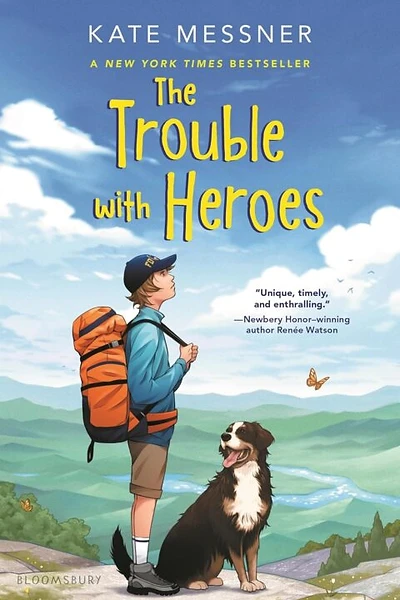
The Trouble with Heroes
by Kate Messner
Pacing MaterialA young person carrying a heavy burden meets unlikely companions on a journey through the Adirondacks, discovering what it truly means to be a hero.
Big Idea
Heroes aren't always the people we expect — sometimes they're the ones who show us how to keep going.
Discussion Questions
- 1.Who are the unexpected heroes in the story?
- 2.How does the main character's view of heroes change?
- 3.What does the title 'The Trouble with Heroes' mean?
- 4.How does the setting shape the character's journey?
Classroom Activity
Hero Journal
Write a journal entry from the perspective of a young person facing an unexpected challenge, then describe one hero who helped them along the way.
Lesson Plan
Learning Goals
- Analyze character development
- Explore the theme of heroism
- Connect setting to character growth
Standards Connections
- ELA: RL.4.1 — Ask and answer questions about key details
- ELA: RL.4.2 — Retell stories, including key details
- ELA: RL.4.3 — Describe characters, setting, and events
- ELA: RL.7.6 — Acknowledge differences in characters' points of view
- ELA: SL.4.1 — Participate in collaborative conversations about the text
- ELA: W.4.3 — Write narratives recounting events with descriptive details
- SEL: Self-Management
- SEL: Responsible Decision-Making
Pace-Write-Read Study with Pace-Write It!
Focus question: How does an author speed up or slow down a journey so readers feel both danger and growth? In The Trouble with Heroes by Kate Messner, a young person carrying grief and responsibility travels through the Adirondacks with unexpected companions and learns that heroism is built through choices, not just big moments. Messner uses pacing by balancing action on the trail with quieter reflective moments, helping readers feel courage growing step by step.
| Element | How to notice or teach it in the novel |
|---|---|
| Pace | Read: Notice how Kate Messner moves quickly through moments of physical challenge on the Adirondack journey, then slows down for reflection about courage, guilt, and what makes someone a hero. Classroom Activity: Write a short scene in which your character climbs toward a difficult goal; use 3 fast sentences for action and 3 slower sentences for thinking. |
| Plot | Read: Track how the plot of The Trouble with Heroes unfolds as a journey story, with each trail event, encounter, and choice pushing the young protagonist closer to a new understanding of courage and growth. Classroom Activity: Make a 5-box plot ladder for a journey story, labeling each step with how the challenge changes the character inside. |
| Prosody | Read: Listen to the rhythm of sentences in tense hiking scenes compared with the calmer, thoughtful lines that reveal the burden the protagonist carries. Classroom Activity: Write 4 lines of prose about walking through the woods, using sentence length to sound tired at first and determined at the end. |
| Word pause | Read: Notice where Messner uses a pause inside a sentence to let a thought, fear, or memory land before the journey continues. Classroom Activity: Write 3 sentences about a dangerous moment on a trail, using dashes or commas to create a meaningful pause. |
| Concept | Read: Pay attention to the big idea that a hero is not just someone strong or famous, but someone who keeps going, helps others, and grows through hardship. Classroom Activity: Write a paragraph beginning, 'A hero is not always someone who..., sometimes a hero is someone who...' |
| Voice & World View | Read: Notice how the narrator's voice reflects a young person who is carrying a heavy emotional burden and slowly revising what heroism means through the journey. Classroom Activity: Write 6 sentences in a first-person voice from a character who thinks one thing about bravery at the start and something more complex by the end. |
| Setting & Place | Read: Study how the Adirondacks are more than a backdrop in The Trouble with Heroes; the mountains, trails, weather, and wilderness shape the pace, mood, and risks of the story. Classroom Activity: Describe a natural setting that tests a character, including 5 details that affect what the character can or cannot do. |
| Point of View | Read: Notice how the point of view helps readers stay close to the protagonist's physical effort and emotional growth as the journey unfolds. Classroom Activity: Rewrite one tense hiking moment twice, once in first person and once in third person limited, then explain which version feels more immediate. |
| Original Characters | Read: Watch how the unlikely companions in the book each add something different to the journey, revealing that heroes can come in unexpected forms. Classroom Activity: Invent 3 trail companions; for each one, give an unusual strength that helps the group in a different way. |
| Dialogue | Read: Notice how conversations with companions reveal personality, conflict, encouragement, and changing ideas about courage without stopping the story for long explanation. Classroom Activity: Write 8 lines of dialogue between two hikers who disagree about turning back, and let the dialogue show who is afraid and who is hopeful. |
| Details | Read: Look for small details from the hike, gear, weather, and body language that make the journey feel real and keep the reader anchored in each moment. Classroom Activity: Write a 6-sentence scene using at least 5 concrete details from a mountain trail. |
| Descriptions | Read: Notice how descriptions in The Trouble with Heroes help shape both danger and wonder, showing the Adirondacks as beautiful, demanding, and emotionally meaningful. Classroom Activity: Describe the same mountain path in two ways: once as frightening and once as inspiring. |
| Strong First Lines | Read: Think about how an opening can quickly set up burden, conflict, or movement so readers want to follow a character into the wilderness. Classroom Activity: Write 3 possible first lines for an adventure story about a character carrying grief or responsibility into the outdoors. |
| Immediacy & Engagement | Read: Notice how Messner keeps readers close to the protagonist's body and mind so each step, slip, decision, and realization feels present and urgent. Classroom Activity: Write a paragraph that begins in the middle of action with no backstory, using sensory details to pull readers in immediately. |
| Story Scenes & Summaries & Unique Structures | Read: Watch how some parts of the journey are shown as full scenes while other stretches are summarized to move time forward, keeping the story from dragging. Classroom Activity: Write one full scene about a difficult crossing and one 3-sentence summary of the next day's travel. |
| Flashback & Flash Forward & Cliffhangers | Read: Notice whether memories or hints about the protagonist's burden deepen the present journey, and how chapter endings can leave a worry or question hanging. Classroom Activity: End a short chapter with a cliffhanger connected to a past mistake or secret the character is carrying. |
| Tension & Suspense & Surprise | Read: Pay attention to how trail dangers, emotional uncertainty, and the behavior of unlikely companions create suspense about what kind of hero the protagonist can become. Classroom Activity: Write a scene where your character hears something unexpected in the woods; build tension in 5 sentences before revealing what it is. |
| Page Turns and Chapter Breaks | Read: Notice how Messner may end a chapter after a discovery, decision, or risky moment so readers need to keep going, much like a hiker pushing toward the next marker. Classroom Activity: Draft a chapter ending in 2-4 sentences that makes a reader want to turn the page. |
| Performance | Read: Read a tense section aloud and notice where your voice speeds up on action and slows on emotional realization, showing how pacing lives in performance too. Classroom Activity: Mark up a paragraph with slashes for pauses and arrows for places to speed up, then rehearse it aloud. |
| Personality | Read: Notice how each companion's personality affects the energy of the journey; some may steady the group, while others create friction, humor, or surprise. Classroom Activity: Create a character card for one travel companion with 3 traits and one way each trait changes the pace of a scene. |
| Humor | Read: Look for moments when humor lightens the burden of the journey and gives readers a breather between more serious scenes about grief, courage, and growth. Classroom Activity: Add one humorous line or observation to a tense outdoor scene without ruining the seriousness of the moment. |
| Pause | Read: Notice the larger pauses in the story when the hiking action stops and the protagonist has space to think about the meaning of heroism and the weight they carry. Classroom Activity: Write a quiet 5-sentence pause scene where a character stops to look at a view and realizes something important. |
| Poetry and Poetic Devices | Read: Notice any figurative language, imagery, or sound devices that make the wilderness and the protagonist's feelings more vivid and memorable. Classroom Activity: Write 4 lines comparing a mountain trail to an emotion using simile, metaphor, or personification. |
| Repetition | Read: Watch for repeated ideas, images, or words connected to heroes, burden, climbing, or courage, and consider how repetition builds meaning over the journey. Classroom Activity: Write a paragraph that repeats one key phrase 3 times, changing its meaning slightly each time. |
| Rhythm | Read: Feel how sentence rhythm can echo footsteps, breathing, stumbling, or steady progress on the trail in The Trouble with Heroes. Classroom Activity: Write 5 sentences whose rhythm sounds like climbing: short-short-long, short-short-long, then a final strong sentence. |
| Punctuation | Read: Notice how punctuation such as commas, dashes, ellipses, and exclamation points can shape urgency, hesitation, and surprise in adventure scenes. Classroom Activity: Rewrite a simple sentence about seeing danger 3 ways, using different punctuation to change the pace and mood. |
| Questions | Read: Pay attention to the questions the protagonist asks about their journey, their burden, and what makes a real hero; these questions keep readers emotionally engaged. Classroom Activity: Write 4 internal questions your character asks while facing a hard climb, then answer only one. |
| Compare-Contrast | Read: Compare fast, risky scenes with slower reflective ones, and contrast early ideas about heroism with what the protagonist learns by traveling with unlikely companions. Classroom Activity: Make a T-chart comparing 'hero at the beginning' and 'hero at the end,' then write a sentence explaining the change. |
| Objects | Read: Notice whether gear, trail markers, keepsakes, or other objects carry emotional meaning and help connect the outer journey to the inner one. Classroom Activity: Choose one object a character carries on a hike and write how it changes meaning from the start of the trip to the end. |
| Threes | Read: Look for places where details, actions, or ideas may come in groups of three, creating a satisfying rhythm in scenes about travel and challenge. Classroom Activity: Write a sentence describing three sounds, three sights, and three feelings during a storm on the mountain. |
| Whitespace & Negative Space | Read: Notice how breaks between paragraphs, short lines of thought, or brief chapter spaces can give readers time to feel the weight of fear, memory, or realization. Classroom Activity: Write a mini-scene in three short paragraphs, leaving space between each emotional shift. |
| Art & Graphics | Read: Even in a text-centered novel, readers can imagine how a trail map, summit sketch, or visual timeline would help track the journey and its pacing. Classroom Activity: Create a simple map or visual path of the protagonist's route and label 4 places where the emotional pace changes. |
| Interactives & Gamification | Read: Think about how the journey in The Trouble with Heroes includes goals, obstacles, checkpoints, and rewards much like a game, with each challenge teaching something about courage. Classroom Activity: Design a 'hero's trail challenge' with 4 levels; for each level, name the obstacle, the choice, and the lesson learned. |
Pace-Write It!
20-Minute Classroom Flow\nRead (5 min): Read aloud a short passage from The Trouble with Heroes by Kate Messner that includes both physical movement on the trail and a reflective moment about courage or burden. Ask students to listen for where the pacing speeds up and where it slows down.\nNotice (5 min): Students turn and talk: What words, sentence lengths, or scene choices make the action feel fast? What details or pauses make the thinking feel slow and meaningful? Chart 2 columns: 'Fast Pace' and 'Slow Pace.'\nWrite (7 min): Students draft a short adventure paragraph that includes both a fast action moment and a slower realization. Writing frame: 'I pushed past __________. My breath was __________. Then I saw/heard/felt __________. For a second, everything slowed. I remembered/thought __________. Maybe being a hero means __________.' Encourage students to use one dash, one sensory detail, and one internal thought.\nShare (3 min): Invite partners to read their paragraphs aloud and identify where the pace changes. Ask listeners to name one sentence that moved quickly and one that slowed down effectively.\nExit ticket: In one sentence, answer: How can slowing down a scene help readers understand a character's growth?