 1-4
1-4P CORDELL
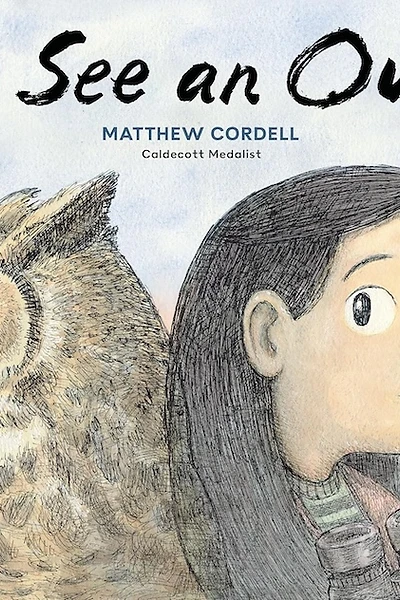
To See an Owl
by Matthew Cordell
Pacing MaterialA young girl who dreams of seeing a great horned owl learns that some of nature's most beautiful moments come to those who wait.
Big Idea
Some things are worth waiting for — patience, stillness, and careful observation lead to the most meaningful discoveries.
Discussion Questions
- 1.Why does the girl want to see an owl?
- 2.What does it mean to be patient?
- 3.What's something you've waited a long time to see or do?
- 4.How do you stay still and observant?
Classroom Activity
Field Guide Page
Students create a 'field guide' page — drawing and describing an animal they want to observe in the wild.
Lesson Plan
Learning Goals
- Practice patience and still observation.
- Describe an animal's habitat and behavior.
- Formulate questions for further investigation.
- Create a labeled field guide illustration.
Activity Steps
- 1.Read the book, noting how the girl waits and watches for the owl.
- 2.Discuss what it means to be a patient observer.
- 3.Students pick an animal to 'study' and create a field guide page.
- 4.Include a drawing, habitat notes, and one question they'd want to answer.
Standards Connections
- ELA: RL.1.1 — Ask and answer questions about key details
- ELA: RL.1.2 — Retell stories, including key details
- ELA: RL.1.3 — Describe characters, setting, and events
- ELA: RL.4.6 — Acknowledge differences in characters' points of view
- ELA: SL.1.1 — Participate in collaborative conversations about the text
- ELA: W.1.3 — Write narratives recounting events with descriptive details
- SEL: Social Awareness
- SEL: Relationship Skills
- Art: VA:Re7 — Perceive and analyze artistic work
Pace-Write-Read Study with Pace-Write It!
Focus question: How does an author slow a story down so readers can feel patience, waiting, and wonder? In To See an Owl by Matthew Cordell, a young girl longs to see a great horned owl and must wait quietly through many attempts in nature. Cordell uses gentle pacing, sparse text, repetition, and page-by-page moments of watching and listening to help readers feel how patience can lead to a powerful moment of wonder.
| Element | How to notice or teach it in the novel |
|---|---|
| Pace | Read: Notice how To See an Owl moves slowly as the girl watches, waits, and returns again to the woods, matching the theme that special things in nature cannot be rushed. Classroom Activity: Write 4-5 sentences about waiting for something important, using short sentences to slow the pace. |
| Plot | Read: Notice that the plot is simple but meaningful: the girl wants to see a great horned owl, keeps trying, and finally experiences a moment of wonder. Classroom Activity: Make a beginning-middle-end plan for a story about searching for one special thing outdoors. |
| Prosody | Read: Notice how the quiet wording in To See an Owl sounds soft when read aloud, almost like whispering in the woods. Classroom Activity: Read one page aloud softly, then write 3 lines that should be read in a calm, hushed voice. |
| Word pause | Read: Notice how single words and short phrases create little stopping places, helping readers feel the girl's careful attention as she listens for the owl. Classroom Activity: Write 3 short lines about noticing nature, putting one strong word or phrase on each line. |
| Concept | Read: Notice that the big idea is that patience and wonder work together; the girl cannot force the owl to appear. Classroom Activity: Write a sentence that teaches a lesson about waiting, then add an example from nature. |
| Voice & World View | Read: Notice how the book's voice feels observant, gentle, and full of respect for the natural world, showing that nature is not there just for humans to control. Classroom Activity: Write from the viewpoint of someone who believes quiet watching is important. |
| Setting & Place | Read: Notice how the woods feel peaceful, open, and full of hidden life, making the setting important to the girl's search for the great horned owl. Classroom Activity: Describe a natural place in 5 sensory details that could hold a surprising animal. |
| Point of View | Read: Notice how readers stay close to the young girl's experience, so we feel her hoping, waiting, and wondering. Classroom Activity: Write 3-4 sentences from the point of view of a child searching for an animal. |
| Original Characters | Read: Notice that the girl is memorable because of her quiet determination and curiosity, even though the story is simple and realistic. Classroom Activity: Invent a child character who really wants to spot one wild creature, and list 3 traits. |
| Dialogue | Read: Notice that To See an Owl relies more on observation than conversation, which helps keep the pacing slow and focused. Classroom Activity: Write a tiny dialogue of 2 lines between a child and an adult while waiting silently for an animal to appear. |
| Details | Read: Notice the small details of watching and listening that make the girl's search feel real and careful. Classroom Activity: Write 4 specific details a child might notice while standing still in the woods. |
| Descriptions | Read: Notice how Matthew Cordell uses clear, simple descriptions that leave room for the reader's imagination and the illustrations to build wonder. Classroom Activity: Describe an owl or another animal in 3 vivid sentences without saying it is beautiful. |
| Strong First Lines | Read: Notice how the opening quickly introduces the girl's desire to see an owl, giving readers a clear reason to keep going. Classroom Activity: Write an opening line for a story that begins with a child wanting to see something rare. |
| Immediacy & Engagement | Read: Notice how the book keeps readers engaged by making us share the girl's question: Will this be the time she finally sees the owl? Classroom Activity: Write 3 sentences that make a reader want to find out whether a child will discover something. |
| Story Scenes & Summaries & Unique Structures | Read: Notice how the story balances repeated attempts with focused scenes of waiting, creating a structure that feels calm but purposeful. Classroom Activity: Plan a story with 2 summary lines about trying and 1 close-up scene of the big moment. |
| Flashback & Flash Forward & Cliffhangers | Read: Notice that this book does not depend on flashbacks or cliffhangers; instead, it builds interest through steady waiting in the present. Classroom Activity: Write a 'What if next...' ending line after a nature scene that gently holds suspense. |
| Tension & Suspense & Surprise | Read: Notice how suspense comes from quiet uncertainty: the girl hopes for the owl, but nature may or may not reveal it. Classroom Activity: Write 4 sentences that build suspense while a child listens for an unseen animal. |
| Page Turns and Chapter Breaks | Read: Notice how page turns matter in a picture book like To See an Owl because each turn can delay or reveal what the girl notices next. Classroom Activity: Create a 3-page storyboard where the last page reveals the thing the character has waited to see. |
| Performance | Read: Notice that this story invites a calm read-aloud performance with pauses, soft volume, and slower timing to match the mood of patience and wonder. Classroom Activity: Mark a short passage with slash marks to show where a reader should pause. |
| Personality | Read: Notice the girl's personality: patient, observant, hopeful, and determined enough to keep returning to look for the great horned owl. Classroom Activity: Write a character sketch of a child whose personality helps them notice small things others miss. |
| Humor | Read: Notice that humor is gentle and light here; the focus is more on sincerity and quiet curiosity than on jokes. Classroom Activity: Add one small, respectful funny moment to a nature-watching scene, such as a squirrel startling someone. |
| Pause | Read: Notice how pauses are essential in To See an Owl because the waiting itself is part of the story's meaning. Classroom Activity: Write a short paragraph and include ellipses or line breaks to show a long moment of waiting. |
| Poetry and Poetic Devices | Read: Notice the poetic feeling created by repetition, sound, and simple imagery, which make the girl's search feel almost like a quiet poem. Classroom Activity: Write 4 lines of free verse about listening for wings in the darkening woods. |
| Repetition | Read: Notice how repeated actions and ideas in the girl's search emphasize persistence and help set the book's gentle rhythm. Classroom Activity: Write a short piece that repeats a key phrase such as 'She waited' or 'I listened' three times. |
| Rhythm | Read: Notice the rhythm of short, calm sentences that mirror footsteps, breaths, and stillness in nature. Classroom Activity: Write 5 sentences with a slow rhythm by mixing a few very short sentences with slightly longer ones. |
| Punctuation | Read: Notice how punctuation helps control speed in this book, especially periods and pauses that keep the reading measured and quiet. Classroom Activity: Rewrite 3 sentences about a forest scene, changing punctuation to make them slower and more suspenseful. |
| Questions | Read: Notice the unspoken question running through the story: Will the girl finally see the great horned owl? Classroom Activity: Write 3 questions a child might ask while waiting in the woods. |
| Compare-Contrast | Read: Notice the contrast between wanting something badly and having to be still and patient before it happens. Classroom Activity: Write 2 compare-contrast sentences about rushing versus waiting in nature. |
| Objects | Read: Notice how small objects in the outdoor setting matter because they ground the girl's experience in the real world of trails, trees, and signs of wildlife. Classroom Activity: List 5 objects someone might bring or notice on an owl walk, then write a sentence about each. |
| Threes | Read: Notice how patterns of three can help readers feel structure in a quiet story like this one: three tries, three sounds, or three details noticed while waiting. Classroom Activity: Write a paragraph that includes 3 things a child sees, 3 things they hear, and 3 things they feel. |
| Whitespace & Negative Space | Read: Notice how open space on the pages and in the illustrations helps slow readers down and creates a feeling of quiet, attention, and possibility. Classroom Activity: Make a mini picture-book page with only 1-2 lines of text and lots of blank space around the words. |
| Art & Graphics | Read: Notice how Matthew Cordell's illustrations help carry pacing by showing the girl's smallness in the woods and the long stretches of waiting before the owl appears. Classroom Activity: Draw a before-and-after sketch showing a child waiting first, then experiencing wonder. |
| Interactives & Gamification | Read: Notice how this book invites active participation because readers can play 'spot the clue' and predict when the girl may finally see the owl. Classroom Activity: Create a classroom nature-noticing challenge where students hide 3 picture clues in a scene and write captions that build suspense. |
Pace-Write It!
20-Minute Classroom Flow\nRead (5 min): Read To See an Owl aloud, using a soft voice and intentional pauses. Ask students to listen for places where the story slows down and where they feel the girl's patience most strongly.\nNotice (5 min): Revisit 2-3 pages. Discuss: How do the short sentences, repetition, page turns, and quiet illustrations make us feel like we are waiting with the girl? Chart student noticings under these headings: words, pauses, pictures, feeling.\nWrite (7 min): Students write their own short 'waiting for wonder' scene. Writing frame: 'I wanted to see ____. I went to ____. I waited. I listened for ____. I noticed ____, ____, and ____. Still, I waited. Then, at last, ____.' Encourage students to use short sentences, one repeated line, and at least 3 sensory details.\nShare (3 min): Partners read their scenes aloud softly. Listeners name one place where the writer slowed the pacing well.\nExit ticket: Write one sentence answering: How did slowing down your writing help create a feeling of patience or wonder?