 3-7
3-7GN ANDREWS
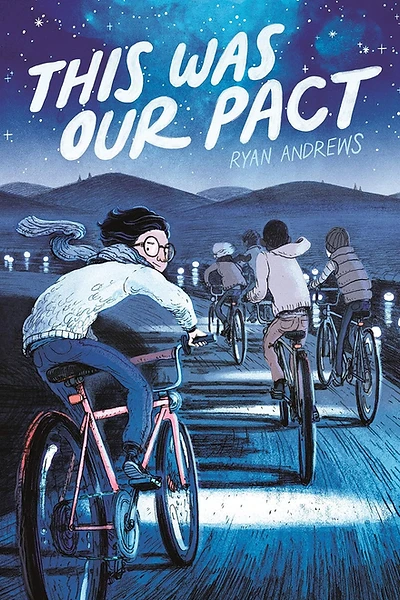
This Was Our Pact
by Ryan Andrews
Pacing MaterialOn the night of the autumn equinox, a group of boys ride their bikes into the dark, following the lanterns down the river as they've promised — but the journey takes them into a world of magic, mystery, and unexpected friendship.
Big Idea
Keeping a promise can lead you to places you never expected — and sometimes the journey changes everything.
Discussion Questions
- 1.Why do the boys make their pact, and what does it mean to each of them?
- 2.How does the story shift from realistic to fantastical?
- 3.What do the boys learn about friendship along the way?
- 4.Have you ever made a promise that was hard to keep?
Classroom Activity
Journey Map Story
Students create a visual journey map of a story adventure, charting the transformation from ordinary to extraordinary.
Lesson Plan
Learning Goals
- Analyze how stories transition from realistic to fantastical
- Understand the hero's journey narrative structure
- Explore themes of friendship, promises, and transformation
- Create visual storytelling through maps and illustrations
Activity Steps
- 1.Discuss the concept of a pact and why promises matter
- 2.Have students identify key moments in the boys' journey
- 3.Students create a journey map with illustrations for each stage
- 4.Share maps and discuss how the journey changed the characters
- 5.Reflect on how adventures transform us
Standards Connections
- ELA: RL.3.1 — Ask and answer questions about key details
- ELA: RL.3.2 — Retell stories, including key details
- ELA: RL.3.3 — Describe characters, setting, and events
- ELA: RL.7.6 — Acknowledge differences in characters' points of view
- ELA: SL.3.1 — Participate in collaborative conversations about the text
- ELA: W.3.3 — Write narratives recounting events with descriptive details
- SEL: Relationship Skills
- SEL: Social Awareness
- Art: VA:Re7 — Perceive and analyze artistic work
Pace-Write-Read Study with Pace-Write It!
Focus question: How does Ryan Andrews control the speed of the story so readers feel both the quiet wonder and the rising danger of Ben and Nathaniel’s journey? In This Was Our Pact by Ryan Andrews, the pacing shifts from the familiar excitement of a town tradition to a mysterious, dreamlike adventure full of pauses, surprises, and tense moments. As a graphic novel, it uses page turns, panel size, dialogue, silence, and visual detail to slow readers down in some places and rush them forward in others.
| Element | How to notice or teach it in the novel |
|---|---|
| Pace | Read: Notice how the story begins with the annual lantern pact, then gradually speeds up as Ben and Nathaniel ride farther from town and deeper into the unknown. Ryan Andrews balances quiet travel scenes with sudden magical encounters so the friendship and mystery grow together. Classroom Activity: Write a short scene about two friends following a rule or promise, using one slow paragraph and one fast paragraph to control the pace. |
| Plot | Read: Track the clear plot line from the autumn equinox ritual to the boys’ bike ride, the group splitting apart, and Ben and Nathaniel continuing alone into a fantasy world. The plot keeps moving because each new event raises a fresh question about where the lanterns go and what the boys will find. Classroom Activity: Make a 5-step plot ladder for a journey story, then write the middle step where the plan starts to change. |
| Prosody | Read: Listen to how the dialogue and narration in This Was Our Pact create a calm, reflective mood in some places and a brisk, urgent sound in others. Even in a graphic novel, sentence length and speech rhythm help readers feel whether a moment is peaceful, awkward, funny, or tense. Classroom Activity: Write four lines of dialogue between two friends, first with a gentle rhythm and then with a hurried rhythm. |
| Word pause | Read: Notice places where a single word, short sentence, or small speech bubble creates a pause, especially when Ben or Nathaniel reacts to something strange or meaningful. These tiny stops make the mystery feel bigger. Classroom Activity: Write a 6-sentence scene and include three intentional one-word or two-word pauses to slow the reader at important moments. |
| Concept | Read: Think about the big concept behind the book: a childhood promise leads to a magical journey, but the deeper story is about trust, kindness, and staying with someone when things get hard. The pacing supports this by letting the adventure unfold step by step instead of explaining everything at once. Classroom Activity: Write a story idea in which a simple tradition hides a bigger truth, and explain in 3-4 sentences how you would reveal that truth slowly. |
| Voice & World View | Read: Notice how the book’s voice feels sincere, curious, and slightly wistful, matching Ben’s growing understanding of friendship and courage. The world view suggests that kindness matters, even in strange places, and that people are often more complicated than first impressions. Classroom Activity: Write a first-person paragraph from a character who begins a journey thinking one thing about a friend and ends the paragraph seeing that friend differently. |
| Setting & Place | Read: Pay attention to how the town, the river, the dark road, and the magical landscapes all shape the pacing of the story. Familiar places move quickly because readers understand them, while strange places are given more visual and narrative space so we can wonder along with Ben and Nathaniel. Classroom Activity: Describe a setting that changes from ordinary to magical in 5-6 sentences, slowing down when the magical details appear. |
| Point of View | Read: Notice how the story stays close to Ben’s experience, so readers discover the mystery at the same time he does. This point of view helps pacing because we only know what Ben knows, which keeps the suspense alive. Classroom Activity: Write a scene from the point of view of a child following something mysterious at night, revealing only what the character can see, hear, and guess. |
| Original Characters | Read: Study how Ben, Nathaniel, and the other boys each feel distinct, with Nathaniel especially surprising readers through his oddness, honesty, and warmth. The pacing benefits because readers slowly revise their opinions of Nathaniel as the journey continues. Classroom Activity: Create two traveling characters who seem mismatched at first, then write a paragraph that reveals one surprising strength in the stranger one. |
| Dialogue | Read: Notice how dialogue in This Was Our Pact often does more than share information; it reveals personality, discomfort, humor, and growing trust between Ben and Nathaniel. Short exchanges can speed the story, while more thoughtful conversations slow it down. Classroom Activity: Write a dialogue-only scene between two kids on a journey where one is annoyed and the other is trying to be helpful. |
| Details | Read: Look closely at the specific details Ryan Andrews chooses, such as the lantern tradition, bikes, nighttime shadows, and unusual magical creatures. These details make the fantasy believable and keep the pacing grounded. Classroom Activity: Write a paragraph about a nighttime adventure using at least five exact details that make the scene feel real. |
| Descriptions | Read: Notice how descriptions expand during magical or emotional moments, allowing readers to linger on wonder, fear, or beauty. The book does not describe everything equally; it gives more space to scenes that matter most. Classroom Activity: Write two descriptions of the same river, one in a quick single sentence and one in a slower, image-rich paragraph. |
| Strong First Lines | Read: Study how the opening quickly introduces the pact and the importance of the lantern night, giving readers a reason to keep going immediately. A strong beginning creates momentum by raising a question right away. Classroom Activity: Write three possible opening lines for a story about a promise, making sure each line creates curiosity. |
| Immediacy & Engagement | Read: Notice how readers are pulled in because the tradition feels urgent and the boys’ decision to keep following the lanterns creates immediate stakes. The graphic novel format also increases engagement by placing readers inside the motion and mood of each scene. Classroom Activity: Write an opening paragraph that makes readers feel they must keep following the main character right now. |
| Story Scenes & Summaries & Unique Structures | Read: Notice that some parts of Ben and Nathaniel’s trip are shown as full scenes, while others are compressed to move the story along. This scene-summary balance helps Ryan Andrews keep the adventure from dragging while still giving important moments emotional weight. Classroom Activity: Write one full scene of a journey stop, then add a 2-sentence summary that skips ahead to the next important event. |
| Flashback & Flash Forward & Cliffhangers | Read: Notice how the story mostly moves forward, which makes each unknown event feel immediate, but it also uses moments of delay and page-end uncertainty like cliffhangers. Those stopping points make readers eager to turn the page and learn what Ben and Nathaniel will face next. Classroom Activity: Write a scene ending that leaves a character staring at something unexpected, using a final line that acts as a cliffhanger. |
| Tension & Suspense & Surprise | Read: Watch how tension grows when the group falls away, the setting becomes stranger, and Ben and Nathaniel cannot predict what comes next. Surprises in the fantasy world keep the pacing alive, but the friendship between the boys gives readers an emotional reason to care. Classroom Activity: Write a suspenseful paragraph in which two friends hear or see something unusual and do not yet know whether it is dangerous. |
| Page Turns and Chapter Breaks | Read: In this graphic novel, page turns are powerful because they hide reveals, shift mood, and create surprise as Ben and Nathaniel move deeper into the journey. Chapter and scene breaks also help readers feel progress across the long night and beyond. Classroom Activity: Plan a 4-panel comic or a 4-part prose scene and mark where you would place one dramatic page turn or break for maximum suspense. |
| Performance | Read: Think about how the story would sound if read aloud, especially the quieter reflective moments versus the funny or tense exchanges between Ben and Nathaniel. The pacing depends on a reader knowing when to speed up, pause, or let a visual moment breathe. Classroom Activity: Choose 6-8 lines for a read-aloud script about a nighttime journey and add performance notes such as pause, whisper, or faster. |
| Personality | Read: Notice how personality affects pacing, especially Nathaniel’s earnest, unusual way of speaking and Ben’s more cautious reactions. Their different personalities shape the speed and feel of conversations and decisions. Classroom Activity: Write a short exchange between a careful character and an overly enthusiastic character, showing how personality changes the flow of the scene. |
| Humor | Read: Look for humor in the awkwardness, misunderstandings, and the contrast between danger and Nathaniel’s unexpected comments. Humor gives readers a break from suspense and makes the friendship feel more human. Classroom Activity: Write a funny moment that happens during a serious journey scene, using one line of dialogue to lighten the mood. |
| Pause | Read: Notice the larger pauses in the story when Ben and Nathaniel stop to look, listen, or think. These moments are important because they create space for wonder and for readers to feel the meaning of the friendship. Classroom Activity: Write a scene in which the action stops for three sentences so the main character can notice something beautiful or important. |
| Poetry and Poetic Devices | Read: Notice the dreamlike quality of many images in This Was Our Pact, especially the lanterns on the river, the night sky, and the magical creatures. Simile, imagery, and symbolic visuals help the pacing feel almost musical in slower scenes. Classroom Activity: Write 4-5 lines describing floating lanterns or glowing lights using at least two poetic devices such as simile, metaphor, or personification. |
| Repetition | Read: Pay attention to repeated ideas such as the pact, the lanterns, the journey forward, and the theme of staying with someone. Repetition helps unify the story and gives the pacing a steady pattern beneath the surprises. Classroom Activity: Write a paragraph that repeats one important phrase three times, changing its meaning slightly each time. |
| Rhythm | Read: Notice the rhythm created by biking, stopping, talking, discovering, and moving on again. This repeated motion gives the story a traveling beat that helps readers feel both progress and uncertainty. Classroom Activity: Write 6-8 sentences with a rhythmic pattern of action-action-pause, action-action-pause to imitate a journey. |
| Punctuation | Read: Study how punctuation in speech and narration can make moments feel rushed, hesitant, or dramatic, especially in scenes of surprise or confusion. In a graphic novel, punctuation also works with facial expressions and panel layout. Classroom Activity: Write the same 3-line dialogue twice, once using ellipses and once using exclamation points, then compare how the pace changes. |
| Questions | Read: The story keeps readers moving by raising questions: Where do the lanterns go? Why does Nathaniel act the way he does? What kind of world are they entering? These questions are not answered all at once, which strengthens suspense. Classroom Activity: Write a story beginning that includes at least three questions a reader would have by the end of the first paragraph. |
| Compare-Contrast | Read: Compare the ordinary town tradition with the extraordinary fantasy journey, and contrast Ben’s first impression of Nathaniel with the friend Nathaniel becomes. These contrasts help the pacing feel meaningful because the story keeps changing what readers expect. Classroom Activity: Write two short paragraphs comparing an everyday place with a magical version of that same place. |
| Objects | Read: Notice how objects like lanterns, bicycles, food, and travel items are not just props; they help move the plot and reveal character. The lanterns especially act as both a literal object and a symbol of wonder, promise, and pursuit. Classroom Activity: Choose one object for a journey story and write a paragraph showing how it is useful, meaningful, and connected to the theme. |
| Threes | Read: Look for places where events, attempts, or ideas feel grouped in memorable patterns, which can make scenes satisfying and easy to follow. Writers often use threes to build rhythm and emphasis, especially in adventure stories like Ben and Nathaniel’s. Classroom Activity: Write a short scene in which a character tries three times to solve a problem, with the third attempt changing the story. |
| Whitespace & Negative Space | Read: In this graphic novel, open space, dark skies, and quieter panels slow the reading pace and create feeling, especially during lonely or magical moments. Negative space lets readers sit with mystery instead of rushing past it. Classroom Activity: Write a very short scene of only 5-6 sentences, leaving line breaks after important images to imitate visual space on the page. |
| Art & Graphics | Read: Notice how Ryan Andrews uses panel size, color, shadow, and expression to shape pacing just as much as words do. Large scenic panels slow readers down, while tighter sequences can make biking, talking, or danger feel faster. Classroom Activity: Storyboard a 4-panel moment from an original journey scene, labeling which panel should be largest and why. |
| Interactives & Gamification | Read: Think about how readers can interact with the pacing by predicting what will happen next, tracking clues, and noticing when the journey changes direction. This Was Our Pact invites readers to become detectives of friendship and mystery. Classroom Activity: Create a 'follow the clues' chart with three clues from your own fantasy journey story, then write a short scene that reveals clue number one. |
Pace-Write It!
20-Minute Classroom Flow\nRead (5 min): Read a selected excerpt from This Was Our Pact that shows Ben and Nathaniel traveling after the other boys have dropped out. Ask students to notice where the story moves quickly and where it slows down.\nNotice (5 min): Discuss: What makes this part feel fast or slow? Look at dialogue, panel size or visual space, description, suspense, and page-turn moments. Chart student observations under two headings: 'Speeds up the story' and 'Slows down the story.'\nWrite (7 min): Students write an original journey scene about two characters following something mysterious. Require one fast moment, one pause for wonder, and one final cliffhanger. Writing frame: 'At first, ___ and ___ promised to ___. The path seemed ___ until they noticed ___. We hurried when ___. Then everything slowed as we saw ___. I wanted to turn back, but ___ said ___. When we reached ___, we discovered ___. And then ___.'\nShare (3 min): Partners read their scenes aloud and identify where the pacing speeds up, slows down, and ends with suspense. Invite 1-2 students to share a line that creates strong pacing.\nExit ticket: In one sentence, explain one technique Ryan Andrews uses in This Was Our Pact to control pacing, and in one sentence, name the pacing move you used in your own writing.