 K-2
K-2P NARWHAL
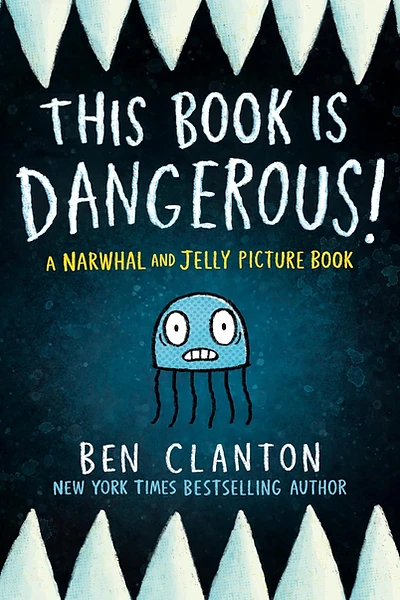
This Book Is Dangerous
by Ben Clanton
Pacing MaterialIn this daring adventure, Narwhal and Jelly warn readers of the supposed dangers lurking within the pages. It is a lighthearted exploration of courage that invites readers to be bold as they turn each page.
Big Idea
Facing 'dangers' with curiosity and humor helps us build courage and resilience.
Discussion Questions
- 1.What were some of the 'dangers' Narwhal and Jelly talked about?
- 2.Why did the characters want us to be brave while reading?
- 3.Have you ever felt nervous about something that turned out to be fun?
- 4.How did the characters help us feel safe while reading?
- 5.What does it mean to be a bold reader?
Classroom Activity
The Courageous Reader's Shield
Students will design shields that represent their bravery when encountering new or challenging books.
Lesson Plan
Learning Goals
- Define courage in a literary context
- Connect personal feelings to character experiences
- Create visual representations of bravery
Activity Steps
- 1.Discuss times when students felt brave while reading or trying something new
- 2.Trace and cut out a shield shape from cardstock
- 3.Draw symbols on the shield that represent things they are brave about
- 4.Write one 'bravery goal' on the back of the shield
- 5.Display the shields in the classroom reading corner
Standards Connections
- CCSS.ELA-LITERACY.RL.1.3
- SEL.2.1 Social awareness
- VA.1.CR2.1
Pace-Write-Read Study with Pace-Write It!
Focus question: How does an author make turning the page feel exciting and a little dangerous? In This Book Is Dangerous by Ben Clanton, Narwhal and Jelly warn readers about the scary surprises hiding in the book, but the danger is playful and funny instead of truly frightening. Clanton uses page-by-page suspense, direct talk to the reader, and quick bursts of humor to control pacing and make readers brave enough to keep going.
| Element | How to notice or teach it in the novel |
|---|---|
| Pace | Read: Notice how Ben Clanton moves the story quickly as Narwhal and Jelly keep warning us and then pulling us into the next moment. The fast pace matches the adventure theme because readers want to keep going even when the characters say the book is dangerous. Classroom Activity: Write 3 short pages for a pretend dangerous adventure using one warning on each page to speed up the action. |
| Plot | Read: Notice that the plot is simple but powerful: Narwhal and Jelly announce danger, react to what might come next, and invite the reader deeper into the adventure. The story keeps moving because each new page feels like the next step in a daring journey. Classroom Activity: Draw and label a beginning, middle, and end for a silly brave adventure starring two friends. |
| Prosody | Read: Listen to how the warnings in This Book Is Dangerous sound dramatic when read aloud, while the jokes keep the mood light. Narwhal and Jelly's playful fear changes the way your voice rises, pauses, and stretches words. Classroom Activity: Practice reading one warning line in a spooky voice and one line in a giggly voice, then write your own line meant to be read dramatically. |
| Word pause | Read: Notice where a single important word or short phrase makes you stop, such as a warning that builds suspense before the page turn. These tiny pauses help the reader feel the danger before discovering that the book stays humorous. Classroom Activity: Write a sentence about a mystery object and add a one-word line after it, such as 'Wait.' or 'Uh-oh!' |
| Concept | Read: The big concept is that courage can mean continuing even when something seems scary, especially when the fear turns out to be fun. Narwhal and Jelly model being nervous and brave at the same time. Classroom Activity: Finish this sentence in writing: 'Courage is when I keep going even if ____.' |
| Voice & World View | Read: Ben Clanton creates a playful voice that treats the reader like part of the joke. The world view of the book says adventures can feel risky, but curiosity and friendship make them worth it. Classroom Activity: Write 2-3 sentences in a playful voice warning a reader about a very silly danger, like a bouncing marshmallow or tickly cloud. |
| Setting & Place | Read: Even though the setting is the book itself, it feels like a place full of hidden surprises. The pages become the adventure world, making each turn feel like stepping into a new space with Narwhal and Jelly. Classroom Activity: Write about a place inside a book where anything could happen, and include one danger and one funny detail. |
| Point of View | Read: Notice how the story speaks right to the reader, making you feel as if Narwhal and Jelly are talking directly to you. This point of view increases engagement because the reader becomes part of the brave adventure. Classroom Activity: Write 3 sentences to a reader beginning with 'You should be careful because...' |
| Original Characters | Read: Narwhal and Jelly are memorable because they are sweet, funny, and dramatic about danger. Their personalities shape the pacing since Narwhal's boldness and Jelly's worry help the story bounce between courage and caution. Classroom Activity: Invent two ocean friends with opposite reactions to danger and write one sentence describing each one. |
| Dialogue | Read: The dialogue in This Book Is Dangerous helps the story move fast because characters can react instantly to each new warning. Narwhal and Jelly's back-and-forth adds humor and keeps the adventure lively. Classroom Activity: Write a 4-line dialogue between two friends, where one says 'Don't turn the page!' and the other answers bravely. |
| Details | Read: Notice the small details that make the warnings feel exciting without becoming too scary. Ben Clanton chooses playful details that fit the humorous tone and support the theme of brave page-turning. Classroom Activity: Make a list of 5 tiny details that could make a silly scene seem dangerous, then use 2 in a sentence. |
| Descriptions | Read: Descriptions in this book are short and effective, giving just enough information to spark imagination before the next page turn. The descriptions help readers picture danger while leaving room for surprise. Classroom Activity: Describe a pretend dangerous page in 2 sentences using one describing word for sound and one for movement. |
| Strong First Lines | Read: Notice how the opening quickly grabs attention by warning the reader and setting up the problem right away. A strong first line matters here because it launches the pace immediately and makes readers curious. Classroom Activity: Write an opening line that starts your own book with a warning, such as 'Do not open this backpack!'. |
| Immediacy & Engagement | Read: The story feels immediate because Narwhal and Jelly act as if the danger is happening right now. Readers stay engaged because they are being spoken to directly and asked to keep participating. Classroom Activity: Write 3 present-tense sentences that make a reader feel inside the action, using words like 'now' and 'right here.' |
| Story Scenes & Summaries & Unique Structures | Read: This Book Is Dangerous uses a playful structure where each page works like a mini-scene in an ongoing warning. Instead of long summaries, the book gives quick moments that stack suspense and jokes. Classroom Activity: Plan a 3-part story on separate lines: warning, page-turn surprise, funny ending. |
| Flashback & Flash Forward & Cliffhangers | Read: This book mostly uses cliffhanger energy instead of flashbacks, because each warning makes readers wonder what is waiting on the next page. The suspense comes from looking forward, not backward. Classroom Activity: End a short scene with a cliffhanger line such as 'But when we looked behind the shell...' |
| Tension & Suspense & Surprise | Read: Notice how the book creates tension by hinting that something dangerous is ahead, then surprises readers with humor. Narwhal and Jelly help make suspense safe and funny for young readers. Classroom Activity: Write one sentence that builds suspense and one sentence that turns it into a joke. |
| Page Turns and Chapter Breaks | Read: In a picture book like This Book Is Dangerous, page turns do the job that chapter breaks might do in a longer book. Ben Clanton uses the turn of the page as the big moment of courage and discovery. Classroom Activity: Fold a paper into 3 parts and plan what a reader learns before and after each page turn. |
| Performance | Read: This book begs to be performed because the warnings, pauses, and reactions are so expressive. Reading Narwhal and Jelly aloud with gestures helps students hear how pacing works. Classroom Activity: Perform one page with a partner, using a warning voice, a surprised face, and a brave pose, then write one line for your performance. |
| Personality | Read: The personalities of Narwhal and Jelly shape the timing of the story because one can seem more fearless while the other reacts with worry. Their friendship makes the adventure feel warm, not mean or scary. Classroom Activity: Write 2 sentences showing a brave personality and a worried personality reacting to the same silly danger. |
| Humor | Read: Humor is what makes the danger enjoyable in This Book Is Dangerous. Ben Clanton turns fear into fun, so readers can practice courage while laughing with Narwhal and Jelly. Classroom Activity: Write a funny warning about something harmless, like a cupcake or bubble. |
| Pause | Read: Notice the moments where the text or illustration makes you stop before moving on. These pauses stretch the suspense and give the joke time to land. Classroom Activity: Rewrite a sentence and add a pause with a dash or line break before the surprise word. |
| Poetry and Poetic Devices | Read: Even in a humorous picture book, sound play and carefully chosen repeated phrases can feel poetic. The dramatic warnings in Narwhal and Jelly's adventure create a chant-like effect. Classroom Activity: Write a 2-line warning poem with repeating beginning words, such as 'Beware of... Beware of...' |
| Repetition | Read: Repetition helps the pacing because repeated warnings and reactions make readers expect danger while enjoying the pattern. In this book, repetition also adds comedy because the danger keeps being announced so seriously. Classroom Activity: Write 3 sentences that begin the same way to build a pattern in your own funny adventure. |
| Rhythm | Read: The rhythm of short exclamations, pauses, and page turns keeps the story bouncing along. Narwhal and Jelly's playful exchanges create a beat that supports suspense and humor. Classroom Activity: Clap the rhythm of a warning sentence, then write your own short sentence with a strong beat. |
| Punctuation | Read: Look for exclamation marks, question marks, and pauses that tell you how dramatic the reading should sound. Punctuation helps Ben Clanton control pace and emotion on each page. Classroom Activity: Write one warning sentence three ways using different punctuation, and talk about which one sounds most urgent. |
| Questions | Read: Questions pull readers into the adventure by making them wonder what will happen next and whether they are brave enough to continue. Narwhal and Jelly use uncertainty to keep the pages turning. Classroom Activity: Write 3 questions a character could ask before opening a mysterious door or turning a scary page. |
| Compare-Contrast | Read: Compare how danger sounds at first to how it actually feels once the joke or surprise arrives. Contrast Narwhal and Jelly's reactions if one is more bold and the other more cautious. Classroom Activity: Complete a T-chart labeled 'Seems Dangerous' and 'Really Is' for a silly adventure idea. |
| Objects | Read: Objects in the book can become powerful because anything on the page might seem risky when the characters warn us about it. A small object can help build suspense if the story gives it importance. Classroom Activity: Pick one object, like a shell, map, or sandwich, and write 2 sentences making it seem dangerously important. |
| Threes | Read: Stories often feel satisfying in groups of three, and you can notice how repeated warnings or events build toward a bigger moment. The pattern of three helps young readers follow the pacing clearly. Classroom Activity: Write 3 escalating warnings for Narwhal and Jelly, with each one sounding sillier than the last. |
| Whitespace & Negative Space | Read: In a picture book, open space on the page can slow readers down and spotlight a warning, reaction, or joke. The empty space around words or characters can make the danger feel larger or the humor feel sharper. Classroom Activity: Create a mini page with one short warning line and lots of blank space around it to increase suspense. |
| Art & Graphics | Read: Ben Clanton's art works with the text to make the book feel energetic, expressive, and funny. The illustrations of Narwhal and Jelly's faces and movements help pace the story by showing fear, excitement, and relief instantly. Classroom Activity: Draw one scene from a funny dangerous adventure and add a caption that matches the characters' expressions. |
| Interactives & Gamification | Read: This Book Is Dangerous feels interactive because readers are challenged to keep going and become part of the adventure. The act of turning the page becomes a brave choice, almost like a game. Classroom Activity: Write a choose-to-continue line for readers, such as 'If you are brave, turn the page to see the wiggly surprise!' |
Pace-Write It!
20-Minute Classroom Flow\nRead (5 min): Read This Book Is Dangerous by Ben Clanton aloud with dramatic expression. Pause before page turns and ask students to notice when Narwhal and Jelly warn the reader.\nNotice (5 min): Discuss: How does the book make us want to turn the page? Chart student ideas such as warnings, direct talk to the reader, humor, punctuation, and pauses.\nWrite (7 min): Students write their own 3-part mini-book page sequence about a silly danger. Writing frame: 'This ____ is dangerous! Do not _____. But if you are brave, _____. On the next page, _____!' Encourage students to include one warning, one question, and one funny surprise.\nShare (3 min): Partners read their mini-sequences aloud using dramatic voices. Listeners name one pacing move they heard, such as a pause, repeated warning, or cliffhanger.\nExit ticket: Write one sentence answering: 'How did I make my reader want to keep reading?'