 K-2
K-2P BURACH
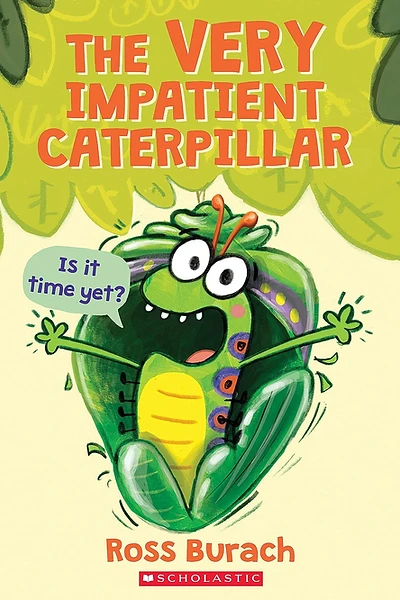
The Very Impatient Caterpillar
by Ross Burach
Pacing MaterialA hilarious, heartwarming picture book about a caterpillar who just can't wait to become a butterfly — and the hard-earned lesson that some things take time.
Big Idea
Big changes take time — and patience is the hardest part of growing up.
Discussion Questions
- 1.Why is the caterpillar so impatient?
- 2.What happens inside a chrysalis while the caterpillar waits?
- 3.How does the author use humor to teach about metamorphosis?
- 4.What's something you've had to wait patiently for?
Classroom Activity
Chrysalis Journals
Create a classroom chrysalis journal — observe and draw the stages of metamorphosis, then write a diary entry from the perspective of an impatient caterpillar.
Lesson Plan
Learning Goals
- Understand the butterfly life cycle and metamorphosis
- Explore patience and self-regulation through humor
- Practice writing from a character's perspective
Standards Connections
- ELA: RL.K.1 — Ask and answer questions about key details
- ELA: RL.K.2 — Retell stories, including key details
- ELA: RL.K.3 — Describe characters, setting, and events
- ELA: RL.2.6 — Acknowledge differences in characters' points of view
- ELA: SL.K.1 — Participate in collaborative conversations about the text
- ELA: W.K.3 — Write narratives recounting events with descriptive details
- SEL: Social Awareness
- SEL: Relationship Skills
- Art: VA:Re7 — Perceive and analyze artistic work
Pace-Write-Read Study with Pace-Write It!
Focus question: How does an author make waiting feel funny, exciting, and important? In The Very Impatient Caterpillar by Ross Burach, a caterpillar wants to become a butterfly right away, but the story stretches out the waiting to match his impatience. Burach uses quick dialogue, page turns, repetition, and expressive illustrations to speed some moments up and slow others down so readers feel both the caterpillar’s frustration and his growth.
| Element | How to notice or teach it in the novel |
|---|---|
| Pace | Read: Notice how the story moves quickly when the caterpillar talks and worries, then slows down during the waiting in the chrysalis. The pacing helps readers feel how hard patience is for the very impatient caterpillar. Classroom Activity: Write 3 short sentences that feel fast and excited, then 1 longer sentence that slows down a moment of waiting. |
| Plot | Read: Notice the simple plot arc: the caterpillar learns about metamorphosis, reacts dramatically, waits unwillingly, and finally changes into a butterfly. Each part builds the lesson that growth takes time. Classroom Activity: Make a 4-box story map for a character who has to wait for something important. |
| Prosody | Read: Listen to how the words sound when read aloud, especially the caterpillar’s dramatic reactions and anxious questions. The lively phrasing creates a bouncy, energetic reading voice. Classroom Activity: Choose 2 lines and practice reading one in a fast, worried voice and one in a calm, patient voice, then write your own line for each voice. |
| Word pause | Read: Notice where single words, ellipses, or line breaks make readers pause before the next joke or reaction. These pauses help the humor land and show the caterpillar thinking or panicking. Classroom Activity: Write a 4-line mini-scene about waiting and include 2 places where one word stands alone for emphasis. |
| Concept | Read: Notice how the big concept is patience and growth, shown through the real-life process of metamorphosis. The caterpillar learns that change cannot be rushed. Classroom Activity: Write one sentence that tells a lesson about waiting, then add one story sentence that shows that lesson through a character’s actions. |
| Voice & World View | Read: Notice the narrator’s playful style and the caterpillar’s childlike world view—he sees waiting as unfair, confusing, and impossible. This makes the story feel funny and relatable to young readers. Classroom Activity: Write 5 lines from the point of view of a character who thinks waiting is the hardest thing in the world. |
| Setting & Place | Read: Notice that the natural setting of leaves, branches, and chrysalis space is simple, but it matters because it is where the caterpillar must stop and change. The setting supports the theme of growth in nature. Classroom Activity: Draw or describe a place where a character has to stay still and wait for something to happen. |
| Point of View | Read: Notice how readers stay close to the impatient caterpillar’s experience, hearing his thoughts and reactions through the dialogue and narration. This close point of view helps readers feel his emotions strongly. Classroom Activity: Rewrite a moment from the story from the point of view of one of the calmer caterpillars. |
| Original Characters | Read: Notice how Ross Burach makes the caterpillar original by giving him a huge personality—he is loud, worried, funny, and dramatic. The other caterpillars help highlight just how impatient he is. Classroom Activity: Invent a bug character with one BIG trait, such as very sleepy or very curious, and write 3 lines that show it. |
| Dialogue | Read: Notice that much of the story’s pacing comes from dialogue, especially the caterpillar’s many questions and outbursts. The back-and-forth talk makes the book feel fast and lively. Classroom Activity: Write a short conversation between two characters where one is calm and one cannot wait. |
| Details | Read: Notice the small details about metamorphosis, caterpillar behavior, and the chrysalis that make the story informative while staying silly. These details ground the humor in something real. Classroom Activity: Add 3 specific details to a sentence about an animal changing or growing. |
| Descriptions | Read: Notice that the descriptions are not long, but they are vivid because they focus on feelings, reactions, and what the caterpillar notices right now. This keeps the pacing brisk. Classroom Activity: Describe a waiting moment using what a character sees, feels, and says in just 3 sentences. |
| Strong First Lines | Read: Notice how the opening quickly introduces the caterpillar’s big reaction and pulls readers into the problem right away. A strong start helps the story begin with energy. Classroom Activity: Write an opening line for a story about a character who absolutely does not want to wait. |
| Immediacy & Engagement | Read: Notice how the caterpillar’s urgent voice makes everything feel like it is happening right now. Readers stay engaged because his feelings are so immediate and dramatic. Classroom Activity: Write 4 sentences in which a character reacts in the moment using words like now, already, and right away. |
| Story Scenes & Summaries & Unique Structures | Read: Notice how the book uses quick scenes of conversation and reaction, then jumps through time during the waiting period. This balance of scene and summary keeps the story moving. Classroom Activity: Write one detailed scene of a character beginning to wait, then one summary sentence that skips ahead in time. |
| Flashback & Flash Forward & Cliffhangers | Read: Notice that the story does not rely heavily on flashbacks, but it does create a forward-looking feeling because the caterpillar keeps thinking about becoming a butterfly. Some page turns act like little cliffhangers because readers wonder what he will do next. Classroom Activity: Write a sentence where a character imagines the future, then end with a cliffhanger question. |
| Tension & Suspense & Surprise | Read: Notice the tension comes from whether the caterpillar can handle waiting and what will happen inside the chrysalis. The surprise and payoff come when the change finally happens. Classroom Activity: Write 3 sentences that build tension about waiting for a change, and make the third sentence reveal a surprise. |
| Page Turns and Chapter Breaks | Read: Notice how page turns help deliver jokes, reactions, and little bursts of suspense in this picture book. Even without chapters, each turn can speed up or delay what readers learn next. Classroom Activity: Plan a 2-page picture book moment by writing what happens before the page turn and what surprise comes after it. |
| Performance | Read: Notice that this book invites a big performance voice because the caterpillar sounds dramatic, loud, and expressive. Reading it aloud changes the pacing because some lines beg to be stretched, whispered, or shouted. Classroom Activity: Mark 3 lines with performance notes such as whisper, gasp, or shout, then read them aloud. |
| Personality | Read: Notice how the caterpillar’s personality drives the whole story—his impatience creates the humor, conflict, and pacing. His emotional reactions make the lesson feel earned instead of preachy. Classroom Activity: Write a character sketch for someone whose personality causes a problem while waiting. |
| Humor | Read: Notice how the humor comes from exaggeration, unexpected reactions, and the caterpillar’s inability to stay calm. Ross Burach uses funny speech and expressions to make waiting entertaining. Classroom Activity: Write 3 funny lines for a character who is overreacting to a small delay. |
| Pause | Read: Notice how pauses let readers feel the caterpillar’s uncertainty, confusion, or building frustration. A pause before a punchline or realization helps the pacing feel intentional. Classroom Activity: Write a short paragraph about waiting and include dashes or ellipses to create 2 meaningful pauses. |
| Poetry and Poetic Devices | Read: Notice that while this is not a poem, it uses sound, repetition, and playful phrasing that make parts of the text feel musical. These choices help the story sound fun when read aloud. Classroom Activity: Write 2 alliterative phrases about a bug waiting, such as busy bug or patient pupa, and use them in a sentence. |
| Repetition | Read: Notice the repeated worries, questions, and ideas about waiting and changing. Repetition shows how stuck the caterpillar feels and makes the story funnier. Classroom Activity: Write a repeating line for a character, such as Is it time yet?, and use it 3 times in a mini-story. |
| Rhythm | Read: Notice how short bursts of dialogue create a quick rhythm, while waiting scenes stretch the rhythm out. The changing rhythm matches the theme of impatience versus patience. Classroom Activity: Write one fast rhythm section with 4 short lines and one slow rhythm section with 2 longer lines. |
| Punctuation | Read: Notice the exclamation marks, question marks, and other punctuation that show the caterpillar’s dramatic emotions. Punctuation helps control speed, volume, and feeling. Classroom Activity: Write the same sentence 3 ways using different punctuation to show calm, worry, and excitement. |
| Questions | Read: Notice how the caterpillar asks many questions because he does not understand or trust the waiting process. His questions move the story forward and reveal his feelings. Classroom Activity: Write 5 questions a nervous character might ask while waiting for a big change. |
| Compare-Contrast | Read: Notice the contrast between the impatient caterpillar and the calmer caterpillars, and between being a caterpillar now and a butterfly later. These contrasts sharpen the theme of growth. Classroom Activity: Make a T-chart comparing a character before waiting and after waiting, then write 2 sentences using your chart. |
| Objects | Read: Notice how important objects and natural features, especially the chrysalis, help organize the story and symbolize change. The chrysalis becomes the object that holds both waiting and growth. Classroom Activity: Choose one object that could symbolize waiting, and write 3 sentences explaining how a character uses it. |
| Threes | Read: Notice how funny stories often build through patterns, and readers can hear a satisfying rhythm when reactions or examples come in small groups. This kind of patterning would fit the caterpillar’s repeated complaints and realizations. Classroom Activity: Write 3 related complaints your character makes while waiting, making the third one the funniest. |
| Whitespace & Negative Space | Read: Notice how the uncluttered page design gives big reactions room to stand out and helps readers focus on key lines. Empty space can slow readers down and make a moment feel bigger. Classroom Activity: Create a page layout for one sentence, deciding which words should stand alone with extra space around them. |
| Art & Graphics | Read: Notice how Ross Burach’s bold, expressive illustrations show the caterpillar’s emotions and help set the pacing of each page. The facial expressions and visual humor add meaning even when the text is brief. Classroom Activity: Draw one picture-book page of a waiting character and add one speech bubble and one facial expression that change the mood. |
| Interactives & Gamification | Read: Notice how the book naturally invites students to join in by predicting, repeating lines, and reacting to the caterpillar’s dramatic waiting. Its playful style makes reading feel participatory. Classroom Activity: Create a class chant for a waiting character, then write one place in your story where readers can join in by saying the repeated line. |
Pace-Write It!
20-Minute Classroom Flow Read (5 min): Read aloud The Very Impatient Caterpillar by Ross Burach. Pause to let students hear the caterpillar’s dramatic questions, repeated worries, and the shift from fast, funny talking to slower waiting. Notice (5 min): Ask: How did Ross Burach make waiting feel long but still funny? Chart student noticings: lots of dialogue, repeated questions, exclamation marks, page-turn surprises, and a slower feeling during the chrysalis part. Write (7 min): Students write their own mini-scene about a character waiting for a change or event. Writing frame: “I was waiting for ________. ‘Is it time yet?’ I asked. ________ said, ‘________.’ I waited… and waited… Then, at last, ________.” Encourage students to include at least 1 question, 1 repeated line, and punctuation that shows feeling. Share (3 min): Partners read their mini-scenes aloud using performance voices. Listeners name one pacing move they heard, such as repetition, questions, or a dramatic pause. Exit ticket: Write one sentence answering: How did your writing show waiting?