
 K-2
K-2P FROST
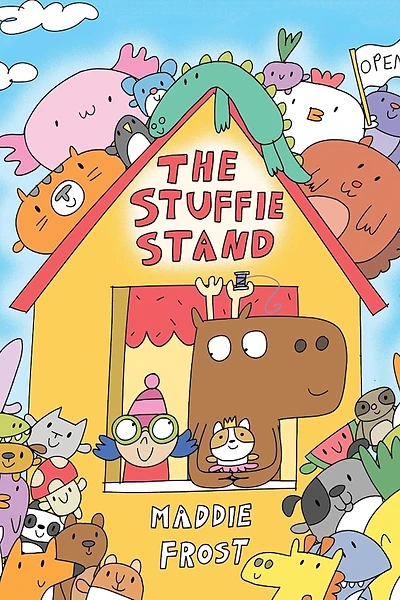
The Stuffie Stand
by Maddie Frost
Pacing MaterialWhen a child opens a stand to share stuffed animals with friends, a joyful community of stuffies and kids comes together.
Big Idea
Sharing what you love can bring people together and create something wonderful.
Discussion Questions
- 1.Why did the child open a stuffie stand?
- 2.How did the stuffie stand bring the community together?
- 3.What would you share at your own stand?
Classroom Activity
My Sharing Stand
Students design their own sharing stand, deciding what to share and writing a sign to invite friends.
Lesson Plan
Learning Goals
- Understand entrepreneurship basics
- Practice persuasive writing
- Express ideas through design
Activity Steps
- 1.Read the story and discuss what makes a good stand
- 2.Students choose what they would share
- 3.Design a stand sign with a catchy title
- 4.Write one sentence inviting friends to visit
Standards Connections
- ELA: RL.K.1 — Ask and answer questions about key details
- ELA: RL.K.2 — Retell stories, including key details
- ELA: RL.K.3 — Describe characters, setting, and events
- ELA: RL.2.6 — Acknowledge differences in characters' points of view
- ELA: SL.K.1 — Participate in collaborative conversations about the text
- ELA: W.K.3 — Write narratives recounting events with descriptive details
- SEL: Social Awareness
- SEL: Relationship Skills
- Art: VA:Re7 — Perceive and analyze artistic work
Pace-Write-Read Study with Pace-Write It!
Focus question: How does an author slow down and speed up a story to show joy, sharing, and excitement? In The Stuffie Stand by Maddie Frost, a child creates a stand where stuffed animals can be shared with friends, and the story grows from one simple idea into a lively community event. Frost uses picture-book pacing with quick page turns, repeated moments of giving and receiving, expressive dialogue, and playful illustrations to help readers feel the gathering excitement and warmth.
| Element | How to notice or teach it in the novel |
|---|---|
| Pace | Read: Notice how The Stuffie Stand moves quickly when the stand idea begins and more slowly when readers get to enjoy the stuffed animals, the friends, and the sharing moments. Classroom Activity: Write 3 short sentences that speed up a stand opening, then 1 longer sentence that slows down to show one special sharing moment. |
| Plot | Read: Notice the clear plot in The Stuffie Stand: a child starts a stuffie stand, other kids join in, and the sharing idea grows into a happy community experience. Classroom Activity: Write a beginning, middle, and end for a new stand story about sharing one kind of toy or classroom item. |
| Prosody | Read: Listen to how the words in The Stuffie Stand can be read with cheerful expression when the stand opens and with gentle warmth when children connect through stuffed animals. Classroom Activity: Choose one moment from your own stand story and mark it with a smiley face for an excited voice or a heart for a calm, caring voice, then read it aloud. |
| Word pause | Read: Notice where you naturally pause in The Stuffie Stand to look at a stuffie, a child's reaction, or an illustration detail before reading on. Classroom Activity: Write one sentence about a toy stand and add slash marks / where a reader should pause for effect. |
| Concept | Read: Notice that the big concept in The Stuffie Stand is entrepreneurship mixed with generosity, because the stand is not only an idea to organize and offer stuffies, but also a way to build sharing and friendship. Classroom Activity: Write one sentence that tells the big idea of your own story using the frame 'My stand helps people by ___.' |
| Voice & World View | Read: Notice how Maddie Frost creates a warm, playful world view in The Stuffie Stand, showing that sharing can turn a simple neighborhood or play space into a welcoming community. Classroom Activity: Write 2 sentences in a kind, playful voice to show that your character believes sharing can help others. |
| Setting & Place | Read: Notice how the stand setting in The Stuffie Stand helps the story feel open, social, and busy as kids and stuffies come together in one place. Classroom Activity: Draw and label a setting for your own stand, then write 2 setting sentences that show where people gather. |
| Point of View | Read: Notice whose experience readers follow in The Stuffie Stand and how that point of view helps us stay close to the child who creates the stand and watches others join. Classroom Activity: Write 3 sentences from the point of view of the child running a toy stand using 'I' words. |
| Original Characters | Read: Notice that The Stuffie Stand makes the child, the friends, and especially the many stuffed animals feel distinct and memorable as a group. Classroom Activity: Invent one original stuffie character with a name, a look, and a favorite way to help at the stand. |
| Dialogue | Read: Notice how dialogue in The Stuffie Stand can make the stand feel lively, friendly, and full of invitations to join and share. Classroom Activity: Write 2 lines of dialogue between the stand owner and a friend who wants to choose a stuffie. |
| Details | Read: Notice the small details in The Stuffie Stand that help readers picture the stuffed animals, the stand, and the happy activity around it. Classroom Activity: Make a list of 5 tiny details for your stand story, such as signs, colors, toys, hands, or smiles, and use 2 in a sentence. |
| Descriptions | Read: Notice how The Stuffie Stand uses clear, child-friendly descriptions so readers can easily imagine the stand and the stuffies without slowing the story too much. Classroom Activity: Write 3 describing words for one special stuffie, then use them in a sentence. |
| Strong First Lines | Read: Notice how a picture book like The Stuffie Stand needs a beginning that quickly introduces the idea of the stand and makes readers want to see what happens next. Classroom Activity: Write a first line for your own story that introduces a stand right away, such as 'Today I opened a __ stand.' |
| Immediacy & Engagement | Read: Notice how The Stuffie Stand makes readers feel close to the action by showing the stand idea happening now, with kids arriving, choosing, and connecting. Classroom Activity: Rewrite one sentence from your story to make it feel immediate by using words like 'now,' 'today,' or 'here comes.' |
| Story Scenes & Summaries & Unique Structures | Read: Notice that The Stuffie Stand likely mixes scene moments, like a child sharing with a friend, with summary moments that show many kids and stuffies joining the fun. Classroom Activity: Write one scene sentence about one child choosing one stuffie and one summary sentence about many children visiting the stand. |
| Flashback & Flash Forward & Cliffhangers | Read: Notice that even if The Stuffie Stand stays mostly in the present, readers can imagine what happened before the stand opened and wonder who will come next. Classroom Activity: Write one flashback sentence starting with 'Before the stand opened...' and one cliffhanger sentence ending a page, such as 'Then I saw someone surprising walk up...'. |
| Tension & Suspense & Surprise | Read: Notice the gentle tension in The Stuffie Stand as readers may wonder whether others will come, which stuffie will be chosen, or how the sharing will work out. Classroom Activity: Write 2 sentences that create a small worry in your stand story, then solve it with a happy surprise. |
| Page Turns and Chapter Breaks | Read: Notice how page turns in The Stuffie Stand can build curiosity, for example when a reader sees the stand begin and turns the page to find out who arrives next. Classroom Activity: Fold a paper into 4 pages and plan where to stop each page so the reader wants to turn to the next one. |
| Performance | Read: Notice how The Stuffie Stand invites expressive reading with bright energy for busy stand moments and softer expression for caring, sharing moments. Classroom Activity: Practice reading one line from your story two ways: excited for opening the stand and gentle for giving a toy to a friend. |
| Personality | Read: Notice the personality in The Stuffie Stand, from the child entrepreneur's enthusiasm to the playful charm of the stuffies and the welcoming feeling of the group. Classroom Activity: Write 3 sentences that show your main character's personality through actions, not just labels. |
| Humor | Read: Notice any playful humor in The Stuffie Stand, especially in the idea of stuffed animals gathering at a stand and the silly joy that can come from toy-centered community fun. Classroom Activity: Add one funny moment to your own story, such as a stuffie that keeps tipping over or a sign with a silly name. |
| Pause | Read: Notice where the story of The Stuffie Stand gives readers a pause to enjoy a picture, a feeling, or a meaningful act of sharing. Classroom Activity: Write one short sentence all by itself to create a pause after an important moment in your story. |
| Poetry and Poetic Devices | Read: Notice how even in prose, The Stuffie Stand may use playful sound, pleasing word patterns, or image-rich language to make the sharing feel special. Classroom Activity: Write a line about stuffies using alliteration, such as 'soft, snuggly, smiling stuffies.' |
| Repetition | Read: Notice whether The Stuffie Stand repeats an action, phrase, or pattern, such as kids coming to the stand again and again, to build rhythm and community feeling. Classroom Activity: Write a repeating line for your story, such as 'One came, then another came, then another came.' |
| Rhythm | Read: Notice the rhythm created in The Stuffie Stand when similar actions happen in a pattern: arrive, look, choose, share, smile. Classroom Activity: Write a 4-part rhythm sentence about your stand using the frame 'They came, they looked, they chose, they __.' |
| Punctuation | Read: Notice how punctuation in The Stuffie Stand can shape pacing, with exclamation marks for excitement, commas for listing stuffies, and periods for calm stops. Classroom Activity: Write 3 sentences about your stand and use a period, a comma, and an exclamation mark correctly. |
| Questions | Read: Notice the questions readers may think while reading The Stuffie Stand, such as who will visit, which stuffie will be picked, or how the stand will grow. Classroom Activity: Write 2 question sentences that could appear in your story or that your character wonders. |
| Compare-Contrast | Read: Notice how The Stuffie Stand can invite readers to compare one stuffie to another or compare being alone with being part of a sharing community. Classroom Activity: Write 2 sentences comparing two stuffies or contrasting the stand before and after friends arrive. |
| Objects | Read: Notice how objects matter in The Stuffie Stand: the stand itself, the stuffed animals, signs, containers, and other small items help tell the story. Classroom Activity: Choose 3 important objects for your stand story and write one sentence telling why each matters. |
| Threes | Read: Notice how groups of three can help pacing in a picture book like The Stuffie Stand, such as three visitors, three favorite stuffies, or three actions in a row. Classroom Activity: Write a list of 3 things your character sets up before the stand opens, then turn it into a sentence. |
| Whitespace & Negative Space | Read: Notice how the open space on picture-book pages in The Stuffie Stand can help readers focus on a stuffie, a child, or a tender sharing moment. Classroom Activity: Make one page of your story with only 1 sentence and a small drawing so the big empty space helps the important moment stand out. |
| Art & Graphics | Read: Notice how the illustrations in The Stuffie Stand likely carry pacing by showing expressions, toy details, and growing community scenes that add information beyond the words. Classroom Activity: Sketch one page of your story and decide what the picture shows that the words do not have to say. |
| Interactives & Gamification | Read: Notice how The Stuffie Stand naturally invites playful participation because readers may want to choose a favorite stuffie, count visitors, or imagine joining the stand. Classroom Activity: Add an interactive feature to your story, such as 'Which stuffie would you choose?' or a counting challenge with 5 stuffies. |
Pace-Write It!
20-Minute Classroom Flow\nRead (5 min): Read The Stuffie Stand by Maddie Frost aloud. Pause to notice when the story speeds up as the stand gets busy and slows down when a child shares a stuffie with a friend.\nNotice (5 min): Ask: 'Where did the story go fast? Where did it slow down?' Chart student observations under Fast Parts and Slow Parts. Point out repeated actions, dialogue, page turns, and illustration moments that build pacing.\nWrite (7 min): Students write a tiny picture-book scene about their own sharing stand. Writing frame: 'I opened a ___ stand. First, I ___. Then ___ came. We looked at ___. I shared ___. Soon, ___. At the end, we all ___.' Challenge students to add 1 fast part with short sentences and 1 slow part with extra details.\nShare (3 min): Partners read their scenes aloud and tell where they used a fast part and a slow part. Invite 1-2 volunteers to share a favorite pacing move with the class.\nExit ticket: Write one sentence answering: 'How can an author change the speed of a story?'