 5-8
5-8GN CABOT
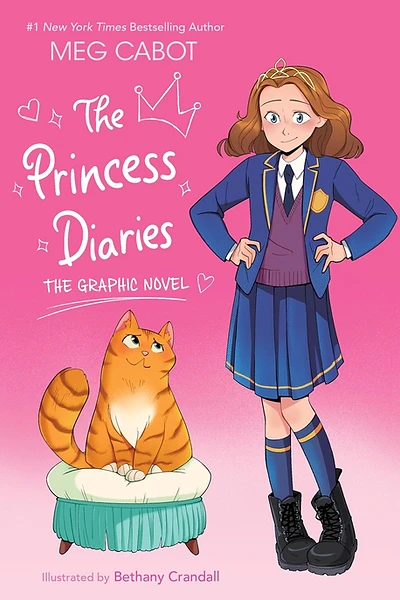
The Princess Diaries: The Graphic Novel
by Meg Cabot
Pacing MaterialMia Thermopolis thinks she's just an ordinary teenager — until she discovers she's the heir to the throne of Genovia, forcing her to navigate royal training, high school drama, and the question of who she really wants to be.
Big Idea
Identity isn't about what you're born into — it's about the choices you make and who you choose to become.
Discussion Questions
- 1.How does Mia's discovery of her royal identity change her life?
- 2.What pressures does Mia face as she learns to be a princess?
- 3.How does Mia balance her ordinary life with her royal responsibilities?
- 4.What would you do if you found out you were royalty?
Classroom Activity
Identity Portrait
Students create a two-sided portrait showing their public and private selves, exploring the theme of hidden identity.
Lesson Plan
Learning Goals
- Analyze how characters navigate dual identities
- Explore themes of identity, responsibility, and self-discovery
- Develop self-awareness about their own public and private selves
- Connect character experiences to personal identity
Activity Steps
- 1.Discuss how Mia balances her ordinary and royal identities
- 2.Have students create a two-sided portrait: their public self and private self
- 3.Students write a short reflection on what each side reveals
- 4.Share portraits and discuss how we present ourselves differently
- 5.Reflect on how discovering new things about ourselves changes us
Standards Connections
- ELA: RL.5.1 — Ask and answer questions about key details
- ELA: RL.5.2 — Retell stories, including key details
- ELA: RL.5.3 — Describe characters, setting, and events
- ELA: RL.8.6 — Acknowledge differences in characters' points of view
- ELA: SL.5.1 — Participate in collaborative conversations about the text
- ELA: W.5.3 — Write narratives recounting events with descriptive details
- SEL: Relationship Skills
- SEL: Social Awareness
- Art: VA:Re7 — Perceive and analyze artistic work
Pace-Write-Read Study with Pace-Write It!
Focus question: How does pacing help readers follow Mia’s changing identity as her ordinary life suddenly becomes extraordinary? In The Princess Diaries: The Graphic Novel by Meg Cabot, Mia Thermopolis learns she is the princess of Genovia while still trying to survive school, friendships, and family expectations. The graphic novel format uses quick scene changes, expressive dialogue, visual reactions, and well-timed page turns to speed up dramatic moments and slow down emotional ones, helping readers feel Mia’s confusion, humor, and growth.
| Element | How to notice or teach it in the novel |
|---|---|
| Pace | Read: Notice how the story moves quickly when Mia’s life changes fast, especially after she learns she is the heir to Genovia, and slows down when she reflects on who she is. Watch how panels, facial expressions, and short bits of dialogue control the speed. Classroom Activity: Write a 6-panel graphic scene about a student who gets surprising news; use one fast section and one slow reflection section. |
| Plot | Read: Track how Mia’s ordinary school life is interrupted by the discovery that she is royalty, and notice how each event pushes the next problem—royal lessons, friendship stress, and identity questions. The plot pacing balances everyday drama with big life changes. Classroom Activity: Create a plot ladder with 5 steps showing how one surprise can change a character’s whole week, then write a paragraph for step 3. |
| Prosody | Read: Listen to how Mia’s words might sound aloud—awkward, sarcastic, worried, or surprised—and how the graphic novel’s speech bubbles support that rhythm. Prosody helps readers hear the emotional pace of Mia’s voice. Classroom Activity: Choose one imagined conversation between Mia and her grandmother and script it with performance notes like pause, whisper, or burst out. |
| Word pause | Read: Notice where short phrases, ellipses, or broken-up speech make Mia hesitate, especially when she is embarrassed, shocked, or unsure of herself. These word pauses slow the moment and show her inner discomfort. Classroom Activity: Write a short dialogue in which a character learns a secret and uses at least 3 pauses to reveal nervousness. |
| Concept | Read: Think about the big concept of identity and belonging—Mia is caught between being a regular teen and a princess. The pacing helps readers see how quickly life can change while the bigger question of self-discovery takes longer to answer. Classroom Activity: Write 4 sentences explaining a character who belongs to two different worlds, then add a short scene that shows the conflict. |
| Voice & World View | Read: Notice Mia’s personal, teen-centered way of seeing the world. Her reactions to royal rules, school drama, and family pressure shape the pace because readers move through events with her feelings first. Classroom Activity: Write a first-person comic caption from the point of view of a student whose day gets turned upside down by family news. |
| Setting & Place | Read: Compare the feel of Mia’s school and home life with the formal world connected to Genovia and royal expectations. The shift between places changes pacing by moving from familiar daily routines to high-pressure public spaces. Classroom Activity: Describe two settings for the same character—one ordinary, one intimidating—and explain how each place changes the speed of the scene. |
| Point of View | Read: Follow how Mia’s point of view keeps readers close to her confusion, embarrassment, and growth. Because the story stays centered on her perspective, surprises arrive when she experiences them. Classroom Activity: Rewrite a moment like Mia’s big royal revelation from another character’s point of view, such as her mother or grandmother. |
| Original Characters | Read: Notice how Mia stands out as a relatable character who is both ordinary and unexpectedly royal. Supporting characters, especially her grandmother, help create conflict and accelerate the action because each one brings different expectations about who Mia should be. Classroom Activity: Invent an original character with two clashing identities and write a character card with a 5-line mini-scene. |
| Dialogue | Read: Watch how dialogue reveals conflict quickly, especially when Mia talks with adults who expect her to act differently. In a graphic novel, short exchanges can speed up tension and make scenes feel immediate. Classroom Activity: Write 8 lines of dialogue between a student and a strict mentor with no narration, showing disagreement through word choice alone. |
| Details | Read: Look for small details in expressions, clothing, school spaces, and royal manners that help readers understand Mia’s world without long explanations. These details let the book move quickly while still building meaning. Classroom Activity: List 6 visual details for a scene where a character feels out of place, then use them in a short paragraph or comic panel notes. |
| Descriptions | Read: Even though graphic novels rely on art, description still matters through captions, visual cues, and selective wording. Notice how Mia’s awkwardness, stress, and surprise are shown through concise descriptions and images rather than long paragraphs. Classroom Activity: Write a brief description of a character entering a room where they do not belong, using only 5 sentences and at least 3 visual clues. |
| Strong First Lines | Read: Think about how a strong beginning in a story like Mia’s needs to introduce normal life while hinting that change is coming. A strong opening helps set pacing by pulling readers in fast. Classroom Activity: Write 3 possible opening lines for a realistic graphic novel about a student discovering a secret identity. |
| Immediacy & Engagement | Read: Notice how the graphic novel format makes Mia’s problems feel present right away through close-up reactions, direct dialogue, and quick transitions. Readers stay engaged because they experience each awkward or dramatic moment almost as it happens. Classroom Activity: Draft the opening of a scene that starts with an immediate problem, such as a text, announcement, or family surprise. |
| Story Scenes & Summaries & Unique Structures | Read: Watch how some parts of Mia’s story are shown as full scenes while other events are moved through quickly. This balance keeps the pacing from dragging while still highlighting the most important emotional and dramatic moments. Classroom Activity: Write one full scene and one 3-sentence summary about the same character’s difficult day, then explain why each form fits its moment. |
| Flashback & Flash Forward & Cliffhangers | Read: Notice whether the story uses remembered moments, hints of what may come, or chapter-ending suspense to keep readers turning pages. In Mia’s story, cliffhanger-like transitions fit the tension of balancing school life with royal expectations. Classroom Activity: End a one-page comic script with a cliffhanger after a character receives shocking family news. |
| Tension & Suspense & Surprise | Read: Pay attention to the tension that comes from Mia trying to figure out how to act once she learns she is a princess. Surprise drives the pacing early, and suspense continues as readers wonder whether she can belong in both worlds. Classroom Activity: Write a short scene where a character must enter a place where they feel they do not fit, building tension in 5 steps. |
| Page Turns and Chapter Breaks | Read: In a graphic novel, page turns can reveal new information suddenly, which matches Mia’s experience of one surprise after another. Notice how breaks between scenes or chapters give readers time to absorb school drama, family revelations, and identity conflict. Classroom Activity: Plan a 4-page comic and mark one page turn where the biggest surprise should be revealed. |
| Performance | Read: Notice how characters perform different versions of themselves—Mia as a regular teen, Mia as a possible princess, and other characters acting formally or casually depending on the setting. This performance affects pacing because the shifts create moments of awkwardness, tension, and humor. Classroom Activity: Write a monologue for a character who must act one way in public and another way in private. |
| Personality | Read: Mia’s personality shapes the rhythm of the story because her insecurity, honesty, and wit color every moment. Notice how her personality keeps serious royal conflict grounded in relatable middle-school or teen feelings. Classroom Activity: Write a 7-sentence character sketch of a student whose personality clashes with a new role they must take on. |
| Humor | Read: Notice how humor softens stressful moments in Mia’s journey and keeps the pacing lively. Awkward interactions, exaggerated reactions, and the contrast between normal teen life and royal training create comic energy. Classroom Activity: Write a humorous school scene in which a character’s secret makes an ordinary class period feel ridiculous. |
| Pause | Read: Watch for moments where the story briefly pauses so Mia can think, worry, or process what is happening. These pauses are important because they let the theme of identity and belonging breathe between dramatic events. Classroom Activity: Insert a reflective pause into a fast-moving scene by writing 3 inner-thought captions for the main character. |
| Poetry and Poetic Devices | Read: Even in a realistic graphic novel, repetition, contrast, and strong imagery can create poetic effects. Notice how the contrast between ‘ordinary girl’ and ‘princess’ works like a repeated image in Mia’s story. Classroom Activity: Write a 6-line poem beginning with ‘I am…’ and ‘I am not…’ to show a character pulled between two identities. |
| Repetition | Read: Notice repeated ideas, worries, or conflicts—Mia repeatedly returns to questions about who she is, what others expect, and where she belongs. Repetition helps structure the pace by circling back to the central theme. Classroom Activity: Write a paragraph that repeats one key phrase 3 times to show a character’s growing stress or determination. |
| Rhythm | Read: Observe the rhythm created by short dialogue bursts, reaction panels, and transitions between school problems and royal duties. This back-and-forth rhythm mirrors Mia’s divided life. Classroom Activity: Write a scene using alternating short and long sentences to show a day shifting between chaos and calm. |
| Punctuation | Read: Look at how question marks, exclamation points, ellipses, and dashes help shape Mia’s emotional pacing. In a graphic novel, punctuation can make a line sound breathless, hesitant, or explosive. Classroom Activity: Rewrite the same 3 lines of dialogue with different punctuation to change the mood from calm to panicked. |
| Questions | Read: Mia’s story is full of questions—about her identity, her future, and what others want from her. These questions pull readers forward and create momentum. Classroom Activity: Write 5 questions your own character would ask after learning a secret that changes their life. |
| Compare-Contrast | Read: Compare Mia’s old understanding of herself with her new royal identity, and contrast everyday school pressures with the demands of Genovia. The pacing often depends on these sharp contrasts. Classroom Activity: Make a T-chart comparing a character’s ‘before’ life and ‘after’ life, then write a scene that shows one difference. |
| Objects | Read: Notice the importance of meaningful objects that connect Mia to school life or royal life—items, clothes, notes, or formal symbols can signal which world she is in. Objects can speed up storytelling by carrying emotional meaning quickly. Classroom Activity: Choose one object that represents a character’s old life and one that represents a new role; write a scene where both objects appear. |
| Threes | Read: Look for patterns of three in reactions, problems, or attempts to adjust—school, family, and royalty; fear, confusion, and courage. Grouping ideas in threes can give the story a satisfying pace and structure. Classroom Activity: Write 3 connected mini-scenes showing a character fail, struggle, and finally respond to a new responsibility. |
| Whitespace & Negative Space | Read: In a graphic novel, empty space around a panel or between lines can slow readers down and highlight Mia’s isolation, embarrassment, or uncertainty. Notice how silence can be as meaningful as dialogue. Classroom Activity: Plan a comic panel where negative space shows a character feeling alone in a crowded room, then write the caption text. |
| Art & Graphics | Read: Study how the artwork carries pacing through panel size, facial expressions, body language, and scene transitions. In Mia’s story, the graphics help readers feel both the comedy and the stress of becoming someone new. Classroom Activity: Sketch or storyboard 4 panels showing a character’s reaction changing from confusion to acceptance. |
| Interactives & Gamification | Read: Think about how readers could interact with Mia’s identity journey by tracking choices, conflicts, or turning points. The story naturally invites decision-making questions about belonging, honesty, and responsibility. Classroom Activity: Create a ‘Choose Mia’s next move’ style decision chart with 3 options, then write the outcome of one choice. |
Pace-Write It!
20-Minute Classroom Flow Read (5 min): Read a short excerpt or selected pages from The Princess Diaries: The Graphic Novel by Meg Cabot that show Mia reacting to the news that she is heir to Genovia or struggling between school life and royal expectations. Ask students to pay attention to where the story speeds up, where it slows down, and how the art and dialogue show Mia’s feelings. Notice (5 min): Students annotate or discuss: Where do the panels move quickly? Where does Mia pause to think? How do dialogue, facial expressions, and page turns build humor, tension, or embarrassment? Chart 3 craft moves students notice, such as short dialogue bursts, reaction panels, and reflective pauses. Write (7 min): Students write their own identity-conflict scene inspired by Mia’s situation. They should create a character who belongs to two worlds and use pacing on purpose. Writing frame: ‘At first, I thought I was just __________. Then I found out __________. The room felt __________. Everyone expected me to __________, but inside I was thinking __________. When __________ spoke, I answered, “__________” but I really meant __________. By the end of the scene, I still didn’t know whether I belonged in __________ or __________.’ Challenge students to include: 1 pause, 1 surprising line of dialogue, and 1 visual detail that shows the character’s emotions. Share (3 min): Partners read their scenes aloud and point out one place where the pacing speeds up and one place where it slows down. Invite 1-2 volunteers to share how they used a pause or page-turn-style surprise. Exit ticket: In 1-2 sentences, answer: How does pacing help readers understand Mia’s identity struggle in The Princess Diaries: The Graphic Novel, and what is one pacing move you used in your own writing?