 K-3
K-3P MCDONNELL
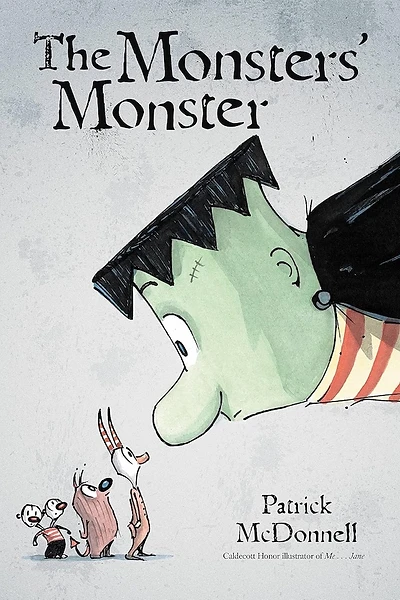
The Monsters' Monster
by Patrick McDonnell
Pacing MaterialThree little monsters build the biggest, scariest monster ever — but he turns out to be the kindest one of all.
Big Idea
Kindness is more powerful than being scary or mean.
Discussion Questions
- 1.Why wasn't the big monster scary?
- 2.How did the little monsters feel when the big monster was kind?
- 3.What does it mean to be a good friend?
Classroom Activity
Kindness Monster Puppet
Students create monster puppets and practice saying kind things to each other in character.
Lesson Plan
Learning Goals
- Understand the power of kindness
- Practice using kind words
- Express creativity through art
Activity Steps
- 1.Create monster puppets from paper bags
- 2.Practice introducing the puppet with a kind greeting
- 3.In pairs, puppets compliment each other
- 4.Reflect on how kind words feel
Standards Connections
- ELA: RL.K.1 — Ask and answer questions about key details
- ELA: RL.K.2 — Retell stories, including key details
- ELA: RL.K.3 — Describe characters, setting, and events
- ELA: RL.3.6 — Acknowledge differences in characters' points of view
- ELA: SL.K.1 — Participate in collaborative conversations about the text
- ELA: W.K.3 — Write narratives recounting events with descriptive details
- SEL: Relationship Skills
- SEL: Social Awareness
- Art: VA:Re7 — Perceive and analyze artistic work
Pace-Write-Read Study with Pace-Write It!
Focus question: How does an author slow down and speed up a story to make a surprise ending feel powerful? In The Monsters' Monster by Patrick McDonnell, three little monsters work together to build the biggest and scariest monster they can imagine. McDonnell uses pacing by repeating the monsters’ collecting and building actions, stretching the anticipation as the creature grows, and then slowing the story at the surprising moment when the monster speaks with unexpected kindness.
| Element | How to notice or teach it in the novel |
|---|---|
| Pace | Read: Notice how the story moves steadily as the three little monsters gather parts and build their giant creature, then slows at the moment the monster comes alive and speaks kindly. Classroom Activity: Write 3 short sentences that speed up a building scene and 1 longer sentence that slows down the surprise ending. |
| Plot | Read: Follow the simple plot: the little monsters want something scary, they build it piece by piece, and the result is not what they expected because the biggest monster is gentle and kind. Classroom Activity: Draw and label the beginning, middle, and end of a story where characters build something that turns out differently than planned. |
| Prosody | Read: Listen for how the repeated monster actions and the change in the giant monster’s voice affect how the story sounds when read aloud. Classroom Activity: Practice reading the building pages in an excited voice and the kind monster’s words in a calm, warm voice, then write one line for each voice. |
| Word pause | Read: Notice places where a reader naturally pauses before the big reveal, especially when the little monsters are waiting to see what they have made. Classroom Activity: Write a 2-sentence suspense moment and mark with a slash where a reader should pause. |
| Concept | Read: The big idea is that someone can look scary on the outside and still be loving and friendly on the inside. Classroom Activity: Write about a character who seems one way at first but shows a different, kinder heart by the end. |
| Voice & World View | Read: Patrick McDonnell tells the story in a playful, gentle way that lets readers laugh at the little monsters’ scary plans while still caring about them. Classroom Activity: Write 4 sentences about a spooky character using a voice that is funny and sweet instead of truly frightening. |
| Setting & Place | Read: Notice the simple monster world where the three little monsters can search for parts and create their giant monster; the uncluttered setting keeps attention on the action and feelings. Classroom Activity: Describe a workshop, cave, or yard where unusual characters build something together. |
| Point of View | Read: The story is told from an outside narrator point of view, so readers can watch all three little monsters and the giant monster at once. Classroom Activity: Rewrite one moment from the point of view of the giant monster as he wakes up and sees the little monsters staring at him. |
| Original Characters | Read: The three little monsters are memorable because they are small, determined, and alike in their goal, while the giant monster is original because he breaks the scary-monster expectation by being kind. Classroom Activity: Invent a surprising character who looks fierce but acts helpful, and write 3 traits. |
| Dialogue | Read: Pay attention to how the giant monster’s words matter because they reveal his gentle personality and change the whole story. Classroom Activity: Write a short dialogue between builders and the thing they created, showing a surprise in what the new character says. |
| Details | Read: Notice the small details about collecting, building, and watching the monster come to life; these details help stretch the pacing before the twist. Classroom Activity: List 5 details characters could gather to build a creature or machine, then use 3 in a sentence. |
| Descriptions | Read: McDonnell uses descriptions that help readers picture a giant, scary-looking monster and then contrast that image with his warm behavior. Classroom Activity: Write 2 describing sentences—one about a frightening appearance and one about a kind action. |
| Strong First Lines | Read: Notice how the opening quickly introduces the three little monsters and their wish for a monster, starting the story without delay. Classroom Activity: Write an opening line that introduces characters and their big plan right away. |
| Immediacy & Engagement | Read: The story keeps readers engaged because the monsters want something now, and we want to know if their plan will work. Classroom Activity: Write 3 sentences that show characters starting a plan immediately, using action words like grabbed, ran, stacked, or built. |
| Story Scenes & Summaries & Unique Structures | Read: Some parts feel like quick summary as the little monsters gather and construct, while the waking-up moment feels like a fuller scene. Classroom Activity: Write one summary sentence about building over time and then 3 scene sentences about the exact moment the creation opens its eyes. |
| Flashback & Flash Forward & Cliffhangers | Read: This book does not use flashback much, but it does create a cliffhanger feeling before the monster reveals who he is. Classroom Activity: End a short paragraph with a cliffhanger line just before a surprising character speaks. |
| Tension & Suspense & Surprise | Read: Tension builds because readers expect the biggest monster to be the scariest, so the gentle ending becomes a funny and meaningful surprise. Classroom Activity: Write a mini-story where a character prepares for something frightening, but the ending reveals kindness instead. |
| Page Turns and Chapter Breaks | Read: In this picture book, page turns matter because each turn can reveal a new part of the building process or the giant monster’s reaction. Classroom Activity: Plan a 4-page picture book and write what surprise or new action will be revealed on each page turn. |
| Performance | Read: This story works well as a performance because students can act out the little monsters gathering parts, building, and then reacting to the giant monster’s kind words. Classroom Activity: Write a tiny script with roles for three little monsters and one gentle giant monster. |
| Personality | Read: The little monsters show determined, bossy, excited personalities, while the giant monster shows calm and caring personality traits that change the mood. Classroom Activity: Choose one character and write 3 actions that show personality without naming the trait. |
| Humor | Read: The humor comes from the mismatch between what the little monsters want—a terrifying creature—and what they actually get—a sweet one. Classroom Activity: Write a funny ending where characters try to make something scary, but it becomes silly or kind instead. |
| Pause | Read: Pause after the building is finished and before the monster speaks, because that quiet moment makes the surprise stronger. Classroom Activity: Add an ellipsis or line break to create a pause before the last line of a short suspenseful scene. |
| Poetry and Poetic Devices | Read: Notice the simple, musical repetition and the strong contrast between scary looks and kind actions, which gives the story a poetic feel. Classroom Activity: Write 4 short lines about a monster using repetition such as 'Big hands, big feet, big heart.' |
| Repetition | Read: Repetition in the monsters’ actions helps the story feel patterned and builds anticipation as their project grows. Classroom Activity: Write a repeating pattern for a class story, such as 'They found ___. They carried ___. They added ___.' |
| Rhythm | Read: The rhythm of the story is created by repeated building actions followed by the slower, calmer ending with the kind giant monster. Classroom Activity: Clap the beat of 3 repeated action sentences, then write your own set of rhythmic building sentences. |
| Punctuation | Read: Notice how punctuation can help show excitement during the building and calm certainty when the giant monster speaks kindly. Classroom Activity: Write one excited sentence with an exclamation mark and one calm sentence with a period for a surprise character. |
| Questions | Read: Readers may ask, 'What will the monster be like?' and 'Will he be scary?' These questions keep the pacing moving forward. Classroom Activity: Write 3 questions a reader might ask before the giant monster speaks, then answer one in your ending. |
| Compare-Contrast | Read: Compare the little monsters’ expectation of a frightening monster with the reality of a friendly one; this contrast is the heart of the story’s pacing and theme. Classroom Activity: Make a T-chart comparing 'Looks scary' and 'Acts kind' for the giant monster, then write 2 compare-contrast sentences. |
| Objects | Read: The objects the little monsters collect and use to build are important because each added part increases the sense that something enormous is coming. Classroom Activity: Choose 4 objects for a made-up creature and write how each object changes its appearance or behavior. |
| Threes | Read: The use of three little monsters creates a strong pattern that feels complete and familiar, like many folktales and picture books. Classroom Activity: Write a story plan using three characters, three collected items, or three steps in a building project. |
| Whitespace & Negative Space | Read: Notice how the clean page design and open space in the illustrations help readers focus on the monsters, the growing creature, and the important pause before the ending. Classroom Activity: Sketch a page with one character in lots of empty space, then write 1 sentence explaining how the emptiness builds attention. |
| Art & Graphics | Read: The illustrations are essential because they show the little monsters’ expressions, the giant monster’s size, and the contrast between scary design and gentle feeling. Classroom Activity: Draw a character who looks frightening but shows kindness through facial expression or body language, then label 2 visual clues. |
| Interactives & Gamification | Read: Readers can interact with this story by predicting what part the little monsters will add next and whether the giant monster will be scary or kind. Classroom Activity: Create a class prediction chart with two columns—'Scary clues' and 'Kind clues'—and add evidence from the story before writing a new surprise ending. |
Pace-Write It!
20-Minute Classroom Flow\nRead (5 min): Read The Monsters' Monster aloud. Pause to show the pages where the three little monsters gather and build, and stop right before the giant monster reveals his true nature. Ask: 'What do you think will happen next?'\nNotice (5 min): Guide students to notice how Patrick McDonnell repeats the building actions to stretch time and create suspense. Discuss how the pacing slows at the end so the giant monster’s kindness feels surprising and important. Make a quick class chart: 'Fast parts' and 'Slow parts.'\nWrite (7 min): Students write their own short surprise character scene. Writing frame: '___, ___, and ___ wanted to make a very ___. First, they found ___. Next, they added ___. Then, they waited... When it opened its eyes, it said, "___." Everyone was surprised because ___." Encourage students to make the character look one way but act another way.\nShare (3 min): Partners read their scenes aloud with expression, making the building part sound quick and the surprise ending sound slow and clear. Invite 1-2 students to share with the class.\nExit ticket: Write one sentence answering: 'How did the author use pacing to make the ending of The Monsters' Monster surprising?'