 K-2
K-2P BURACH
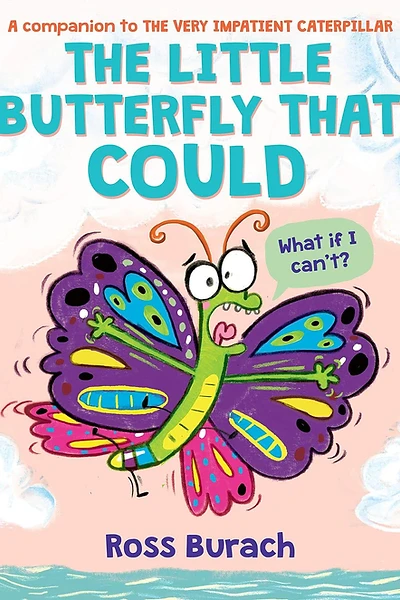
The Little Butterfly That Could
by Ross Burach
Pacing MaterialA nervous little butterfly discovers it has the courage to fly in this funny, heartfelt companion to The Very Impatient Caterpillar about facing your fears.
Big Idea
Even when you're scared, you can do hard things — one flap at a time.
Discussion Questions
- 1.What is the little butterfly afraid of?
- 2.How does the butterfly overcome its fear?
- 3.How does the author use humor to talk about worry?
- 4.What's something you were scared to try but did anyway?
Classroom Activity
Can-Do Stories
Write a 'can-do' story about a time you faced a big challenge, then illustrate the moment you overcame it.
Lesson Plan
Learning Goals
- Explore themes of courage and perseverance
- Analyze how humor can help with anxiety
- Practice writing about overcoming challenges
Standards Connections
- ELA: RL.K.1 — Ask and answer questions about key details
- ELA: RL.K.2 — Retell stories, including key details
- ELA: RL.K.3 — Describe characters, setting, and events
- ELA: RL.2.6 — Acknowledge differences in characters' points of view
- ELA: SL.K.1 — Participate in collaborative conversations about the text
- ELA: W.K.3 — Write narratives recounting events with descriptive details
- SEL: Self-Management
- SEL: Responsible Decision-Making
- Art: VA:Re7 — Perceive and analyze artistic work
Pace-Write-Read Study with Pace-Write It!
Focus question: How does an author slow down and speed up a story to show a character finding courage? In The Little Butterfly That Could by Ross Burach, a worried little butterfly faces the big challenge of learning to fly. Burach uses quick, funny dialogue, dramatic page turns, repeated worried thoughts, and expressive illustrations to control pacing and help readers feel the butterfly’s fear, effort, and growing perseverance.
| Element | How to notice or teach it in the novel |
|---|---|
| Pace | Read: Notice how Ross Burach speeds up the story during the butterfly’s nervous thoughts and slows it down at important moments when the little butterfly must decide whether to keep trying. The pacing matches the theme of courage and perseverance. Classroom Activity: Write 3-4 sentences about a time a character tries something scary, using one short fast sentence and one longer slow sentence to change the pace. |
| Plot | Read: Track the butterfly’s adventure from worry, to attempts, to a brave breakthrough. The plot moves forward through small obstacles that help the little butterfly grow more confident. Classroom Activity: Make a beginning-middle-end organizer and write one sentence for each part showing how the butterfly’s problem changes. |
| Prosody | Read: Listen to how the butterfly’s anxious voice sounds when read aloud and how the rhythm changes when the story becomes more exciting or reassuring. Burach’s comic timing helps readers hear the emotion. Classroom Activity: Choose one line the butterfly might say before flying and one after flying, and write both so they sound different when read aloud. |
| Word pause | Read: Notice places where a single word, a short phrase, or a line break makes readers stop and feel the butterfly’s hesitation. These pauses stretch out the scary moment. Classroom Activity: Write a 2-3 line mini-scene about standing on the edge of doing something brave, using a one-word line to create a pause. |
| Concept | Read: The big idea in this book is that courage does not mean you are not scared; it means you try anyway. The butterfly shows perseverance by facing fear step by step. Classroom Activity: Write one sentence that tells the lesson of the story, then write one example from the butterfly’s actions that proves it. |
| Voice & World View | Read: Notice the funny, nervous, child-friendly voice that makes the butterfly’s fear feel real but also playful. The world is seen through a lens where small problems can feel huge. Classroom Activity: Write 3 sentences in the voice of a tiny creature facing a big challenge, using worried but humorous thinking. |
| Setting & Place | Read: Pay attention to the outdoor natural world where the butterfly must learn to fly. Even though the setting is simple, it feels big and important because the butterfly is so small. Classroom Activity: Write a setting description of a place that feels enormous to a tiny character, using at least 3 detail words. |
| Point of View | Read: Notice how the story stays close to the little butterfly’s feelings and reactions, so readers experience fear and bravery right alongside the character. This close point of view helps pacing feel immediate. Classroom Activity: Rewrite one flying moment from the butterfly’s point of view using "I" statements. |
| Original Characters | Read: Study how Ross Burach makes the little butterfly memorable through anxious thoughts, funny reactions, and a relatable struggle. The butterfly feels original because it is both dramatic and lovable. Classroom Activity: Invent a new tiny animal character who is scared to do something important, and write 3 details that make the character unique. |
| Dialogue | Read: Listen for the way dialogue reveals the butterfly’s fear, humor, and changing confidence. The spoken lines help move the story quickly. Classroom Activity: Write a short dialogue between the butterfly and a friend who encourages it to keep trying. |
| Details | Read: Notice the small details in the butterfly’s reactions, body language, and thoughts that show fear before the butterfly is ready to fly. These details make the struggle believable. Classroom Activity: Write 4 specific details that show a character is nervous without saying "nervous." |
| Descriptions | Read: Look at how the book describes the butterfly’s experience in a simple, lively way that young readers can picture. The descriptions support the adventure without slowing it too much. Classroom Activity: Write 2-3 descriptive sentences about the air, height, or movement a butterfly might feel before taking off. |
| Strong First Lines | Read: Think about how the opening quickly introduces the butterfly’s problem and pulls readers into the emotional challenge. A strong start helps set the pace right away. Classroom Activity: Write an opening line for a story about a tiny character who is afraid to begin something new. |
| Immediacy & Engagement | Read: Notice how the butterfly’s worries feel like they are happening right now, making readers want to turn the page. Burach creates engagement through humor, urgency, and emotion. Classroom Activity: Write 3 short present-tense sentences that make a scary moment feel immediate. |
| Story Scenes & Summaries & Unique Structures | Read: Notice how some parts feel like close-up scenes of the butterfly’s fear, while other parts move more quickly to the next attempt. This balance keeps the story from feeling too slow or too rushed. Classroom Activity: Write one detailed scene sentence and one summary sentence about the butterfly practicing bravery. |
| Flashback & Flash Forward & Cliffhangers | Read: Think about how the book mostly stays in the present moment, which keeps the butterfly’s challenge feeling close and urgent. You can also notice where a page turn acts a little like a cliffhanger because readers wonder if the butterfly will fly. Classroom Activity: Write a cliffhanger ending for a page that stops right before a character tries something brave. |
| Tension & Suspense & Surprise | Read: Watch how tension builds each time the little butterfly hesitates, and how readers wait to see whether fear or courage will win. Humor softens the suspense while still keeping the challenge real. Classroom Activity: Write 3 sentences that build suspense before a character jumps, flies, or tries. |
| Page Turns and Chapter Breaks | Read: In this picture book, page turns are important because they delay the answer to what the butterfly will do next. Each turn can stretch fear or reveal progress. Classroom Activity: Plan a 4-page picture-book sequence and write what happens before and after one dramatic page turn. |
| Performance | Read: Notice how this story invites expressive read-aloud performance with worried voices, dramatic pauses, and excited changes in tone. Performing the butterfly’s emotions helps readers feel the pacing. Classroom Activity: Mark up one short passage with symbols for pause, whisper, and excited voice, then practice reading it aloud. |
| Personality | Read: The little butterfly’s personality comes through as timid, funny, dramatic, and determined. That personality shapes how long scary moments feel and how satisfying brave moments become. Classroom Activity: Write a character sketch of the butterfly using 4 personality words and one example for each. |
| Humor | Read: Look for the funny exaggeration in the butterfly’s fearful reactions and the playful style Ross Burach uses. Humor keeps the story light even while the theme is serious. Classroom Activity: Write one funny line a scared butterfly might say before trying to fly. |
| Pause | Read: Notice the moments when the story pauses on the butterfly’s doubt so readers can sit inside the feeling. These pauses make the final act of courage feel bigger. Classroom Activity: Write a mini-paragraph that includes an ellipsis or dash to show a character pausing before acting. |
| Poetry and Poetic Devices | Read: Listen for repeated sounds, playful phrasing, and lines that feel almost musical when the butterfly thinks or reacts. Even in prose, these poetic touches shape the pace. Classroom Activity: Write 2 lines about flying that use alliteration, such as repeating the same beginning sound. |
| Repetition | Read: Notice how repeated worried thoughts or repeated attempts help show the butterfly’s struggle and perseverance. Repetition also creates a pattern readers can join. Classroom Activity: Write a 3-line pattern for a character trying, failing, and trying again, repeating the same starter words. |
| Rhythm | Read: Hear how short and long sentences work together to create a bouncy rhythm that matches the butterfly’s emotions. The rhythm helps the book feel funny and alive. Classroom Activity: Write one short sentence, one medium sentence, and one long sentence about a brave moment. |
| Punctuation | Read: Pay attention to question marks, exclamation points, and ellipses that show the butterfly’s fear, surprise, and pauses. Punctuation is a big part of the book’s comic pacing. Classroom Activity: Write 3 lines of dialogue for the butterfly, each using different punctuation to show a different feeling. |
| Questions | Read: Notice how worried questions can reveal what the butterfly is thinking and make readers wonder too. Questions help pull readers deeper into the challenge. Classroom Activity: Write 3 questions the little butterfly might ask before its first flight. |
| Compare-Contrast | Read: Compare the butterfly at the beginning of the story with the butterfly after showing courage. The contrast helps readers see growth and perseverance. Classroom Activity: Make a T-chart labeled "Before Brave" and "After Brave" and write 3 details in each column. |
| Objects | Read: Pay attention to objects or physical parts of the butterfly’s world, such as wings and the spaces around it, that become important to the challenge of flying. Small objects can carry big meaning in a picture book. Classroom Activity: Choose one object a scared character uses for comfort or courage and write 2 sentences explaining it. |
| Threes | Read: Notice if moments, tries, or reactions come in patterns that feel satisfying, such as trying again and again before success. Patterns of three often help pacing feel complete and memorable. Classroom Activity: Write a sequence of 3 attempts a character makes before succeeding at something hard. |
| Whitespace & Negative Space | Read: Look at how open space on the page can make the butterfly seem tiny, alone, or on the edge of a big moment. The empty space helps slow readers down and feel the fear. Classroom Activity: Sketch a quick page plan with lots of blank space around one sentence about a character facing a big challenge. |
| Art & Graphics | Read: Study how Ross Burach’s expressive illustrations add motion, humor, and emotional clues to the butterfly’s journey. The art helps control pacing by showing when to linger and when action is moving fast. Classroom Activity: Draw the butterfly in two panels, one scared and one brave, and write a caption for each. |
| Interactives & Gamification | Read: Think about how the book’s lively style invites children to predict, act out, and cheer for the little butterfly. This makes the reading experience feel interactive. Classroom Activity: Create a "Courage Steps" chart with 3 levels for a character, and write one sentence for each level from scared to brave. |
Pace-Write It!
20-Minute Classroom Flow\nRead (5 min): Read aloud a key section of The Little Butterfly That Could by Ross Burach, stopping at a dramatic page turn before the butterfly’s brave action. Ask: "How do we know the butterfly is scared but still trying?"\nNotice (5 min): Students turn and talk about what speeds the story up and what slows it down. Chart student observations: repeated worried thoughts, short dialogue, punctuation, page turns, pauses, and funny illustrations that show fear and courage.\nWrite (7 min): Students write their own tiny bravery scene about a small animal or child trying something scary for the first time. Writing frame: "I am about to ________. My body feels ________. I think, '________?' I stop... Then I ________." Encourage students to add one question, one pause mark, and one strong action at the end.\nShare (3 min): Students read their scene to a partner using an expressive voice. Partners listen for where the writing slows down and where it speeds up.\nExit ticket: Write one sentence answering: "How did Ross Burach slow down the scary part and speed up the brave part in The Little Butterfly That Could?"