
 2-5
2-5GN LYALL
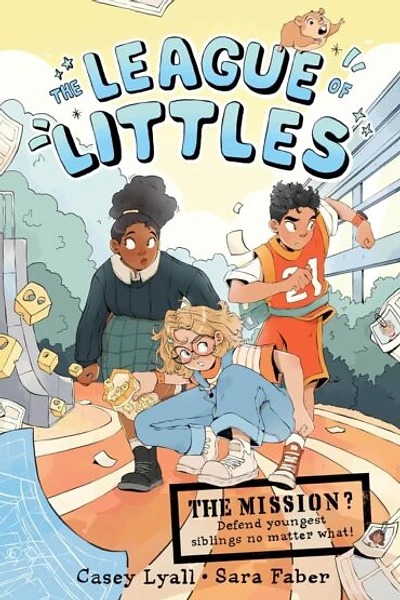
The League of Littles
by Casey Lyall
Pacing MaterialA secret league of youngest siblings band together to defend little kids everywhere — proving that being the smallest doesn't mean you can't be the bravest.
Big Idea
Even the smallest voices can make the biggest difference when you stand together.
Discussion Questions
- 1.Why do the youngest siblings form a league?
- 2.What challenges do the 'littles' face that older kids don't understand?
- 3.How does being small actually help the team?
- 4.Have you ever been the youngest or smallest in a group? How did you handle it?
Classroom Activity
My League
Design a league or club you would create. Who would be in it? What would your mission be? Draw the team and write your club pledge.
Lesson Plan
Learning Goals
- Explain how the youngest siblings in The League of Littles demonstrate bravery and teamwork, using details from the words and illustrations.
- Describe how standing together helps characters make their voices heard.
- Design an inclusive league with a clear mission that helps others.
- Combine a labeled team drawing with a written pledge that expresses shared values and responsibilities.
Activity Steps
- 1.Read or revisit selected scenes from The League of Littles. Discuss: How do the youngest siblings support one another? What makes them brave besides their size? Have students point to evidence in dialogue and illustrations.
- 2.Introduce 'My League': students will create a club inspired by the secret league. Brainstorm problems a league could help solve, such as younger children being left out of games or students feeling unheard.
- 3.Have students choose a league name, identify its members, and write a one-sentence mission. Encourage membership based on shared purpose rather than size, popularity, or special abilities.
- 4.Ask students to draw and label their team, showing how each member contributes. Add speech bubbles that show members encouraging one another or speaking up for someone.
- 5.Have students write a club pledge beginning, 'As members of ___, we promise to…' Include two or three specific commitments to courage, kindness, and teamwork. For grades 2–3, offer sentence starters; for grades 4–5, ask students to explain how their commitments support the mission.
- 6.Invite students to share their leagues with a partner or the class. Close with the reflection: How could your league show that even the smallest voices can make a big difference?
Standards Connections
- ELA: RL.2.3–RL.5.3 — Analyze characters, their responses to challenges, and their interactions using details from the story.
- ELA: RL.2.7–RL.5.7 — Examine how illustrations and visual elements contribute to understanding characters, events, and meaning.
- ELA: W.2.8–W.5.8 — Recall or gather relevant information from the book to support discussion and reflection.
- ELA: SL.2.1–SL.5.1 — Participate in collaborative discussions, build on others’ ideas, and express ideas clearly.
- SEL: Relationship skills and responsible decision-making — Create shared commitments that promote inclusion, cooperation, and helping others.
Pace-Write-Read Study with Pace-Write It!
Focus question: How does an author speed up and slow down a story to show courage growing in small but powerful moments? In The League of Littles by Casey Lyall, a secret team of youngest siblings takes on big dangers in a fast, funny graphic novel adventure. The book uses pacing through quick dialogue, dramatic page turns, action-filled panels, and pauses for emotion so readers can feel both the rush of the mission and the bravery it takes to keep going.
| Element | How to notice or teach it in the novel |
|---|---|
| Pace | Read: Notice how The League of Littles moves quickly during rescue missions and slows down when the youngest siblings make a plan or face a fear. Casey Lyall changes the speed so readers feel both adventure and resilience. Classroom Activity: Write a 6-sentence mini-scene where a small hero rushes into action, then pauses to make a brave choice. |
| Plot | Read: Notice how the plot builds from the idea that youngest siblings are often underestimated to the exciting problem of defending little kids everywhere. Each new challenge raises the stakes and shows that courage grows through action. Classroom Activity: Make a beginning-middle-end plot map for a new League mission, then write one paragraph for each part. |
| Prosody | Read: Notice how the words in dialogue and action can be read with changing expression—fast, loud, dramatic, or quiet—especially when the League reacts to danger or celebrates a win. The rhythm of speech helps the bravery feel real. Classroom Activity: Choose one exciting moment and rewrite the dialogue so a reader knows exactly where to speed up, slow down, whisper, or shout. |
| Word pause | Read: Notice where single words, ellipses, or short lines create a pause before a reveal, a worry, or a bold decision in the League’s adventure. These brief stops make readers lean in. Classroom Activity: Write a comic-style exchange between teammates using at least three intentional word pauses before the big moment. |
| Concept | Read: Notice the central concept that the smallest people can still be the bravest and most capable. The secret league idea gives the story energy because it turns an everyday family role—being the youngest—into a heroic identity. Classroom Activity: Invent a secret club for kids who are usually overlooked and write a paragraph explaining its mission and motto. |
| Voice & World View | Read: Notice the playful, confident voice that treats youngest siblings as clever protectors instead of helpless tag-alongs. The world view of The League of Littles says size does not decide strength. Classroom Activity: Write a first-person statement from a youngest sibling who is tired of being underestimated and ready to prove everyone wrong. |
| Setting & Place | Read: Notice how ordinary places become exciting because the League sees them as mission zones full of risk and possibility. Familiar kid spaces feel larger and more adventurous through the characters’ brave point of view. Classroom Activity: Pick a normal school or home setting and describe it as if it were a secret rescue headquarters. |
| Point of View | Read: Notice how the story centers the experience of the youngest siblings, helping readers understand their frustrations, teamwork, and courage. Seeing events from their side makes small moments feel important and heroic. Classroom Activity: Rewrite one event from the point of view of an older sibling who suddenly realizes the Littles are the real heroes. |
| Original Characters | Read: Notice how the League members stand out as more than just 'little kids' because they each bring their own strengths, fears, and brave choices to the mission. Their originality helps the pacing because every character reacts differently under pressure. Classroom Activity: Create a new League recruit with a code name, special skill, fear, and one sentence of dialogue. |
| Dialogue | Read: Notice how dialogue in The League of Littles is quick, funny, and purposeful, often moving the action forward while showing personality. Team talk helps build courage because characters encourage one another in the middle of danger. Classroom Activity: Write 8 lines of dialogue between two League members planning a rescue without using any narration. |
| Details | Read: Notice the small details that show what it feels like to be the youngest—being overlooked, having to squeeze into spaces, or noticing things bigger people miss. These details support the theme of resilience. Classroom Activity: List five details a youngest sibling hero would notice during a mission, then use them in a short paragraph. |
| Descriptions | Read: Notice how descriptions are efficient and vivid, giving just enough information to keep the adventure moving while still making scenes clear. In a graphic novel, words and pictures work together so description can be sharp and quick. Classroom Activity: Describe a daring rescue in 5 sentences, using strong verbs and only one adjective per sentence. |
| Strong First Lines | Read: Notice how the opening quickly pulls readers into the secret, high-stakes, slightly funny world of youngest-sibling heroes. A strong start creates momentum right away. Classroom Activity: Write three possible opening lines for a new League adventure that make readers want to turn the page immediately. |
| Immediacy & Engagement | Read: Notice how the book makes readers feel close to the action through urgent problems, expressive reactions, and the sense that danger could grow at any second. That immediacy helps bravery feel active, not distant. Classroom Activity: Write a scene that begins with the words 'Right now,' and puts a small hero in the middle of a problem. |
| Story Scenes & Summaries & Unique Structures | Read: Notice how some parts of The League of Littles zoom in on a full action scene while others move quickly through time or plans so the story does not drag. The graphic novel structure helps balance fast scenes and short summaries. Classroom Activity: Write one full scene of a rescue, then add a 2-sentence summary of what happened later that day. |
| Flashback & Flash Forward & Cliffhangers | Read: Notice whether the story uses quick reveals, remembered moments, or chapter-end suspense to deepen character feelings and keep readers hooked. Cliffhanger energy fits a secret-league adventure because readers want to know how the Littles will solve the next problem. Classroom Activity: End a short mission scene with a cliffhanger sentence that makes the danger suddenly worse. |
| Tension & Suspense & Surprise | Read: Notice how tension builds when the Littles face bigger opponents, hidden obstacles, or the possibility of failing someone who needs help. Surprise often comes when the smallest character notices the solution first. Classroom Activity: Write a paragraph where a mission seems doomed until an underestimated character changes everything. |
| Page Turns and Chapter Breaks | Read: Notice how page turns in a graphic novel can hide a reveal, a joke, or a problem, and how chapter or section breaks can pause the action at the perfect moment. Casey Lyall uses those stops to control excitement. Classroom Activity: Plan a 4-panel comic page and decide what secret or surprise should be saved for the page turn. |
| Performance | Read: Notice how the characters’ words and actions feel performable, almost like a play, with dramatic entrances, whispered plans, and bold announcements. The secret-league style invites expressive reading. Classroom Activity: Turn one rescue moment into a short script with stage directions for movement, volume, and facial expression. |
| Personality | Read: Notice how each League member’s personality affects the speed of scenes—some charge ahead, some worry, some joke, and some carefully observe. Their different traits help show that courage can look many ways. Classroom Activity: Write two versions of the same moment: one told by a bold character and one told by a cautious character. |
| Humor | Read: Notice how humor keeps the book lively even during danger, especially through the idea of tiny heroes doing serious secret work and through funny reactions or sibling dynamics. The laughs make the brave moments shine brighter. Classroom Activity: Write a humorous mission report from a Little who takes their job very seriously while describing a silly problem. |
| Pause | Read: Notice the moments when the story pauses for a look, a reaction, or a breath before the next burst of action. Those pauses give courage emotional weight because bravery often happens in a heartbeat of decision. Classroom Activity: Write a 5-line scene where the hero pauses before helping someone, and show what they are thinking. |
| Poetry and Poetic Devices | Read: Notice any sound play, vivid comparisons, or repeated phrases that make action and emotion more memorable in this graphic novel. Even adventurous prose can feel poetic when brave moments are described in striking ways. Classroom Activity: Write 4 lines comparing a small hero to something powerful in nature, such as a spark, river, or storm. |
| Repetition | Read: Notice how repeated ideas—like being little, being overlooked, and being brave—help strengthen the theme across the story. Repetition can also build humor and momentum in team talk. Classroom Activity: Write a short pep talk for the League that repeats one key phrase three times for emphasis. |
| Rhythm | Read: Notice the rhythm created by alternating action, jokes, plans, and emotional beats. This pattern keeps The League of Littles energetic without becoming confusing. Classroom Activity: Write a 6-sentence action paragraph with this rhythm: action, reaction, dialogue, action, pause, victory. |
| Punctuation | Read: Notice how exclamation points, question marks, ellipses, and dashes shape the speed and feeling of speech in tense or funny moments. In a graphic novel, punctuation helps perform the scene. Classroom Activity: Rewrite a plain sentence three ways using different punctuation to show panic, courage, and surprise. |
| Questions | Read: Notice the questions raised in the story: Can the Littles really protect others? Will they be taken seriously? How will they solve the next problem? These questions keep readers turning pages. Classroom Activity: Write five questions a reader might ask during a League mission, then answer one in a short scene. |
| Compare-Contrast | Read: Notice the contrast between little and big, overlooked and important, fear and bravery, ordinary spaces and secret-mission spaces. These comparisons sharpen the book’s theme of courage. Classroom Activity: Make a T-chart comparing an older sibling and a League member, then write a paragraph explaining who is truly more powerful and why. |
| Objects | Read: Notice how objects in a youngest sibling’s world can become important tools, clues, or symbols of bravery during a mission. In adventure stories, ordinary objects often gain new meaning. Classroom Activity: Choose one small object a Little carries and write a scene showing how it helps save the day. |
| Threes | Read: Notice if events, jokes, attempts, or team actions come in groups of three, a pattern that often makes stories feel satisfying and well-paced. Three tries can show persistence and resilience clearly. Classroom Activity: Write a scene where the League tries three different plans before the third one works. |
| Whitespace & Negative Space | Read: Notice how empty space around panels, words, or reactions can slow the reading and highlight an important feeling or reveal. In a graphic novel, silence on the page can be powerful. Classroom Activity: Sketch or describe a 3-panel sequence with very few words, using empty space to show fear turning into courage. |
| Art & Graphics | Read: Notice how facial expressions, panel size, motion lines, and visual humor help control pacing in The League of Littles. The graphics make fast scenes faster and emotional pauses clearer. Classroom Activity: Design a comic panel layout for a brave moment, including one large panel for the most important action. |
| Interactives & Gamification | Read: Notice how the secret-league setup feels like a game or mission system, with rules, roles, and challenges that invite readers to imagine joining in. That playful structure keeps engagement high while supporting the theme of courage. Classroom Activity: Create a 'League of Littles Mission Card' with a code name, challenge level, tools, and a one-paragraph mission description. |
Pace-Write It!
20-Minute Classroom Flow\nRead (5 min): Read a short, high-action section from The League of Littles by Casey Lyall. Ask students to listen for places where the story speeds up and slows down as the youngest siblings face a problem and choose to be brave.\nNotice (5 min): Chart what students observe: quick dialogue, short action beats, expressive punctuation, page-turn suspense, and pauses before a courageous decision. Ask: How do the words and pictures help us feel the mission?\nWrite (7 min): Students write their own mini 'League-style' scene about a small hero helping someone. Writing frame: 'When ___ happened, ___ felt small but not helpless. First, ___. Then, ___. For one second, ___ paused and thought, "___." After that, ___. In the end, ___ proved that ___.'' Encourage students to include one fast part, one pause, and one brave line of dialogue.\nShare (3 min): Partners read their scenes aloud with expression, noticing where the pacing speeds up and slows down. Invite 1-2 students to share a line that shows courage.\nExit ticket: Write one sentence answering: How did you use pacing to show resilience or courage in your scene?