 K-3
K-3P FOOD-GROUP
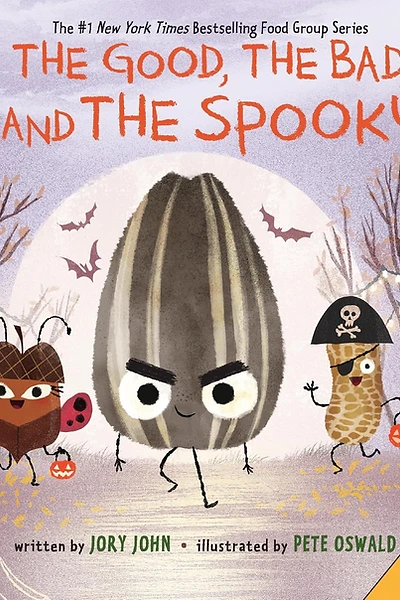
The Good, The Bad, and The Spooky
by Jory John
Pacing MaterialThe Bad Seed faces his fears in a spooky Halloween adventure that proves even the toughest seed can get spooked.
Big Idea
Sometimes things seem spooky, but with courage and friends, we can face our fears.
Discussion Questions
- 1.What does the Bad Seed think is spooky? What do YOU think is spooky?
- 2.How does the Bad Seed handle being scared? Is that a good strategy?
- 3.What is the difference between spooky and scary?
- 4.Have you ever been scared of something that turned out to be fun?
- 5.What can you do when you feel spooked or scared?
Classroom Activity
Spooky Story Theater
Students write a short story titled 'The Good, The Bad, and The ___' featuring a character who overcomes a spooky challenge, using their own ending.
Lesson Plan
Learning Goals
- Understand character feelings and motivations
- Explore the difference between spooky and scary
- Develop coping strategies for fear and anxiety
- Practice narrative writing with a beginning, middle, and end
Activity Steps
- 1.Discuss what makes something 'spooky' versus 'scary.'
- 2.Brainstorm a list of not-too-spooky challenges (e.g., dark room, strange noise).
- 3.Each student writes: 'The Good, The Bad, and The ___' on top of their paper.
- 4.Students write a 3-sentence story where their character faces a spooky challenge and finds a creative solution.
- 5.Students illustrate their story.
- 6.Volunteers share their stories in the 'campfire' circle.
Standards Connections
- ELA: RL.K-3.3 (Character Development)
- ELA: RL.K-3.7 (Illustrations)
- ELA: W.K-3.3 (Narrative Writing)
- SEL: Self-Regulation and Coping Skills
Pace-Write-Read Study with Pace-Write It!
Focus question: How does an author slow down and speed up a spooky story to show fear, courage, and friendship? In The Good, The Bad, and The Spooky by Jory John, the Bad Seed heads into a funny Halloween adventure where even a tough character gets scared. Jory John uses pacing through page turns, short dialogue, suspenseful moments, and humorous pauses to help readers feel the spooky tension and then the brave payoff.
| Element | How to notice or teach it in the novel |
|---|---|
| Pace | Read: Notice how the story moves quickly during spooky surprises and slows down when the Bad Seed hesitates, looks around, or reacts to something creepy. Classroom Activity: Write 3 short sentences that speed up a scary moment for the Bad Seed, then 3 longer sentences that slow it down as he tries to be brave. |
| Plot | Read: Track how the Bad Seed begins with confidence, faces spooky Halloween problems, and grows through the adventure toward courage and friendship. Classroom Activity: Make a beginning-middle-end organizer and write one sentence for each part showing how the plot builds fear and then resolution. |
| Prosody | Read: Listen for how the funny-spooky tone changes when reading the Bad Seed’s lines aloud, especially when he tries to sound tough but is actually nervous. Classroom Activity: Choose one scene and practice reading it two ways—brave voice and scared voice—then write one sentence about which version matches the moment best. |
| Word pause | Read: Notice places where a pause before a key word or reaction makes the spooky moment funnier, such as when the Bad Seed spots something unexpected. Classroom Activity: Write a sentence about the Bad Seed seeing a spooky Halloween object and use a dash or ellipsis to create a pause before the surprise word. |
| Concept | Read: Think about the big idea that courage does not mean never being scared; it means facing fears, especially with friendship and support. Classroom Activity: Write a 2-sentence lesson the Bad Seed learns about courage during this spooky adventure. |
| Voice & World View | Read: Notice the Bad Seed’s voice—grumpy, funny, dramatic, and secretly vulnerable—and how his world view changes when fear becomes real. Classroom Activity: Write a mini diary entry in the Bad Seed’s voice about Halloween night, showing both toughness and fear. |
| Setting & Place | Read: Pay attention to how the Halloween setting creates mood with spooky decorations, dark spaces, and eerie details that shape the Bad Seed’s reactions. Classroom Activity: Describe a Halloween setting for the Bad Seed using 4 sensory details that make the place feel spooky but playful. |
| Point of View | Read: Notice how the story lets readers stay close to the Bad Seed’s feelings so we understand his fear, embarrassment, and brave choices. Classroom Activity: Rewrite one spooky moment from the point of view of a friend watching the Bad Seed act tough. |
| Original Characters | Read: Study how Jory John makes the Bad Seed memorable by mixing toughness, humor, and fear into one character. Classroom Activity: Invent a new snack-food friend for the Bad Seed and write 3 sentences showing how that character helps him during a spooky moment. |
| Dialogue | Read: Listen for short, funny dialogue that reveals the Bad Seed’s personality and keeps the pace moving during tense scenes. Classroom Activity: Write 4 lines of dialogue between the Bad Seed and a friend as they hear a spooky sound and decide what to do next. |
| Details | Read: Notice the small details in the Bad Seed’s expressions, movements, and Halloween surroundings that make the fear feel real and the humor feel sharp. Classroom Activity: Write 5 quick details you might notice if you were standing beside the Bad Seed during the spooky adventure. |
| Descriptions | Read: Look for descriptive words that help readers picture creepy-but-funny moments, not just scary ones. Classroom Activity: Write 3 describing sentences about a spooky place the Bad Seed must enter, using one color word, one sound word, and one feeling word. |
| Strong First Lines | Read: Think about how a strong opening in a humorous spooky story can grab attention right away by showing attitude, problem, or surprise. Classroom Activity: Write an opening line for a new Bad Seed Halloween story that sounds bold but hints he may get scared. |
| Immediacy & Engagement | Read: Notice how the action feels close and immediate when the Bad Seed reacts right in the moment to something spooky. Classroom Activity: Write 4 sentences in the present tense about the Bad Seed opening a creaky door so the reader feels like it is happening now. |
| Story Scenes & Summaries & Unique Structures | Read: Notice when the story zooms into a full spooky scene and when it quickly summarizes what happened to keep the adventure moving. Classroom Activity: Write one detailed scene of the Bad Seed hearing a strange noise, then write a 1-sentence summary of what happens next. |
| Flashback & Flash Forward & Cliffhangers | Read: Think about places where the story could remind us of the Bad Seed’s past tough behavior or end a page on a suspenseful moment before the reveal. Classroom Activity: Write a 2-sentence flashback about a time the Bad Seed said he was never afraid, then add a cliffhanger sentence about what he sees now. |
| Tension & Suspense & Surprise | Read: Watch how Jory John builds tension with waiting, wondering, and sudden surprises that are spooky but also funny. Classroom Activity: Write a short paragraph where the Bad Seed walks toward a shadow, expects one thing, and gets surprised by something else. |
| Page Turns and Chapter Breaks | Read: Notice how a page turn can hide the next spooky reveal and make readers want to keep going. Classroom Activity: Plan a 2-page spread by writing what happens before the page turn and what big surprise appears after it. |
| Performance | Read: Notice how facial expressions, dramatic reactions, and exaggerated fear make the story feel performative and entertaining. Classroom Activity: Choose one Bad Seed reaction and write a stage direction for how a student could act it out while reading aloud. |
| Personality | Read: Pay attention to how the Bad Seed’s big personality shapes the pacing because his dramatic attitude stretches small moments into funny ones. Classroom Activity: Write 3 sentences that show the Bad Seed pretending to be fearless even though his personality gives him away. |
| Humor | Read: Notice how the book balances spooky moments with humor so readers laugh while still feeling suspense. Classroom Activity: Write a funny comparison for the Bad Seed’s fear, such as comparing his shiver or jump to something silly. |
| Pause | Read: Listen for moments where a pause after a spooky sound or before the Bad Seed speaks increases suspense. Classroom Activity: Write a mini scene using line breaks or punctuation to create a pause before the Bad Seed admits he is scared. |
| Poetry and Poetic Devices | Read: Notice any playful sound patterns or repeated spooky words that make the text fun to say aloud. Classroom Activity: Write a 4-line spooky poem about the Bad Seed using alliteration, such as creepy, creaky, costume, or crunch. |
| Repetition | Read: Watch for repeated phrases, reactions, or patterns that make the humor stronger and show the Bad Seed’s growing fear. Classroom Activity: Write a short passage where the Bad Seed repeats a brave sentence 3 times, but each time he sounds less sure. |
| Rhythm | Read: Feel how short and long sentences work together to create a rhythm that matches sneaking, stopping, and startling. Classroom Activity: Write one sentence with a slow rhythm about walking carefully, then one quick sentence about the Bad Seed suddenly jumping. |
| Punctuation | Read: Notice how exclamation points, ellipses, question marks, and dashes help show the Bad Seed’s emotions and control pacing. Classroom Activity: Write 3 lines the Bad Seed might say during Halloween night, each using different punctuation to show a different feeling. |
| Questions | Read: Pay attention to questions in the story or questions readers ask themselves, like what is making the sound or whether the Bad Seed will be brave. Classroom Activity: Write 3 questions the Bad Seed might ask himself while exploring a spooky place. |
| Compare-Contrast | Read: Compare how the Bad Seed acts at the start of the story versus how he acts after facing his fears and learning about friendship. Classroom Activity: Complete a T-chart comparing Tough Bad Seed and Brave-but-Scared Bad Seed, then write one sentence about the difference. |
| Objects | Read: Notice how Halloween objects like costumes, candy, shadows, decorations, or doors can become important to the spooky mood and pacing. Classroom Activity: Pick one object from the Halloween adventure and write 3 sentences showing how it changes from ordinary to spooky in the Bad Seed’s mind. |
| Threes | Read: Look for patterns of three in actions, sounds, or attempts because three tries often make humor and suspense stronger. Classroom Activity: Write a sequence where the Bad Seed hears 3 spooky noises, reacts each time, and finally discovers the cause. |
| Whitespace & Negative Space | Read: Notice how space on a page can make a reaction, pause, or reveal stand out when the Bad Seed is waiting or staring. Classroom Activity: Write a very short spooky scene with only 5 lines, leaving one line blank before the final reveal sentence. |
| Art & Graphics | Read: Study how the illustrations support pacing by showing the Bad Seed’s expressions, body language, and spooky Halloween visuals. Classroom Activity: Sketch a simple storyboard of 3 panels showing the Bad Seed from confident to scared to courageous, then label each panel with one sentence. |
| Interactives & Gamification | Read: Think about how readers can predict, act out, or guess what will happen next as the Bad Seed faces spooky surprises. Classroom Activity: Create a ‘What will the Bad Seed do next?’ choice card with 3 options, then write which choice best shows courage and friendship. |
Pace-Write It!
20-Minute Classroom Flow\nRead (5 min): Read aloud a spooky-funny section from The Good, The Bad, and The Spooky by Jory John. Pause to let students hear how the Bad Seed sounds tough, then nervous, then brave.\nNotice (5 min): Ask: How did the author make this part feel spooky and funny at the same time? Chart student observations about short sentences, page-turn suspense, dialogue, punctuation, and the Bad Seed’s reactions.\nWrite (7 min): Students write a short spooky scene starring the Bad Seed or a similar character who wants to seem brave. Writing frame: ‘I was not scared. Not even a little. Then I heard ____. I looked at ____. “____?” I whispered. My friend said, “____.” I took a deep breath and ____. In the end, I learned ____.’ Encourage students to include one pause mark, one question, and one funny detail.\nShare (3 min): Partners read their scenes aloud using expression. Listeners name one pacing move they heard, such as a pause, repetition, or a surprise ending.\nExit ticket: Write one sentence answering: How did Jory John use pacing to help readers feel the Bad Seed’s fear and courage?