 K-2
K-2E FOOD-GROUP
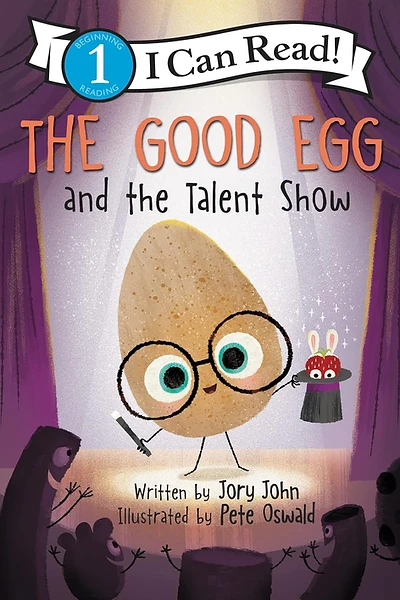
The Good Egg and the Talent Show
by Jory John
Pacing MaterialThe Good Egg enters the school talent show and discovers that being brave enough to try is its own kind of talent.
Big Idea
Everyone has a talent to share — and the courage to share it is what matters most.
Discussion Questions
- 1.What was the Good Egg's talent? Was he nervous?
- 2.What is a talent? Does everyone have one?
- 3.What is YOUR talent? What are you good at?
- 4.How did the Good Egg feel before the show? How did he feel after?
- 5.Why is it brave to perform in front of others?
Classroom Activity
Classroom Talent Show
Students plan and present a 30-second 'talent show' act showcasing something they're good at, then write a sentence introducing their talent.
Lesson Plan
Learning Goals
- Identify and celebrate personal strengths
- Develop confidence in public speaking and performance
- Practice writing complete sentences
- Build classroom community through shared celebration
Activity Steps
- 1.Discuss what a talent show is and what the Good Egg performed.
- 2.Each student chooses one thing they're good at (drawing, telling jokes, jumping, etc.).
- 3.Students write: 'My talent is ___.' on an index card.
- 4.Students practice their 30-second talent act.
- 5.Hold a classroom talent show where each student performs.
- 6.Celebrate every act with applause.
Standards Connections
- ELA: RL.K-2.3 (Character Development)
- ELA: RL.K-2.7 (Illustrations)
- ELA: SL.K-2.4 (Speaking and Listening — Presentation)
- SEL: Self-Confidence and Social Awareness
Pace-Write-Read Study with Pace-Write It!
Focus question: How does an author slow down and speed up a story to show a character finding courage? In The Good Egg and the Talent Show by Jory John, the Good Egg faces the big feelings that come with performing in front of others. The story uses pacing by moving quickly through simple moments and slowing down during nervous, important talent-show scenes so readers can feel the Good Egg’s bravery grow.
| Element | How to notice or teach it in the novel |
|---|---|
| Pace | Read: Notice how the story moves quickly through everyday school moments but slows down when the Good Egg thinks about joining the talent show and stepping onstage. The pacing helps readers feel the difference between regular time and brave time. Classroom Activity: Write 3 short sentences that speed through getting ready for the show, then 3 longer sentences that slow down the moment your character steps onto the stage. |
| Plot | Read: Track the Good Egg’s problem, choice, and change: wanting to join the talent show, feeling nervous, and learning that trying is a talent too. The plot builds courage step by step. Classroom Activity: Draw and label a beginning-middle-end story map for a student entering a talent show. |
| Prosody | Read: Listen for places where the words would sound excited, shaky, proud, or relieved when read aloud, especially in scenes about performing. Jory John’s easy-reader style supports expressive reading. Classroom Activity: Choose one line your character says before performing and mark it with symbols to show how to read it aloud: loud, soft, slow, or fast. |
| Word pause | Read: Notice where a reader naturally pauses around feeling words, stage moments, or surprising choices by the Good Egg. These pauses help the courage theme stand out. Classroom Activity: Write 4 sentences about waiting backstage and add slash marks / where a reader should pause for effect. |
| Concept | Read: The big idea is that courage and self-expression matter more than being perfect. The Good Egg learns that trying in front of others is its own success. Classroom Activity: Finish this idea in your own mini-book page: 'A talent can be _____ because _____.' |
| Voice & World View | Read: Notice the warm, encouraging voice that treats the Good Egg’s worries seriously while still keeping the story light and hopeful. The world view says mistakes and nerves are normal parts of sharing who you are. Classroom Activity: Write a short narrator paragraph in a kind, encouraging voice about a child who is scared to share a song, drawing, or dance. |
| Setting & Place | Read: Pay attention to the school setting and especially the talent show space, where a familiar place suddenly feels big and important. The setting helps make the Good Egg’s courage visible. Classroom Activity: Describe a school stage, classroom rug, or cafeteria performance area using 5 details that make it feel exciting and a little scary. |
| Point of View | Read: Notice how the story centers the Good Egg’s experience so readers stay close to the character’s feelings about being seen and judged. This helps young readers connect to the nervousness and bravery. Classroom Activity: Rewrite a talent-show moment from the point of view of another audience member, such as a classmate, teacher, or friend. |
| Original Characters | Read: Think about what makes the Good Egg memorable: a familiar character with a careful, thoughtful personality now facing a public challenge. The character feels both funny and real. Classroom Activity: Invent a new food-character for the talent show and write 3 traits, 1 worry, and 1 special way that character shows courage. |
| Dialogue | Read: Look for how speaking in the story can reveal nerves, encouragement, or excitement around the talent show. Dialogue helps move the action and show relationships. Classroom Activity: Write a 4-line conversation between the Good Egg and a friend before the performance, including one encouraging line. |
| Details | Read: Notice the small details that help readers picture talent-show preparation, such as waiting, watching, and reacting. These details make the emotional journey clearer. Classroom Activity: Make a list of 6 tiny details someone might notice right before going onstage, then turn them into sentences. |
| Descriptions | Read: Study how descriptions can show feelings without always naming them directly, such as shaky, quiet, bright, or spotlight-like moments. Descriptions support the theme of self-expression. Classroom Activity: Describe your character’s hands, feet, and face right before performing to show nervousness without using the word 'nervous.' |
| Strong First Lines | Read: Think about how the opening needs to quickly introduce the Good Egg, the school setting, and the talent-show challenge in a way that invites readers in. A strong first line creates instant interest. Classroom Activity: Write 3 different first lines for a story about a student deciding whether to join a talent show. |
| Immediacy & Engagement | Read: Notice how the story keeps readers close to the Good Egg’s moment-by-moment feelings so the talent show feels important right now. That immediacy helps readers root for the character. Classroom Activity: Write 5 'right now' sentences using words like now, today, here, and suddenly as your character waits to be called. |
| Story Scenes & Summaries & Unique Structures | Read: Notice how some parts likely move quickly over general preparation while key scenes—like deciding, waiting, and performing—get more space. This balance keeps the story clear for K-2 readers. Classroom Activity: Write one summary sentence for a week of practice and then one full scene of the exact moment the performance begins. |
| Flashback & Flash Forward & Cliffhangers | Read: Think about how a story like this could briefly look back at earlier worries or look ahead to the stage to build anticipation, even in a simple way. A stopping point before the performance can feel like a mini-cliffhanger. Classroom Activity: Write 1 flashback sentence about a time your character felt shy and 1 flash-forward sentence imagining the applause after the show. |
| Tension & Suspense & Surprise | Read: Notice how the Good Egg’s uncertainty creates tension: Will the character go through with the performance? The surprise is that bravery itself becomes the real talent. Classroom Activity: Write 3 sentences that build suspense before a performance and end with a surprising final line. |
| Page Turns and Chapter Breaks | Read: In an easy reader, page turns can hold little moments of anticipation, such as just before a name is called or before the audience reacts. Even without chapters, the breaks between pages help pacing. Classroom Activity: Plan a 4-page mini-book and choose one page turn where readers must wait to find out if the character performs. |
| Performance | Read: The talent-show performance is the center of the story, but the book also shows that performing includes preparation, feelings, and audience response. The Good Egg’s performance matters because it shows courage. Classroom Activity: Write a short performance scene with 3 parts: walking onstage, doing the talent, and hearing the crowd respond. |
| Personality | Read: Notice how the Good Egg’s personality shapes the pacing; a thoughtful, careful character may hesitate, think, and notice more before acting. Personality affects how fast events feel. Classroom Activity: Create a character web showing how a shy, silly, or confident personality would change the way a talent-show story unfolds. |
| Humor | Read: Look for gentle humor in the Good Egg’s situation and reactions, which can make scary moments feel more manageable for young readers. Humor softens tension while keeping the heart of the story. Classroom Activity: Add one funny but kind detail to a nervous performance scene, such as a squeaky shoe or a wobbly bow. |
| Pause | Read: Notice the meaningful pause before a brave choice, such as the moment before stepping forward, speaking, or beginning a talent. That pause can be emotionally powerful. Classroom Activity: Write a scene that includes this frame: 'I took a breath. I waited. Then I ____.' |
| Poetry and Poetic Devices | Read: Listen for places where repeated sounds, vivid images, or line-like phrasing could make the performance and feelings more musical. A simple story can still sound poetic. Classroom Activity: Write a 4-line poem from the Good Egg’s point of view using one simile about stage fright, such as 'My tummy felt like ____.' |
| Repetition | Read: Notice how repeated words or ideas can echo the Good Egg’s worry and then shift into confidence. Repetition helps early readers and strengthens theme. Classroom Activity: Write a refrain your character thinks 3 times, changing it each time from fear to bravery. |
| Rhythm | Read: Hear the rhythm of short, simple sentences during action and slower phrasing during reflective moments. The rhythm helps readers feel the beat of waiting and performing. Classroom Activity: Write 2 choppy sentences for nervous footsteps and 2 smoother sentences for a finished performance. |
| Punctuation | Read: Notice how punctuation like commas, periods, ellipses, question marks, and exclamation points can control speed and feeling in a talent-show story. Punctuation can sound like breathing, worrying, or cheering. Classroom Activity: Write one sentence three ways—with a period, a question mark, and an exclamation point—to show different feelings about going onstage. |
| Questions | Read: Pay attention to the questions readers or the Good Egg might ask: What if I mess up? What if I do great? These questions build the theme of courage. Classroom Activity: Write 4 questions your character asks before a performance, then answer one with a brave thought. |
| Compare-Contrast | Read: Compare the Good Egg before the talent show and during or after it. The contrast shows growth from worry to self-expression. Classroom Activity: Make a T-chart labeled 'Before the Show' and 'After the Show' and fill it with words, actions, and feelings. |
| Objects | Read: Notice how objects connected to the talent show—like a microphone, costume piece, music stand, drawing, or prop—can carry emotional meaning. Objects can show what matters to the character. Classroom Activity: Choose one talent-show object and write 5 sentences showing why it is important to your character. |
| Threes | Read: Look for patterns of three that make ideas memorable for young readers, such as three worries, three practice tries, or three brave steps. Groups of three create satisfying pacing. Classroom Activity: Write a sequence of three actions your character takes to get ready: 'First ____, next ____, last ____.' |
| Whitespace & Negative Space | Read: Notice how space on the page in an easy reader can make a single thought or feeling stand out, especially before a big moment onstage. Less text can slow readers down and highlight bravery. Classroom Activity: Create a one-page spread with only 1 sentence about the moment before performing and leave room around it to make the feeling feel big. |
| Art & Graphics | Read: Think about how illustrations in a Good Egg book help show facial expressions, body language, and audience reaction during the talent show. The art supports pacing by showing what words do not need to explain. Classroom Activity: Draw three storyboard boxes for the Good Egg-like character: backstage, onstage, and after the applause, then add one sentence under each. |
| Interactives & Gamification | Read: Imagine how readers could interact with the story by predicting what the Good Egg will do, acting out feelings, or voting on brave choices. Interactive thinking keeps students engaged with courage and self-expression. Classroom Activity: Make a 'Brave Choice Meter' with 3 levels and write what your character might do at each level before finally choosing to perform. |
Pace-Write It!
20-Minute Classroom Flow Read (5 min): Read aloud the part of the story where the Good Egg thinks about the talent show and the moment of performing. Ask students to listen for where the story feels fast and where it feels slow. Notice (5 min): Chart two columns: 'Fast Parts' and 'Slow Parts.' Guide students to notice that Jory John speeds through ordinary moments but slows down for feelings, waiting, and stepping onstage. Ask: How does that help us feel the Good Egg’s courage? Write (7 min): Students write their own mini talent-show scene about a character being brave enough to share something. Writing frame: 'I wanted to ____. At first, I felt ____. I waited by the ____. My hands ____. My heart ____. Then I took a breath and ____. When it was over, I learned ____.' Encourage students to use one fast sentence and one slow, detailed sentence. Share (3 min): Partners read their favorite sentence aloud and say whether it is a fast part or a slow part. Invite 1-2 students to share how they showed courage in their writing. Exit ticket: Complete this sentence on a sticky note: 'Pacing helps readers feel courage when the author ____.'