
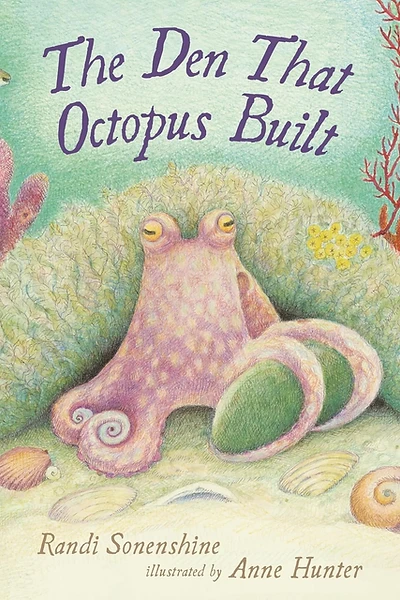
 K-3
K-3P SONENSHINE
The Den That Octopus Built
by Randi Sonenshine, illustrated by Anne Hunter
Pacing MaterialFollowing the cumulative-house-that-Jack-built pattern, this lyrical picture book explores how an octopus constructs its den and raises its young in the sea.
Big Idea
Animals build shelters tailored to their needs and environments, and studying how reveals the deep connection between creature and habitat.
Discussion Questions
- 1.Why does the octopus build a den?
- 2.What materials does the octopus use, and where do they come from?
- 3.How is an octopus den like a human home?
- 4.What would happen if the octopus couldn't find a good spot?
Classroom Activity
Build an Octopus Den
Students build a model octopus den using classroom materials and label the parts that help an octopus survive.
Lesson Plan
Learning Goals
- Describe how animals construct shelters to survive.
- Identify adaptations an octopus uses for protection.
- Compare animal and human shelters.
- Construct a model habitat with labeled features.
Activity Steps
- 1.Read the book, noting how the octopus builds and maintains its den.
- 2.List the den's features — shelter, camouflage, protection.
- 3.Students build a den model from craft materials.
- 4.Label each feature and explain its survival purpose.
Standards Connections
- ELA: RL.K.1 — Ask and answer questions about key details
- ELA: RL.K.2 — Retell stories, including key details
- ELA: RL.K.3 — Describe characters, setting, and events
- ELA: RL.3.6 — Acknowledge differences in characters' points of view
- ELA: SL.K.1 — Participate in collaborative conversations about the text
- ELA: W.K.3 — Write narratives recounting events with descriptive details
- SEL: Responsible Decision-Making
- Art: VA:Re7 — Perceive and analyze artistic work
Pace-Write-Read Study with Pace-Write It!
Focus question: How does an author use repeating lines, page turns, and descriptive details to make a quiet animal home-building story feel exciting? In The Den That Octopus Built by Randi Sonenshine, illustrated by Anne Hunter, readers follow an octopus as she gathers, arranges, and protects her undersea den in a cumulative, "house-that-Jack-built" pattern. The pacing grows through repetition, small actions that build on each other, and suspense about how the den will shelter both the octopus and her young.
| Element | How to notice or teach it in the novel |
|---|---|
| Pace | Read: Notice how the story moves step by step as the octopus builds her den, with each new action added to the ones before it. The pacing is steady and cumulative, so the underwater home feels like it is growing right before the reader. Classroom Activity: Write 4-5 short lines about an animal building a home, adding one new action in each line the way the octopus does. |
| Plot | Read: Track the simple but satisfying plot: the octopus finds and arranges objects, creates a den, and prepares a safe place for her eggs and young. Even though the story is lyrical, each event clearly leads to the next. Classroom Activity: Make a beginning-middle-end chart showing how the octopus builds, protects, and uses her den, then write one sentence for each part. |
| Prosody | Read: Listen to how the repeated phrasing makes the book sound musical when read aloud, especially in the cumulative pattern. The flowing language matches the ocean setting and helps the pacing feel smooth and memorable. Classroom Activity: Read one page aloud with a partner and mark where your voice should rise, fall, or slow down, then write your own musical ocean sentence. |
| Word pause | Read: Notice where readers naturally pause because of line breaks, commas, or repeated phrases while the octopus adds shells, stones, or other sea objects. These little pauses help each detail stand out. Classroom Activity: Write one long sentence about an ocean animal, then add commas or line breaks to show where a reader should pause. |
| Concept | Read: The big idea is that animal habitats are built for safety, survival, and raising young, and this octopus carefully creates a den to meet those needs. The story turns a science concept into a patterned narrative. Classroom Activity: Write 2-3 sentences explaining how an octopus den helps an octopus family, using story details as evidence. |
| Voice & World View | Read: The voice is gentle, observant, and full of wonder about life under the sea. The worldview values animal behavior and shows the octopus not as scary, but as clever, caring, and resourceful. Classroom Activity: Write a sentence in a curious, respectful voice about another sea creature making a home. |
| Setting & Place | Read: Pay attention to the undersea setting, where rocks, shells, sand, and water currents shape what the octopus can use to build her den. The ocean floor is not just background; it helps create the action. Classroom Activity: Draw or list 5 setting details from the ocean habitat, then write a paragraph explaining how that place helps the octopus build. |
| Point of View | Read: The story is told from an outside narrator's point of view, but the narration stays close to the octopus's actions and needs. This helps readers observe her work while still caring about her success. Classroom Activity: Rewrite one moment from the book as if the octopus is saying, "I built..." and tell what she does next. |
| Original Characters | Read: The octopus stands out as an original main character because she is shown as a builder, protector, and mother in a lyrical cumulative tale. Her young are important too, because the den is made for them as well. Classroom Activity: Create a new animal character who builds a habitat and write 3 traits that make that character special. |
| Dialogue | Read: This book relies more on narration than spoken dialogue, which keeps the focus on action, rhythm, and observation. The absence of dialogue makes the underwater world feel quiet and watchful. Classroom Activity: Add two lines of imagined dialogue between the octopus and her hatchlings or between the octopus and the sea, making sure the lines fit the calm tone. |
| Details | Read: Notice the specific details of what the octopus gathers and how she places items to shape and protect the den. These concrete details slow readers down in a good way and make the habitat believable. Classroom Activity: Write a list sentence with at least 4 specific objects an animal could use to make a home. |
| Descriptions | Read: The descriptions help readers picture the textures and movement of the underwater home, from hard shells and stones to soft flowing water. Description adds beauty while also helping explain the den's function. Classroom Activity: Write 3 describing sentences about an undersea den using color words, texture words, and movement words. |
| Strong First Lines | Read: Look at how the opening quickly introduces the den-building pattern and invites readers into the cumulative structure. A strong beginning prepares readers to expect repeated language and building action. Classroom Activity: Write an opening line for a patterned story called "The Nest That Wren Built" or another habitat title. |
| Immediacy & Engagement | Read: Readers stay engaged because each page asks, in effect, what the octopus will add next and how the den will take shape. The building process creates a feeling of right now, even in a quiet story. Classroom Activity: Write 3 short sentences that make a habitat-building moment feel immediate by using action verbs like tucked, carried, wedged, or curled. |
| Story Scenes & Summaries & Unique Structures | Read: The book uses a cumulative structure instead of a more ordinary scene-by-scene plot, and that unique pattern shapes the pacing. Each repeated part summarizes what came before while also creating a new scene with the latest addition. Classroom Activity: Write a 5-line cumulative mini-story about a habitat, repeating earlier lines and adding one new detail each time. |
| Flashback & Flash Forward & Cliffhangers | Read: This story does not depend on flashbacks or flash forwards, but it does create mini-cliffhangers through page turns because readers wonder what the octopus will add next or how the den will be used. The suspense is soft but effective. Classroom Activity: End a sentence with a cliffhanger such as "But then the octopus found..." and let a partner finish the next line. |
| Tension & Suspense & Surprise | Read: The tension comes from whether the den will become safe enough for eggs and young in the shifting sea environment. There is also a satisfying surprise in seeing how ordinary sea objects become a carefully designed home. Classroom Activity: Write 2-4 sentences about a problem an ocean animal faces while making a home and how that problem builds suspense. |
| Page Turns and Chapter Breaks | Read: Because this is a picture book, page turns are important; each turn can reveal the next object, the next repeated phrase, or a fuller view of the den. There are no chapter breaks, so the pacing depends on the visual and verbal reveal from spread to spread. Classroom Activity: Plan a 4-page picture-book idea and decide what new habitat detail will be revealed on each page turn. |
| Performance | Read: The repeated, cumulative language makes this book perfect for choral reading and performance, with students joining in on the recurring pattern. Performance highlights how pacing lives in sound as well as in action. Classroom Activity: In a small group, practice reading one repeated section together, then write one repeated refrain for your own class habitat poem. |
| Personality | Read: Even without dialogue, the octopus shows personality through careful, patient, protective actions. Her choices make her seem smart and determined as she prepares a home for her young. Classroom Activity: Write a character sentence that shows personality through action, such as how an animal gathers, hides, stacks, or guards materials. |
| Humor | Read: The humor is gentle and subtle, coming from the playful cumulative pattern and the idea of an octopus busily "building" like a tiny underwater architect. The repeated structure can feel delightfully predictable. Classroom Activity: Write a funny but fitting line comparing a sea animal to a builder, designer, or cleaner. |
| Pause | Read: Notice the moments when the text and illustrations invite readers to stop and study the den, the octopus, or the eggs. These pauses give importance to the habitat and the care involved in making it. Classroom Activity: Choose one important moment in a habitat story and add a pause by writing a very short sentence or line all by itself. |
| Poetry and Poetic Devices | Read: The Den That Octopus Built uses poetic language, repetition, sound play, and imagery to turn animal behavior into a lyrical reading experience. The cumulative pattern acts almost like a refrain in a poem. Classroom Activity: Write 3 lines about the sea using repetition, such as starting each line with "In the den..." |
| Repetition | Read: Repetition is the engine of this book's pacing, since each new part echoes earlier lines and builds a stronger sense of pattern. Readers learn the rhythm and begin to anticipate what comes next. Classroom Activity: Write a repeated line for a habitat story and use it 3 times, adding a new detail after it each time. |
| Rhythm | Read: The rhythm flows like ocean water, especially when repeated phrases return with slight changes. This steady rhythm helps young readers follow the sequence of building the den. Classroom Activity: Clap the beat of one repeated section, then write a sentence with a strong rhythm about an animal at work. |
| Punctuation | Read: Study how punctuation helps control the pace of the cumulative sentences, slowing readers for lists and carrying them forward through connected ideas. Punctuation supports both meaning and read-aloud flow. Classroom Activity: Write one sentence about an octopus den using commas in a list, then read it aloud to hear how the punctuation changes the pace. |
| Questions | Read: While the text may not ask many direct questions, the story invites readers to wonder: Why does the octopus choose these objects? How will the den protect her eggs? Those unspoken questions keep the pages turning. Classroom Activity: Write 3 inquiry questions about the octopus's habitat and answer one of them in a complete sentence. |
| Compare-Contrast | Read: Compare the octopus's den to homes built by land animals or even to a human house made from gathered materials. Contrasting ocean and land habitats helps readers better understand the octopus's special environment. Classroom Activity: Make a T-chart comparing an octopus den with a bird nest, then write two compare-contrast sentences. |
| Objects | Read: The gathered sea objects matter because each shell, stone, or other material helps form the den and gives the cumulative structure something concrete to build on. Objects are central to both the science concept and the pacing pattern. Classroom Activity: Choose 4 objects an ocean animal could use in a home and write one sentence telling what each object does. |
| Threes | Read: Look for places where details can be grouped in threes, such as three materials, three actions, or three stages in the octopus's work: gather, arrange, protect. Groups of three make ideas easier to remember and often sound satisfying. Classroom Activity: Write a habitat sentence that includes three actions an animal takes to build or protect its home. |
| Whitespace & Negative Space | Read: In a picture book about the sea, open page space can suggest water, quiet, and depth around the octopus and her den. This visual breathing room slows the pace and directs attention to the small but important building actions. Classroom Activity: Sketch a simple page for a habitat story and decide where to leave open space, then write one sentence explaining why. |
| Art & Graphics | Read: Anne Hunter's illustrations work with the text to reveal the ocean habitat, the octopus's movement, and the den's gradual construction. The art supports pacing by showing what has changed from page to page. Classroom Activity: Pick one imagined page of your habitat story and describe what the illustration would need to show that the words do not fully explain. |
| Interactives & Gamification | Read: The cumulative pattern naturally invites interaction because students can predict, repeat, and sequence what the octopus adds to her den. This makes the reading experience feel almost like a memory game. Classroom Activity: Create sequencing cards for 5 parts of the octopus's den-building process, then use them to write a retelling with repeated language. |
Pace-Write It!
20-Minute Classroom Flow\nRead (5 min): Read The Den That Octopus Built aloud. Pause to let students join in with the repeated cumulative pattern and notice how each new object or action adds to the octopus's den.\nNotice (5 min): Ask: How does the story build slowly? What repeats? How do the page turns and illustrations help us wonder what comes next? Chart student ideas under these headings: repeated words, new detail added, page-turn surprise, habitat purpose.\nWrite (7 min): Students write their own short cumulative habitat piece about an animal making a home. Writing frame: \"This is the ___ that ___ built.\" \"This is the ___ in the ___ that ___ built.\" \"This is the ___ by the ___ in the ___ that ___ built.\" \"This is the ___ for the ___ by the ___ in the ___ that ___ built.\" Encourage students to choose a real animal and include habitat details that help protect eggs, babies, or the animal itself.\nShare (3 min): Students read their pieces to a partner or small group, using a storyteller voice and slowing down at repeated lines. Invite listeners to notice one repeated phrase and one strong habitat detail.\nExit ticket: Write one sentence answering: How did repetition help the pacing of your writing or of The Den That Octopus Built?