
 K-3
K-3P DAYWALT
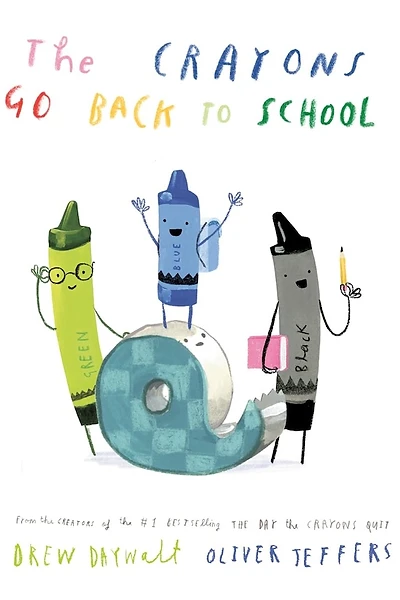
The Crayons Go Back to School
by Drew Daywalt
Pacing MaterialThe beloved crayons return to school, each bringing its own personality and worries to the classroom.
Big Idea
Just as every crayon adds a unique color to a picture, every student brings valuable talents that help create a welcoming classroom.
Discussion Questions
- 1.Which crayon did you relate to the most? Why?
- 2.How are the crayons similar to students?
- 3.What challenges did the crayons face at school?
- 4.How did they solve their problems?
- 5.What makes each crayon unique?
- 6.Why is teamwork important in a classroom?
Classroom Activity
If I Were a Crayon...
Write from the point of view of a crayon. Share your color, personality, favorite school subject, and how you help classmates.
Lesson Plan
Learning Goals
- Identify how each crayon's personality mirrors a kind of student
- Write a first-person paragraph from a crayon's point of view
- Connect each crayon's strength to a classroom community role
Activity Steps
- 1.Read the story, noting one worry and one strength for each crayon.
- 2.Discuss: 'Which crayon is most like you? Which crayon helps the class most?'
- 3.Model a short first-person paragraph: 'I am ___ crayon. I feel ___ about school because ___. I help my class by ___.
- 4.Students fill in their crayon template and write their paragraph.
- 5.Create a 'Crayon Box' classroom display with every student's crayon.
Standards Connections
- ELA: RL.K-3.6 — Identify the point of view of the narrator or characters.
- ELA: W.K-3.3 — Write narratives using details and sequence.
- SEL — Demonstrates perspective-taking and empathy.
- Art — Creates an original illustration that communicates a narrative.
Pace-Write-Read Study with Pace-Write It!
Focus question: How does an author make a funny back-to-school story move quickly while still showing each character’s big feelings? In The Crayons Go Back to School by Drew Daywalt, the crayons return to the classroom with their usual bold personalities, worries, and opinions about school. The pacing feels lively because Daywalt uses short scenes, quick character turns, expressive dialogue, and page-by-page surprises to keep readers laughing and wondering what each crayon will do next.
| Element | How to notice or teach it in the novel |
|---|---|
| Pace | Read: Notice how The Crayons Go Back to School moves briskly from one crayon’s reaction to another, so each school worry or joke lands quickly. Classroom Activity: Write 4 short sentences about a school morning object coming to life, and make each sentence reveal a new feeling fast, like the crayons do. |
| Plot | Read: Notice the simple plot arc: the crayons head back to school, react to classroom routines, and show their different worries and strengths along the way. Classroom Activity: Make a beginning-middle-end plan for a story about one classroom supply going back to school and facing one funny problem. |
| Prosody | Read: Listen for how the sentences in Drew Daywalt’s text sound playful and read aloud smoothly, matching the humorous mood of the crayons’ school experiences. Classroom Activity: Write 3 read-aloud lines for a nervous crayon entering class, using words that sound bouncy and fun when spoken. |
| Word pause | Read: Notice where a pause after an important word or phrase helps a joke or feeling stand out, especially when a crayon reacts strongly to school. Classroom Activity: Write 2 sentences about a crayon at school and place a dash or ellipsis where you want the reader to pause for effect. |
| Concept | Read: Notice the big concept that school readiness includes excitement, worry, personality, and humor, all shown through familiar crayons. Classroom Activity: Write a sentence explaining one back-to-school feeling and then show it through a crayon character’s actions. |
| Voice & World View | Read: Notice how the story’s voice is silly, confident, and child-friendly, while the crayons’ world view treats classroom events as a very big deal. Classroom Activity: Write in the voice of a crayon who thinks one school rule is either wonderful or terrible. |
| Setting & Place | Read: Notice how the school setting shapes the story, with classroom routines, supplies, and learning spaces giving the crayons new things to react to. Classroom Activity: Describe one place in a school from a crayon’s point of view, such as the desk, cubby, rug, or art table. |
| Point of View | Read: Notice how the story invites readers to see school through the crayons’ perspective, making ordinary classroom moments feel new and funny. Classroom Activity: Rewrite one school moment from the point of view of a crayon, not a child. |
| Original Characters | Read: Notice that each crayon feels like an original character with a distinct personality, just as readers expect in a Drew Daywalt crayon story. Classroom Activity: Invent a new crayon character for the class and give it one strong school opinion, one worry, and one talent. |
| Dialogue | Read: Notice how imagined crayon talk could quickly reveal feelings about going back to school, from confidence to complaints. Classroom Activity: Write a 4-line dialogue between two crayons getting ready for the first day of school. |
| Details | Read: Notice the small school details that make the crayons’ experiences relatable, such as supplies, routines, and classroom expectations. Classroom Activity: List 5 tiny back-to-school details a crayon would notice first, then use 3 of them in a paragraph. |
| Descriptions | Read: Notice how descriptions stay clear and lively so the action keeps moving while still showing each crayon’s mood. Classroom Activity: Describe one crayon walking into class using color, expression, and movement in 3 vivid phrases. |
| Strong First Lines | Read: Notice how a strong opening in a humorous school story needs to introduce the situation quickly and make readers curious right away. Classroom Activity: Write an opening line for a new crayon school story that shows a problem on the very first line. |
| Immediacy & Engagement | Read: Notice how the story pulls readers in immediately because school is familiar, but the crayons’ reactions are surprising and funny. Classroom Activity: Write 2 sentences that begin in the middle of a crayon’s school problem so the reader feels dropped right into the action. |
| Story Scenes & Summaries & Unique Structures | Read: Notice how the book can move between quick scenes of individual crayon moments and broader summary ideas about the school day. Classroom Activity: Write one scene showing a crayon during circle time and one summary sentence about the rest of the day. |
| Flashback & Flash Forward & Cliffhangers | Read: Notice how readers might think about past crayon adventures and wonder what will happen next at school, which adds playful anticipation. Classroom Activity: Write a flashback sentence about what a crayon remembers from last year and a cliffhanger ending about tomorrow. |
| Tension & Suspense & Surprise | Read: Notice how small school worries create tension, and the crayons’ unexpected reactions add surprise instead of scary suspense. Classroom Activity: Write a short paragraph in which a crayon fears one part of school, but the ending reveals a funny surprise. |
| Page Turns and Chapter Breaks | Read: Notice how picture books like The Crayons Go Back to School use page turns to deliver jokes, new reactions, or visual surprises about classroom life. Classroom Activity: Plan a 2-page mini picture book spread and decide what information to hide until the page turn. |
| Performance | Read: Notice how this story invites expressive reading, with different voices for different crayons and dramatic reactions to school routines. Classroom Activity: Mark one short passage with performance notes such as whisper, loud, slow, or excited, then read it aloud. |
| Personality | Read: Notice that pacing depends on how quickly each crayon’s personality comes through, so readers instantly understand who is worried, bossy, brave, or dramatic. Classroom Activity: Write 3 sentences that reveal a crayon’s personality only through its actions at school. |
| Humor | Read: Notice how Drew Daywalt builds humor by turning ordinary school readiness worries into exaggerated crayon-sized problems and opinions. Classroom Activity: Write one funny complaint a crayon might have about school and one funny solution. |
| Pause | Read: Notice where a brief stop in the action lets readers absorb a joke, an expression, or a crayon’s dramatic feeling. Classroom Activity: Draft a short crayon paragraph and underline the spot where the reader should pause before the funniest part. |
| Poetry and Poetic Devices | Read: Notice how playful sound, repetition, and strong word choices can make even prose about crayons at school feel poetic. Classroom Activity: Write a 4-line crayon poem about the first day of school using alliteration or rhyme. |
| Repetition | Read: Notice how repeating a phrase or pattern could emphasize that many crayons have different feelings about the same school day. Classroom Activity: Write 4 sentences that all begin with “At school, this crayon…” and change the ending each time. |
| Rhythm | Read: Notice how short and medium sentences create a rhythm that helps the story feel energetic, comic, and easy to follow. Classroom Activity: Write one sentence with 3 quick actions a crayon takes at school to create a lively rhythm. |
| Punctuation | Read: Notice how punctuation such as exclamation marks, commas, dashes, and question marks can help show the crayons’ strong reactions. Classroom Activity: Write 3 crayon school sentences, each using a different punctuation mark to change the feeling. |
| Questions | Read: Notice how school stories naturally raise questions: Who is ready, who is worried, and what will each crayon say or do next? Classroom Activity: Write 3 questions a crayon might ask on the first day of school, then answer one in character. |
| Compare-Contrast | Read: Notice how the crayons can be compared and contrasted by their feelings about school, their confidence, and their ways of solving problems. Classroom Activity: Choose two crayons and write 2 compare sentences and 2 contrast sentences about their school behavior. |
| Objects | Read: Notice how everyday objects in a classroom matter in this story because crayons interact with desks, paper, books, backpacks, and art tools. Classroom Activity: Pick one classroom object and write how a crayon feels about it and why. |
| Threes | Read: Notice how listing ideas in groups of three can make humor sound stronger and more complete in a lively picture book. Classroom Activity: Write a sentence naming 3 things a crayon packed for school, with the third item being the funniest. |
| Whitespace & Negative Space | Read: Notice how picture books use open space on the page to slow readers down, highlight expressions, and make jokes land clearly. Classroom Activity: Sketch a simple page plan for a crayon scene and decide where leaving blank space would make the feeling bigger. |
| Art & Graphics | Read: Notice how the illustrations and design help pacing by showing each crayon’s mood instantly and adding visual humor to the school setting. Classroom Activity: Draw a crayon in a school scene and add one label or caption that strengthens the joke. |
| Interactives & Gamification | Read: Notice how this story could inspire playful participation, since readers can guess which crayon will love or dislike different school activities. Classroom Activity: Create a quick class game called “Which Crayon Would?” with 3 school situations and matching crayon responses. |
Pace-Write It!
20-Minute Classroom Flow\nRead (5 min): Read aloud a section of The Crayons Go Back to School by Drew Daywalt. Pause to emphasize the quick shifts between crayons, their different feelings about school, and the humorous page-by-page movement.\nNotice (5 min): Ask students: How does the author keep the story moving? Chart what students notice: short scenes, strong personalities, funny reactions, quick dialogue, and page-turn surprises. Point out how each crayon’s feeling about school helps set the pace.\nWrite (7 min): Students write a mini crayon story about a new school problem. Use this writing frame: “On the first day of school, _____ Crayon felt _____. When _____ happened, _____ Crayon said, ‘_____!’ Then _____ happened. By the end, _____ Crayon learned _____.” Encourage students to use one funny line, one strong feeling, and one punctuation choice that matches the mood.\nShare (3 min): Partners read their stories aloud with expression. Listeners say where they heard the funniest moment or the strongest pause.\nExit ticket: Write one sentence answering: How did you make your story move quickly like The Crayons Go Back to School?
Pace-Write-Read Connection
Teach this book using the Pace-Write-Read method — Tool 22: Personality.
Open the Mastery Manual