 K-3
K-3R BIEBOW
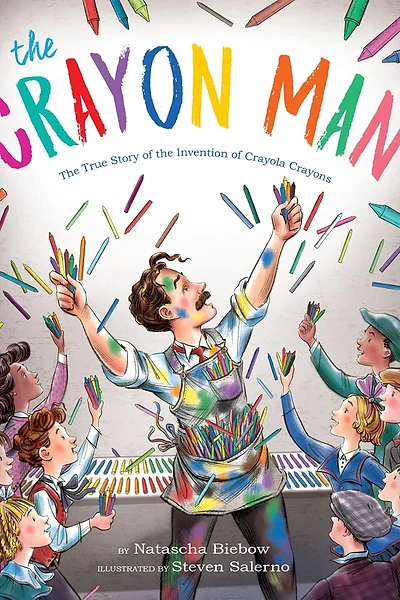
The Crayon Man: The True Story of the Invention of Crayola Crayons
by Natascha Biebow
Pacing MaterialThe true story of Edwin Binney, the inventor of Crayola crayons, who brought color into the hands of every child in America.
Big Idea
A simple idea — making color affordable for every child — can change the world.
Discussion Questions
- 1.How did Edwin Binney's invention change childhood?
- 2.What problem was Edwin trying to solve?
- 3.Why were crayons so important for children?
- 4.What would you invent to make kids happier?
Classroom Activity
Invent a Crayon
Design your own crayon color, name it, and write a story about what it would be used to draw.
Lesson Plan
Learning Goals
- Understand biographical narrative
- Explore themes of innovation and perseverance
- Connect history to everyday objects
Standards Connections
- ELA: RI.K.1 — Ask and answer questions about key details
- ELA: RI.K.2 — Identify main topic and retell key details
- ELA: RI.K.3 — Describe connection between events
- ELA: RI.3.6 — Acknowledge differences in characters' points of view
- ELA: SL.K.1 — Participate in collaborative conversations about the text
- ELA: W.K.3 — Write narratives recounting events with descriptive details
- SEL: Self-Management
- SEL: Responsible Decision-Making
Pace-Write-Read Study with Pace-Write It!
Focus question: How does an author slow down and speed up a true story to show innovation and perseverance? In The Crayon Man: The True Story of the Invention of Crayola Crayons by Natascha Biebow, readers follow Edwin Binney as he keeps working to solve problems and create something new for children. The pacing moves through important moments in his life, slowing down to highlight key inventions and colorful discoveries, which helps readers feel both the challenge and excitement of his journey.
| Element | How to notice or teach it in the novel |
|---|---|
| Pace | Read: Notice how Natascha Biebow moves quickly through parts of Edwin Binney’s early work life, then slows down when he experiments, fails, and finally helps create Crayola crayons. This pacing helps readers feel that innovation takes time, but big breakthroughs deserve attention. Classroom Activity: Write 3 short sentences that speed through Edwin’s earlier jobs, then 3 longer sentences that slow down the moment he discovers a better way to bring color to children. |
| Plot | Read: Notice the true-story plot: Edwin Binney sees problems, works with materials like slate and pigment, keeps trying, and eventually helps invent crayons that many children can use. The events build in a clear order from problem to perseverance to success. Classroom Activity: Make a 4-box plot map labeled problem, attempts, breakthrough, and result, then write one sentence for each box about Edwin’s story. |
| Prosody | Read: Listen to how the words sound when the story describes dusty factories, dark colors, and then bright, exciting crayons. The changing sound and flow support the mood of Edwin’s journey from hard work to joyful invention. Classroom Activity: Read one page aloud and mark where your voice should sound slow, excited, soft, or strong, then practice performing it with expression. |
| Word pause | Read: Notice places where a word or short phrase deserves a pause, especially when Edwin studies a problem or when a new color idea appears. These pauses help important ideas stand out in this real story. Classroom Activity: Choose 3 sentences from the book and add slash marks to show where a reader should pause for meaning. |
| Concept | Read: Notice that the big concept is innovation through perseverance—Edwin Binney does not stop when ideas are messy, difficult, or unfinished. The book shows that useful inventions can begin with a simple question about helping people. Classroom Activity: Write 2 sentences explaining how Edwin’s invention shows innovation and 2 sentences explaining how it shows perseverance. |
| Voice & World View | Read: Notice that the author’s voice is lively, admiring, and informative, helping readers see Edwin Binney as a creative problem-solver who wanted to make color available to children. The world view suggests that inventions can improve everyday life. Classroom Activity: Write a short paragraph in an admiring voice about an inventor, using Edwin as your model. |
| Setting & Place | Read: Notice the factory and work settings where Edwin experiments with materials and where color is made. These places matter because the invention of crayons grows out of real workspaces, tools, and substances. Classroom Activity: Draw or describe Edwin’s workplace and write 3 sentences telling how the setting helped him invent crayons. |
| Point of View | Read: Notice that the book is told in third person, so readers learn about Edwin Binney from an outside narrator who explains his actions, ideas, and success. This point of view helps tell a true story clearly. Classroom Activity: Rewrite one event from the book in first person, beginning with “I am Edwin Binney, and today I…” |
| Original Characters | Read: Notice that even in a nonfiction picture book, Edwin Binney stands out as a memorable main figure because he is curious, determined, and inventive. Other people connected to his work help show that invention can be collaborative. Classroom Activity: Make a character web for Edwin with words and details from the book that show what kind of person he was. |
| Dialogue | Read: Notice whether the author includes spoken words sparingly and how any quoted or imagined conversational moments support the true-story style. Dialogue is not the main feature here, but when present it can make Edwin’s ideas feel immediate. Classroom Activity: Write a short 4-line dialogue between Edwin and a child who wants brighter, safer colors to draw with. |
| Details | Read: Notice the specific details about black dust, color, materials, factories, and inventions that make Edwin Binney’s story believable and vivid. These details help readers understand the real work behind crayons. Classroom Activity: List 5 factual details from the book and use them in a short nonfiction paragraph about how crayons were invented. |
| Descriptions | Read: Notice how descriptions shift from dull, dusty, and dark materials to bright, cheerful, colorful crayons. These descriptions support the theme that Edwin brought color into children’s lives. Classroom Activity: Write a before-and-after description: first describe the world of soot and dust, then describe the bright box of crayons. |
| Strong First Lines | Read: Notice how the opening draws readers into Edwin Binney’s world and sets up the importance of color, work, or invention. A strong beginning helps readers want to learn how crayons came to be. Classroom Activity: Write 2 new opening lines for a nonfiction picture book about Edwin Binney that make readers curious right away. |
| Immediacy & Engagement | Read: Notice how the author makes readers feel close to Edwin’s discoveries by focusing on key moments, vivid images, and child-friendly connections to crayons. Even though it is a true story from the past, it feels meaningful now because children still know crayons. Classroom Activity: Write 3 sentences explaining why young readers care about Edwin’s invention today. |
| Story Scenes & Summaries & Unique Structures | Read: Notice how some parts of Edwin Binney’s life are summarized quickly, while important invention moments are shown more like scenes. This structure keeps the biography moving while still highlighting turning points. Classroom Activity: Choose one part of the book that feels like a summary and one part that feels like a scene, then write 1 sentence explaining the difference. |
| Flashback & Flash Forward & Cliffhangers | Read: Notice that this biography is mostly told in chronological order, but you can think about how the author builds curiosity before the final success with crayons. The book does not rely on dramatic cliffhangers, yet it still makes readers wonder what Edwin will invent next. Classroom Activity: Write a cliffhanger sentence that could come right before Edwin discovers the crayon idea. |
| Tension & Suspense & Surprise | Read: Notice the tension in Edwin Binney’s problem-solving—he wants better, affordable color tools, but the answer is not easy at first. The surprise comes when hard work leads to a colorful invention that changes childhood. Classroom Activity: Write 4 sentences that build suspense about whether Edwin’s newest experiment will work. |
| Page Turns and Chapter Breaks | Read: Notice how page turns in this picture book likely hold back important information until the next page, especially around inventions, experiments, and the appearance of crayons. The page turn helps control pacing and excitement. Classroom Activity: Create a 2-page mini-book spread where page 1 sets up Edwin’s problem and page 2 reveals his colorful solution. |
| Performance | Read: Notice how this book can be performed aloud by changing your voice for dusty factory work, careful experimenting, and joyful color discovery. The pacing of your reading can help listeners feel Edwin’s perseverance. Classroom Activity: Practice reading one section aloud with a partner, using a slower voice for problem-solving and a brighter voice for success. |
| Personality | Read: Notice Edwin Binney’s personality traits—curious, hardworking, determined, and inventive—shown through his actions rather than just labels. His personality shapes the pace because he keeps moving from one idea to the next. Classroom Activity: Write a sentence stem for each trait: “Edwin was ___ because he ___.” Complete 4 stems. |
| Humor | Read: Notice that the book is mostly inspiring and informational, but there may be lightness in the idea that something as ordinary as a crayon has such an extraordinary history. The joyful surprise of crayons can create a warm tone. Classroom Activity: Write a playful sentence or caption about the moment children first got to use Edwin’s crayons. |
| Pause | Read: Notice moments where readers may naturally pause to think about how different children’s art would be without crayons. These reflective pauses deepen the theme of innovation. Classroom Activity: After hearing a page read aloud, pause and write one thought beginning with “I’m thinking…” about Edwin’s perseverance. |
| Poetry and Poetic Devices | Read: Notice the colorful language, repeated sounds, and vivid imagery that make this nonfiction book feel almost poetic in places. Words about color, dust, and brightness help the true story sound lively and memorable. Classroom Activity: Write a 3-line poem about crayons using color words and one example of alliteration, such as “brilliant blue.” |
| Repetition | Read: Notice any repeated ideas about color, work, invention, or trying again. Repetition helps readers remember that Edwin Binney’s success came from steady effort. Classroom Activity: Write a short paragraph about Edwin using the repeated starter “He kept…” at least 3 times. |
| Rhythm | Read: Notice the rhythm created when the author lists materials, actions, or colors, and how sentence lengths change as the story moves from hard work to exciting discovery. This rhythm supports pacing. Classroom Activity: Write 4 sentences about inventing crayons, using 2 short sentences and 2 longer sentences to create rhythm. |
| Punctuation | Read: Notice how punctuation helps shape pacing—commas slow readers down for details, periods stop ideas clearly, and exclamation points may highlight exciting moments in Edwin Binney’s success. Punctuation helps control how the story sounds. Classroom Activity: Rewrite 3 plain sentences about Edwin and add punctuation to make one calm, one suspenseful, and one excited. |
| Questions | Read: Notice the questions readers might ask while listening: How did Edwin Binney get the idea? Why were crayons important? How did he keep going? Questions keep readers engaged in the real story. Classroom Activity: Write 3 questions you would ask Edwin Binney if you could interview him about inventing Crayola crayons. |
| Compare-Contrast | Read: Notice the contrast between dark industrial materials like soot or slate and the bright crayons children would later enjoy. This compare-contrast structure strengthens the message that Edwin changed children’s lives with color. Classroom Activity: Make a T-chart comparing Edwin’s early materials with the finished crayons, then write 2 compare-contrast sentences. |
| Objects | Read: Notice how important objects—pigments, tools, boxes, and crayons—carry the story forward. In this biography, objects are not just things; they show the steps of invention. Classroom Activity: Choose one object from the book and write a first-person object paragraph beginning, “I am the crayon box…” or “I am the pigment…” |
| Threes | Read: Notice if the story groups ideas in threes, such as three attempts, three descriptive words, or three stages of Edwin’s work. Groups of three often make information sound complete and memorable. Classroom Activity: Write 3 sentences using a set of three words to describe Edwin’s invention, such as “bright, bold, beautiful.” |
| Whitespace & Negative Space | Read: Notice how the picture-book layout may leave open space around key words or illustrations so readers can pause and focus. This space can make the bright colors and important moments feel bigger. Classroom Activity: Design a page with one sentence about Edwin and lots of open space to make the sentence stand out. |
| Art & Graphics | Read: Notice how the illustrations help tell Edwin Binney’s story by showing dusty workplaces, experiments, and the burst of color crayons bring. The art supports pacing by letting readers linger on important visual moments. Classroom Activity: Create an illustration of the moment crayons change from an idea into a real product, and add a caption. |
| Interactives & Gamification | Read: Notice how this true story invites hands-on learning because children can connect the book to real crayons, colors, and invention challenges. The topic naturally encourages playful extension activities. Classroom Activity: Invent a new crayon color, name it, describe it, and write 2 sentences explaining how Edwin Binney might react to your invention. |
Pace-Write It!
20-Minute Classroom Flow\nRead (5 min): Read aloud a key section from The Crayon Man: The True Story of the Invention of Crayola Crayons by Natascha Biebow that shows Edwin Binney working through a problem and then reaching a colorful breakthrough. Ask students to listen for places where the story moves fast and places where it slows down.\nNotice (5 min): Discuss: Where did the author speed up time? Where did the author slow down? Why? Chart student ideas under two headings: “Fast Pace” and “Slow Pace.” Point out how the slower parts help readers pay attention to Edwin’s perseverance and innovation.\nWrite (7 min): Students write a short nonfiction response about Edwin’s invention using pacing. Writing frame: “First, Edwin Binney ____________. Then he ____________. He kept trying when ____________. Finally, he ____________. This part is important because ____________.” Encourage students to add one short sentence and one longer sentence to show different pacing.\nShare (3 min): Students read their writing to a partner and underline the sentence where they slowed down the most. Invite 2 or 3 students to share aloud.\nExit ticket: Write one sentence answering: “How did pacing help you understand Edwin Binney’s perseverance?”