 K-2
K-2E FOOD-GROUP
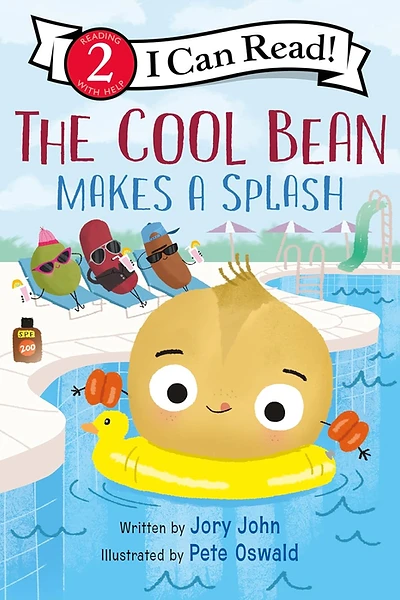
The Cool Bean Makes a Splash
by Jory John
Pacing MaterialThe Cool Bean heads to the pool and discovers that making a splash isn't about being cool — it's about being safe and having fun.
Big Idea
Being cool isn't about looking good — it's about being safe, kind, and having fun.
Discussion Questions
- 1.What did the Cool Bean do at the pool? Was he safe?
- 2.What does it mean to be 'cool'? Is it about how you look or how you act?
- 3.What are some pool safety rules you know?
- 4.Have you ever been afraid to try something new, like swimming?
- 5.How can we help each other be safe and have fun?
Classroom Activity
Pool Safety Posters
Students create a 'pool safety poster' illustrating one rule for staying safe at the pool, then write a safety tip.
Lesson Plan
Learning Goals
- Understand water safety rules
- Explore the meaning of 'cool' and positive peer behavior
- Practice informative writing
- Develop awareness of personal safety
Activity Steps
- 1.Discuss pool safety rules as a class.
- 2.Each student chooses one safety rule to illustrate.
- 3.On poster paper, students draw a picture of someone following the rule.
- 4.Students write their safety tip at the bottom: 'Always ___ at the pool.'
- 5.Display the posters around the classroom.
- 6.Review the rules together.
Standards Connections
- ELA: RL.K-2.2 (Central Message)
- ELA: RL.K-2.7 (Illustrations)
- ELA: W.K-2.2 (Informative Writing)
- Health: Safety and Injury Prevention
Pace-Write-Read Study with Pace-Write It!
Focus question: How does an author make a simple trip to the pool feel exciting, funny, and important? In The Cool Bean Makes a Splash by Jory John, the Cool Bean goes to the pool and learns that being brave means following safety rules and trying something new. The pacing moves quickly with short, playful moments, dialogue, and page-by-page action that build from nervous feelings to a confident splash.
| Element | How to notice or teach it in the novel |
|---|---|
| Pace | Read: Notice how the story moves at a quick, easy-reader pace as the Cool Bean heads to the pool, worries, watches, and finally joins the fun safely. The short scenes help young readers feel each step of building courage. Classroom Activity: Write 4 short sentences that show a character getting ready to try something new, with each sentence moving the action forward. |
| Plot | Read: Notice the clear plot: the Cool Bean goes to the pool, faces nervous feelings, learns that safety matters, and discovers fun does not have to look flashy to feel exciting. The events are simple but build toward the splash moment. Classroom Activity: Make a beginning-middle-end chart for the Cool Bean’s pool day, then write your own 3-part mini story about trying a new activity safely. |
| Prosody | Read: Listen to how the playful language in the Cool Bean’s story sounds when read aloud, especially in pool scenes that may speed up with excitement and slow down during nervous moments. The voice helps readers hear courage growing. Classroom Activity: Choose 3 lines to read aloud in a brave voice, a worried voice, and an excited voice, then write one new line for each feeling. |
| Word pause | Read: Notice where you naturally pause while reading about the Cool Bean at the pool, especially before an important choice or splash. These pauses give readers time to feel the character’s hesitation and safety thinking. Classroom Activity: Copy one sentence pattern from the story and add slash marks where a reader should pause, then write your own pool or playground sentence with pauses. |
| Concept | Read: Think about the big idea that making a splash is not about showing off; it is about being safe, brave, and having fun like the Cool Bean learns. The concept is strong because it connects courage with smart choices. Classroom Activity: Finish this idea in writing: “Being brave means ______ because ______.” Then add an example from the Cool Bean’s pool day. |
| Voice & World View | Read: Notice the warm, funny, encouraging voice that sees the world through a child-friendly lens where pool worries are real but manageable. The story’s world view says everyone can grow in courage with support and safety. Classroom Activity: Write 3 sentences in a kind, playful narrator voice that helps a nervous character feel ready to try something new. |
| Setting & Place | Read: Notice how the pool setting shapes the action in The Cool Bean Makes a Splash, giving the story rules, movement, sounds, and chances for both caution and fun. The place matters because water creates both excitement and safety choices. Classroom Activity: Draw or list 5 details from a pool setting, then write 2 sentences showing how that place affects a character’s actions. |
| Point of View | Read: Notice how the story stays close to the Cool Bean’s experience so readers can feel the worry, observing, and growing confidence. This point of view helps the lesson about courage feel personal. Classroom Activity: Write the same pool moment in first person using “I” and then in third person using “The bean,” and compare how each version feels. |
| Original Characters | Read: Notice how the Cool Bean is an original character because a bean doing everyday kid things is silly and memorable, yet the feelings about safety and bravery are real. The character design makes the lesson approachable for young readers. Classroom Activity: Invent a food character who is nervous about a new place and write 3 sentences about what makes that character special. |
| Dialogue | Read: Notice how any spoken lines around the pool can quickly show encouragement, rules, or feelings without slowing the story down. Dialogue helps the Cool Bean’s experience feel immediate and social. Classroom Activity: Write a 4-line dialogue between the Cool Bean and a friend or lifeguard about trying the water safely. |
| Details | Read: Notice the small details that make the Cool Bean’s pool trip believable, such as actions around the water, watching others, and noticing what feels safe or scary. These details help readers picture the day. Classroom Activity: Write a sentence about a nervous moment and add 3 small details that help a reader see and feel it. |
| Descriptions | Read: Notice how descriptions in this easy reader are likely simple and clear, helping young readers imagine the pool, the splash, and the Cool Bean’s changing emotions. The descriptive choices support understanding without becoming too long. Classroom Activity: Describe water in 3 different ways: before jumping in, during a splash, and after the splash. |
| Strong First Lines | Read: Notice how the beginning needs to pull readers quickly into the Cool Bean’s pool adventure and make them want to know what will happen. A strong opening starts the pace right away. Classroom Activity: Write 2 opening lines for a story about a character arriving at a place that feels exciting and a little scary. |
| Immediacy & Engagement | Read: Notice how the story keeps readers close to the Cool Bean’s moment-by-moment experience so the trip to the pool feels like it is happening right now. This immediacy makes courage feel active, not just explained. Classroom Activity: Write 3 present-tense sentences about standing at the edge of the pool and deciding what to do next. |
| Story Scenes & Summaries & Unique Structures | Read: Notice how some parts of the Cool Bean’s pool day can be shown as full scenes while other parts move quickly in summary to keep the easy-reader structure smooth. This balance helps pacing stay lively. Classroom Activity: Write one scene in 3 sentences about a big moment at the pool, then one summary sentence that skips ahead to what happened next. |
| Flashback & Flash Forward & Cliffhangers | Read: Notice whether the story stays mostly in the present pool day instead of using flashbacks or flash forwards, which helps beginning readers follow the action. If there is a page-end moment before the splash, it can work like a gentle cliffhanger. Classroom Activity: Write a cliffhanger sentence that ends with the character about to jump, such as “The Cool Bean bent down and then...” |
| Tension & Suspense & Surprise | Read: Notice how the tension comes from wondering if the Cool Bean will feel ready, follow safety rules, and have fun in the water. The final splash can feel surprising because bravery looks calmer and smarter than showing off. Classroom Activity: Write 3 sentences that build tension before a character tries something new, and make the last sentence reveal a safe, happy surprise. |
| Page Turns and Chapter Breaks | Read: Notice how page turns in a picture-book-style easy reader can hold a question, a pause, or a funny beat before showing the next pool moment. Even without chapters, the story can create little stops and starts that control pace. Classroom Activity: Plan a 4-page mini book and write what happens before each page turn to keep readers curious. |
| Performance | Read: Notice how this story invites expression in read-aloud performance, especially in lines about nervousness, pool rules, and the big splash. The Cool Bean’s feelings can be acted out with voice and gestures. Classroom Activity: Practice reading one moment with actions for tiptoeing, looking, and splashing, then write a performance note like “read this softly” or “say this loudly.” |
| Personality | Read: Notice the Cool Bean’s personality traits, such as wanting to seem cool but also having real fears and a growing willingness to be careful and brave. Personality helps the lesson feel honest. Classroom Activity: Write 3 personality words for the Cool Bean and give a sentence of evidence for each from the pool story. |
| Humor | Read: Notice how humor comes from the idea of a bean at the pool and from the playful style that keeps the courage-and-safety theme light instead of preachy. Funny moments make readers relax while still learning. Classroom Activity: Write a humorous sentence about a food character in a silly swimsuit or doing a careful pool activity. |
| Pause | Read: Notice the important pause before the Cool Bean makes a choice at the pool. That pause slows the pace just enough for courage and safety thinking to matter. Classroom Activity: Write 2 sentences that show a character stopping, thinking, and then making a smart choice. |
| Poetry and Poetic Devices | Read: Notice any playful sound patterns, repeated phrases, or image-rich language that make the Cool Bean’s pool story feel musical. Even simple text can use poetic devices to support pacing. Classroom Activity: Write a 3-line poem about water using one sound word, one repeating phrase, and one feeling word. |
| Repetition | Read: Notice if the story repeats an idea, phrase, or action around being cool, being safe, or making a splash. Repetition helps young readers remember the theme and anticipate what matters. Classroom Activity: Write 3 sentences that repeat the frame “I can be brave when I...” and finish each one differently. |
| Rhythm | Read: Notice the bouncy rhythm of the language as the Cool Bean moves through pool-day moments. The rhythm helps the story feel playful and forward-moving even when the character is unsure. Classroom Activity: Write a 4-line chant about pool safety and fun with a steady beat. |
| Punctuation | Read: Notice how punctuation such as commas, periods, question marks, and exclamation marks helps control pace and emotion in the Cool Bean’s adventure. A small mark can make a line feel calm, worried, or excited. Classroom Activity: Write one sentence three ways using different end marks to show calm, worry, and excitement. |
| Questions | Read: Notice the questions readers may ask while reading: Will the Cool Bean jump in? What will help the Cool Bean feel safe? These questions keep the pages turning. Classroom Activity: Write 3 questions a reader might ask during the story, then answer them using clues from the pool scenes. |
| Compare-Contrast | Read: Notice how the book compares looking cool with actually being safe and having fun. The Cool Bean learns that those ideas are not always the same. Classroom Activity: Make a T-chart labeled “Showing off” and “Being safe and brave,” then write 2 sentences comparing the two. |
| Objects | Read: Notice how pool objects such as water, steps, floaties, towels, or signs can help tell the story and support the safety theme. Objects can shape what the Cool Bean does next. Classroom Activity: Pick one pool object and write 3 sentences about how it helps a character solve a problem or feel brave. |
| Threes | Read: Notice whether ideas can be grouped in threes, such as three feelings, three tries, or three safety reminders during the Cool Bean’s pool day. Groups of three often sound satisfying and help pacing. Classroom Activity: Write about 3 steps the Cool Bean could follow before making a splash safely. |
| Whitespace & Negative Space | Read: Notice how an easy reader often uses lots of open space so readers can focus on one action, feeling, or joke at a time. This visual pacing gives the Cool Bean’s splash moments room to stand out. Classroom Activity: Create a page plan with one short sentence and one picture idea, leaving space around the biggest action word. |
| Art & Graphics | Read: Notice how the illustrations and design likely help show the Cool Bean’s facial expressions, the pool action, and the safety theme even when the text stays simple. Pictures carry part of the pacing by revealing each next moment. Classroom Activity: Draw 3 storyboard boxes for before, during, and after the splash, then add one sentence under each box. |
| Interactives & Gamification | Read: Notice how this book could invite interactive reading by having students act out safe choices, predict what the Cool Bean will do, or give a thumbs-up to careful decisions. Interaction keeps engagement high. Classroom Activity: Write a “Choose the safe next step” card with two options for the Cool Bean, and circle the best choice with a reason. |
Pace-Write It!
20-Minute Classroom Flow Read (5 min): Read The Cool Bean Makes a Splash aloud. Pause at key moments when the Cool Bean feels unsure at the pool and before the splash. Ask: “What is making the story move quickly here?” and “Where does the author slow down for an important choice?” Notice (5 min): Chart what students notice about pacing: short sentences, funny moments, page turns, dialogue, and the pause before the Cool Bean acts. Highlight how Jory John connects courage with safety and fun instead of showing off. Write (7 min): Students write a 4-5 sentence mini story about trying something new safely. Writing frame: “I went to the ____. First, I felt ____. I stopped and remembered to ____. Then I ____. At the end, I felt ____ because ____.” Encourage students to use one question, one feeling word, and one action word. Share (3 min): Partners read their mini stories aloud with expression. Listeners name one place where the writer made the story go fast and one place where the writer slowed down for an important moment. Exit ticket: Complete this sentence on a sticky note: “Pacing helps a reader feel ____ when ____.”