 4-7
4-7M VENKATRAMAN
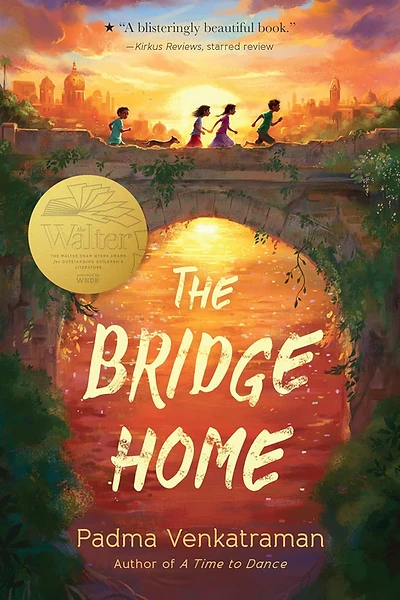
The Bridge Home
by Padma Venkatraman
Pacing MaterialFour runaway children navigate life on the streets of Chennai, India, forming an unlikely family as they struggle to survive and find safety in a city that offers both danger and unexpected kindness.
Big Idea
Even in the most desperate circumstances, the bonds of chosen family can light the way to freedom.
Discussion Questions
- 1.What drives the children to leave home, and how do their reasons differ?
- 2.How does the bridge serve as both a literal and symbolic setting in the story?
- 3.What sacrifices do the characters make for each other, and what do those reveal about family?
- 4.How do the children's perceptions of adults change throughout the story?
- 5.What does freedom mean to each character, and how does that definition evolve?
Classroom Activity
Mapping Chosen Family
Students create a 'family web' diagram showing the relationships between the four main characters, noting how each connection provides something different — safety, belonging, hope, or courage.
Lesson Plan
Learning Goals
- Analyze how characters' relationships evolve through adversity
- Identify symbolic settings and their narrative significance
- Examine themes of chosen family, survival, and freedom
- Connect the story's cultural context to universal themes of belonging
Activity Steps
- 1.Read and discuss the opening chapters, noting how each child is introduced.
- 2.Create a character relationship web on chart paper, labeling each connection.
- 3.In small groups, identify three pivotal moments where a relationship changes.
- 4.Write a reflective journal entry from one character's perspective about what 'home' means to them.
- 5.Share reflections and discuss how the concept of home evolves throughout the novel.
Standards Connections
- ELA: RL.4.1 — Ask and answer questions about key details
- ELA: RL.4.2 — Retell stories, including key details
- ELA: RL.4.3 — Describe characters, setting, and events
- ELA: RL.7.6 — Acknowledge differences in characters' points of view
- ELA: SL.4.1 — Participate in collaborative conversations about the text
- ELA: W.4.3 — Write narratives recounting events with descriptive details
- SEL: Self-Management
- SEL: Responsible Decision-Making
Pace-Write-Read Study with Pace-Write It!
Focus question: How does an author speed up or slow down a story to help readers feel danger, hope, and courage? In The Bridge Home by Padma Venkatraman, four runaway children—Viji, Rukku, Arul, and Muthu—survive on the streets of Chennai and create a fragile family. Venkatraman uses short scenes, emotional pauses, sensory description, and chapter endings filled with uncertainty to control pacing so readers feel both the urgency of survival and the quiet moments of trust and freedom.
| Element | How to notice or teach it in the novel |
|---|---|
| Pace | Read: Notice how The Bridge Home moves quickly during moments of escape, hunger, and danger, then slows down when Viji reflects on Rukku, trust, and what home means. Classroom Activity: Write two versions of the same scene about a child arriving at a new place—one fast-paced with short sentences and one slower-paced with reflection. |
| Plot | Read: Track how the plot follows Viji and Rukku leaving abuse, meeting Arul and Muthu, building life under the bridge, and facing loss and survival in Chennai. Notice how each event raises the stakes. Classroom Activity: Make a 5-step plot ladder for a survival story and write one paragraph for the step where the danger becomes most intense. |
| Prosody | Read: Listen to the flow of Venkatraman’s language, especially how sentence length and emotional phrasing shape the mood of Viji’s narration. Some lines feel clipped in tense moments, while others stretch in sorrow or hope. Classroom Activity: Rewrite a tense scene using a read-aloud rhythm that sounds breathless, then revise it to sound calm and reflective. |
| Word pause | Read: Notice where a single powerful word or short phrase creates a pause, especially in emotional moments involving Rukku’s safety, Muthu’s teasing warmth, or Arul’s care. Classroom Activity: Write a short paragraph about fear or relief and include three one-word sentence fragments for emphasis. |
| Concept | Read: Notice how the big ideas of courage, freedom, family, and survival shape the pacing of the story. The book slows at moments when Viji begins to redefine what home and safety really mean. Classroom Activity: Choose one concept—freedom, courage, or belonging—and write a scene that reveals it through action rather than explanation. |
| Voice & World View | Read: Viji’s voice is observant, guarded, and deeply loving toward Rukku, and her worldview changes as she begins to trust Arul and Muthu. Notice how her emotional lens affects what gets more page time. Classroom Activity: Write a first-person paragraph from a character who wants to protect someone, showing how that goal shapes what they notice. |
| Setting & Place | Read: Notice how Chennai is not just a backdrop but an active force in the pacing—the bridge, the streets, the market, and the sea can feel threatening, crowded, or briefly freeing. Classroom Activity: Describe a city place in 6-8 sentences and show how the setting either speeds up action or slows it down. |
| Point of View | Read: The story is told through Viji’s point of view, so readers learn about events through her fears, guesses, and growing understanding. Notice how this limited perspective creates suspense because we do not know everything at once. Classroom Activity: Write a scene in first person where the narrator misunderstands part of what is happening, creating tension. |
| Original Characters | Read: Study how Viji, Rukku, Arul, and Muthu each feel distinct—Viji is protective, Rukku is gentle and perceptive, Arul is thoughtful, and Muthu brings energy and humor. Their differences keep scenes lively and balanced. Classroom Activity: Invent a group of three characters surviving a challenge and give each one a different strength that affects the pacing of a scene. |
| Dialogue | Read: Notice how dialogue reveals trust, caution, teasing, and fear among the children under the bridge. Their spoken words often move scenes quickly while unspoken feelings create slower emotional depth. Classroom Activity: Write a dialogue between two children deciding whether to trust a stranger, using at least one line of teasing and one line of warning. |
| Details | Read: Pay attention to concrete details about hunger, dirt, noise, weather, illness, and small acts of kindness. These details make the children’s struggle feel immediate and real. Classroom Activity: Write a survival scene using five specific sensory details that show hardship without directly saying it is hard. |
| Descriptions | Read: Notice how Venkatraman chooses descriptions carefully rather than overloading every moment, which keeps the story moving even when emotions are deep. Description often sharpens danger or tenderness. Classroom Activity: Describe a temporary shelter using vivid but selective details, then underline the three details that matter most to the mood. |
| Strong First Lines | Read: Look at how the opening pulls readers straight into Viji’s urgent situation and emotional world. The beginning creates immediate curiosity and concern. Classroom Activity: Write three possible first lines for a realistic survival story, each creating urgency in a different way. |
| Immediacy & Engagement | Read: Notice how quickly readers become invested in whether Viji can keep Rukku safe and whether this new found family can survive. The stakes feel personal from the start. Classroom Activity: Write an opening paragraph in which a character has one urgent goal involving someone they love. |
| Story Scenes & Summaries & Unique Structures | Read: Notice when Venkatraman lingers in full scenes and when she summarizes time passing on the streets. This balance helps the novel cover many hardships without losing emotional focus. Classroom Activity: Write one full scene about finding food and one short summary sentence about several difficult days that follow. |
| Flashback & Flash Forward & Cliffhangers | Read: Notice how memories of home and abuse deepen Viji’s motives, and how chapter endings often leave readers worried about the next danger. Classroom Activity: Write a scene in the present, add a brief flashback that explains the character’s fear, and end with a cliffhanger question or problem. |
| Tension & Suspense & Surprise | Read: Track how danger can come from adults, sickness, hunger, and uncertainty, while moments of kindness or connection can arrive unexpectedly. This mix keeps readers emotionally alert. Classroom Activity: Write a paragraph where a child expects one outcome in a city street scene but is surprised by a different human response. |
| Page Turns and Chapter Breaks | Read: Notice how chapter breaks often come after a realization, threat, or emotional shift involving Viji, Rukku, Arul, or Muthu. These breaks make readers want to keep going. Classroom Activity: Draft a short chapter ending that makes a reader turn the page by revealing a new problem in the final line. |
| Performance | Read: Consider how scenes from The Bridge Home would sound if performed aloud—the urgency, quiet grief, protective love, and occasional joking all affect pacing. Classroom Activity: Choose a short scene you wrote and mark where a reader should speed up, slow down, or pause for emotion. |
| Personality | Read: Notice how personality shapes pacing: Muthu’s liveliness can lighten a scene, Arul’s steadiness can slow and ground it, and Viji’s worry can sharpen urgency. Classroom Activity: Write a group scene where each character’s personality changes the speed or tone of the moment. |
| Humor | Read: Even in a harsh story, small moments of humor and teasing—especially through Muthu—offer relief and make the children feel human and connected. Classroom Activity: Add one believable moment of humor to a serious scene without breaking the emotional truth. |
| Pause | Read: Notice where the story pauses for grief, memory, tenderness, or a realization about family and freedom. These quiet spaces make the fast scenes matter more. Classroom Activity: Write a 5-6 sentence reflective pause after an action scene, showing what the character now understands. |
| Poetry and Poetic Devices | Read: Venkatraman’s language often feels lyrical, with imagery and emotional precision that deepen Viji’s inner life. Notice how poetic language slows readers down at key moments. Classroom Activity: Write four lines of prose about the sea, the bridge, or the city using imagery, personification, or metaphor. |
| Repetition | Read: Notice repeated ideas and emotional patterns—protecting Rukku, searching for safety, returning to the meaning of home—which create rhythm and thematic unity. Classroom Activity: Write a paragraph that repeats one phrase three times, each time with a slightly different meaning. |
| Rhythm | Read: Study how sentence rhythm changes between crowded street danger and quieter moments under the bridge. Rhythm helps readers feel panic, exhaustion, or peace. Classroom Activity: Write one paragraph with choppy rhythm for fear and one with longer flowing sentences for relief. |
| Punctuation | Read: Notice how punctuation helps control pace—short sentences, commas, dashes, and fragments can create urgency or hesitation in Viji’s narration. Classroom Activity: Revise a paragraph by changing punctuation to make the scene feel more tense. |
| Questions | Read: Readers keep asking: Will Viji keep Rukku safe? Can the children trust anyone? What does freedom cost? These questions drive pacing through the novel. Classroom Activity: Write three guiding questions for your own story and then draft a scene that raises one of them without answering it. |
| Compare-Contrast | Read: Compare life in Viji’s home with life under the bridge, and compare danger from family with danger from the city. Notice how these contrasts deepen the theme of freedom. Classroom Activity: Write a compare-contrast paragraph about two places a character has lived, showing which one feels more free and why. |
| Objects | Read: Notice how small objects and necessities matter in a survival story—food, shelter items, or anything the children can carry or protect can become emotionally important. Classroom Activity: Choose one object a runaway child would treasure and write a paragraph showing its practical and emotional value. |
| Threes | Read: Look for places where ideas, images, or actions could be grouped in threes to create emphasis, such as listing dangers, hopes, or sensory details from Chennai. Classroom Activity: Write a sentence and then expand it using a group of three details to build intensity. |
| Whitespace & Negative Space | Read: Notice how short chapters, brief paragraphs, and pauses on the page can make heavy events feel sharper. What is left unsaid can carry grief and suspense. Classroom Activity: Write a short scene with one intentional paragraph break after the most important line to create silence and impact. |
| Art & Graphics | Read: Although The Bridge Home is a prose novel, readers can imagine visual snapshots: the bridge, the crowded streets, the sea, and the children together. Classroom Activity: Sketch a quick storyboard of three key moments from a survival scene, then write captions that match the pacing of each image. |
| Interactives & Gamification | Read: Think about how readers could map Viji’s choices—leave home, trust Arul and Muthu, search for food, protect Rukku—and see how each decision changes the tension. Classroom Activity: Create a simple choice path for a survival story with three decision points, and write the most suspenseful branch. |
Pace-Write It!
20-Minute Classroom Flow\nRead (5 min): Read aloud a short excerpt from The Bridge Home that shows both urgency and reflection, such as a moment when Viji is protecting Rukku or adjusting to life under the bridge with Arul and Muthu. Ask students to listen for places where the writing speeds up and places where it slows down.\nNotice (5 min): Students mark the excerpt for short sentences, sensory details, emotional pauses, and chapter-ending style tension. Discuss: How does Padma Venkatraman make us feel danger? How does she make us stop and feel love, grief, or hope?\nWrite (7 min): Students write their own realistic survival scene about a child trying to protect someone in an unfamiliar place. Writing frame: “At first, everything happened fast. ________. I grabbed/ran/called for ________. But then, for one moment, time slowed. I noticed ________. I thought about ________. If I wanted freedom/safety, I had to ________.” Challenge students to include 1 short sentence, 2 sensory details, and 1 reflective pause.\nShare (3 min): Partners read their scenes aloud and identify one place where the pacing speeds up and one place where it slows down. Invite 1-2 volunteers to share a sentence that created strong tension.\nExit ticket: In one or two sentences, explain one way Padma Venkatraman controls pacing in The Bridge Home and one pacing move you tried in your own writing.