 1-4
1-4R UGLOW
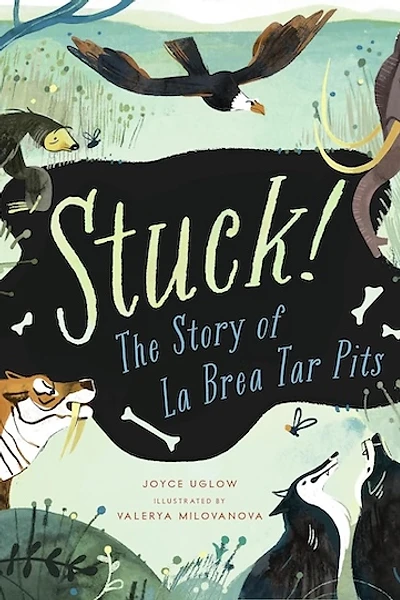
Stuck! The Story of La Brea Tar Pits
by Joyce Uglow
Pacing MaterialThe true story of the La Brea Tar Pits, where thousands of prehistoric animals were trapped in sticky asphalt, preserving their bones for thousands of years.
Big Idea
The earth preserves its own history, and tar pits are a window into a vanished world of ice age creatures.
Discussion Questions
- 1.How do animals get trapped in tar pits?
- 2.What kinds of animals have been found at La Brea?
- 3.Why are tar pits so good at preserving bones?
- 4.What can fossils teach us about the past?
- 5.How is a tar pit different from a regular fossil site?
Classroom Activity
Tar Pit Diorama
Build a diorama of the La Brea Tar Pits. Label three animals and show how they became trapped.
Lesson Plan
Learning Goals
- Explain how sticky natural asphalt at the La Brea Tar Pits trapped Ice Age animals and helped preserve their bones.
- Identify three animals found at La Brea, such as saber-toothed cats, dire wolves, and mammoths.
- Use details from Stuck! The Story of La Brea Tar Pits to build and label a model of the site.
- Explain how preserved bones provide evidence about animals that lived long ago.
Activity Steps
- 1.Read the book aloud, pausing to discuss the Ice Age animals and how they became trapped. Clarify that the pits contain natural asphalt, often called tar, and that preserved bones help scientists study the past.
- 2.Have students choose three animals described in the book. Sketch a diorama plan showing the asphalt pit, nearby land, and the placement of each animal.
- 3.Build the landscape in a shallow cardboard box. Use brown paper for land and black paper or black modeling clay for sticky asphalt; do not use real tar.
- 4.Draw, cut out, and attach the three animals. Show feet partly embedded in the asphalt. Where supported by the book, include a predator approaching a trapped animal and becoming stuck too.
- 5.Label each animal and add captions explaining the trapping process and how bones were preserved. Younger students may dictate captions; older students should include supporting details from the book.
- 6.Invite students to present their dioramas, describe what happened to their animals, and explain what scientists can learn from the bones left behind.
Standards Connections
- ELA: RI.1.3 — Describe connections between events and scientific ideas in an informational text, including trapping and bone preservation.
- ELA: RI.3.3 — Describe relationships between scientific ideas or events using language about sequence and cause and effect.
- ELA: SL.2.5 — Create visual displays to clarify ideas when presenting the tar pit diorama.
- Science: NGSS 3-LS4-1 — Use fossil evidence to understand organisms and environments of long ago; connect preserved La Brea bones to past animal life.
Pace-Write-Read Study with Pace-Write It!
Focus question: How does an author slow down and speed up true events to help readers feel the danger, wonder, and discovery in history? In Stuck! The Story of La Brea Tar Pits by Joyce Uglow, readers learn the true story of animals trapped in sticky tar and the scientists who later uncovered their bones. Joyce Uglow uses pacing by lingering on dramatic moments of getting stuck and discovery, then moving quickly across long stretches of time to show how the tar pits preserved the past.
| Element | How to notice or teach it in the novel |
|---|---|
| Pace | Read: Notice how Joyce Uglow speeds through thousands of years but slows down when an animal steps into the sticky tar or when fossils are discovered. The pacing helps readers feel both the quick danger and the long history of the La Brea Tar Pits. Classroom Activity: Write 3-4 sentences about an animal getting trapped; make the first sentence quick, the middle two slow and detailed, and the last sentence fast again. |
| Plot | Read: Follow the true sequence of events in this book: prehistoric animals come to the tar pits, become trapped, their bones are preserved, and much later scientists uncover the remains. The plot moves from natural event to scientific discovery. Classroom Activity: Make a four-part timeline with one sentence for each plot event, then turn one part into a fuller scene. |
| Prosody | Read: Listen to how the sentences sound when the book describes sticky tar, struggling animals, and careful fossil study. The rhythm of the language can sound heavy, slow, and serious, matching the book’s topic. Classroom Activity: Read a favorite page aloud and then write two sentences that sound slow and sticky by repeating soft or heavy-sounding words. |
| Word pause | Read: Notice where you naturally pause on words like tar, stuck, bones, and trapped because those important words carry the meaning of the story. These pauses help the book’s key ideas stand out. Classroom Activity: Write one sentence about the tar pits and underline the word you want a reader to pause on for emphasis. |
| Concept | Read: The big concept in this book is that a dangerous natural place became a record of prehistoric life. Joyce Uglow helps readers understand how something harmful to animals became helpful to scientists. Classroom Activity: Write 2-3 sentences explaining how the tar pits were both a trap and a treasure. |
| Voice & World View | Read: The voice in this real story sounds informed, curious, and respectful of nature and science. The world view shows that studying the past helps us learn about animals, habitats, and change over time. Classroom Activity: Write a short paragraph in a curious science-writer voice beginning with “Long ago, at La Brea…”. |
| Setting & Place | Read: Pay attention to La Brea as a real place in what is now Los Angeles, where bubbling asphalt created a dangerous landscape. The setting is important because the whole story depends on the sticky ground. Classroom Activity: Draw and label the setting, then write three setting sentences that show why this place was risky for animals. |
| Point of View | Read: The book is told from an outside narrator’s point of view, giving readers information about prehistoric animals and later fossil hunters. This point of view lets the author explain facts clearly. Classroom Activity: Rewrite one event from the point of view of a trapped mammoth, dire wolf, or scientist. |
| Original Characters | Read: Even though this is nonfiction, the animals and scientists act like important story figures in the book. Prehistoric animals such as mammoths, saber-toothed cats, and dire wolves help move the action. Classroom Activity: Choose one animal from the book and write a character card with what it wanted, what happened to it, and why it matters to the story. |
| Dialogue | Read: This book is mainly informational, so readers may notice little or no dialogue. That means the action, facts, and description do the work that talking characters might do in fiction. Classroom Activity: Invent 3 lines of possible dialogue between two scientists discovering bones at La Brea, keeping the facts true to the book. |
| Details | Read: Notice the factual details about sticky asphalt, trapped animals, preserved bones, and excavation work. These details make the true story vivid and believable. Classroom Activity: Write a factual sentence and then add two details from the book to make it more interesting. |
| Descriptions | Read: Look for places where Joyce Uglow describes how the tar looked, felt, or acted and how animals struggled in it. Strong description slows the pace and helps readers picture the scene. Classroom Activity: Write three describing sentences about the tar using sight, touch, and movement words. |
| Strong First Lines | Read: Notice how the beginning invites readers into the strange, dangerous world of the La Brea Tar Pits right away. A strong opening makes readers curious about what got stuck and why. Classroom Activity: Write your own first line for a nonfiction piece about the tar pits that creates instant curiosity. |
| Immediacy & Engagement | Read: The book makes old history feel immediate by focusing on moments of danger, struggle, and discovery. Readers feel close to the action even though it happened long ago. Classroom Activity: Write 2-3 sentences that begin with “Imagine…” to pull a reader into the scene of an animal nearing the tar. |
| Story Scenes & Summaries & Unique Structures | Read: Notice how some parts feel like close-up story scenes, such as an animal getting trapped, while other parts summarize long stretches of time and scientific work. This mix helps the book cover both action and information. Classroom Activity: Write one scene sentence about a trapped animal and one summary sentence about what happened over many years. |
| Flashback & Flash Forward & Cliffhangers | Read: The book reaches back to prehistoric times and forward to modern discoveries, almost like a flashback and flash forward in a true story. Some page endings may make readers want to know what was found next. Classroom Activity: Write two sentences that jump from “Long ago…” to “Today…” to show time change. |
| Tension & Suspense & Surprise | Read: The tension comes from animals stepping into a place that looks safe but is actually dangerous. Surprise comes when readers learn that the sticky trap preserved bones for scientists to study. Classroom Activity: Write a short suspenseful moment in which an animal first realizes it cannot get free. |
| Page Turns and Chapter Breaks | Read: Notice where a page turn makes you want to see what happened next—perhaps after an animal is in danger or when bones are uncovered. These breaks help control pacing and curiosity. Classroom Activity: Write two sentences for the end of a page; make the second one a page-turn line that creates a question. |
| Performance | Read: This book can be performed dramatically by changing your voice to sound slow and heavy for tar and bright and excited for discoveries. The pacing in oral reading helps listeners feel the shifts in time and mood. Classroom Activity: Mark one paragraph with slashes for pauses and arrows for where to speed up or slow down, then practice reading it aloud. |
| Personality | Read: Although the text is nonfiction, the storytelling has a personality that feels curious, serious, and full of wonder about prehistoric life. That personality keeps the facts from feeling dry. Classroom Activity: Write a four-sentence mini-explanation about fossils using a voice that sounds amazed and thoughtful. |
| Humor | Read: The topic is mostly serious, but students may notice moments of surprise or irony in how a messy, sticky place became one of the most famous fossil sites. Any lightness comes from the unexpected situation, not from jokes. Classroom Activity: Write one respectful, playful sentence about how tricky tar can be, while keeping the science idea accurate. |
| Pause | Read: Notice where the author seems to invite readers to stop and think—especially after describing trapped animals or important discoveries. These pauses give weight to the book’s big ideas. Classroom Activity: Write a sentence about finding a fossil and add an ellipsis or dash to create a thoughtful pause. |
| Poetry and Poetic Devices | Read: Even in nonfiction, the book may use strong sound and image words that feel poetic when describing bubbling tar, ancient animals, and buried bones. These choices make the science memorable. Classroom Activity: Write a two-line poem about the tar pits using personification or alliteration. |
| Repetition | Read: Notice if key ideas or words such as stuck, tar, bones, or trapped appear again and again. Repetition helps readers remember the main problem and the importance of the site. Classroom Activity: Write three sentences about La Brea that repeat one key word for effect. |
| Rhythm | Read: The rhythm of the writing may feel slow and heavy in dangerous moments and steadier in explanatory parts about fossils and scientists. This changing rhythm supports the pacing. Classroom Activity: Write one short sentence, one medium sentence, and one long sentence about the tar pits to create a rhythm pattern. |
| Punctuation | Read: Look closely at commas, dashes, and end marks that shape how fast or slow the text sounds when read aloud. Punctuation helps the author control pacing in a nonfiction story. Classroom Activity: Write two versions of the same sentence about a dire wolf near the tar pits—one with commas to slow it down and one with a period to make it abrupt. |
| Questions | Read: Think about the questions the book answers, such as how the bones stayed preserved and what scientists can learn from them. Questions help guide curiosity through the text. Classroom Activity: Write three research questions a reader might ask after reading about the La Brea Tar Pits. |
| Compare-Contrast | Read: Compare the prehistoric animals’ experience of the tar pits with the scientists’ experience studying them many years later. One side shows danger and loss; the other shows learning and discovery. Classroom Activity: Make a T-chart comparing “Then: trapped animals” and “Now: fossil scientists,” then write two compare-contrast sentences. |
| Objects | Read: Important objects in this book include sticky asphalt, bones, fossils, excavation tools, and museum displays. These objects carry the action and the information. Classroom Activity: Choose one object, such as a fossil bone or a shovel, and write from its point of view in 3 sentences. |
| Threes | Read: Notice if the author groups ideas in threes, such as naming several animals or listing steps in discovery. Groups of three can make information sound complete and memorable. Classroom Activity: Write a sentence that names three animals that might have come to the tar pits and explain what happened next. |
| Whitespace & Negative Space | Read: Look at how the space on the page, short paragraphs, and breaks between chunks of text help readers pause and absorb information. In nonfiction, open space can make dramatic facts stand out. Classroom Activity: Create a tiny nonfiction page with one short paragraph and one single-line fact to use space for emphasis. |
| Art & Graphics | Read: Notice how any illustrations, diagrams, or photographs support the text by showing the tar pits, prehistoric animals, and fossils. Visuals add information and can slow readers down to study details. Classroom Activity: Make a labeled sketch of a tar pit scene and add two captions that match the book’s facts. |
| Interactives & Gamification | Read: This book itself is not a game, but readers can interact with the ideas by sorting animals, sequencing events, or matching fossils to creatures. Interactive thinking helps students notice pacing and sequence. Classroom Activity: Create four event cards from the book and put them in order, then write one sentence explaining why the third card is an important turning point. |
Pace-Write It!
20-Minute Classroom Flow Read (5 min): Read aloud a section of Stuck! The Story of La Brea Tar Pits by Joyce Uglow that describes animals approaching the tar pits and another section about scientists discovering bones. Ask students to listen for where the story feels slow, fast, or suspenseful. Notice (5 min): Chart student observations under three headings: “Fast,” “Slow,” and “Important pause.” Discuss how Joyce Uglow slows down the dangerous moment of getting stuck, but speeds through many years until fossil discoveries are made. Name words and details such as tar, trapped, bones, mammoths, dire wolves, and scientists. Write (7 min): Students write a short nonfiction-style paragraph that uses pacing to tell one true-style moment from La Brea. Writing frame: “Long ago, a ______ came near the La Brea tar pits. At first, ______. Then, slowly, ______. Soon, ______ could not get free. Thousands of years later, scientists ______.” Encourage students to use one short sentence, one detailed slow sentence, and one final sentence that jumps forward in time. Share (3 min): Partners read their paragraphs aloud and point to the sentence where they slowed the pace most. Invite 1-2 volunteers to share how they used pacing to show danger and discovery. Exit ticket: Complete this sentence: “Joyce Uglow changes the pace in Stuck! The Story of La Brea Tar Pits to help readers ______.”
Pace-Write-Read Connection
Teach this book using the Pace-Write-Read method — Tool 8: Setting & Place.
Open the Mastery Manual