 K-3
K-3P BECKMEYER
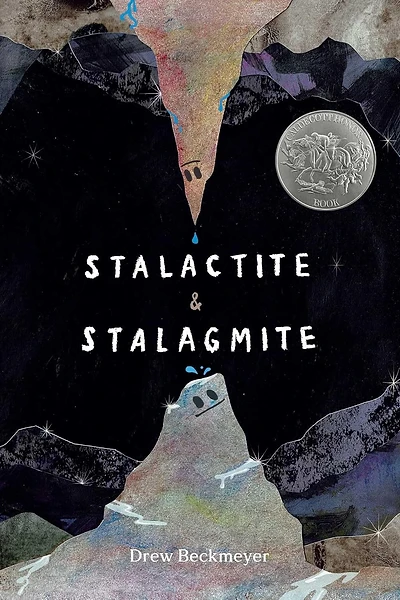
Stalactite & Stalagmite
by Drew Beckmeyer
Pacing MaterialTwo cave formations — one hanging from above, one rising from below — grow slowly toward each other in this quiet, funny story about patience and connection.
Big Idea
Even the slowest, smallest changes matter — patience and time can bring things together in unexpected ways.
Discussion Questions
- 1.What's the difference between a stalactite and a stalagmite?
- 2.How do the two formations grow toward each other?
- 3.What's something that changes slowly in your life?
- 4.Why is patience important?
Classroom Activity
Slow Change Journal
Students create a 'slow change' journal — observing something in the classroom that changes slowly over a week.
Lesson Plan
Learning Goals
- Distinguish between stalactites and stalagmites.
- Describe slow geological change.
- Practice patient observation over time.
- Record and compare daily observations.
Activity Steps
- 1.Read the book, noting how the stalactite and stalagmite grow toward each other.
- 2.Discuss how some changes happen slowly over time.
- 3.Pick something to observe for a week (a plant, ice melting, etc.).
- 4.Record observations daily and share findings.
Standards Connections
- ELA: RL.K.1 — Ask and answer questions about key details
- ELA: RL.K.2 — Retell stories, including key details
- ELA: RL.K.3 — Describe characters, setting, and events
- ELA: RL.3.6 — Acknowledge differences in characters' points of view
- ELA: SL.K.1 — Participate in collaborative conversations about the text
- ELA: W.K.3 — Write narratives recounting events with descriptive details
- SEL: Social Awareness
- SEL: Relationship Skills
- Art: VA:Re7 — Perceive and analyze artistic work
Pace-Write-Read Study with Pace-Write It!
Focus question: How can a story about waiting make readers feel eager for what happens next? In Stalactite & Stalagmite by Drew Beckmeyer, two cave formations grow very, very slowly toward each other, yet the book feels lively because the pacing stretches time, repeats small changes, and builds anticipation. Beckmeyer uses quiet humor, spare language, and page-by-page progress to show that patience can still feel exciting when readers are rooting for connection.
| Element | How to notice or teach it in the novel |
|---|---|
| Pace | Read: Notice how the story moves slowly on purpose, matching the tiny growth of Stalactite and Stalagmite, but still keeps readers interested because each page brings them a little closer together. Classroom Activity: Write 3-4 short sentences about two things moving slowly toward each other, and make each sentence show just a tiny bit of change. |
| Plot | Read: Notice that the plot is simple—Stalactite hangs from above, Stalagmite rises from below, and both keep growing toward a possible meeting—yet that clear goal gives the story momentum. Classroom Activity: Plan a beginning, middle, and end for a story where two characters are trying to reach each other over time. |
| Prosody | Read: Listen to how the words sound calm, steady, and almost echoing, like a cave, which helps the slow pacing feel natural instead of boring. Classroom Activity: Read one page aloud, then write two lines that sound slow and steady by using simple, gentle wording. |
| Word pause | Read: Notice where the text makes you stop for a moment to think or wait, especially when the space between Stalactite and Stalagmite still remains. Classroom Activity: Write a sentence about waiting and add an ellipsis or dash to create a pause before the important word. |
| Concept | Read: Notice how the big idea of patience is turned into something children can see: two cave formations taking a long time to connect. Classroom Activity: Write one sentence explaining the lesson Stalactite and Stalagmite teach about patience, then write one sentence showing that lesson in action. |
| Voice & World View | Read: Notice the gentle, playful voice that treats cave formations like real characters while still honoring the slowness of their world. Classroom Activity: Write 2-3 sentences in a calm, cheerful voice about something in nature that seems alive and full of feelings. |
| Setting & Place | Read: Notice how the cave setting shapes the whole story: dark, quiet, drippy, and slow, making every small change matter. Classroom Activity: Describe a place where time feels slow, and explain how that place changes what happens in the story. |
| Point of View | Read: Notice how readers are invited to watch both Stalactite and Stalagmite from the outside, seeing their shared journey toward connection. Classroom Activity: Write a short scene from the point of view of one object above and one object below, both noticing each other. |
| Original Characters | Read: Notice how unusual it is that the main characters are a stalactite and a stalagmite, and how their shapes and positions create the whole problem and promise of the story. Classroom Activity: Invent two nonhuman characters that belong in the same place but cannot meet right away. |
| Dialogue | Read: Notice how any speaking in the book helps reveal the personalities of Stalactite and Stalagmite without rushing the slow story. Classroom Activity: Write a 4-line dialogue between two characters who are waiting a long time to meet. |
| Details | Read: Notice the small details of dripping, growing, and cave life that make the long wait feel real and interesting. Classroom Activity: List five tiny details from a place in nature, then use at least three in a sentence or two about slow change. |
| Descriptions | Read: Notice how the descriptions help you picture Stalactite hanging tight from the ceiling and Stalagmite stretching up from the floor. Classroom Activity: Write one describing sentence for a character above and one for a character below, using clear visual words. |
| Strong First Lines | Read: Notice how the opening quickly sets the unusual world and prepares readers for a story built on waiting and watching. Classroom Activity: Write a first line for a story that introduces a surprising character and hints that something will take a long time. |
| Immediacy & Engagement | Read: Notice how the book keeps readers engaged even though the action is slow, because we immediately understand the wish for Stalactite and Stalagmite to connect. Classroom Activity: Write two sentences that make readers care right away about two characters who are still far apart. |
| Story Scenes & Summaries & Unique Structures | Read: Notice how the book can show individual moments of growth while also letting long stretches of time pass, creating a structure that fits a very slow process. Classroom Activity: Write one scene showing a single moment and one summary sentence that skips ahead in time. |
| Flashback & Flash Forward & Cliffhangers | Read: Notice that even without big dramatic flashbacks, the story builds a kind of cliffhanger by making readers wonder, page after page, when Stalactite and Stalagmite will finally meet. Classroom Activity: End a short paragraph with a line that makes readers want to turn the page to see if two characters connect. |
| Tension & Suspense & Surprise | Read: Notice how the tension comes from delay—readers keep waiting for the gap to close—and how that waiting creates suspense in a quiet, funny way. Classroom Activity: Write three sentences that build suspense by showing two characters getting closer, but not there yet. |
| Page Turns and Chapter Breaks | Read: Notice how each page turn can reveal a tiny change in distance, helping the pacing feel measured and full of anticipation. Classroom Activity: Make a mini 4-page booklet plan where each page turn shows one small step toward a meeting. |
| Performance | Read: Notice how this story works well when read aloud with a slow, dramatic voice, stretching key moments of waiting between Stalactite and Stalagmite. Classroom Activity: Practice reading one line slowly, then write a new line that should be performed with a long pause. |
| Personality | Read: Notice how Stalactite and Stalagmite feel distinct and lovable even though they are rock formations, because the book gives them attitude and longing. Classroom Activity: Write 2-3 sentences giving personality traits to an object or landform that cannot move quickly. |
| Humor | Read: Notice the quiet humor in taking something as slow as cave growth and turning it into a relationship readers can root for. Classroom Activity: Write one funny sentence about a very slow character trying hard to be patient. |
| Pause | Read: Notice how the story leaves room for silence and waiting, letting readers sit with the space between the two characters. Classroom Activity: Write a tiny moment where nothing big happens except a character waiting and noticing. |
| Poetry and Poetic Devices | Read: Notice the poetic feeling created by repeating ideas of dripping, growing, and reaching, which suits the cave setting and patient theme. Classroom Activity: Write three short lines of cave poetry using repetition such as 'drop by drop' or 'inch by inch.' |
| Repetition | Read: Notice how repeated patterns of waiting and growing help the pacing feel steady and build expectation for connection. Classroom Activity: Write a short passage that repeats a phrase like 'closer and closer' to show progress. |
| Rhythm | Read: Notice the rhythm of the language and page progression, which feels unhurried and steady like dripping water in a cave. Classroom Activity: Write two sentences with a slow rhythm by repeating similar sentence beginnings. |
| Punctuation | Read: Notice how punctuation can slow readers down or highlight a moment of hope, especially when Stalactite and Stalagmite seem almost close enough. Classroom Activity: Rewrite one sentence three ways using a period, ellipsis, and exclamation point, then discuss how the pace changes. |
| Questions | Read: Notice how readers naturally ask, 'Will they ever meet?' and that question keeps the pages turning. Classroom Activity: Write two questions a reader might ask during a slow-building story, then answer one at the end. |
| Compare-Contrast | Read: Notice how Stalactite and Stalagmite are alike because both are growing, patient, and hopeful, but different because one hangs down and one rises up. Classroom Activity: Make a compare-contrast T-chart for the two characters, then use it to write two comparison sentences. |
| Objects | Read: Notice how the main 'characters' are actually natural objects, and their object-ness shapes the pacing because they cannot hurry. Classroom Activity: Choose two objects from nature and write how their shapes or positions create a story problem. |
| Threes | Read: Notice places where events, details, or descriptions could be grouped in threes to make the slow pattern feel satisfying and memorable. Classroom Activity: Write a sentence with three small signs that two characters are getting closer. |
| Whitespace & Negative Space | Read: Notice how the empty space between Stalactite and Stalagmite matters just as much as the characters themselves, because that gap visually holds the waiting. Classroom Activity: On a page, draw or leave space between two simple pictures, then write one sentence explaining how the empty space shows patience. |
| Art & Graphics | Read: Notice how the illustrations help tell the pacing story by showing size, distance, cave darkness, and tiny changes over time. Classroom Activity: Sketch three frames of two characters moving a little closer in each frame, then add one sentence under each picture. |
| Interactives & Gamification | Read: Notice that readers can almost turn the book into a prediction game by checking each page to see how much closer Stalactite and Stalagmite have grown. Classroom Activity: Create a 'Will they meet?' progress tracker with four steps, and write one sentence for each step showing the growing connection. |
Pace-Write It!
20-Minute Classroom Flow\nRead (5 min): Read aloud Stalactite & Stalagmite by Drew Beckmeyer. Pause to let students notice how slowly the two cave formations grow and how each page still makes us want to keep going.\nNotice (5 min): Ask: How does the author make a very slow story feel interesting? Chart student ideas such as repetition, page turns, empty space, tiny changes, cave setting, and the question of whether Stalactite and Stalagmite will meet.\nWrite (7 min): Students write a short slow-growth scene about two characters trying to connect. Writing frame: '____ was up high. ____ was down low. Day by day, ______. Little by little, ______. They waited. They hoped. They grew ______ and ______. Would they ever ______?' Encourage students to use repetition and one pause mark such as an ellipsis.\nShare (3 min): Partners read their scenes aloud slowly and underline the line that best shows patience or connection. Invite 1-2 volunteers to share with the class.\nExit ticket: Write one sentence answering: How did Drew Beckmeyer use pacing to help readers care about Stalactite and Stalagmite?