 K-2
K-2P SAYRE
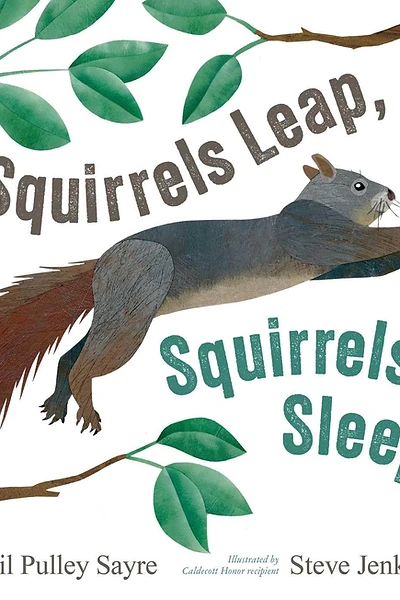
Squirrels Leap, Squirrels Sleep
by April Pulley Sayre
Pacing MaterialA lyrical exploration of the busy lives of squirrels — leaping, eating, and sleeping through the seasons.
Big Idea
Every animal has a rhythm of action and rest that helps it survive.
Discussion Questions
- 1.What are some things squirrels do during the day? What do they do at night?
- 2.How are squirrels like us? How are they different?
- 3.What did you notice about the words the author chose? Can you find any rhyming words?
- 4.Why do you think squirrels leap? Why do they sleep?
- 5.What other animals can you think of that leap and sleep?
Classroom Activity
Squirrel Nest Builders
Students create a squirrel nest using natural materials, then write one sentence describing where their squirrel would sleep.
Lesson Plan
Learning Goals
- Identify rhyming words and patterns
- Understand animal behavior and habitats
- Observe and describe physical adaptations
- Make text-to-world connections
Activity Steps
- 1.Distribute paper bowls and natural materials.
- 2.Students arrange twigs and leaves in the bowl to create a nest.
- 3.Place cotton or shredded paper in the center for bedding.
- 4.Students write: 'My squirrel sleeps in a ___ near a ___.'
- 5.Display the nests and sentences on a classroom 'Squirrel Habitat' table.
Standards Connections
- ELA: RL.K-2.4 (Rhyme and Rhythm)
- ELA: RI.K-2.7 (Illustrations)
- Science: LS1.A (Structure and Function)
- Science: LS1.D (Information Processing)
Pace-Write-Read Study with Pace-Write It!
Focus question: How does a writer make a squirrel’s day feel busy, bouncy, and calm at different moments? In Squirrels Leap, Squirrels Sleep by April Pulley Sayre, the author uses short, lyrical lines and carefully chosen action words to show squirrels darting, nibbling, hiding, and resting through the seasons. The pacing changes as the language speeds up during movement and slows down during quieter moments, helping readers feel both the energy and wonder of nature.
| Element | How to notice or teach it in the novel |
|---|---|
| Pace | Read: Notice how April Pulley Sayre makes the squirrels seem quick and lively in active moments and slower in resting moments. The pacing matches the squirrels’ leaping, eating, and sleeping across the seasons. Classroom Activity: Write 3 short lines about an animal moving quickly, then 2 calm lines about it resting. |
| Plot | Read: This poetry picture book does not follow one big problem and solution, but it still has movement as readers watch squirrels live through daily actions and seasonal changes. The plot-like flow comes from what squirrels do next in nature. Classroom Activity: Make a simple beginning-middle-end map of a squirrel day: move, find food, rest. |
| Prosody | Read: Listen to how the words in Squirrels Leap, Squirrels Sleep sound when read aloud. The phrasing and line breaks help the poem feel musical and support the bouncing energy of squirrels. Classroom Activity: Read one page aloud with a partner and mark where your voice gets faster, softer, or stronger. |
| Word pause | Read: Notice where a line ends or where punctuation makes you stop for a moment. These small pauses help readers pay attention to each squirrel action and image. Classroom Activity: Copy one short line pattern and add slash marks / where you want a reader to pause in your own animal poem. |
| Concept | Read: The big idea of the book is that ordinary squirrel life is full of wonder. April Pulley Sayre turns common nature observations into something lyrical and exciting. Classroom Activity: Write one sentence naming a small nature moment you think is full of wonder, such as a bird pecking or a rabbit hiding. |
| Voice & World View | Read: The voice in this book is curious, observant, and full of respect for the natural world. The world view suggests that animals’ everyday lives are worth noticing closely. Classroom Activity: Write 2 lines in a voice of wonder about an animal you have seen outside. |
| Setting & Place | Read: The setting is the outdoor world where squirrels leap in trees, search for food, and curl up to sleep. Seasonal nature details help place the squirrels in a changing environment. Classroom Activity: List 4 setting words for a squirrel habitat, then use at least 2 in a short poem. |
| Point of View | Read: The book is told from an outside observer’s point of view, watching squirrels closely rather than speaking as a squirrel. This lets the reader notice many squirrel behaviors across time. Classroom Activity: Write one line as an observer and one line as if you were the squirrel, then compare how they sound. |
| Original Characters | Read: The squirrels are not named storybook characters, but they still feel lively and memorable because of their movements and habits. Their actions make them the stars of the book. Classroom Activity: Invent one squirrel character based on a behavior, such as a bold leaper or a sleepy nest-maker, and write 3 describing words. |
| Dialogue | Read: Squirrels Leap, Squirrels Sleep does not rely on spoken dialogue. Instead, the action and poetic language carry the meaning. Classroom Activity: Add one imagined line of squirrel dialogue, such as what a squirrel might say before a big leap, and then write one action line to go with it. |
| Details | Read: Notice the specific details about what squirrels do—leap, eat, hide, sleep—that make the book feel real. These details help young readers picture actual animal behavior. Classroom Activity: Choose one animal and list 5 true details about what it does. |
| Descriptions | Read: April Pulley Sayre uses descriptive language to help readers see squirrel bodies, motions, and seasonal changes. The descriptions are brief but vivid. Classroom Activity: Write 2 descriptive lines about a squirrel using color, movement, or texture words. |
| Strong First Lines | Read: Notice how the opening immediately brings readers into squirrel action and attention. A strong beginning helps set the energetic, poetic pace right away. Classroom Activity: Write 3 possible first lines for a poem about an animal, each starting with a strong action word. |
| Immediacy & Engagement | Read: The book feels immediate because readers are placed close to the squirrels’ movements, as if watching them right now. Quick lines and active verbs pull readers in. Classroom Activity: Write a line that makes the reader feel they are seeing the action happen now, using a present-tense verb. |
| Story Scenes & Summaries & Unique Structures | Read: This book uses a poetic structure that moves through brief scenes and summarized moments instead of long story events. The unique structure lets many squirrel actions fit into one lyrical text. Classroom Activity: Create a 4-line poem with 2 lines showing one close-up scene and 2 lines summarizing what the animal usually does. |
| Flashback & Flash Forward & Cliffhangers | Read: This book does not use flashbacks or cliffhangers in a dramatic way, but it does move readers through time by showing squirrels across seasons and daily rhythms. That time movement gives a sense of what comes next in nature. Classroom Activity: Write one line about what a squirrel did before winter and one line about what it may do next. |
| Tension & Suspense & Surprise | Read: The tension in this book is gentle and comes from the quick, alert life of squirrels in nature. Readers may feel surprise in sudden movements like leaps or dashes. Classroom Activity: Write 2 short lines that build suspense before an animal moves, then 1 line showing the surprise action. |
| Page Turns and Chapter Breaks | Read: In this picture book, page turns help control pacing by revealing a new squirrel action or image at just the right moment. There are no chapters, so each spread helps shape the reading flow. Classroom Activity: Plan a 2-page mini-book and decide what action should be saved for the page turn. |
| Performance | Read: This book is meant to be enjoyed aloud, with readers using their voices to match squirrel energy and calm. Performance helps listeners hear the change between leaping and sleeping. Classroom Activity: Practice reading 2 lines in a bouncy voice and 2 lines in a quiet, sleepy voice. |
| Personality | Read: Even without names, the squirrels show personality through bold movement, alert behavior, and cozy resting. Their habits make them feel active and alive. Classroom Activity: Choose one personality trait for a squirrel—busy, brave, cautious, or cozy—and write 2 lines that show it. |
| Humor | Read: The book’s humor is light and comes from watching squirrels’ busy, sometimes funny-looking actions in nature. Their nibbling, scrambling, and sudden pauses can make readers smile. Classroom Activity: Write one playful line about a squirrel doing something that looks funny. |
| Pause | Read: Notice how calm moments, especially around sleep or stillness, create bigger pauses in the pacing. These pauses balance the quick action and help the reader breathe. Classroom Activity: In your poem, add one line with a quiet still moment after 2 fast action lines. |
| Poetry and Poetic Devices | Read: Squirrels Leap, Squirrels Sleep uses poetic language, line breaks, sound, and imagery to turn observation into poetry. The title itself shows a pleasing pattern with action words. Classroom Activity: Write a 4-line nature poem using one strong image and one pair of matching action words. |
| Repetition | Read: Notice how repeated patterns of squirrel behavior and repeated language ideas help tie the poem together. Repetition gives the book a steady, memorable feel. Classroom Activity: Choose one repeated starter such as “Squirrels…” or “I see…” and use it in 3 lines. |
| Rhythm | Read: The rhythm of the words often feels quick and springy, like a squirrel’s body in motion, then softer in resting parts. This rhythm helps create pacing without a long plot. Classroom Activity: Clap the beat of one page, then write 2 lines with a quick beat and 2 lines with a slow beat. |
| Punctuation | Read: Look at how punctuation helps the reader know when to pause, stop, or move ahead quickly. In a poetry picture book, punctuation works together with line breaks to shape pacing. Classroom Activity: Write the same animal line two ways—one with a period and one with an exclamation mark—and read both aloud. |
| Questions | Read: Even when the text is not full of direct questions, the book invites readers to wonder about squirrel life: Where are they going? What are they storing? When will they rest? Classroom Activity: Write 3 wonder questions about squirrels or another backyard animal. |
| Compare-Contrast | Read: The biggest contrast in the book is between active moments like leaping and calm moments like sleeping. The seasons may also create contrasts in how squirrels live. Classroom Activity: Make a T-chart comparing squirrel action and squirrel rest, then turn one pair into 2 poem lines. |
| Objects | Read: Notice the important objects in squirrel life, such as nuts, branches, nests, and places to hide food. These objects help explain how squirrels survive and move through their world. Classroom Activity: Pick one object an animal needs and write 2 lines showing how it uses it. |
| Threes | Read: As you read, listen for places where ideas or actions could be grouped in threes, such as leap, eat, sleep. Groups of three sound satisfying and help pacing feel complete. Classroom Activity: Write a 3-part line about an animal using three verbs, such as “hop, sniff, hide.” |
| Whitespace & Negative Space | Read: In a picture book poem, open space on the page can slow the reader down and make each word feel important. The visual breathing room helps match moments of stillness and wonder. Classroom Activity: Write a 3-line poem and leave a blank line before the final line to create a pause. |
| Art & Graphics | Read: The illustrations in Squirrels Leap, Squirrels Sleep work with the words to show movement, seasonal setting, and squirrel behavior. The pictures help readers feel the pace of darting and resting. Classroom Activity: Sketch a squirrel action scene and add one caption line that matches the picture’s energy. |
| Interactives & Gamification | Read: This book invites active noticing because children can spot squirrel actions, seasonal clues, and repeated patterns as they read. The natural world becomes a kind of observation game. Classroom Activity: Make a squirrel action hunt with boxes for leap, nibble, hide, and sleep, then write one line about the action you found most interesting. |
Pace-Write It!
20-Minute Classroom Flow\nRead (5 min): Read Squirrels Leap, Squirrels Sleep by April Pulley Sayre aloud once for enjoyment. On a second quick reread of selected pages, have students listen for places where the poem feels fast and places where it feels slow and calm.\nNotice (5 min): Chart two columns: “Fast squirrel moments” and “Slow squirrel moments.” Ask: Which words make the squirrels feel bouncy? Which words make the page feel quiet? Notice action verbs, short lines, repetition, and pauses.\nWrite (7 min): Students write a short animal poem that changes pace. Writing frame: “_____ leap. / _____ dash. / _____ look. / Now _____ rest. / In the _____, / _____ sleep.” Encourage students to replace the animal and setting words and add one original detail.\nShare (3 min): Partners read their poems aloud twice—first with all lines at the same speed, then with fast lines read quickly and resting lines read slowly. Briefly discuss which version sounded more like the book.\nExit ticket: Write one sentence answering: “How did I change the pace in my poem?”