 1-4
1-4GN SQUIRREL
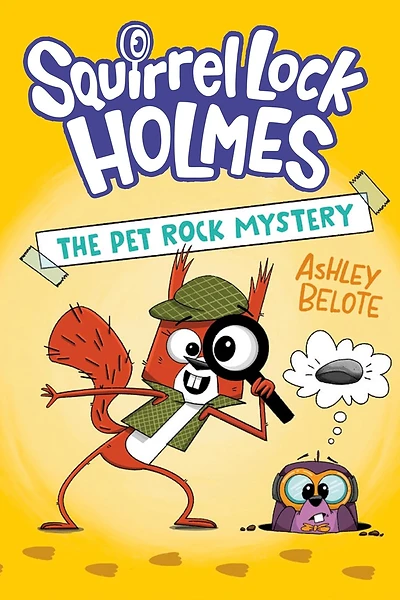
Squirrel Lock Holmes: The Pet Rock Mystery
by Ashley Belote
Pacing MaterialA detective squirrel and his sidekick crack the case of the missing pet rock in a funny, twist-filled mystery for young readers.
Big Idea
Every mystery is solvable if you look closely enough — and don't jump to conclusions.
Discussion Questions
- 1.How does Squirrel Lock Holmes use clues to solve mysteries?
- 2.What makes a good detective?
- 3.How does the author use humor in the mystery?
- 4.What was the most surprising clue in the story?
Classroom Activity
Mystery Case File
Create a mystery case file for a lost object, including clues, suspects, and a resolution.
Lesson Plan
Learning Goals
- Analyze mystery genre structure
- Practice inferential thinking
- Explore character traits through detective work
Standards Connections
- ELA: RL.1.1 — Ask and answer questions about key details
- ELA: RL.1.2 — Retell stories, including key details
- ELA: RL.1.3 — Describe characters, setting, and events
- ELA: RL.4.6 — Acknowledge differences in characters' points of view
- ELA: SL.1.1 — Participate in collaborative conversations about the text
- ELA: W.1.3 — Write narratives recounting events with descriptive details
- SEL: Relationship Skills
- SEL: Social Awareness
Pace-Write-Read Study with Pace-Write It!
Focus question: How does an author speed up or slow down a mystery so readers keep turning the pages? In Squirrel Lock Holmes: The Pet Rock Mystery by Ashley Belote, a clever squirrel detective and his sidekick investigate a missing pet rock through funny clues, quick dialogue, and surprising twists. The graphic novel format helps pacing by using panels, page turns, and visual jokes to move some moments fast while stretching out suspense in others.
| Element | How to notice or teach it in the novel |
|---|---|
| Pace | Read: Notice how Ashley Belote moves quickly through clue-finding scenes but slows down important mystery moments when Squirrel Lock Holmes and his sidekick study evidence about the missing pet rock. Classroom Activity: Write 4-5 sentences about a missing classroom object, using one fast action sentence and one slower thinking sentence to control pace. |
| Plot | Read: Track the mystery plot from the missing pet rock, to the clues, to the final solution, and notice how each event helps Squirrel Lock Holmes and his sidekick solve the case. Classroom Activity: Make a beginning-middle-end mystery plan for your own story with a problem, three clues, and a solution. |
| Prosody | Read: Listen to how the dialogue can be read with expression—serious detective lines, excited discoveries, and funny reactions all change the sound of the story. Classroom Activity: Choose one clue scene and rewrite the speech bubbles so a reader knows where to sound whispery, shocked, or proud. |
| Word pause | Read: Notice where a single word, short phrase, or tiny speech bubble makes readers stop before the next clue or joke in this graphic novel mystery. Classroom Activity: Write a 3-panel mini-scene about finding a clue and include a one-word pause such as “Wait!” or “Hmm…” before the reveal. |
| Concept | Read: Think about the big idea that problem-solving and friendship work together as Squirrel Lock Holmes and his sidekick crack a silly but important case. Classroom Activity: Write 2-3 sentences explaining how teamwork helps solve a mystery in your own imagined detective story. |
| Voice & World View | Read: Notice the playful, detective-style voice and the way the story treats a missing pet rock like a very serious case, which makes the world feel both silly and important. Classroom Activity: Write a short case report in a dramatic detective voice about a tiny problem, such as a lost pencil or missing snack. |
| Setting & Place | Read: Pay attention to where the investigation happens and how each place gives Squirrel Lock Holmes and his sidekick new clues, suspects, or funny moments. Classroom Activity: Draw and label a mystery setting, then write 3 sentences showing how the place helps your detective find evidence. |
| Point of View | Read: Notice how the story shares the case so readers follow the detectives and discover clues along with them instead of knowing everything at once. Classroom Activity: Rewrite one mystery moment from the point of view of the missing pet rock, a suspect, or the sidekick. |
| Original Characters | Read: Study how Squirrel Lock Holmes stands out as a squirrel detective and how his sidekick helps balance the investigation with support, reactions, and friendship. Classroom Activity: Invent an original animal detective and sidekick, and write 4 sentences telling what makes them different from other mystery characters. |
| Dialogue | Read: Notice how the speech between Squirrel Lock Holmes, his sidekick, and other characters moves the case forward while also adding humor and personality. Classroom Activity: Write 6 lines of dialogue between a detective and a sidekick who disagree about what a clue means. |
| Details | Read: Look closely at the small clues, expressions, and object details that matter in the pet rock case, since mysteries depend on readers noticing little things. Classroom Activity: Write a clue list with 5 specific details for a mystery about a missing toy, book, or lunchbox. |
| Descriptions | Read: Notice how the book uses short, sharp descriptions and pictures together so readers can quickly understand the clue, the suspect, or the scene. Classroom Activity: Describe one mysterious object in 3 vivid sentences without naming it, so classmates can guess what it is. |
| Strong First Lines | Read: Think about how the opening quickly pulls readers into a case and promises mystery, humor, and action right away. Classroom Activity: Write three different opening lines for a funny mystery, and make one sound dramatic like Squirrel Lock Holmes would say it. |
| Immediacy & Engagement | Read: Notice how the case feels urgent even though it is about a pet rock, because the characters act as if solving it matters right now. Classroom Activity: Write 3-4 sentences that make a small problem feel important and urgent, using words like now, suddenly, or at once. |
| Story Scenes & Summaries & Unique Structures | Read: Watch how some parts of the book zoom in on key scenes with dialogue and clues, while other parts move quickly past less important moments to keep the mystery tight. Classroom Activity: Write one detailed scene of finding a clue and one 2-sentence summary of what happens next on the way to solving the case. |
| Flashback & Flash Forward & Cliffhangers | Read: Notice whether characters refer back to earlier events or whether page endings leave readers hanging before the next clue or twist in the pet rock mystery. Classroom Activity: End a short mystery paragraph with a cliffhanger line that makes readers want to turn the page. |
| Tension & Suspense & Surprise | Read: Pay attention to how Ashley Belote builds suspense from clue to clue and then delivers funny surprises as Squirrel Lock Holmes and his sidekick get closer to the truth. Classroom Activity: Write 5 sentences that build from calm to suspenseful and end with a surprising discovery. |
| Page Turns and Chapter Breaks | Read: In this graphic novel, notice how turning the page can hide a reveal, a suspect, or a joke until the perfect moment. Classroom Activity: Plan a 2-page mystery comic and write what should happen right before the page turn and what should be revealed after it. |
| Performance | Read: Notice how the characters seem ready to perform with big expressions, detective poses, and dramatic reactions that make the mystery feel lively. Classroom Activity: Write a short detective speech for Squirrel Lock Holmes or your own detective to perform aloud when a clue is found. |
| Personality | Read: Study how Squirrel Lock Holmes’s confident detective personality and the sidekick’s support shape the investigation and the friendship theme. Classroom Activity: Write a character card for a detective that includes 3 personality traits and how each trait would affect solving a case. |
| Humor | Read: Notice how the book makes readers laugh by treating a missing pet rock like a major crime and by mixing visual jokes with serious detective behavior. Classroom Activity: Write a funny mystery problem that sounds tiny but is treated as enormous, and explain why your detective cares so much. |
| Pause | Read: Watch for moments when the action stops so the detectives can think, stare at evidence, or let a joke land before moving on. Classroom Activity: Add a pause moment to a short mystery scene by writing one sentence of silence, thinking, or staring before the solution. |
| Poetry and Poetic Devices | Read: Even in a graphic novel mystery, listen for playful sound patterns, repeated words, or dramatic phrasing that make lines memorable. Classroom Activity: Write a 2-line detective chant or clue poem using alliteration, such as “rocky, round, and right under the rug.” |
| Repetition | Read: Notice if certain words, clue ideas, or detective habits repeat to build humor and help readers remember important parts of the case. Classroom Activity: Write a short mystery paragraph that repeats one key phrase three times for effect, such as “The clue was small.” |
| Rhythm | Read: Feel how short panels, quick speech bubbles, and action-reaction moments create a bouncy rhythm as Squirrel Lock Holmes and his sidekick investigate. Classroom Activity: Write 6 short sentences with a quick rhythm to show a detective hurrying from clue to clue. |
| Punctuation | Read: Look at how question marks, exclamation points, ellipses, and bold detective-style statements shape the speed and feeling of the dialogue. Classroom Activity: Rewrite a 4-line conversation about a missing object using at least three kinds of punctuation to change the mood. |
| Questions | Read: Notice how mysteries are powered by questions: Who took it? Where did it go? What does this clue mean? Squirrel Lock Holmes keeps readers wondering. Classroom Activity: Write 5 detective questions your character would ask while solving a case. |
| Compare-Contrast | Read: Compare Squirrel Lock Holmes and his sidekick—how are they alike as friends, and how are they different as problem-solvers? Classroom Activity: Make a T-chart comparing your detective and sidekick, then write 3 sentences about how their differences help the case. |
| Objects | Read: Focus on the pet rock itself and other clue objects, since in mysteries ordinary things can become very important evidence. Classroom Activity: Choose one everyday object and write 4 clues that could make it the center of a mystery. |
| Threes | Read: Notice how mysteries often feel satisfying when clues, suspects, or attempts come in threes, helping readers follow the investigation. Classroom Activity: Plan a mystery with exactly 3 clues, 3 suspects, or 3 wrong guesses before the real answer. |
| Whitespace & Negative Space | Read: In a graphic novel, empty space around panels or speech bubbles can slow readers down, spotlight a reaction, or make a reveal feel bigger. Classroom Activity: Sketch a simple 3-panel comic and decide where to leave extra blank space to make one clue or reaction stand out. |
| Art & Graphics | Read: Study how Ashley Belote’s illustrations, panel sizes, facial expressions, and visual clues help tell the mystery along with the words. Classroom Activity: Create a comic panel of a detective discovering evidence, and add labels showing what the picture tells readers that the words do not. |
| Interactives & Gamification | Read: Treat the book like a clue game by stopping to guess suspects, predict answers, and test ideas with the evidence Squirrel Lock Holmes and his sidekick find. Classroom Activity: Make a mini “Solve the Case” sheet with 3 clues, 2 suspects, and 1 final answer for a classmate to solve. |
Pace-Write It!
20-Minute Classroom Flow Read (5 min): Read aloud a short section from Squirrel Lock Holmes: The Pet Rock Mystery by Ashley Belote that includes the missing pet rock problem, clue-finding, and a funny reveal or suspect moment. Ask students to listen for where the story speeds up, slows down, and makes them want to turn the page. Notice (5 min): On chart paper, list what students notice about pacing in the book: quick dialogue, clue-by-clue structure, dramatic pauses, funny reactions, and page-turn surprises. Prompt with: “Where did Squirrel Lock Holmes act fast?” “Where did the story pause to think?” “How did the pictures help the mystery feel suspenseful or silly?” Write (7 min): Students write their own tiny mystery scene about a missing object. Writing frame: “Oh no! The ___ was missing. Detective ___ and sidekick ___ looked in ___. First, they found ___. Then they noticed ___. ‘___?’ said ___. At last, they discovered ___. The case was solved because ___.” Challenge students to add: 1 question, 1 pause word (Wait…/Hmm…), and 1 funny detail. Share (3 min): Partners read their mystery scenes aloud with expression, using dramatic pauses and detective voices. Invite 2-3 students to share how they paced their scene by speeding up the search or slowing down the clue reveal. Exit ticket: Write one sentence answering: “What is one way Ashley Belote makes Squirrel Lock Holmes: The Pet Rock Mystery exciting to read?”