 PreK-3
P MILLER
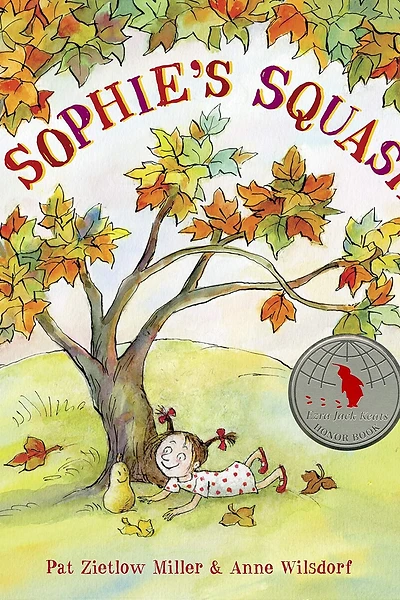
Sophie's Squash
by Pat Zietlow Miller
Pacing MaterialSophie names her butternut squash Bernice and treats it as her best friend. But as Bernice begins to soften and age, Sophie learns about the cycles of friendship and growth.
Big Idea
True friendship endures through change — and sometimes letting go leads to something new and beautiful.
Discussion Questions
- 1.Why does Sophie name her squash Bernice?
- 2.What happens when Bernice starts to get squishy?
- 3.What does Sophie do with Bernice at the end of the story?
- 4.What does this story teach us about friendship?
Classroom Activity
Squash Friend
Give each student a small squash or gourd to name and befriend. Have them write a short story about their squash friend's adventures.
Lesson Plan
Learning Goals
- Retell key events in Sophie's Squash, including Sophie naming Bernice, noticing her changes, and discovering new squash growing.
- Describe how Sophie shows care for Bernice and explain how friendship can continue through change.
- Create a squash-friend character with a name, personality, and imagined adventure.
- Use drawings, dictation, or writing to tell a short story with a beginning, middle, and ending.
Activity Steps
- 1.Read Sophie's Squash aloud. Pause to ask: 'What makes Bernice special to Sophie?' and 'How does Sophie respond when Bernice begins to change?'
- 2.Together, retell what happens to Bernice. Discuss how planting Bernice leads to new growth and how Sophie welcomes new squash friends.
- 3.Give each student a small squash or gourd. Invite students to observe its shape, color, and texture, name their friend, and add a face using washable markers or removable paper features.
- 4.Have students plan an adventure: Where will their squash friend go? What will change or become challenging? How will someone show friendship or care?
- 5.Ask students to draw and dictate their adventure in PreK–K or write a short beginning-middle-ending story in grades 1–3. Encourage a detail inspired by Sophie's care for Bernice.
- 6.Invite students to introduce their squash friends and share their stories with a partner. Close by asking: 'How can we care for a friend when things change?' Explain that real squash will eventually soften, so the class will keep drawings and stories as lasting reminders.
Standards Connections
- ELA: RL.K.2 / RL.1.2 — Retell the story, including key events in Sophie's friendship with Bernice.
- ELA: RL.K.3 / RL.1.3 — Describe Sophie, Bernice, and major events using story details.
- ELA: W.K.3 / W.1.3 / W.2.3 / W.3.3 — Use developmentally appropriate drawing, dictation, or writing to create a sequenced narrative.
- ELA: SL.K.1 / SL.1.1 — Participate in conversations about the book and classmates' squash-friend stories.
- SEL: Relationship skills and self-awareness — Identify feelings about change and describe caring actions that sustain friendship.
Pace-Write-Read Study with Pace-Write It!
Focus question: How does an author slow down and speed up a story to help us feel a friendship grow and change? In "Sophie's Squash" by Pat Zietlow Miller, Sophie treats a butternut squash named Bernice like a true friend, and the story moves gently through playful moments and more slowly through Bernice’s changes. The pacing helps readers enjoy Sophie’s imagination, then pause and feel the sadness, kindness, and hope that come with growth and new friendship.
| Element | How to notice or teach it in the novel |
|---|---|
| Pace | Read: Notice how the story begins with quick, happy friendship moments as Sophie plays with Bernice, then slows down when Bernice starts to soften and change. The pacing helps readers feel both the joy of make-believe friendship and the tenderness of letting go. Classroom Activity: Write 3 short sentences about a fun day with a toy or object, then 3 longer sentences about when it changed, broke, or had to be left behind. |
| Plot | Read: Track the main plot steps: Sophie picks Bernice, loves her as a friend, Bernice ages, Sophie feels upset, and then new squash plants and new friendships begin. The plot pacing moves from problem to change to hopeful resolution. Classroom Activity: Make a 5-box plot map with labels for beginning, friendship, problem, change, and new beginning, then write one sentence for each box. |
| Prosody | Read: Listen to how the sentences can be read warmly and gently, especially during scenes between Sophie and Bernice. The rhythm of the language supports the caring, thoughtful mood of the book. Classroom Activity: Choose one page and practice reading it two ways—happy and worried—then write one sentence telling which way better matches Sophie’s feelings and why. |
| Word pause | Read: Notice places where readers naturally pause around important words about Bernice getting soft, spotty, or old. Those pauses help the changes feel important. Classroom Activity: Copy one sentence about Bernice changing and mark with a slash where you would pause when reading aloud. |
| Concept | Read: The big concept is that friendship can change, and growth can bring endings and beginnings at the same time. Sophie learns kindness includes caring through change. Classroom Activity: Finish this idea in writing: “A friend can change, but I can still _____.” Add one example from Sophie and Bernice. |
| Voice & World View | Read: The story’s voice honors Sophie’s childlike belief that Bernice is real and important. The world view is gentle and respectful toward imagination, feelings, nature, and change. Classroom Activity: Write 2–4 sentences in a voice that treats an ordinary object like a real friend, the way Sophie does with Bernice. |
| Setting & Place | Read: Notice how home, neighborhood, and garden spaces shape the pacing—indoor play feels cozy, while the garden scenes slow the story and connect it to seasons and growth. Setting helps the ending feel calm and hopeful. Classroom Activity: Draw and label one setting from the story, then write two sentences explaining how that place changes Sophie’s feelings. |
| Point of View | Read: The book is told in third person, but it stays close to Sophie’s thoughts and feelings, so readers experience Bernice as special because Sophie does. This point of view helps the pacing feel personal. Classroom Activity: Rewrite one moment from the story in first person starting with “I am Sophie, and I…” |
| Original Characters | Read: Sophie is memorable because she is imaginative and sincere, and Bernice is unusual because she is a squash treated like a best friend. Their unusual friendship makes readers slow down and pay attention. Classroom Activity: Invent an original character friendship between a child and an unexpected object, and write 3 sentences introducing them. |
| Dialogue | Read: Notice how dialogue and conversation around Sophie’s attachment to Bernice reveal personality and move scenes along without rushing. Talk helps show how others react to Sophie’s special friendship. Classroom Activity: Write a 4-line dialogue between a child and an adult about keeping a very unusual friend. |
| Details | Read: Small details about how Sophie carries, dresses, and cares for Bernice make the friendship believable. These details stretch the story’s middle and help readers enjoy the bond before the change comes. Classroom Activity: List 5 caring details Sophie might do for Bernice, then use 2 of them in a short paragraph. |
| Descriptions | Read: Notice the descriptive language for Bernice at the beginning versus later when she becomes softer and older-looking. Description changes the pace by making readers linger on Bernice’s transformation. Classroom Activity: Write a before-and-after description of an object using the frame “At first it was ____. Later it became ____.” |
| Strong First Lines | Read: Pay attention to how the opening quickly introduces Sophie’s strong interest in Bernice and invites readers into the unusual friendship right away. A strong start creates instant curiosity. Classroom Activity: Write an opening line for a story about meeting an unexpected friend that makes readers want to know more. |
| Immediacy & Engagement | Read: The book keeps readers engaged by making Sophie’s feelings immediate—her delight, worry, and hope feel close and real. The pacing helps young readers stay connected from page to page. Classroom Activity: Write 3 sentences about a moment that feels important right now, using feeling words like “excited,” “worried,” or “hopeful.” |
| Story Scenes & Summaries & Unique Structures | Read: Some parts feel like full scenes, such as Sophie spending time with Bernice, while other parts summarize time passing as Bernice ages. This balance keeps the book from feeling too fast or too slow. Classroom Activity: Write one scene in 3 sentences about a child playing with a special object, then one summary sentence that begins “After many days…” |
| Flashback & Flash Forward & Cliffhangers | Read: This story does not rely on flashbacks or cliffhangers, but readers can still notice how curiosity builds when Bernice begins to change and we wonder what Sophie will do next. The suspense comes gently. Classroom Activity: Add one forward-looking sentence to a Bernice scene using the frame “Sophie did not know that soon…” |
| Tension & Suspense & Surprise | Read: The tension grows quietly when Bernice no longer seems healthy, and Sophie must face change. The surprise and hope come when new plants grow and Sophie opens her heart to new friendship. Classroom Activity: Write 4 sentences that build quiet suspense about noticing a beloved object changing day by day. |
| Page Turns and Chapter Breaks | Read: As a picture book, "Sophie's Squash" uses page turns instead of chapters to create anticipation, especially when Bernice’s condition changes or when the garden brings something new. Page turns help control pacing. Classroom Activity: Plan a 4-page mini picture book and write one sentence for each page turn that makes the reader want to keep going. |
| Performance | Read: This story works well in read-aloud because readers can use tender, playful, and worried voices to match Sophie’s journey. Performance choices slow down emotional moments and brighten playful ones. Classroom Activity: Mark one page with emojis or simple notes to show how you would perform it aloud, then write one sentence explaining your choices. |
| Personality | Read: Sophie’s personality is loyal, imaginative, and caring, and those traits shape the pace because she spends real time loving Bernice. Her strong personality makes the story believable and heartfelt. Classroom Activity: Write a character card for Sophie with 3 traits and one sentence of evidence for each trait. |
| Humor | Read: There is gentle humor in the idea of a child treating a squash as a best friend and in the serious way Sophie cares for Bernice. The humor keeps the story light even as it moves toward change. Classroom Activity: Write a funny but kind sentence about an unusual object acting like a best friend. |
| Pause | Read: Notice where the story invites emotional pauses, especially when Sophie sees that Bernice is not the same anymore. These pauses give readers time to feel sadness and care. Classroom Activity: Reread a serious moment and write one sentence beginning “I would pause here because…” |
| Poetry and Poetic Devices | Read: While the book is prose, its gentle repetition, soft sounds, and image-rich language create a poetic feeling that suits Sophie’s tender friendship with Bernice. The language helps the story flow smoothly. Classroom Activity: Write 2 lines about Bernice using alliteration, such as repeating the same beginning sound. |
| Repetition | Read: Repeated caring actions and repeated attention to Bernice help show how deep Sophie’s friendship is. Repetition slows the pacing in a useful way by showing devotion. Classroom Activity: Write a 3-sentence piece where each sentence begins with “Every day, Sophie…” and shows a different caring action. |
| Rhythm | Read: The story’s rhythm feels calm and steady, matching daily routines and the slow natural process of growth and decay. That steady rhythm helps young readers follow the emotional change. Classroom Activity: Write 4 short lines about a daily friendship routine with a steady pattern, such as “She carried… She checked… She smiled… She stayed…” |
| Punctuation | Read: Notice how punctuation helps shape the read-aloud pace—periods slow things down, and expressive marks can highlight surprise or strong feeling. In a gentle story like this one, punctuation supports emotion without making it too loud. Classroom Activity: Take one plain sentence about Sophie and Bernice and rewrite it two ways using different punctuation to change the feeling. |
| Questions | Read: Readers naturally ask questions: Why does Sophie love Bernice so much? What will happen when Bernice changes? Will Sophie find a new way to care? These questions keep the pages turning. Classroom Activity: Write 3 reader questions you would ask during the middle of the story, then answer one of them. |
| Compare-Contrast | Read: Compare Bernice at the start and Bernice later, and compare Sophie’s first friendship with her later new friendships. These contrasts help readers see growth and change clearly. Classroom Activity: Make a T-chart comparing “Bernice at first” and “Bernice later,” then write one sentence about what Sophie learns from the change. |
| Objects | Read: The central object, Bernice the butternut squash, carries the whole story’s meaning. The object becomes a symbol of friendship, change, and new life. Classroom Activity: Choose an everyday object and write 3 sentences showing how it could stand for friendship or kindness. |
| Threes | Read: Look for places where actions or details could be grouped in threes to strengthen rhythm, such as three ways Sophie cares for Bernice or three changes Sophie notices. Groups of three often sound complete and memorable. Classroom Activity: Write a sentence that lists 3 things Sophie does for Bernice, separated by commas. |
| Whitespace & Negative Space | Read: In a picture book, open page space can slow readers down and draw attention to Sophie’s feelings or to Bernice herself. Space can make quiet moments feel even quieter. Classroom Activity: Create a one-page story sketch with only one sentence and a lot of blank space, then explain what feeling the space creates. |
| Art & Graphics | Read: The illustrations are essential for pacing because they show Sophie’s attachment, Bernice’s changes, and the hopeful garden ending even when the text stays simple. Art helps readers notice emotion and time passing. Classroom Activity: Draw two quick panels—Sophie with Bernice at the beginning and Sophie at the end—then write one caption under each. |
| Interactives & Gamification | Read: Readers can interact with the story by predicting what Bernice’s changes mean, sequencing events, and matching feelings to pages. These activities help students notice pacing in a playful way. Classroom Activity: Make 4 event cards from the story, mix them up, put them in order, and write one sentence explaining which event should come last and why. |
Pace-Write It!
20-Minute Classroom Flow\nRead (5 min): Read aloud key parts of "Sophie's Squash" by Pat Zietlow Miller: Sophie choosing Bernice, caring for Bernice, noticing Bernice changing, and the ending with new growth and friendship. Pause briefly to let students notice how some parts move quickly and some parts slow down.\nNotice (5 min): Ask: “Where did the story feel fast? Where did it feel slow?” Chart student ideas under two headings: Fast parts and Slow parts. Guide students to notice that playful friendship scenes move quickly, while Bernice’s changes and Sophie’s feelings are given more time.\nWrite (7 min): Students write a short piece about a special object, toy, or plant using different pacing. Writing frame: “At first, I loved my ______. Every day, I ______, ______, and ______. Then one day, I noticed ______. I felt ______ because ______. In the end, I learned ______.” Encourage students to make the middle slower by adding details about what changed and how they felt.\nShare (3 min): Partners read their writing aloud and point to one place where they wrote a fast part and one place where they slowed down the story. Invite 1–2 volunteers to share with the class.\nExit ticket: Write one sentence answering: “Why did Pat Zietlow Miller slow down the part when Bernice changed?”
Pace-Write-Read Connection
Teach this book using the Pace-Write-Read method — Tool 20: Play.
Open the Mastery Manual