
 K-3
K-3P BOOK-HARE
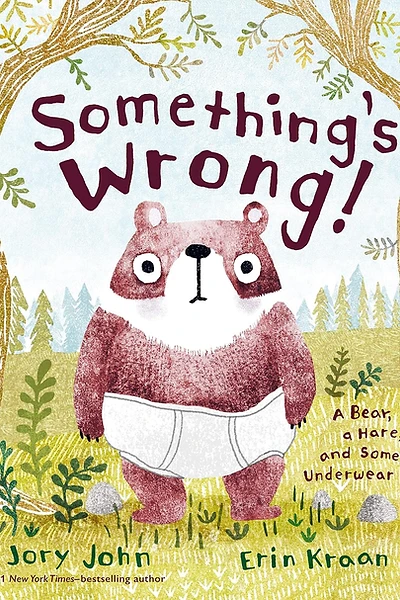
Something's Wrong!
by Jory John
Pacing MaterialA bear wakes up wearing underwear and can't figure out what's wrong — a hilarious story about friendship, embarrassment, and asking for help.
Big Idea
It's okay to make mistakes — a true friend will help you, not embarrass you.
Discussion Questions
- 1.What was wrong with Bear? Why was he afraid to tell Hare?
- 2.Have you ever had something embarrassing happen to you? What did you do?
- 3.How did Hare react when Bear told him? Was that a good way to react?
- 4.What should you do if a friend tells you something embarrassing?
- 5.Why is it hard to ask for help sometimes?
Classroom Activity
Asking for Help Role-Play
Students practice asking for help by role-playing scenarios where something is 'wrong' and they need to tell a friend.
Lesson Plan
Learning Goals
- Understand the importance of asking for help
- Develop empathy and supportive friendship skills
- Recognize that everyone makes mistakes
- Practice communication and problem-solving
Activity Steps
- 1.Discuss why it was hard for Bear to tell his friend about the underwear.
- 2.In pairs, students receive a scenario card (e.g., 'Your shoe is untied and you can't tie it').
- 3.Students role-play asking for help politely.
- 4.Switch roles and try a new scenario.
- 5.Discuss as a class: How did it feel to ask for help? How did it feel to help?
Standards Connections
- ELA: RL.K-3.3 (Character Development)
- ELA: RL.K-3.7 (Illustrations)
- SEL: Relationship Skills and Help-Seeking
- ELA: SL.K-3.1 (Collaborative Conversations)
Pace-Write-Read Study with Pace-Write It!
Focus question: How does an author make a funny problem feel bigger and bigger until a character is ready to ask for help? In Something's Wrong! by Jory John, a bear wakes up sure that something feels very wrong, but he cannot figure out what it is. The pacing works by stretching out Bear’s confusion with repeated reactions, building humor and suspense page by page until friendship and courage help solve the problem.
| Element | How to notice or teach it in the novel |
|---|---|
| Pace | Read: Notice how the story moves at Bear’s worried speed—he wakes up, feels that something is wrong, and keeps checking and reacting before he understands the problem. The slow build makes the final realization funnier. Classroom Activity: Write 4 short sentences about a character who knows something is wrong but does not know what yet; make each sentence add one new clue. |
| Plot | Read: Track the simple but strong plot in this book: Bear wakes up uncomfortable, tries to figure out the problem, feels embarrassed, and needs friendship to help him through it. The problem grows even though the cause is small. Classroom Activity: Make a beginning-middle-end chart for Bear’s problem, then write a new 3-part plot about a different silly mix-up. |
| Prosody | Read: Listen to how the read-aloud voice can change with Bear’s alarm, confusion, and embarrassment. The sound of the sentences helps the humor land. Classroom Activity: Practice reading one Bear reaction in three ways—worried, dramatic, and relieved—then write one line that would sound funny when read aloud. |
| Word pause | Read: Notice where a reader naturally pauses before the reveal or after Bear notices another strange feeling. Those tiny stops help the audience wait and wonder. Classroom Activity: Write 3 lines about a mystery problem and add slash marks / where a reader should pause for effect. |
| Concept | Read: The big idea is that asking for help can take courage, especially when you feel embarrassed. Bear’s underwear problem becomes a friendship lesson. Classroom Activity: Write one sentence naming the lesson Bear learns and one sentence about a time a character should ask a friend for help. |
| Voice & World View | Read: The storytelling voice treats Bear’s problem as if it is huge, which matches a child’s world view when a small embarrassment feels enormous. That serious voice about a silly problem creates humor. Classroom Activity: Write 2 sentences in a serious voice about a very silly problem, like wearing boots on the wrong feet. |
| Setting & Place | Read: Notice how the everyday setting makes Bear’s strange underwear problem stand out even more. A familiar place helps readers focus on the funny problem and the friendship response. Classroom Activity: Choose a normal place—bedroom, playground, or classroom—and write 3 details that make a silly problem seem surprising there. |
| Point of View | Read: Pay attention to how close readers stay to Bear’s feelings and thoughts as he tries to understand what is wrong. This close view helps us feel both his confusion and his embarrassment. Classroom Activity: Rewrite one moment from the point of view of Bear’s friend who notices the problem first. |
| Original Characters | Read: Bear is memorable because he is big and dramatic, yet vulnerable about something as ordinary as underwear. His friend matters because friendship brings the courage Bear needs. Classroom Activity: Invent an animal character with one strong feeling and one silly problem, then write 3 character traits. |
| Dialogue | Read: Notice how dialogue can show Bear’s confusion, denial, or worry and how a friend’s words can be gentle and helpful. Talking moves the story toward the solution. Classroom Activity: Write a 4-line conversation between Bear and a friend where the friend helps without teasing. |
| Details | Read: Small details about what Bear feels, sees, or does make the mystery of what is wrong stay funny. The little clues keep readers engaged before the reveal. Classroom Activity: List 5 tiny details a character might notice before discovering a silly mistake, then turn them into 2 sentences. |
| Descriptions | Read: Descriptions in this story help readers picture Bear’s discomfort and big reactions. The contrast between a small cause and a big emotional description builds humor. Classroom Activity: Describe a character’s embarrassed face, body, and voice in 3 short sentences. |
| Strong First Lines | Read: Think about how the opening quickly introduces a problem feeling so readers want to know what is wrong with Bear right away. A strong start creates instant curiosity. Classroom Activity: Write an opening line for a funny story that begins with a character sensing a problem. |
| Immediacy & Engagement | Read: The story feels immediate because Bear’s problem starts right away and readers begin guessing from the first pages. We stay engaged because we want to solve the mystery before Bear does. Classroom Activity: Write 2 opening sentences that make readers ask, What happened? |
| Story Scenes & Summaries & Unique Structures | Read: Notice how the book likely spends full scene time on Bear’s reactions instead of rushing through them. That scene-by-scene structure stretches the comic misunderstanding. Classroom Activity: Write one moment as a full scene with action and dialogue, then write one summary sentence that skips ahead. |
| Flashback & Flash Forward & Cliffhangers | Read: Even if this story stays mostly in the present, you can notice how each page can act like a mini cliffhanger because Bear still does not know the answer. The delay keeps readers turning pages. Classroom Activity: Add a cliffhanger ending to a page, such as 'Then Bear looked down and gasped...' |
| Tension & Suspense & Surprise | Read: The tension is playful—readers know something odd is happening, but the exact problem and Bear’s reaction create suspense. The surprise becomes funnier because the buildup is so serious. Classroom Activity: Write 3 sentences that build suspense toward a silly reveal. |
| Page Turns and Chapter Breaks | Read: In a picture book like this, page turns matter because each turn can hold back or reveal a clue about Bear’s underwear problem. The turn becomes part of the joke. Classroom Activity: Plan a 6-page mini picture book and mark where a page turn should hide the funniest reveal. |
| Performance | Read: This book invites performance with dramatic gasps, worried looks, and embarrassed whispers. Acting Bear’s reactions helps readers feel the pacing. Classroom Activity: Choose one moment and add performance notes in parentheses, such as (gasp), (whisper), or (look down slowly). |
| Personality | Read: Bear’s personality shapes the pacing because his dramatic, puzzled responses stretch a simple problem into a big emotional event. His friend’s calm support balances him. Classroom Activity: Write 3 lines showing a dramatic character reacting to a tiny mistake. |
| Humor | Read: The humor comes from mismatch: Bear treats underwear like a giant mystery, and readers enjoy the embarrassment without meanness because friendship stays at the center. The book is silly but kind. Classroom Activity: Write one funny sentence using a mismatch between a big reaction and a small problem. |
| Pause | Read: Notice how a pause before the reveal or before a friend speaks can make the room laugh harder. Silence is part of the pacing in a humorous read-aloud. Classroom Activity: Mark one sentence with ellipses or a stage direction to show where the reader should pause dramatically. |
| Poetry and Poetic Devices | Read: Listen for playful sound, repeated phrasing, and vivid word choices that make Bear’s feelings bounce in the ear. Even prose can feel poetic when sounds and patterns repeat. Classroom Activity: Write a 2-line chant for Bear using alliteration, such as 'Bear blinked, baffled, and bewildered.' |
| Repetition | Read: Repeated worry, repeated checking, or repeated 'something’s wrong' feelings help build the joke and make the pacing feel patterned. Repetition lets children join in. Classroom Activity: Write 4 lines that repeat the same beginning words while adding a new clue each time. |
| Rhythm | Read: The rhythm of short, punchy reactions can speed up Bear’s panic, while a longer sentence can stretch suspense. Sentence length helps control the laugh. Classroom Activity: Write one short sentence, one longer sentence, and one very short sentence to create a funny rhythm. |
| Punctuation | Read: Exclamation points, question marks, and ellipses can show Bear’s alarm, confusion, and pauses. Punctuation helps the voice perform the humor. Classroom Activity: Write 3 versions of the same line using different punctuation to show worried, confused, and relieved feelings. |
| Questions | Read: Bear’s problem naturally invites questions from both the character and the reader: What is wrong? Why does he feel strange? How will he handle the embarrassment? Questions drive the pace forward. Classroom Activity: Write 5 questions Bear might ask before he understands the problem. |
| Compare-Contrast | Read: Compare Bear’s huge feelings with the small cause, and contrast Bear’s embarrassment with a friend’s caring response. That contrast supports both humor and theme. Classroom Activity: Complete this sentence frame twice: 'Bear feels ___, but the problem is really ___.' |
| Objects | Read: The underwear is not just an object—it is the whole trigger for the plot, the embarrassment, and the laugh. A simple object becomes story power. Classroom Activity: Pick an everyday object and write how it could cause a funny misunderstanding. |
| Threes | Read: Look for places where events or reactions could come in sets of three—three guesses, three checks, or three big feelings—because that pattern often feels satisfying and funny. Classroom Activity: Write 3 attempts Bear makes to solve a problem before asking for help. |
| Whitespace & Negative Space | Read: In picture books, blank space can make Bear look alone, confused, or small in a big moment of embarrassment. The space slows readers down and highlights emotion. Classroom Activity: Storyboard one page with only a few words and lots of empty space to show a character’s awkward feeling. |
| Art & Graphics | Read: The illustrations are essential in a story like this because Bear’s facial expressions, body language, and the visual reveal of the underwear carry much of the pacing and humor. Pictures help readers know more than Bear does. Classroom Activity: Draw 3 comic-style faces for Bear—confused, shocked, relieved—and label each with one sentence. |
| Interactives & Gamification | Read: This book invites interactive reading because students can predict, act out clues, and guess what Bear should do next. The mystery structure makes it feel like a game. Classroom Activity: Create a 'Guess What’s Wrong' page with 3 clues and a final reveal for classmates to solve. |
Pace-Write It!
20-Minute Classroom Flow Read (5 min): Read Something's Wrong! by Jory John aloud. Pause before key page turns and ask students to watch how Bear’s feelings get bigger before he understands the problem. Notice (5 min): Chart what the class notices about pacing: repeated worry, clues, funny pauses, Bear’s dramatic reactions, and how a friend helps when Bear feels embarrassed. Ask: How does the story make a small problem feel big and funny? Write (7 min): Students write a tiny pacing story about a character with a silly problem who needs help from a friend. Writing frame: 'Something felt wrong when ____. First, I ____. Next, I noticed ____. Then, I asked ____ for help. I felt ____, but my friend ____. In the end, I learned ____.' Encourage students to add one repeated line, one question, and strong punctuation. Share (3 min): Partners read their stories with expression, including one dramatic pause. Listeners name where the pacing made them curious or laugh. Exit ticket: Write one sentence answering: 'How did Jory John make Bear’s problem funny before solving it?'