
 PreK-3
P GORMAN
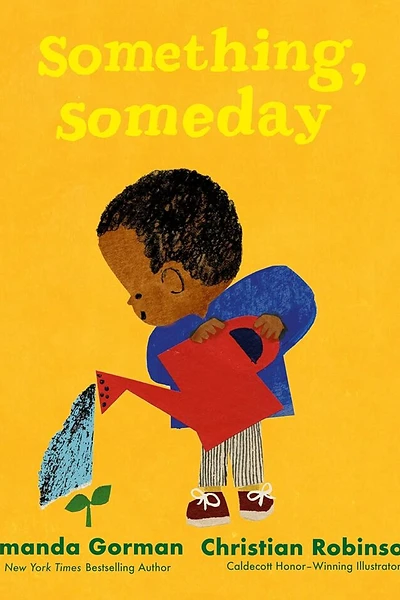
Something, Someday
by Amanda Gorman
Pacing MaterialA child notices a small patch of earth that needs care and begins to nurture it, discovering that even the smallest actions can grow into something beautiful and world-changing.
Big Idea
Even the smallest act of care can grow into something that changes the world.
Discussion Questions
- 1.What does the child notice that others might have overlooked?
- 2.How does the small patch of earth change over time?
- 3.What does the title 'Something, Someday' mean to you?
- 4.What is one small thing you could do to make your community better?
- 5.How do the illustrations show the passage of time and growth?
Classroom Activity
Someday Seed Journals
Students plant seeds and keep 'someday journals' documenting their growth, connecting their small actions to the book's message.
Lesson Plan
Learning Goals
- Identify cause and effect in caring for living things
- Develop a sense of agency and community responsibility
- Observe and document change over time
- Connect literature to real-world action
Activity Steps
- 1.Read the book and discuss how the child's small action led to something bigger.
- 2.Give each student a small pot, soil, and a seed to plant.
- 3.Create 'someday journals' where students draw and write about their plant's growth.
- 4.Check plants weekly and record observations.
- 5.Connect back to the book — what is your 'something' that could grow 'someday'?
Standards Connections
- ELA: RL.K.1 — Ask and answer questions about key details
- ELA: RL.K.2 — Retell stories, including key details
- ELA: RL.K.3 — Describe characters, setting, and events
- ELA: RL.3.6 — Acknowledge differences in characters' points of view
- ELA: SL.K.1 — Participate in collaborative conversations about the text
- ELA: W.K.3 — Write narratives recounting events with descriptive details
- SEL: Social Awareness
- SEL: Relationship Skills
- Art: VA:Re7 — Perceive and analyze artistic work
Pace-Write-Read Study with Pace-Write It!
Focus question: How can an author slow down small moments to show that even tiny actions can grow into big change? In Something, Someday by Amanda Gorman, a child notices a neglected patch of earth and begins to care for it, one small action at a time. The book uses pacing through brief poetic lines, meaningful pauses, and page-by-page growth so readers feel how change happens slowly, then spreads outward with hope.
| Element | How to notice or teach it in the novel |
|---|---|
| Pace | Read: Notice how Something, Someday moves at a gentle, careful pace as the child first sees a damaged place, pauses, and then begins to help little by little. The pacing matches the theme that change starts small and grows over time. Classroom Activity: Write 3 short sentences that show a small act growing step by step, such as seeing a problem, helping once, and noticing change. |
| Plot | Read: Track the simple plot in Something, Someday: the child notices harm, takes action by caring for the patch of earth, and inspires wider hope and change. Amanda Gorman keeps the plot focused so each event feels important. Classroom Activity: Draw or write the beginning, middle, and end of a story where one child helps one small place. |
| Prosody | Read: Listen to how Amanda Gorman’s language in Something, Someday sounds musical when read aloud, with soft rises and pauses that give the hopeful message power. The prosody helps readers feel calm determination. Classroom Activity: Choose one line idea about helping and practice reading it two ways—softly and strongly—then write it the way that sounds best. |
| Word pause | Read: Notice how short phrases in Something, Someday create little stops between ideas, letting readers think about the child’s choices and the meaning of helping. These word pauses slow the reading in a thoughtful way. Classroom Activity: Write a sentence about planting, cleaning, or fixing something, and add slash marks where you would pause when reading aloud. |
| Concept | Read: The central concept in Something, Someday is that one caring action can lead to bigger change for a community and the world. Amanda Gorman builds this idea slowly through the child’s nurturing of the small patch of earth. Classroom Activity: Write one sentence that starts, “One small thing I can do is…” and one sentence that tells what it might grow into. |
| Voice & World View | Read: Notice the hopeful, compassionate voice in Something, Someday and the world view that damaged places and hurting communities can be healed through shared care. The book sees children as powerful helpers. Classroom Activity: Write 2 sentences in a hopeful voice about a place in your school or neighborhood that needs care. |
| Setting & Place | Read: Pay attention to the neglected patch of earth in Something, Someday and how this small setting becomes important because it stands for larger places that need attention. The place feels real and symbolic at the same time. Classroom Activity: Describe a tiny place—a crack in the sidewalk, a garden corner, or a classroom shelf—that could become the setting for a change story. |
| Point of View | Read: Notice that Something, Someday centers a child’s experience and perspective, helping readers see the problem and the possibility for change through young eyes. This point of view makes the message feel personal and empowering. Classroom Activity: Write 3 sentences from the point of view of a child who notices a place that needs help. |
| Original Characters | Read: The child in Something, Someday is memorable not because of a long backstory, but because of caring action, attention, and hope. The child becomes an original character through choices, not just description. Classroom Activity: Invent a child character who notices one small problem and decides to help; write the character’s name, what they notice, and what they do first. |
| Dialogue | Read: Notice that Something, Someday relies more on poetic narration than spoken conversation, which keeps the pacing reflective and focused on action and feeling. If dialogue were added, it would need to be brief and meaningful. Classroom Activity: Write 2 lines of dialogue between the child and a neighbor or friend about helping the patch of earth. |
| Details | Read: Look for the small details in Something, Someday that help readers picture care and change, such as the condition of the earth and the quiet actions that begin healing. Specific details make the theme believable. Classroom Activity: Make a list of 5 details you might see in a place before and after someone helps it. |
| Descriptions | Read: Notice how Something, Someday uses vivid but concise description so readers can imagine damage, tenderness, and growth without slowing the story too much. Amanda Gorman chooses descriptions that carry feeling. Classroom Activity: Write 2 describing sentences about a place that first looks neglected and then begins to look hopeful. |
| Strong First Lines | Read: Think about how the opening of Something, Someday quickly invites readers to notice a problem and care about it right away. A strong beginning helps set the pace for a thoughtful, purposeful story. Classroom Activity: Write an opening line for a story about making a difference that immediately shows a place in need. |
| Immediacy & Engagement | Read: Notice how Something, Someday draws readers in by focusing on a small, visible problem the child can respond to right now. The nearness of the action makes the message feel urgent but manageable. Classroom Activity: Write a sentence that begins with “Right here…” or “Today…” to create immediacy in a story about helping. |
| Story Scenes & Summaries & Unique Structures | Read: In Something, Someday, some moments feel like close-up scenes—seeing, tending, nurturing—while other parts feel more like a summary of hope spreading outward. This structure helps the story move from one child’s act to a larger message. Classroom Activity: Write one close-up scene of a child helping, then one summary sentence about how that help spreads. |
| Flashback & Flash Forward & Cliffhangers | Read: Although Something, Someday does not depend on big flashbacks or cliffhangers, its title and message point forward to what can happen later when kindness grows. The future-facing idea creates momentum. Classroom Activity: Write a “someday” sentence that flashes forward to what might happen because of one small action today. |
| Tension & Suspense & Surprise | Read: Notice the gentle tension in Something, Someday: will this small act matter in a damaged world? The hopeful surprise is that small care can begin real change. Classroom Activity: Write 2 sentences—one that shows a worry about helping, and one that reveals a hopeful surprise. |
| Page Turns and Chapter Breaks | Read: In Something, Someday, page turns help pace the growth of the child’s actions and the widening impact of care. Each turn invites readers to see what changes next. Classroom Activity: Fold a paper into 4 parts and plan what happens on each “page” of your own small-change story. |
| Performance | Read: This book is powerful when performed aloud because Amanda Gorman’s poetic lines in Something, Someday invite expressive pauses, emphasis, and hopeful tone. The pacing becomes clearer in oral reading. Classroom Activity: Practice performing one short part of your writing with one pause and one strong word. |
| Personality | Read: The child in Something, Someday shows personality through gentle courage, patience, and care for the earth and community. These traits shape the pace because the child acts thoughtfully instead of rushing. Classroom Activity: Write 3 words that describe a helper character’s personality, then use one in a sentence. |
| Humor | Read: Something, Someday is serious and hopeful rather than funny, and that choice supports its reflective pacing and message about responsibility. Readers can notice how tone changes the speed and feeling of a story. Classroom Activity: Write one sentence about helping that stays sincere and hopeful instead of silly. |
| Pause | Read: Notice the important pauses in Something, Someday where readers are given space to think about hurt, healing, and possibility. These pauses make the story feel meaningful and calm. Classroom Activity: Write a 3-line poem about helping, leaving a line break after each idea to create a pause. |
| Poetry and Poetic Devices | Read: Amanda Gorman writes Something, Someday with poetic language, using imagery, line breaks, and uplifting phrasing to deepen the theme of making a difference. The poetic style stretches small moments so they feel important. Classroom Activity: Write 3 short poetic lines about a seed, a hand, or a hopeful change. |
| Repetition | Read: Listen for repeated ideas in Something, Someday about small actions, hope, and change. Repetition helps the message stay with readers and creates a steady rhythm. Classroom Activity: Write 3 lines that repeat the same starter, such as “I can help…” or “Someday…”. |
| Rhythm | Read: Notice the steady rhythm of the sentences in Something, Someday and how it supports a feeling of persistence. The rhythm helps readers feel that caring actions keep going. Classroom Activity: Clap the beat of a line you like, then write your own line with a similar steady rhythm. |
| Punctuation | Read: Look at how punctuation in Something, Someday helps control speed, stopping readers to reflect or carrying them gently into the next idea. Marks on the page shape the pacing. Classroom Activity: Write one sentence with a comma and one sentence with a period to show two different reading speeds. |
| Questions | Read: Even when Something, Someday is not full of direct questions, it makes readers ask themselves questions like: What needs care? What can one child do? These thinking questions deepen engagement. Classroom Activity: Write 2 questions a child might ask after noticing a place that needs help. |
| Compare-Contrast | Read: Compare the patch of earth at the start of Something, Someday with the growing hope that comes later. The contrast between neglect and care helps readers feel the change clearly. Classroom Activity: Make a T-chart or write 2 sentences comparing a place before help and after help. |
| Objects | Read: Notice how physical objects in Something, Someday—earth, growing things, and tools of care readers may imagine—carry meaning because they show action, repair, and possibility. Objects help make the theme concrete. Classroom Activity: Choose one object, like a seed, watering can, glove, or broom, and write how it helps a character make a difference. |
| Threes | Read: Notice whether ideas in Something, Someday can be grouped in threes, such as seeing, helping, growing, to create a satisfying pattern. Groups of three can make writing feel complete and memorable. Classroom Activity: Write a 3-part sentence naming three small ways a child can help a place or community. |
| Whitespace & Negative Space | Read: In Something, Someday, the open space around the text and illustrations slows the reader down and gives big ideas room to breathe. Whitespace helps the pacing feel thoughtful and hopeful. Classroom Activity: Write a very short 2- or 3-line piece and spread it out on the page so each line has space around it. |
| Art & Graphics | Read: Study how the illustrations in Something, Someday support the pacing by showing the patch of earth, the child’s care, and the widening sense of hope. The art helps readers see change across time. Classroom Activity: Draw two quick sketches—before and after—to go with your writing about helping a place. |
| Interactives & Gamification | Read: While Something, Someday is not a game, readers can interact with its message by noticing one small problem and planning one real action, just like the child does. This makes the reading active and purposeful. Classroom Activity: Create a “small change challenge” card: write one place, one problem, and one action you can take this week. |
Pace-Write It!
20-Minute Classroom Flow\nRead (5 min): Read Something, Someday aloud, pausing to let students notice the short poetic lines and the way the child’s small actions grow into bigger change. Ask students to listen for places where the story slows down.\nNotice (5 min): Discuss: How does Amanda Gorman make one small act feel important? Chart student noticings such as short lines, repetition, page turns, pauses, and the contrast between the damaged patch of earth and later hope.\nWrite (7 min): Students write a short “small act, big change” piece inspired by the book. Writing frame: “I saw ____. It needed ____. So I ____. At first, ____. Someday, ____.” Encourage students to use 3-5 short lines and at least one pause or repeated phrase.\nShare (3 min): Students read their pieces to a partner or the class, practicing expressive pacing with one clear pause. Invite listeners to name one place where the writer slowed the moment down.\nExit ticket: Complete this sentence: “A writer can slow down a small moment by ____.”