
 K-2
K-2P TATER-TALES
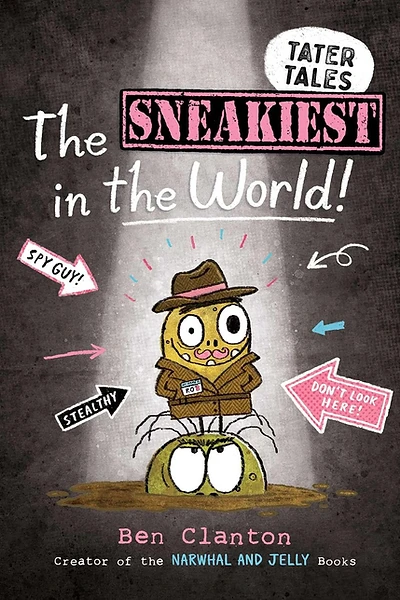
Sneakiest in the World
by Ben Clanton
Pacing MaterialRot is back and determined to prove his sneaking skills in this humorous, lighthearted adventure. It serves as a fun jumping-off point to discuss the importance of integrity and just being yourself.
Big Idea
The most fun you can have is simply being the person you are.
Discussion Questions
- 1.What makes Rot such a funny character?
- 2.Why do you think Rot tries so hard to prove himself?
- 3.Have you ever tried to act like someone else to be cool?
- 4.What is the best part about being yourself?
- 5.How can you show kindness even when you are competing?
Classroom Activity
Sneaky Self-Discovery Game
A game where students perform silly, low-stakes tasks to embrace their quirky sides without fear of judgment.
Lesson Plan
Learning Goals
- Build confidence in personal expression
- Practice self-regulation in fun scenarios
- Celebrate individuality
Activity Steps
- 1.Discuss what makes people unique
- 2.Set up stations for 'silly' challenges (e.g., make a funny sound, dance move)
- 3.Encourage students to add their own twist to each task
- 4.Reflect on how it felt to do things their own way
- 5.Discuss why being different is the key to life
Standards Connections
- CCSS.ELA-LITERACY.SL.1.1
- SEL.CASEL.SelfManagement
- National Core Arts Standard TH:Cr1.1
Pace-Write-Read Study with Pace-Write It!
Focus question: How does an author slow down and speed up a funny story to help us understand a character and a big idea? In Sneakiest in the World by Ben Clanton, Rot tries hard to prove he is sneaky, and the story uses quick funny moments, page-turn surprises, and playful illustrations to keep readers engaged. The pacing helps us follow Rot’s attempts, laugh at the build-up, and think about the theme of being yourself instead of pretending to be someone you are not.
| Element | How to notice or teach it in the novel |
|---|---|
| Pace | Read: Notice how the story moves quickly through Rot’s sneaky attempts and then slows down at key moments so readers can watch Rot try, fail, and react. The fast-and-slow pacing matches the funny tone and helps show Rot’s growing understanding that he does not need to be someone else. Classroom Activity: Write 3 short sentences about a character trying to do something quickly, then add 1 longer sentence that slows down the most important moment. |
| Plot | Read: Notice the clear sequence in Rot’s adventure: he wants to prove he is the sneakiest, he makes attempts, problems happen, and he learns something about himself. The plot is simple for K-2 readers, but each event builds the theme of being yourself. Classroom Activity: Draw and label a beginning, middle, and end for a story about a character trying to prove something. |
| Prosody | Read: Listen to how Sneakiest in the World sounds when read aloud, especially in excited or funny parts with Rot. The rhythm of the words and the playful energy help the humor land and keep the story moving. Classroom Activity: Choose one funny moment and practice reading it in a sneaky voice, then write one sentence you would read softly and one you would read loudly. |
| Word pause | Read: Notice where a reader might naturally pause before a funny reveal, especially when Rot is trying to seem extra sneaky. These pauses build anticipation and make the joke or surprise stronger. Classroom Activity: Write a sentence about Rot sneaking and add a slash mark / where a reader should pause for effect. |
| Concept | Read: Notice that the big idea is not really about being the best sneaker; it is about integrity and being yourself. Rot’s goal creates humor, but the concept underneath gives the story heart. Classroom Activity: Finish this frame: “At first, Rot wants to ________. In the end, he learns ________.” |
| Voice & World View | Read: Notice the playful, humorous voice that treats Rot’s problem in a lighthearted way while still respecting his feelings. The world view suggests that making mistakes is okay and that being yourself matters more than acting like someone else. Classroom Activity: Write 2 sentences in a funny, kind voice about a character who is trying too hard to impress others. |
| Setting & Place | Read: Notice how the places in the story support Rot’s sneaky mission and help create movement from one attempt to the next. Even when the setting is simple, it gives Rot spaces to hide, peek, and try again. Classroom Activity: Draw a place where a character could try to sneak, then write 2 details about how that place helps the story. |
| Point of View | Read: Notice that readers stay close to Rot and mainly understand the action through his goal, feelings, and mistakes. This helps young readers connect with Rot and understand why he cares so much about being seen as sneaky. Classroom Activity: Rewrite one moment from the point of view of another character watching Rot’s sneaky plan. |
| Original Characters | Read: Notice how Rot stands out as a memorable character because he is determined, funny, and a little overconfident. His personality makes the pacing work because readers want to see what he will try next. Classroom Activity: Invent an original character with one big goal and one silly habit, then write 2 sentences introducing that character. |
| Dialogue | Read: Notice how dialogue can speed up scenes and reveal Rot’s personality, especially when he is trying to convince others or himself that he is sneaky. The talking adds humor and helps the story feel lively. Classroom Activity: Write 2 speech bubbles between Rot and another character about a sneaky plan. |
| Details | Read: Notice the small details that make Rot’s attempts funny and help readers picture exactly what is happening. Specific details turn a simple joke into a stronger scene. Classroom Activity: Write 3 small details that could show a character trying hard to be sneaky without saying “He was sneaky.” |
| Descriptions | Read: Notice how descriptions are likely brief but vivid, giving just enough to help us picture Rot and each attempt without slowing the story too much. This balance keeps the humor moving. Classroom Activity: Describe Rot in one sentence using 3 describing words that match his funny personality. |
| Strong First Lines | Read: Notice how the opening quickly introduces Rot’s problem or goal so readers jump right into the action. A strong start helps pacing because it gets to the point fast. Classroom Activity: Write a first line for a story about a character who wants to be the best at something. |
| Immediacy & Engagement | Read: Notice how the story makes readers feel close to Rot’s problem right away, so we care what happens next even in a silly situation. The humor and quick action create strong engagement. Classroom Activity: Write 2 sentences that make a reader want to know if a character’s plan will work. |
| Story Scenes & Summaries & Unique Structures | Read: Notice that some parts may feel like full scenes where Rot is acting in the moment, while other parts move quickly through attempts. This structure helps the story stay energetic and funny. Classroom Activity: Write one scene sentence about a character creeping across a room and one summary sentence about many failed tries. |
| Flashback & Flash Forward & Cliffhangers | Read: Notice whether the story stays in the present instead of using flashbacks or flash forwards, which helps young readers follow Rot’s action clearly. You can still see little cliffhanger-like moments before page turns when readers wonder what Rot will do next. Classroom Activity: Write a sentence ending that makes a reader want to turn the page, such as “But then…” |
| Tension & Suspense & Surprise | Read: Notice how Ben Clanton builds light suspense by making readers wonder whether Rot’s sneaky plan will succeed. The surprise often comes through humor, showing that funny stories can still use tension. Classroom Activity: Write 3 sentences: one that sets up a plan, one that builds suspense, and one that reveals a silly surprise. |
| Page Turns and Chapter Breaks | Read: Notice how page turns likely hold back the funniest reveal for one more second, especially when Rot is about to try something bold. In a picture book, page turns act like mini cliffhangers and shape pacing. Classroom Activity: Fold a paper into 2 pages and plan what goes before the page turn and what surprise comes after it. |
| Performance | Read: Notice how this book invites performance through sneaky voices, pauses, facial expressions, and big reactions for Rot. Performing the story helps students feel the timing of the humor. Classroom Activity: Act out one of Rot’s sneaky moments, then write one line you would say during the performance. |
| Personality | Read: Notice how Rot’s personality drives the whole story: he is eager, determined, and funny, which keeps the action moving. His strong personality also supports the theme because readers see he is most lovable when he is simply himself. Classroom Activity: Write a sentence that shows a character’s personality through an action, not just a label. |
| Humor | Read: Notice how the humor comes from Rot’s efforts to prove something, the mismatch between his goal and what really happens, and the playful tone. The funny pacing helps readers enjoy the lesson about authenticity without feeling preached to. Classroom Activity: Write a funny sentence about a character failing in a harmless, silly way. |
| Pause | Read: Notice where the story might pause after a big moment so readers can look at Rot’s reaction and think about what just happened. These quiet beats are important because they give the humor and theme time to land. Classroom Activity: Add a pause line to your writing by using a short sentence like “Rot froze.” or “Everyone stared.” |
| Poetry and Poetic Devices | Read: Notice any playful sounds, repeated words, or musical language that make Rot’s adventure fun to hear. Even in prose, sound patterns can shape pacing and make lines more memorable. Classroom Activity: Write a line about sneaking that uses alliteration, such as repeating the same beginning sound. |
| Repetition | Read: Notice how repeated tries, repeated words, or repeated patterns can make Rot’s adventure funnier each time. Repetition also helps young readers predict the structure and join in. Classroom Activity: Write a 3-line pattern for a character who keeps trying: “I tried to ____. I tried to ____. I tried to ____.” |
| Rhythm | Read: Notice the beat of short and long sentences as Rot moves from attempt to attempt. The rhythm supports the quick comic pacing and keeps the read-aloud lively. Classroom Activity: Write one short sentence, one longer sentence, and one short sentence to create a playful rhythm. |
| Punctuation | Read: Notice how punctuation such as exclamation marks, commas, ellipses, and question marks can shape how we read Rot’s sneaky adventure. Punctuation helps control speed, emotion, and surprise. Classroom Activity: Write one sentence about Rot using an exclamation mark and one using an ellipsis. |
| Questions | Read: Notice how readers may keep asking, “Will Rot really prove he is sneaky?” or “What will happen next?” Questions help carry the pacing forward. Classroom Activity: Write 2 questions a reader might ask during Rot’s adventure and answer 1 of them. |
| Compare-Contrast | Read: Notice the contrast between how Rot wants to seem and who he really is. Comparing Rot’s plan with the real outcome helps reveal the theme of being yourself. Classroom Activity: Complete this frame: “Rot thinks being sneaky means ______, but the story shows ______.” |
| Objects | Read: Notice any objects Rot uses, notices, or interacts with during his sneaky attempts. In a picture book, small objects can become important for comedy, action, and clues. Classroom Activity: Pick one object a sneaky character might use and write 2 sentences about how it changes the story. |
| Threes | Read: Notice whether the story uses a pattern of three tries or three funny beats, a structure common in picture books because it builds expectation and payoff. A set of three often makes the last moment the funniest or most meaningful. Classroom Activity: Plan 3 attempts your character makes before learning a lesson. |
| Whitespace & Negative Space | Read: Notice how open space on the page can slow readers down, draw attention to Rot, or make a joke feel bigger. In picture books, empty space is part of pacing because it tells readers where to look and when to pause. Classroom Activity: Create a mini page with one short sentence and lots of blank space to spotlight the funniest moment. |
| Art & Graphics | Read: Notice how the illustrations work with the words to show Rot’s sneaky movements, expressions, and the humor of each attempt. The art likely does a lot of pacing work by stretching out reactions or revealing surprises visually. Classroom Activity: Draw Rot in 2 panels—before the sneaky try and after the funny result—and add one caption to each. |
| Interactives & Gamification | Read: Notice how readers can almost play along by predicting whether Rot’s next sneaky move will work. The repeated attempts and surprises make the story feel interactive during a read-aloud. Classroom Activity: Make a class prediction chart with 3 possible sneaky plans for Rot, then write which one you think would be funniest and why. |
Pace-Write It!
20-Minute Classroom Flow\nRead (5 min): Read Sneakiest in the World by Ben Clanton aloud. Pause briefly before page turns and ask students to listen for the parts that go fast, the parts that slow down, and how Rot’s actions connect to the idea of being yourself.\nNotice (5 min): Discuss: Where did the story speed up? Where did it pause for a funny or important moment? How did the pictures help us know what Rot was feeling? Chart student ideas under: Fast Parts, Slow Parts, Funny Surprises, and What Rot Learns.\nWrite (7 min): Students write a short 3-5 sentence story about a character trying hard to prove something. Encourage them to use one fast action part, one pause, and one lesson at the end. Writing frame: “I wanted to prove I was the most ________. First, I ________. Next, I ________. But then, ________. I learned ________.”\nShare (3 min): Partners read their stories aloud using expression. Listeners name one place where the pacing felt fast and one place where the pause made the story stronger.\nExit ticket: Write one sentence answering this question: How did Ben Clanton use pacing to make Rot’s story funny and meaningful?