
 4-7
4-7GN TELGEMEIER
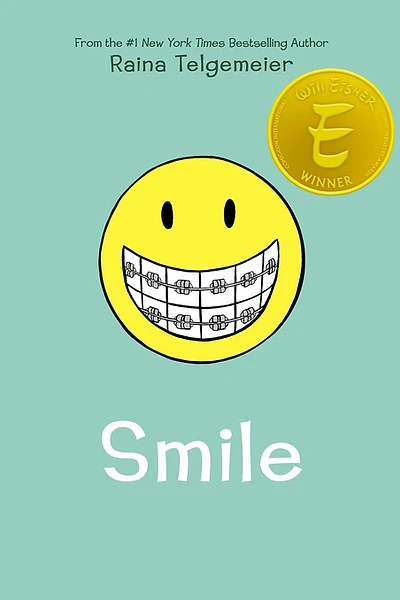
Smile
by Raina Telgemeier
Pacing MaterialA memoir in graphic novel form about Raina's middle school years, from the night she knocks out her front teeth through years of dental drama, friend drama, and the search for her true self.
Big Idea
Growing up is messy and painful, but the challenges we face help us discover who we really are.
Discussion Questions
- 1.How does Raina's dental injury affect her sense of identity?
- 2.How do Raina's friendships change throughout the story?
- 3.What does Raina learn about herself by the end of the book?
- 4.Have you ever gone through something that changed how you see yourself?
Classroom Activity
Memoir Comic Strip
Students create a short autobiographical comic about a challenge they've overcome, inspired by Raina's storytelling style.
Lesson Plan
Learning Goals
- Understand the memoir genre and how it differs from fiction
- Analyze how graphic novels use visual storytelling to convey emotion
- Write a personal narrative with a clear beginning, middle, and end
- Develop empathy by sharing personal stories
Activity Steps
- 1.Discuss how Smile uses both words and pictures to tell a true story
- 2.Have students brainstorm a personal challenge they've overcome
- 3.Students create a 4-6 panel comic about their experience
- 4.Share comics in pairs and discuss what they learned
- 5.Reflect on how challenges help us grow
Standards Connections
- ELA: RL.4.1 — Ask and answer questions about key details
- ELA: RL.4.2 — Retell stories, including key details
- ELA: RL.4.3 — Describe characters, setting, and events
- ELA: RL.7.6 — Acknowledge differences in characters' points of view
- ELA: SL.4.1 — Participate in collaborative conversations about the text
- ELA: W.4.3 — Write narratives recounting events with descriptive details
- SEL: Relationship Skills
- SEL: Social Awareness
- Art: VA:Re7 — Perceive and analyze artistic work
Pace-Write-Read Study with Pace-Write It!
Focus question: How does Raina Telgemeier control pacing in Smile so readers feel both the slow grind of middle school and the sharp, unforgettable moments of change? In Smile, Raina Telgemeier tells the story of her own middle school years through a graphic memoir filled with dental surgeries, shifting friendships, and family life. The book uses pacing through panels, page turns, dialogue, visual pauses, and quick scene changes to show how identity and belonging can develop slowly over time while certain moments feel immediate and intense.
| Element | How to notice or teach it in the novel |
|---|---|
| Pace | Read: Notice how Smile moves between fast, embarrassing moments—like the accident that damages Raina’s teeth—and slower stretches of waiting through braces, surgeries, and middle school changes. Classroom Activity: Write a short graphic-memoir paragraph or panel plan that includes one fast moment and one slow moment to show a change in how the narrator feels about fitting in. |
| Plot | Read: Track how the plot in Smile is not built around one single problem, but around connected challenges: dental drama, friendship trouble with girls like Karin and Emily, and Raina’s growing sense of self. Classroom Activity: Write a plot ladder with 5 steps showing how a personal problem can connect to a bigger identity theme. |
| Prosody | Read: Listen to how Smile would sound aloud in different scenes—awkward, excited, worried, sarcastic, or relieved—especially in conversations between Raina and her friends or family. Classroom Activity: Choose one scene and rewrite the dialogue for a read-aloud, marking where the voice should sound nervous, annoyed, or hopeful. |
| Word pause | Read: Notice where short phrases, single-word reactions, and panel breaks in Smile create tiny pauses after painful, awkward, or surprising moments, such as dental news or friend drama. Classroom Activity: Write 6–8 lines of dialogue about an embarrassing school moment and add at least three brief word pauses for effect. |
| Concept | Read: Think about the big idea in Smile: outward changes, like teeth and appearance, do not solve the deeper challenge of finding real belonging and confidence. Classroom Activity: Write a theme statement about identity and belonging, then create a short scene that shows that idea through action instead of explanation. |
| Voice & World View | Read: Notice how Raina’s voice feels honest, funny, and self-aware, letting readers see middle school through her perspective as someone who wants acceptance but slowly learns to trust herself. Classroom Activity: Write a first-person reflection in a voice that is embarrassed but thoughtful about a time you wanted to belong. |
| Setting & Place | Read: Watch how school hallways, the dentist’s office, the orthodontist’s chair, home, and sleepovers shape the mood in Smile, making some places feel stressful and others more safe. Classroom Activity: Write two short setting descriptions of the same character in two places—one where they feel judged and one where they feel comfortable. |
| Point of View | Read: Smile is told from Raina’s point of view, so readers experience her worries about looks, friendships, and growing up from the inside. Classroom Activity: Rewrite one small middle school conflict from first person, then add one sentence explaining how that point of view changes the pacing and emotion. |
| Original Characters | Read: Notice how the characters in Smile feel specific and believable: Raina is sensitive and funny, her friends can be mean or insecure, and her family members add warmth and tension. Classroom Activity: Invent an original school-age character with one visible problem and one hidden emotional problem, then write 4 traits that make them feel real. |
| Dialogue | Read: Study how the dialogue in Smile sounds like real middle school talk, especially in scenes with teasing, gossip, apologies, and family conversations. Classroom Activity: Write a dialogue-only scene between two friends where one is trying to fit in and the other is pressuring them to change. |
| Details | Read: Notice the precise details in Smile—retainers, braces, headgear, school events, and friend-group behavior—that make Raina’s memoir feel true and relatable. Classroom Activity: Make a list of 8 concrete details from a memorable school experience, then use at least 5 in a short scene. |
| Descriptions | Read: Even in a graphic novel, Smile uses brief but strong descriptive language and visual cues to show pain, awkwardness, and changing emotions. Classroom Activity: Write a 5-sentence description of a stressful appointment or school event, focusing on physical sensations and facial expressions. |
| Strong First Lines | Read: Think about how the opening of Smile quickly sets up Raina’s ordinary life before the sudden accident changes everything, pulling readers in right away. Classroom Activity: Write three possible opening lines for a memoir scene that begin normally but hint that something embarrassing or important is about to happen. |
| Immediacy & Engagement | Read: Notice how Smile keeps readers close to Raina’s experience by showing reactions moment by moment, especially in scenes of pain, humiliation, or friendship conflict. Classroom Activity: Write a present-tense version of a personal memory so the reader feels the event happening right now. |
| Story Scenes & Summaries & Unique Structures | Read: Watch how Smile balances full scenes—like conversations, appointments, and school moments—with summary sections that move time forward through months and years. Classroom Activity: Write one detailed scene from a school memory, then add a 3-sentence summary that jumps ahead to show what changed over time. |
| Flashback & Flash Forward & Cliffhangers | Read: Notice how Smile mostly moves forward in time but creates suspense through scene endings, page turns, and moments where readers must wait to learn what will happen with Raina’s teeth or friendships. Classroom Activity: Write a short scene ending on a cliffhanger before a doctor’s result, social decision, or friendship answer is revealed. |
| Tension & Suspense & Surprise | Read: Identify how Smile builds tension through waiting rooms, painful procedures, social pressure, and unexpected betrayals or realizations. Classroom Activity: Write a suspenseful paragraph about waiting for news at school or at an appointment, using sensory details and an emotional shift. |
| Page Turns and Chapter Breaks | Read: In Smile, page turns often land on a reveal, reaction, or new problem, and chapter shifts help organize stages of Raina’s growth. Classroom Activity: Plan a 4-panel comic or 4-part memoir scene and decide exactly what important detail the reader should discover after a page turn or break. |
| Performance | Read: Consider how Raina and other students sometimes perform versions of themselves at school to seem cool, calm, or accepted, even when they feel unsure. Classroom Activity: Write a scene in which a character acts one way in public and reveals a different truth in a private thought bubble or reflection. |
| Personality | Read: Notice how Smile reveals personality through expressions, dialogue, reactions, and choices—Raina’s persistence, insecurity, humor, and eventual self-respect all shape the pacing of her story. Classroom Activity: Create a character sketch showing personality through three actions, two lines of dialogue, and one internal thought. |
| Humor | Read: Smile uses humor to balance painful and awkward experiences, making Raina’s dental disasters and social struggles feel human instead of hopeless. Classroom Activity: Write about an embarrassing moment and include one humorous detail that helps the narrator cope. |
| Pause | Read: Notice the emotional pauses in Smile, when Raina reflects silently after a hard interaction, a painful procedure, or a disappointing friendship moment. Classroom Activity: Add a pause to a scene by writing one silent beat where the character notices a small detail before responding. |
| Poetry and Poetic Devices | Read: Although Smile is realistic prose in graphic form, it still uses poetic effects like strong imagery, contrast, and repeated visual symbols around smiles, mouths, and expressions. Classroom Activity: Write 4–6 poetic lines comparing a smile to something else, then connect the comparison to identity or belonging. |
| Repetition | Read: Notice how repeated dentist visits, orthodontic devices, and friendship patterns in Smile show how change can feel frustratingly slow. Classroom Activity: Write a scene that uses a repeated phrase or repeated event to show a problem that keeps returning. |
| Rhythm | Read: Watch the rhythm created by short dialogue exchanges, reaction panels, and longer reflective moments in Smile. Classroom Activity: Write a short passage that alternates between quick one-line dialogue and longer reflection to create a changing rhythm. |
| Punctuation | Read: Study how punctuation in Smile—ellipsis, dashes, question marks, and exclamation points—helps shape embarrassment, panic, sarcasm, and surprise in conversations. Classroom Activity: Rewrite a plain 4-line dialogue exchange using punctuation to show stronger emotion and pacing. |
| Questions | Read: Think about the questions driving Smile: Will Raina’s teeth ever feel normal? Who are her real friends? How does she become comfortable with herself? Classroom Activity: Write three guiding questions for a memoir scene, then draft a paragraph that begins to answer one of them. |
| Compare-Contrast | Read: Compare how Raina acts around different groups—family, dentists, old friends, and more supportive peers—and how those relationships affect her sense of belonging. Classroom Activity: Write a compare-contrast paragraph about how a character behaves in two social settings and why. |
| Objects | Read: Notice how objects in Smile—braces, retainers, headgear, mirrors, notes, and school items—carry emotional meaning beyond their practical use. Classroom Activity: Choose one object from your own life and write a short memoir paragraph explaining what it represents emotionally. |
| Threes | Read: Look for places in Smile where events, reactions, or visual details can be grouped in threes to create pattern and emphasis, such as repeated appointments, friendship incidents, or emotional reactions. Classroom Activity: Write a sentence or short paragraph using a list of three details to build voice and momentum. |
| Whitespace & Negative Space | Read: In Smile, empty space between panels and quiet visual moments give readers time to process pain, awkwardness, or loneliness. Classroom Activity: Storyboard a 3-panel scene and decide where to leave visual or written space so the emotion has room to land. |
| Art & Graphics | Read: Study how Raina Telgemeier’s art in Smile shows expression, pacing, and tone—especially facial reactions, panel size, and body language during painful or socially tense moments. Classroom Activity: Create a simple comic strip of 3–4 panels showing a character’s changing feelings mostly through expressions and posture. |
| Interactives & Gamification | Read: Think about how readers can interact with Smile by tracking patterns such as friendship changes, dental stages, or moments when Raina feels she does or does not belong. Classroom Activity: Make a reading tracker, checklist, or board-game style path that follows a character’s setbacks and growth across a memoir-style story. |
Pace-Write It!
20-Minute Classroom Flow\nRead (5 min): Read a short excerpt from Smile by Raina Telgemeier that includes both dialogue and visual pacing, such as a dental appointment scene or a friendship conflict scene. Ask students to notice where the story speeds up, slows down, and pauses.\nNotice (5 min): Discuss: How do the panels, expressions, dialogue, and page turns shape pacing? Chart examples of a fast moment, a slow moment, and a quiet pause. Name how those pacing choices connect to the theme of identity and belonging.\nWrite (7 min): Students write a short memoir scene inspired by Smile about a time they felt embarrassed, left out, or changed by an experience. Writing frame: “At first, I thought ________. Then, when ________ happened, everything sped up/slowed down. I noticed ________. What I wanted most was ________. By the end, I began to understand ________.” Encourage students to include one line of dialogue, one sensory detail, and one pause moment.\nShare (3 min): Partners read their scene aloud and identify one place where the pacing is fast, one place where it slows, and one place where emotion deepens.\nExit ticket: In one or two sentences, explain how pacing can help show a character’s search for identity or belonging.