
 PreK-2
P TABOR
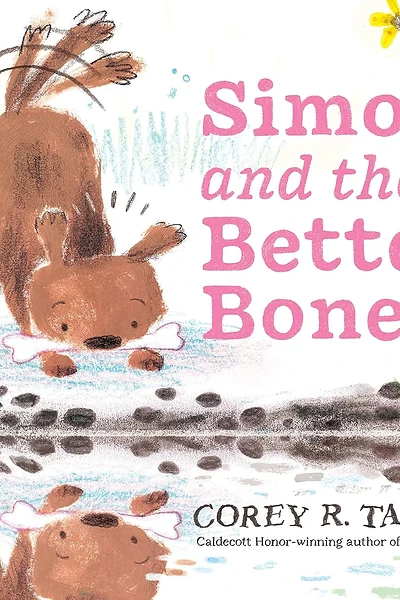
Simon and the Better Bone
by Corey R. Tabor
Pacing MaterialSimon the dog sees a bigger bone in the water and chases it — only to discover the bone he already has is the best one of all.
Big Idea
Comparing yourself to others can make you lose sight of the good things right in front of you.
Discussion Questions
- 1.Why does Simon want the bone in the water?
- 2.What does Simon learn about what he already has?
- 3.Have you ever wanted something someone else had?
- 4.What makes something the 'best'?
Classroom Activity
My Better Bone
Draw something you already have that is wonderful. Write one sentence about why it's the best.
Lesson Plan
Learning Goals
- Retell Simon’s search for a better bone, including what he sees in the water and what he discovers.
- Use illustrations and story details to explain how Simon’s feelings about his own bone change.
- Recognize how comparing what we have with what others seem to have can distract us from things we already appreciate.
- Draw something personally meaningful and write, dictate, or complete one sentence explaining why it is wonderful.
Activity Steps
- 1.Introduce “Simon and the Better Bone” by Corey R. Tabor. Show the cover and ask, “What might make a bone ‘better’ to a dog?”
- 2.Read aloud, pausing when Simon sees the bigger bone in the water. Ask, “What does Simon think he sees? What clues do the pictures give us?” After reading, revisit those clues and discuss the reflection.
- 3.Retell the beginning, middle, and end together. Ask, “Why does Simon want the other bone? What does he learn about the bone he already has?” Connect his experience to appreciating something without comparing it to someone else’s.
- 4.Introduce “My Better Bone.” Invite children to choose something they already have that is wonderful, such as a favorite toy, a book, a friendship, or time with family. Model drawing an example and explaining its value.
- 5.Have children draw their choice and add one sentence: “My _____ is the best for me because _____.” PreK children may dictate to an adult; older children can write independently. Emphasize personal meaning rather than being better than someone else.
- 6.Invite children to share with a partner or the class. Close by asking, “How can remembering what we love help us when we want something someone else has?”
Standards Connections
- ELA: RL.K.2 / RL.1.2 / RL.2.2 — Retell the story and discuss its central message about appreciating what one already has.
- ELA: RL.K.3 / RL.1.3 / RL.2.3 — Describe Simon’s experiences and explain how he responds to the bone he sees in the water.
- ELA: W.K.1 / W.1.1 / W.2.1 — Use drawing, dictation, or writing to express a preference and give a reason; adapt sentence length and support by grade.
- ELA: SL.K.1 / SL.1.1 / SL.2.1 — Participate in conversations about the story and classmates’ drawings.
- SEL: Self-awareness — Identify personally meaningful things and recognize feelings associated with comparison and appreciation.
Pace-Write-Read Study with Pace-Write It!
Focus question: How does an author slow down and speed up a story to help us feel a character’s mistake and learning? In Simon and the Better Bone by Corey R. Tabor, Simon the dog thinks he sees a better bone in the water and rushes after it, only to learn that the bone he already had was best. The pacing moves from calm to quick action to a thoughtful ending, helping young readers feel Simon’s wanting, his problem, and his new understanding about empathy and self-acceptance.
| Element | How to notice or teach it in the novel |
|---|---|
| Pace | Read: Notice how the story begins simply, speeds up when Simon spots the bone in the water, and then slows at the end when he realizes what he lost and what he has learned. Classroom Activity: Write 3 short parts called slow, fast, slow about a pet or child who wants something, chases it, and then learns a lesson. |
| Plot | Read: Track the clear plot: Simon has a bone, sees what looks like a bigger one, grabs for it, loses his own, and discovers his mistake. Classroom Activity: Draw and label a 5-box plot map for Simon: has, sees, jumps, loses, learns, then use it to write 5 sentences. |
| Prosody | Read: Listen to how the read-aloud voice can change—calm when Simon is content, excited when he chases the reflection, and softer when he understands. Classroom Activity: Choose 3 lines or moments from Simon’s story and mark them with voice directions like calm, excited, worried, or relieved before rereading them aloud. |
| Word pause | Read: Notice places where a reader may naturally pause before the important moment when Simon reacts to the bone in the water or realizes the truth. Classroom Activity: Write 4 short sentences about Simon’s chase and add slash marks to show where a reader should pause for effect. |
| Concept | Read: Notice the big idea that wanting what someone else seems to have can make us miss the good thing already in our own paws. Classroom Activity: Finish this sentence and expand it into 2 more: Simon learned that ________. I can remember this when ________. A better choice is ________. |
| Voice & World View | Read: Notice the playful, child-friendly voice that stays close to Simon’s dog thinking and makes his mistake feel understandable, not mean. Classroom Activity: Write 3-5 sentences in a playful voice from Simon’s point of view explaining why the water bone seemed so amazing. |
| Setting & Place | Read: Notice how the outdoor setting, especially the water, matters because it creates the reflection that tricks Simon. Classroom Activity: Write 3 descriptive sentences about the place where Simon sees the bone, including what he sees, hears, and feels. |
| Point of View | Read: Notice that readers follow Simon closely and understand the problem through what he sees and believes. Classroom Activity: Rewrite the water scene from the point of view of a duck, fish, or frog who watches Simon make his mistake. |
| Original Characters | Read: Notice how Simon is memorable because he is both ordinary and specific—a dog with a big feeling, a quick choice, and a lesson to learn. Classroom Activity: Invent a new animal character like Simon who wants something shiny, tasty, or special, and write 4 sentences showing that character’s problem. |
| Dialogue | Read: Notice where spoken words or imagined words could make Simon’s feelings feel immediate and funny. Classroom Activity: Write a short dialogue between Simon and the reflection bone using quotation marks, with at least 4 lines. |
| Details | Read: Notice the small details that help readers understand Simon’s desire for the bigger bone and his disappointment when things go wrong. Classroom Activity: Make a list of 5 tiny details Simon might notice about his bone and the water bone, then use 3 of them in a short paragraph. |
| Descriptions | Read: Notice how simple descriptions help young readers picture Simon, the bone, and the water without slowing the story too much. Classroom Activity: Write 3 describing sentences—one for Simon, one for his bone, and one for the water—using vivid but simple words. |
| Strong First Lines | Read: Notice how the beginning quickly introduces Simon and his bone so readers know what matters right away. Classroom Activity: Write 2 new opening lines for a story about Simon wanting something else, making sure the main character and problem show up fast. |
| Immediacy & Engagement | Read: Notice how the story quickly pulls readers in because Simon’s problem is easy to understand and the danger of losing his bone feels immediate. Classroom Activity: Write 3 sentences that begin with action, such as Simon ran, Simon looked, Simon leaped, to make a reader want to keep going. |
| Story Scenes & Summaries & Unique Structures | Read: Notice how some moments feel like full scenes, especially at the water, while other parts move quickly so the lesson stays clear. Classroom Activity: Write one scene in 4-5 sentences about Simon staring into the water, then write one 1-sentence summary of what happened after. |
| Flashback & Flash Forward & Cliffhangers | Read: Notice that this story stays in the present, but readers can imagine a cliffhanger right before Simon jumps. Classroom Activity: Write a cliffhanger ending for a page: Simon bent closer to the water and then ________. On the next line, write what happens next. |
| Tension & Suspense & Surprise | Read: Notice the tension when Simon believes the other bone is better and the surprise when readers understand the water is fooling him. Classroom Activity: Write 4-6 sentences that build suspense before a character grabs something that only looks amazing from far away. |
| Page Turns and Chapter Breaks | Read: Notice how a picture book can use page turns to hold the big moment until readers are ready to discover Simon’s mistake. Classroom Activity: Plan a 4-page mini-book and mark where you would put the page turn before the surprising moment when the character learns the truth. |
| Performance | Read: Notice how this story invites acting—sniffing, staring, creeping, splashing, and the sad moment after Simon loses his bone. Classroom Activity: Perform Simon’s actions with a partner, then write 3 action sentences using strong verbs from your performance. |
| Personality | Read: Notice Simon’s personality: hopeful, eager, a little impulsive, and still lovable even when he makes a poor choice. Classroom Activity: Write a character card for Simon with 3 traits, one piece of proof for each trait, and 1 sentence about how a trait causes the problem. |
| Humor | Read: Notice the gentle humor in a dog being fooled by a reflection and in the way the story treats his mistake with warmth instead of harshness. Classroom Activity: Write a funny but kind sentence or two about Simon’s mix-up that would make a class laugh without being mean. |
| Pause | Read: Notice where a pause can make Simon’s realization more powerful, especially after the chase when he understands what happened. Classroom Activity: Write a 5-sentence retelling and circle the sentence where a dramatic pause should come before the lesson. |
| Poetry and Poetic Devices | Read: Notice how repeated sounds and simple image words could make Simon’s experience feel musical, like splash, slosh, and plop. Classroom Activity: Write a 3-line poem about Simon and the water using at least 2 sound words and 1 comparison. |
| Repetition | Read: Notice how repeating key ideas, such as better bone or my bone, can emphasize Simon’s wanting and his final understanding. Classroom Activity: Write 4 lines that repeat a key phrase to show a character wanting something, then change the last line to show learning. |
| Rhythm | Read: Notice how short sentences can speed up Simon’s chase and longer sentences can slow the ending. Classroom Activity: Write 2 short, choppy sentences for the chase and 2 smoother, longer sentences for the lesson at the end. |
| Punctuation | Read: Notice how exclamation points, periods, and question marks could shape Simon’s excitement, confusion, and realization. Classroom Activity: Write 3 Simon sentences—one excited, one confused, and one disappointed—using different end punctuation correctly. |
| Questions | Read: Notice how readers may ask questions like Is that really another bone? and What will Simon do now? while the story unfolds. Classroom Activity: Write 3 reading questions Simon might ask himself before he jumps, then answer them as if you were Simon after the lesson. |
| Compare-Contrast | Read: Notice the contrast between the bone Simon has and the bone he thinks he sees, and between what looks true and what is true. Classroom Activity: Make a T-chart comparing real bone and reflection bone, then write 2 compare-contrast sentences using both, but, or however. |
| Objects | Read: Notice how one simple object—the bone—carries the whole problem, theme, and lesson of the story. Classroom Activity: Choose one important object from your life or imagination and write 4 sentences showing why a character values it and almost loses it. |
| Threes | Read: Notice how events can be retold in threes to make the pacing clear: Simon looks, Simon reaches, Simon learns. Classroom Activity: Write a 3-part pattern sentence set about Simon or a new character using the structure First ____. Next ____. Finally ____. |
| Whitespace & Negative Space | Read: Notice how open space in a picture book can help readers focus on Simon, the bone, and the important moment of realization. Classroom Activity: On a page, write only 2-3 short sentences about Simon’s big feeling and leave lots of blank space around them to show the moment matters. |
| Art & Graphics | Read: Notice how the illustrations help show Simon’s expression, the watery reflection, and the emotional shift from wanting to understanding. Classroom Activity: Sketch Simon before and after the mistake, then write one caption for each picture to show how the art changes the pace. |
| Interactives & Gamification | Read: Notice how young readers can interact with Simon’s story by predicting, acting, and spotting clues in the pictures before the reveal. Classroom Activity: Create a class game called Real or Reflection with 4 picture or sentence clues, and write a final lesson card that says what Simon learned about being happy with what he has. |
Pace-Write It!
20-Minute Classroom Flow\nRead (5 min): Read Simon and the Better Bone by Corey R. Tabor aloud. Pause briefly before Simon goes after the bone in the water and ask students to predict what might happen.\nNotice (5 min): Discuss how the story’s pacing changes. Ask: Where does the story feel slow and calm? Where does it feel fast? How do the pictures and short action moments help us feel Simon’s excitement and disappointment? Make a quick class anchor chart with 3 parts: beginning, chase, lesson.\nWrite (7 min): Students write their own short paced story about wanting something that only seems better. Writing frame: My character had a ________. Then my character saw ________ and thought, “________!” My character ________ fast. But ________. In the end, my character learned ________. Encourage students to use one short action sentence and one slower feeling sentence.\nShare (3 min): Partners read their stories aloud with expression, making the chase sound fast and the ending sound thoughtful. Invite 1-2 students to share how they changed pace in their writing.\nExit ticket: Complete this sentence on a sticky note: The story got faster when ________, and that helped me feel ________.
Pace-Write-Read Connection
Teach this book using the Pace-Write-Read method — Tool 30: Contrast.
Open the Mastery Manual