 2-4
2-4P NEWMAN
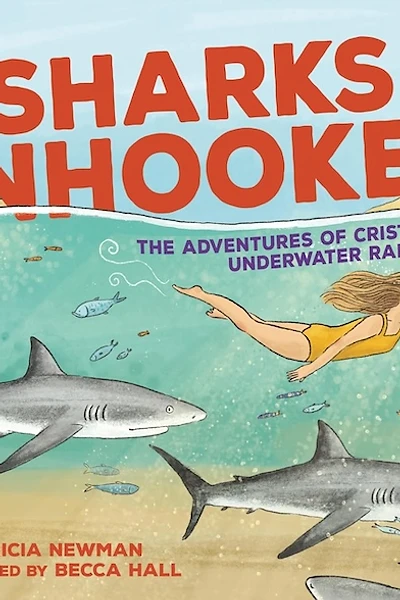
Sharks Unhooked: The Adventures of Cristina Zenato, Underwater Ranger
by Patricia Newman
Pacing MaterialThe true story of Cristina Zenato, a conservationist and cave diver who removes fishing hooks from sharks to help them survive.
Big Idea
Knowledge, compassion, and responsible action can help protect sharks and preserve healthy oceans for future generations.
Discussion Questions
- 1.Why are many people afraid of sharks?
- 2.How does Cristina challenge common myths about sharks?
- 3.Why is it important to remove fishing hooks from sharks?
- 4.What qualities make Cristina a successful underwater ranger?
- 5.How do healthy shark populations help the ocean?
- 6.What did you learn that surprised you?
- 7.How can young people help protect marine life?
Classroom Activity
Conservation Poster
Create a poster encouraging people to protect sharks and ocean habitats. Include facts, a catchy slogan, illustrations, and ways people can help.
Lesson Plan
Learning Goals
- Identify two myths about sharks and the facts that correct them
- Explain how one conservationist's actions protect an ecosystem
- Design a conservation poster with a slogan and a call to action
Activity Steps
- 1.Read the story, tracking each step Cristina takes to help sharks.
- 2.List shark myths vs. facts on the board as students find them.
- 3.Discuss: 'What makes Cristina brave? What makes her a scientist?'
- 4.Students design a conservation poster: one fact, one slogan, one action people can take.
- 5.Gallery walk to share posters and vote on the most persuasive slogan.
Standards Connections
- ELA: RL.2.1 — Ask and answer questions about key details
- ELA: RL.2.2 — Retell stories, including key details
- ELA: RL.2.3 — Describe characters, setting, and events
- ELA: RL.4.6 — Acknowledge differences in characters' points of view
- ELA: SL.2.1 — Participate in collaborative conversations about the text
- ELA: W.2.3 — Write narratives recounting events with descriptive details
- SEL: Social Awareness
- SEL: Relationship Skills
- Art: VA:Re7 — Perceive and analyze artistic work
Pace-Write-Read Study with Pace-Write It!
Focus question: How does an author slow down and speed up a true story to help readers feel danger, care, and hope? In Sharks Unhooked: The Adventures of Cristina Zenato, Underwater Ranger by Patricia Newman, readers follow Cristina as she studies sharks and gently removes harmful fishing hooks. Newman uses pacing by stretching out the most suspenseful underwater moments with careful details and then moving more quickly through background information so the rescue scenes feel powerful and immediate.
| Element | How to notice or teach it in the novel |
|---|---|
| Pace | Read: Notice how Patricia Newman speeds through Cristina Zenato’s background but slows way down when Cristina approaches a shark and removes a hook. The pacing helps readers feel both the danger and Cristina’s calm bravery. Classroom Activity: Write 4-5 sentences about helping an animal, using 1 quick summary sentence and 3 slow-motion action sentences. |
| Plot | Read: Notice the clear sequence in this true story: Cristina loves the ocean, learns about sharks, sees the problem of fishing hooks, and takes action to help. The plot builds from caring to problem-solving. Classroom Activity: Make a beginning-middle-end chart for Cristina’s story, then write one new middle scene about another shark rescue. |
| Prosody | Read: Listen to how the sentences sound when the underwater action becomes quiet, careful, and tense. The smooth flow matches Cristina’s steady movements near the sharks. Classroom Activity: Read a rescue page aloud with a partner, then write 3 sentences that sound calm and gentle like underwater movement. |
| Word pause | Read: Notice where the wording makes you naturally stop and take a breath during dangerous or important moments, especially when Cristina is close to a shark’s mouth. These pauses make the scene feel more serious. Classroom Activity: Write a 3-sentence suspense moment and underline the word or phrase where a reader should pause. |
| Concept | Read: The big idea is that one person can be a citizen scientist who studies animals and helps protect them. Cristina observes sharks closely and uses what she learns to care for them. Classroom Activity: Write 2-3 sentences explaining how Cristina is both a scientist and a helper. |
| Voice & World View | Read: Notice how the book presents sharks as living creatures worth understanding, not monsters to fear. Patricia Newman’s voice supports conservation and respect for nature through Cristina’s work. Classroom Activity: Write a short paragraph from a world view that says a misunderstood animal deserves protection. |
| Setting & Place | Read: The ocean setting matters because the underwater world shapes every action, movement, and danger in Cristina’s work. The sea, reefs, and shark habitat create the mood of wonder and suspense. Classroom Activity: Describe an underwater setting in 5 sensory details that could be the background for a rescue scene. |
| Point of View | Read: The story is told from an outside point of view, but it stays close to Cristina Zenato’s actions and mission. This lets readers learn facts while also feeling connected to her work. Classroom Activity: Rewrite one shark-hook-removal moment from the first-person point of view of Cristina. |
| Original Characters | Read: Cristina stands out as a unique real-life main character because she is both fearless and gentle with sharks. The sharks also feel important as living beings, not just background animals. Classroom Activity: Create a character card for Cristina with traits, evidence, and one sentence about why she is memorable. |
| Dialogue | Read: If there is little or no direct dialogue in a scene, notice how the book still creates action through narration and description. The silence fits the underwater world where Cristina must communicate through movement and trust. Classroom Activity: Add 4 lines of imagined dialogue before a dive between Cristina and a young helper who asks about sharks. |
| Details | Read: Notice the specific details about hooks, shark behavior, diving, and careful hand movements. These details make the true story believable and slow the pacing during key moments. Classroom Activity: Write 4 detailed sentences about completing a careful task, naming tools, movements, and what could go wrong. |
| Descriptions | Read: Patricia Newman uses vivid descriptions to help readers picture the sharks, the water, and Cristina’s careful work. Description helps the most important scenes feel larger and more alive. Classroom Activity: Write a description of a shark swimming close by, using color, motion, and feeling words. |
| Strong First Lines | Read: Notice how the opening draws readers quickly into Cristina’s world and signals that this is a story about sharks, danger, and care. A strong opening helps set the pace for everything that follows. Classroom Activity: Write 3 possible first lines for a nonfiction-style story about helping an ocean animal. |
| Immediacy & Engagement | Read: The rescue moments feel immediate because readers are brought close to Cristina’s hands, the shark’s mouth, and the hook. This closeness makes readers want to keep turning pages. Classroom Activity: Write 3-4 sentences that zoom in on one important action so the reader feels right there in the scene. |
| Story Scenes & Summaries & Unique Structures | Read: Notice how the book balances scene and summary. Some parts quickly explain Cristina’s life and conservation work, while other parts become full scenes when she interacts with a shark. Classroom Activity: Write one 2-sentence summary of Cristina’s mission and one 4-sentence scene showing a single rescue moment. |
| Flashback & Flash Forward & Cliffhangers | Read: Think about whether the book stays mostly in time order and how suspense still builds without needing many flashbacks. The most exciting moments can end with readers wondering what Cristina will do next. Classroom Activity: End a short shark-rescue paragraph with a cliffhanger sentence that makes a reader want the next page. |
| Tension & Suspense & Surprise | Read: The tension comes from Cristina being close to a wild shark while trying to remove a dangerous hook. Readers may feel surprise that a human can build trust with sharks in this way. Classroom Activity: Write 5 sentences that build suspense as a character reaches toward something dangerous to help instead of harm. |
| Page Turns and Chapter Breaks | Read: In a picture book, page turns often hold the suspense. Notice where a page turn might come right before readers see whether Cristina can safely help the shark. Classroom Activity: Plan a 4-page picture-book sequence and mark one page turn where the suspense should increase. |
| Performance | Read: This book invites expressive read-aloud performance because the quiet underwater moments and tense rescue actions need changes in voice, pace, and pause. Readers can sound hushed, amazed, and relieved. Classroom Activity: Practice reading one section aloud using a whispery voice for underwater parts and a slower voice for suspense. |
| Personality | Read: Cristina’s personality shapes the story’s pace because her patience, courage, and care make the shark scenes feel steady instead of rushed. Her calm nature becomes part of the action. Classroom Activity: Write a paragraph showing a character’s personality through actions instead of just naming traits. |
| Humor | Read: This book is mostly serious and awe-filled rather than funny, which helps maintain respect for sharks and conservation work. Notice how the serious tone supports the theme. Classroom Activity: Write 2 sentences explaining why an author might choose not to use humor in a dangerous rescue story. |
| Pause | Read: Notice how the story creates pauses before the most important actions, such as reaching toward the hook. Those pauses give readers time to feel the risk and think about Cristina’s care. Classroom Activity: Write a short scene and place a dash or line break before the most important action. |
| Poetry and Poetic Devices | Read: Listen for language that may sound lyrical or image-rich when describing water, movement, or sharks. Poetic touches can slow pacing and add wonder to this true story. Classroom Activity: Write 3 lines of free verse about a shark gliding through water while Cristina watches respectfully. |
| Repetition | Read: Notice if key ideas repeat, such as helping sharks, protecting oceans, or carefully removing hooks. Repetition can remind readers of the message and create a steady rhythm. Classroom Activity: Write a 4-sentence paragraph that repeats one important phrase about protecting animals. |
| Rhythm | Read: The rhythm of the sentences may become slower and more measured during delicate underwater actions. This rhythm matches Cristina’s careful work and the movement of the sea. Classroom Activity: Write 3 sentences with a slow, smooth rhythm to describe swimming toward a shark. |
| Punctuation | Read: Notice how punctuation such as commas, dashes, or short sentences may help control speed and suspense. Punctuation can make a rescue moment feel careful, quick, or dramatic. Classroom Activity: Write the same rescue sentence two ways—one with commas to slow it down and one with short sentences to speed it up. |
| Questions | Read: Readers may naturally ask questions like: Will the shark stay calm? Can Cristina remove the hook safely? These questions help the pacing feel suspenseful. Classroom Activity: Write 3 reader questions that could pop up during Cristina’s underwater rescue, then answer one of them in a sentence. |
| Compare-Contrast | Read: Compare how sharks may seem scary at first with how Cristina understands them as animals needing help. This contrast deepens the message about learning before judging. Classroom Activity: Make a compare-contrast chart about ‘What many people think about sharks’ and ‘What Cristina knows about sharks,’ then write 3 sentences using the chart. |
| Objects | Read: Important objects like fishing hooks, diving gear, and the underwater environment drive the action. The hook is a small object with huge consequences for the shark and the story’s tension. Classroom Activity: Choose one important object from the book and write 4 sentences explaining how it changes the story. |
| Threes | Read: Notice whether ideas or details can be grouped in threes, such as three traits of Cristina or three steps in a rescue. Groups of three often sound complete and memorable. Classroom Activity: Write a sentence with three actions Cristina might take before helping a shark. |
| Whitespace & Negative Space | Read: In a picture book, open space on the page can slow readers down and make underwater scenes feel quiet, wide, and deep. White space can also spotlight a dramatic moment with the shark. Classroom Activity: Sketch a simple page plan showing where you would leave empty space around one important sentence in a shark scene. |
| Art & Graphics | Read: The illustrations and visual design help pace the story by showing size, danger, calm water, and close-up action. Pictures can slow readers down to study Cristina, the shark, and the hook. Classroom Activity: Draw a storyboard of 3 boxes for a rescue scene and label what each picture should show to build suspense. |
| Interactives & Gamification | Read: Although this book is a picture book, readers can interact by tracking moments when the pace speeds up or slows down and by noticing facts about citizen science. This turns reading into an active discovery experience. Classroom Activity: Create a ‘Pacing Hunt’ chart with two columns—‘Fast Parts’ and ‘Slow Parts’—and fill in at least 2 examples from Cristina’s story. |
Pace-Write It!
20-Minute Classroom Flow\nRead (5 min): Read aloud a section of Sharks Unhooked: The Adventures of Cristina Zenato, Underwater Ranger that includes Cristina approaching a shark and removing a hook. Ask students to listen for where the story feels fast and where it slows down.\nNotice (5 min): Discuss: Which sentences gave lots of details? Which parts moved quickly through time? Why would Patricia Newman slow down the hook-removal moment? Chart student ideas under ‘Fast Summary’ and ‘Slow Scene.’\nWrite (7 min): Students write their own short rescue scene about helping an animal. Writing frame: ‘First, I noticed ____. Next, I moved closer to ____. I took a slow breath and ____. Carefully, I ____. At last, ____ was safe.’ Encourage students to use 1 quick opening sentence and 3 detailed slow-action sentences.\nShare (3 min): Partners read their scenes aloud and point to one place where they slowed the pacing on purpose. Invite 1-2 students to share how they created suspense.\nExit ticket: Write one sentence answering: How did Patricia Newman’s pacing help you understand Cristina’s bravery and care for sharks?
Pace-Write-Read Connection
Teach this book using the Pace-Write-Read method — Tool 11: Details.
Open the Mastery Manual