
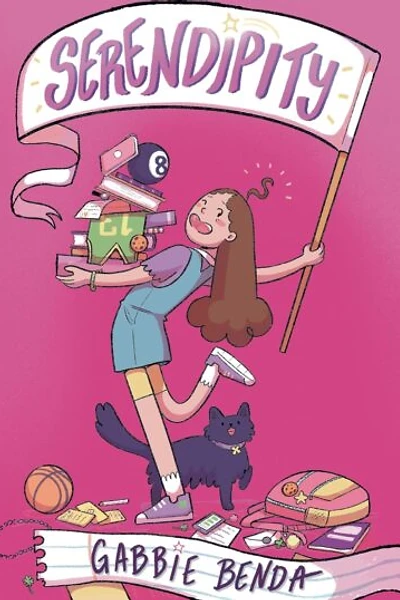
 3-7
3-7GN BENDA
Serendipity
by Gabbie Benda
Pacing MaterialA girl discovers that the best moments in life are often the ones you don't plan for — a joyful story about embracing the unexpected.
Big Idea
Sometimes the best things happen when you least expect them — serendipity is its own kind of magic.
Discussion Questions
- 1.What unexpected thing happens to the main character?
- 2.How does she learn to embrace surprises?
- 3.What does serendipity mean to you?
- 4.What's a happy surprise that happened to you?
Classroom Activity
Happy Accident Story
Write a short story where something unexpected leads to a happy ending. Draw the surprise moment as a comic panel.
Lesson Plan
Learning Goals
- Explain how the girl's experience in Serendipity illustrates the idea that unplanned moments can bring joy.
- Identify how illustrations and words work together to show a character's reaction to an unexpected event.
- Write a short fictional story with a clear beginning, an unexpected event, and a happy ending connected to that event.
- Create a comic panel that uses visual details and dialogue or a caption to communicate the story's surprise moment.
Activity Steps
- 1.Read Serendipity together or revisit selected pages. Discuss: What does the girl expect to happen? What happens instead? How does the unexpected experience bring her joy? Introduce serendipity as a happy discovery that happens by chance.
- 2.Examine a panel showing an unexpected moment or the girl's response to one. Discuss how facial expressions, body language, and words help readers understand her feelings.
- 3.Plan a Happy Accident Story using four prompts: Who is your character? What is their plan? What unexpected event changes it? How does that event lead to a happy ending? Encourage students to invent their own situation rather than retell the book.
- 4.Write the short story, making the connection between the surprise and the happy ending clear. Grades 3–4 can write one paragraph with sequencing words; grades 5–7 can write several paragraphs with dialogue and a developed character response.
- 5.Draw the surprise moment as one comic panel. Include a setting, an expressive character, and a speech bubble or caption that adds information to the picture.
- 6.Share stories and panels with a partner. Partners explain how the surprise leads to happiness and suggest one clarification. Revise, then complete the reflection: Like the girl in Serendipity, my character discovers that…
Standards Connections
- ELA: CCSS RL.3.2–RL.7.2 — Determine a central message or theme and explain how story details develop it, with grade-appropriate expectations.
- ELA: CCSS RL.3.3–RL.7.3 — Analyze characters, events, and their relationships, including responses to unexpected situations.
- ELA: CCSS W.3.3–W.7.3 — Write narratives using clear event sequences, descriptive details, and appropriate narrative techniques.
- ELA: CCSS SL.3.1–SL.7.1 — Participate in collaborative discussions, building on others' ideas and expressing ideas clearly.
- SEL: Self-awareness and self-management — Recognize emotional responses to changed plans and explore flexible ways of responding to surprises.
Pace-Write-Read Study with Pace-Write It!
Focus question: How does a story slow down and speed up to show that unexpected moments can change us? In Serendipity by Gabbie Benda, a girl discovers that surprise experiences can become the most meaningful parts of her day. As a graphic novel, the book uses pacing through panels, page turns, expressions, and shifts between quiet reflection and joyful action to help readers feel the theme of self-expression.
| Element | How to notice or teach it in the novel |
|---|---|
| Pace | Read: Notice how Serendipity moves between calm moments of wondering and quicker moments when the girl responds to an unexpected event. Watch how Gabbie Benda uses panel size and action to make surprise feel exciting. Classroom Activity: Write a 6-sentence scene about a student whose day changes suddenly; make the first 3 sentences slow and reflective, and the last 3 quick and energetic. |
| Plot | Read: Track how the girl's day begins with expectations and then shifts when unplanned moments lead her somewhere better than she imagined. The plot builds the idea that self-expression can grow when we let go of strict plans. Classroom Activity: Make a beginning-middle-end plot map for an original short comic about a character whose best moment happens by accident. |
| Prosody | Read: Listen for how the words in Serendipity might sound if read aloud, especially in moments of wonder, surprise, and joy. The rhythm of the language helps match the girl's changing emotions. Classroom Activity: Choose one unexpected moment and rewrite it for a read-aloud using expressive line breaks, sound words, and a joyful reading voice. |
| Word pause | Read: Notice where a single word, short phrase, or small bit of dialogue makes you stop and feel the moment with the girl. In a graphic novel, these pauses often work with the art to highlight surprise or reflection. Classroom Activity: Write 4 short comic captions for a character discovering something unexpected, using one powerful pause word in each panel. |
| Concept | Read: Think about the big idea in Serendipity: sometimes the best parts of life are unplanned. The girl's experiences show that self-expression can come from being open to the unexpected. Classroom Activity: Write a paragraph explaining a time when a surprise helped a character learn something new about themselves. |
| Voice & World View | Read: Notice how the story presents a hopeful, open-hearted view of the world, where accidents and detours can lead to joy. The girl's reactions help readers see that being flexible can be a strength. Classroom Activity: Write 5 journal lines in the girl's voice about why unexpected moments can feel scary at first but wonderful later. |
| Setting & Place | Read: Pay attention to where the girl's unexpected moments happen and how each place supports the feeling of discovery. The setting helps transform ordinary spaces into places full of possibility. Classroom Activity: Describe one everyday place, like a sidewalk, classroom, or park, and show how it becomes magical because of an unplanned moment. |
| Point of View | Read: Notice how the story keeps readers close to the girl's feelings and discoveries so we experience each surprise with her. This point of view strengthens the theme of self-expression because we see her inner change. Classroom Activity: Rewrite one surprising event from the point of view of a friend or bystander who notices the girl's change. |
| Original Characters | Read: Study how the girl in Serendipity feels relatable but memorable because of her curiosity, emotions, and response to surprise. Think about how even simple characters can feel original when their reactions are specific. Classroom Activity: Invent a new graphic-novel character who hates surprises at first, then give that character 3 unique traits and 1 accidental adventure. |
| Dialogue | Read: Notice how dialogue can be brief in Serendipity, letting expressions and art carry part of the meaning. Words matter most when they reveal the girl's feelings about what she did not expect. Classroom Activity: Write a 6-line dialogue between the girl and a friend after an unexpected event teaches her to be more herself. |
| Details | Read: Look for small details in the girl's environment, actions, and expressions that make a surprise moment feel real. In this book, little details help show that ordinary life holds hidden possibilities. Classroom Activity: List 5 tiny details a character notices right before a surprise changes their day, then use them in a short scene. |
| Descriptions | Read: Notice how descriptions in Serendipity likely stay clear and vivid rather than long, allowing the graphic format to do part of the storytelling. The best descriptions point readers toward emotion and change. Classroom Activity: Describe an unexpected happy moment in 5 vivid sentences, focusing on what a character sees, hears, and feels. |
| Strong First Lines | Read: Think about how an opening in Serendipity would quickly introduce the girl's expectations and create curiosity about what might change. A strong first line sets the pace for discovery. Classroom Activity: Write 3 possible first lines for a story about a character whose carefully planned day does not go as expected. |
| Immediacy & Engagement | Read: Notice how Serendipity pulls readers into the present moment so they feel each surprise as it happens. The combination of visual storytelling and emotional reactions makes the story inviting and immediate. Classroom Activity: Write a present-tense paragraph beginning with 'I didn't see it coming...' and make readers feel the surprise right away. |
| Story Scenes & Summaries & Unique Structures | Read: Watch how some parts of the girl's journey may be shown moment by moment while other parts move quickly to the next important event. This balance helps the unexpected moments stand out. Classroom Activity: Write one detailed scene of a surprise discovery and one 2-sentence summary of the rest of the day. |
| Flashback & Flash Forward & Cliffhangers | Read: Think about whether the story hints at what the girl expected before the surprise or leaves readers at a page turn wanting to know what happens next. These pacing choices can build curiosity and meaning. Classroom Activity: Add a flashback sentence about a character's original plan, then end the scene with a cliffhanger panel caption. |
| Tension & Suspense & Surprise | Read: Notice how Serendipity creates gentle tension by showing that the girl does not know what will happen next. The surprise is not frightening; it is full of possibility and growth. Classroom Activity: Write a scene in which a character hears or notices something unexpected and pauses before discovering it is wonderful. |
| Page Turns and Chapter Breaks | Read: In a graphic novel like Serendipity, page turns can hide a reveal until the perfect moment. Notice how turning the page can mirror the girl's experience of stepping into the unknown. Classroom Activity: Plan a 4-panel comic and decide which surprise image should appear only after a page turn; explain why. |
| Performance | Read: Notice how body language, facial expressions, and movement perform the girl's emotions even when few words are used. In this story, performance helps readers feel surprise, hesitation, and delight. Classroom Activity: Draw or describe 3 poses for a character before, during, and after an unexpected happy moment, then add one caption to each. |
| Personality | Read: Pay attention to how the girl's personality shapes the pacing of the story; her thoughts and reactions determine whether a moment feels slow, nervous, playful, or free. Her growing openness supports the theme of self-expression. Classroom Activity: Write a character sketch of someone who loves plans, then show how one surprise reveals a new side of their personality. |
| Humor | Read: Look for light, playful moments in Serendipity that make the girl's discoveries feel warm and relatable. Humor can soften uncertainty and invite readers to enjoy the unexpected with her. Classroom Activity: Write a funny 5-line comic script in which a character's mistake leads to a joyful surprise. |
| Pause | Read: Notice where the story lets the girl stop, think, or simply experience a moment before moving on. These pauses make the surprises feel more meaningful. Classroom Activity: Write a short scene with one full sentence that acts as a pause, such as a thought, a breath, or a silent observation. |
| Poetry and Poetic Devices | Read: Notice how the idea of serendipity can be expressed with imagery, repetition, or metaphor, even in a simple graphic story. The girl's unexpected moments may feel almost poetic because they transform the ordinary. Classroom Activity: Write a 6-line poem comparing an unexpected happy moment to something in nature, music, or light. |
| Repetition | Read: Look for repeated feelings, images, or ideas connected to planning versus surprise in Serendipity. Repetition can help show how the girl's thinking changes over time. Classroom Activity: Write a paragraph that repeats the phrase 'I thought today would...' before changing to 'But instead...' to show a shift. |
| Rhythm | Read: Notice the rhythm created by quick panels, quiet panels, short dialogue, and reflective spaces. In Serendipity, rhythm helps readers feel the difference between routine and sudden joy. Classroom Activity: Create a 6-panel storyboard with an intentional rhythm: 2 slow panels, 2 quick panels, and 2 celebratory panels. |
| Punctuation | Read: Study how punctuation in dialogue or captions could shape feeling in Serendipity—periods for calm, ellipses for wondering, and exclamation points for delight. These marks help pace the girl's emotional shifts. Classroom Activity: Write the same 3-line reaction to a surprise in two ways, first with calm punctuation and then with excited punctuation. |
| Questions | Read: Notice what questions readers might ask as the girl's day changes: What will happen next? Why does this moment matter? Questions help build curiosity in a story about the unexpected. Classroom Activity: Write 4 questions a reader might ask during a surprise scene, then answer them in a short paragraph. |
| Compare-Contrast | Read: Compare the girl's planned expectations with what actually happens in Serendipity. The contrast shows how self-expression can grow when life does not follow the script. Classroom Activity: Make a T-chart labeled 'Planned' and 'Unexpected,' then write a compare-contrast paragraph about which side helps the character grow more. |
| Objects | Read: Pay attention to any object that becomes important because it starts an unexpected event or reminds the girl to stay open to possibility. In graphic novels, objects can carry meaning across panels. Classroom Activity: Choose one object, like a sketchbook, shoe, note, or umbrella, and write how it accidentally leads a character to a joyful discovery. |
| Threes | Read: Notice whether events, images, or reactions come in sets of three to create satisfying pacing. Three small moments can build to one big change for the girl in Serendipity. Classroom Activity: Write 3 linked mini-events that lead to one final surprising moment where a character expresses their true self. |
| Whitespace & Negative Space | Read: In Serendipity, open space on the page can slow readers down and give feelings room to grow. Notice how empty areas may highlight the girl's pause, wonder, or emotional shift. Classroom Activity: Design a comic page plan with one panel that uses lots of empty space to show a character taking in an unexpected moment. |
| Art & Graphics | Read: Notice how the illustrations in Serendipity help tell the story of self-expression and surprise, especially through color, panel arrangement, and facial expressions. The art controls pacing just as much as the words. Classroom Activity: Sketch or describe 4 panels showing a character's emotions changing from control to surprise to joy to confidence. |
| Interactives & Gamification | Read: Think about how readers could interact with the idea of serendipity by predicting what the girl expects and then discovering what really happens. The theme invites playful participation because surprises are part of the meaning. Classroom Activity: Create a 'Choose the Unexpected' story path with 3 choices where each accidental turn helps the character express themselves in a new way. |
Pace-Write It!
20-Minute Classroom Flow\nRead (5 min): Read a short section of Serendipity by Gabbie Benda that shows the girl moving from a planned expectation into an unexpected joyful moment. Ask students to watch how the panels, expressions, and page turn affect the speed of the moment.\nNotice (5 min): Students turn and talk: Where did the story slow down? Where did it speed up? What did the girl learn about herself when things did not go as planned? Chart student noticings under: panels, dialogue, pause, surprise, self-expression.\nWrite (7 min): Students write their own short surprise scene inspired by the book's theme. Writing frame: 'At first, I thought ________. Then something unexpected happened: ________. For one moment, I paused and noticed ________. After that, I decided to ________. In the end, I learned ________ about myself.' Encourage students to add pacing by including one slow descriptive sentence, one short surprise sentence, and one final reflective sentence.\nShare (3 min): Partners read their scenes aloud and identify one place where the writing slows down and one place where it speeds up. Invite 1-2 volunteers to share how they showed self-expression through an unexpected event.\nExit ticket: Write one sentence answering: How did pacing help show that an unplanned moment became important?