 K-2
K-2P TATER-TALES
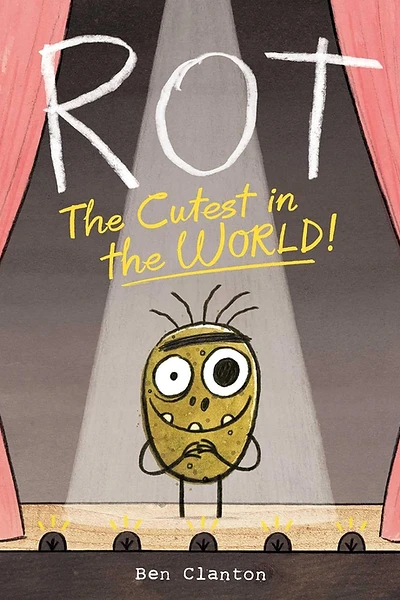
Rot, the Cutest in the World
by Ben Clanton
Pacing MaterialRot enters a cuteness contest only to learn that superficial judgments don't define a person's worth. This story encourages children to embrace their authentic selves, regardless of external validation.
Big Idea
Being yourself is always better than trying to fit someone else's definition of perfect.
Discussion Questions
- 1.Why did Rot want to win the cuteness contest?
- 2.How does it feel to be judged by others?
- 3.What does it mean to be 'yourself'?
- 4.Why is it important to have friends who like you for who you are?
- 5.If you held a contest, what category would you win?
Classroom Activity
Authentic Self Portraits
Students create self-portraits that highlight their favorite unique personality traits rather than physical appearance.
Lesson Plan
Learning Goals
- Promote self-acceptance
- Identify personal unique traits
- Connect visual art to self-identity
Activity Steps
- 1.Discuss why Rot is special in his own way
- 2.List three things you love about your own personality
- 3.Sketch a portrait using colors that represent your mood/personality
- 4.Add labels or words describing those personality traits
- 5.Display the portraits on a 'Who I Am' wall
Standards Connections
- CCSS.ELA-LITERACY.W.K.3
- SEL.CASEL.SelfAwareness
- National Core Arts Standard VA:Cr1.2
Pace-Write-Read Study with Pace-Write It!
Focus question: How does Ben Clanton slow down and speed up Rot’s story to help us feel his hopes, embarrassment, and growing self-acceptance? In Rot, the Cutest in the World by Ben Clanton, Rot the mutant potato enters a cuteness contest and discovers that being judged by looks is not the same as being valued for who you are. The pacing moves quickly in funny contest moments and slows down in emotional beats, helping young readers notice how timing, page turns, and reactions build humor and meaning.
| Element | How to notice or teach it in the novel |
|---|---|
| Pace | Read: Notice how the story speeds up when Rot gets excited about the cuteness contest and slows down when he feels disappointed by how others judge him. Classroom Activity: Write 3 short sentences that speed up a contest scene and 1 longer feeling sentence that slows down the moment when your character reflects on who they are. |
| Plot | Read: Track the clear plot line in Rot, the Cutest in the World: Rot wants to win, enters the contest, faces judgment, and learns that worth is bigger than appearance. Classroom Activity: Make a 4-box plot map and then write one sentence for each box about a character who learns to accept themselves. |
| Prosody | Read: Listen to how the story sounds when read aloud, especially in contest moments, character reactions, and big emotional turns. Ben Clanton’s playful wording supports a lively, expressive read-aloud voice. Classroom Activity: Write 4 lines of read-aloud text for a contest announcer, using expressive words that change how the lines sound. |
| Word pause | Read: Notice where a single word or short phrase creates a pause, making Rot’s feelings or a joke stand out more strongly. These tiny stops help readers sit with his hope or embarrassment. Classroom Activity: Write a mini-scene about a character waiting for results and include one one-word line for emphasis. |
| Concept | Read: The big concept is self-acceptance: Rot learns that a cute contest cannot measure a person’s true value. The story turns a silly contest into a meaningful idea children can understand. Classroom Activity: Write 2 sentences that show a character first chasing outside approval and then realizing what really matters. |
| Voice & World View | Read: Notice the playful, warm voice that treats Rot kindly even while the contest creates funny misunderstandings about cuteness. The book’s world view values kindness, authenticity, and seeing beyond appearances. Classroom Activity: Write a narrator voice that sounds funny and caring while describing an unusual character entering a contest. |
| Setting & Place | Read: Pay attention to how the contest setting shapes the pace of the story by creating a public place for comparison, anticipation, and reaction. The setting helps Rot’s inner feelings stand out against the busy event. Classroom Activity: Write 3 setting details for a silly contest space that makes your character feel both excited and nervous. |
| Point of View | Read: Notice how the story stays close to Rot’s experience so readers feel his excitement and hurt as he tries to be seen as cute. This close focus builds empathy and keeps the pacing centered on his emotional journey. Classroom Activity: Rewrite a contest moment from Rot’s point of view using I, showing what he thinks and feels. |
| Original Characters | Read: Rot is an original main character because he is a mutant potato who does not match typical ideas of cuteness, which makes the theme of self-acceptance even stronger. His uniqueness drives both the humor and the heart of the story. Classroom Activity: Invent an unusual character who enters a contest they seem unlikely to win, and write 3 sentences introducing them. |
| Dialogue | Read: Notice how dialogue in the contest and around Rot can move the story quickly while also revealing how others see him. Dialogue helps show support, judgment, and surprise without long explanations. Classroom Activity: Write 4 lines of dialogue between your character and a friend before a contest, showing hope and worry. |
| Details | Read: Look closely at the small details Ben Clanton uses to show Rot’s appearance, the contest atmosphere, and characters’ reactions. These details make the humor concrete and the emotional moments believable. Classroom Activity: List 5 details about your character’s appearance and choose 2 that show why others might judge them too quickly. |
| Descriptions | Read: Notice how descriptions balance silly visuals and sincere feelings so Rot can be funny and sympathetic at the same time. Description helps readers picture the contest while understanding the deeper message. Classroom Activity: Write a 3-sentence description of a character that includes one funny detail, one surprising detail, and one feeling detail. |
| Strong First Lines | Read: Think about how the opening quickly introduces Rot and sets up the playful tone and central problem around cuteness and belonging. A strong opening helps the pacing begin with energy. Classroom Activity: Write an opening line for a story about a character who believes they are perfect for a contest, even if others disagree. |
| Immediacy & Engagement | Read: Notice how the story quickly draws readers in with a contest, a lovable oddball hero, and the question of whether Rot will be accepted. Fast engagement makes children care right away. Classroom Activity: Write 2 opening sentences that immediately show a character wanting something badly in front of other people. |
| Story Scenes & Summaries & Unique Structures | Read: Notice when the story zooms into important contest scenes and when it moves more quickly through smaller connecting moments. This balance keeps Rot’s emotional turning points clear and memorable. Classroom Activity: Write one detailed scene of a judging moment and one summary sentence that skips ahead to what happens next. |
| Flashback & Flash Forward & Cliffhangers | Read: Even if the book mainly moves forward, readers can imagine pauses where Rot remembers wanting to be seen as cute or wonders what will happen next in the contest. Moments of uncertainty act like small cliffhangers. Classroom Activity: Write a sentence beginning with “Before this…” and a sentence beginning with “What if next…” for your character. |
| Tension & Suspense & Surprise | Read: Notice the tension as Rot waits to see how others will judge him, and the surprise that comes when the story shifts from a contest about looks to a message about true worth. The pacing holds readers between laughter and concern. Classroom Activity: Write 3 sentences that build suspense before contest results are announced, ending with a surprising final line. |
| Page Turns and Chapter Breaks | Read: In this picture book, page turns help deliver jokes, reactions, and emotional reveals about Rot more than chapter breaks would. The turn creates a beat that can delay the result and increase curiosity. Classroom Activity: Plan a 2-page mini-book idea and write what happens before the page turn and what is revealed after it. |
| Performance | Read: This story invites performance through expressive reading, especially in the contest scenes, Rot’s hopeful moments, and any dramatic judging language. Performance helps students feel the book’s changing pace. Classroom Activity: Write one line for an announcer, one for Rot, and one for the crowd, then mark each with how it should be read aloud. |
| Personality | Read: Rot’s personality matters to pacing because his earnestness makes readers root for him, and his reactions give emotional shape to each scene. His personality turns a silly setup into a heartfelt story. Classroom Activity: Write 4 personality traits for a character and then write one sentence showing each trait during a contest. |
| Humor | Read: Notice how humor grows from Rot being a mutant potato in a cuteness contest, from visual contrasts, and from the gap between expectations and reactions. The humor keeps the story light while carrying a serious message about acceptance. Classroom Activity: Write a funny contest category for an unusual character and explain in 2 sentences why it is both silly and meaningful. |
| Pause | Read: Notice where the story seems to pause on Rot’s feelings so readers can think about what it means to be judged by appearance. These quiet beats slow the pacing in a useful way. Classroom Activity: Write a pause moment using the frame “Everyone looked. I waited. Then…” and finish it with your character’s feeling. |
| Poetry and Poetic Devices | Read: Listen for playful sound patterns, lively phrasing, and repeated ideas that make the text feel musical during read-aloud. Even in prose, Ben Clanton uses language that can sound poetic and memorable. Classroom Activity: Write a 3-line chant for a contest crowd using alliteration about your character. |
| Repetition | Read: Notice how repeated ideas about cuteness, judging, or being oneself help emphasize the theme and make the story easier for young readers to follow. Repetition also supports pacing by creating expectation. Classroom Activity: Write 3 sentences that repeat the same beginning words to show your character wanting to be accepted. |
| Rhythm | Read: Feel the rhythm of short and long sentences as the story moves between excitement and reflection. The changing rhythm helps readers sense when a moment is funny, fast, awkward, or heartfelt. Classroom Activity: Write one fast line with 5 or fewer words and one slower line with many descriptive words about the same moment. |
| Punctuation | Read: Look at how punctuation such as exclamation points, commas, and ellipses can shape expression and timing in Rot’s contest journey. Punctuation helps control dramatic pauses and bursts of energy. Classroom Activity: Write 3 versions of the same line from a contestant using different punctuation to change the pacing and feeling. |
| Questions | Read: Ask what questions the book creates: Will Rot win? Will others see beyond his looks? Will Rot still feel good about himself? These questions keep readers engaged from start to finish. Classroom Activity: Write 3 reader questions your own story should make someone wonder during a contest scene. |
| Compare-Contrast | Read: Compare Rot’s idea of cuteness with other characters’ ideas, and contrast outside judgments with inner worth. This contrast is central to the theme of self-acceptance. Classroom Activity: Make a T-chart labeled “What others see” and “Who the character really is,” then write 2 sentences using both sides. |
| Objects | Read: Notice how contest-related objects and Rot’s own body as a mutant potato can become meaningful parts of the story, helping show judgment, identity, and humor. Objects can carry emotional weight in simple ways. Classroom Activity: Choose one object for your character to hold during a contest and write 3 sentences about what it shows about them. |
| Threes | Read: Watch for places where ideas, reactions, or examples could come in threes, a pattern that often makes picture books sound satisfying and funny. A series of three can build rhythm and expectation around Rot’s experience. Classroom Activity: Write a set of 3 descriptions of your character that build from ordinary to funny to heartfelt. |
| Whitespace & Negative Space | Read: In a picture book like this one, open space on the page can slow the reader down and highlight Rot’s feelings, especially in moments of waiting, embarrassment, or realization. Visual quiet can be part of pacing too. Classroom Activity: Plan one page of your story with very few words and explain what big feeling the empty space helps show. |
| Art & Graphics | Read: Notice how the illustrations and page design support pacing by showing Rot’s expressions, the contest mood, and the contrast between comedy and vulnerability. Art helps readers understand feelings even before all the words are read. Classroom Activity: Sketch or describe one illustration for your scene that shows your character’s feelings without naming the feeling word. |
| Interactives & Gamification | Read: The contest structure feels game-like because readers can predict, compare contestants, and guess what might happen to Rot next. This playful structure increases engagement while still teaching self-acceptance. Classroom Activity: Create a simple class voting game for “Most Unique Talent” and write a reflection sentence about why every participant still has value. |
Pace-Write It!
20-Minute Classroom Flow\nRead (5 min): Read Rot, the Cutest in the World by Ben Clanton aloud. Pause to emphasize the contest scenes, Rot’s expressions, and the moment readers realize the story is really about self-acceptance, not just winning.\nNotice (5 min): Ask: “Where did the story move fast? Where did it slow down?” Chart two columns: Fast contest moments and Slow feeling moments. Guide students to notice page turns, funny reactions, and pauses around Rot’s disappointment and understanding.\nWrite (7 min): Students write a short mini-scene about an unusual character in a contest. They should include one fast part, one slow feeling part, and an ending that shows self-acceptance. Writing frame: “My character, _____, entered the _____ contest because _____. At first, everyone noticed _____. My character felt _____. Then _____ happened. In the end, my character learned _____ about being themselves.”\nShare (3 min): Partners read their scenes aloud and point to one sentence that is fast and one sentence that is slow. Invite 1-2 volunteers to share how they showed the lesson about true worth.\nExit ticket: Write one sentence answering: “How did Ben Clanton use pacing to help us understand Rot’s feelings and the theme of self-acceptance?”