 K-4
K-4P SIDMAN
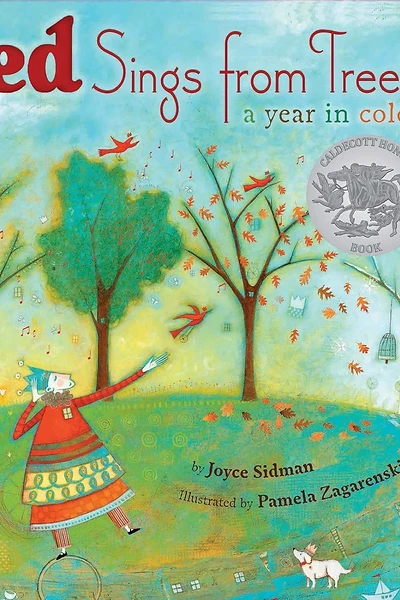
Red Sings from Treetops: A Year in Colors
by Joyce Sidman
Pacing MaterialA poetic journey through the seasons, exploring how colors change and sing throughout the year.
Big Idea
Colors tell the story of the seasons and the world around us.
Discussion Questions
- 1.What color do you think of in spring?
- 2.How do colors change through the seasons?
Classroom Activity
Color Poems
Students write color-themed poems for each season.
Lesson Plan
Learning Goals
- Write sensory poetry
- Observe seasonal changes
Activity Steps
- 1.Read selected poems
- 2.Go on a color walk
- 3.Write a color poem
- 4.Share with the class
Standards Connections
- ELA: RL.K.1 — Ask and answer questions about key details
- ELA: RL.K.2 — Retell stories, including key details
- ELA: RL.K.3 — Describe characters, setting, and events
- ELA: RL.4.6 — Acknowledge differences in characters' points of view
- ELA: SL.K.1 — Participate in collaborative conversations about the text
- ELA: W.K.3 — Write narratives recounting events with descriptive details
- SEL: Social Awareness
- SEL: Relationship Skills
- Art: VA:Re7 — Perceive and analyze artistic work
Pace-Write-Read Study with Pace-Write It!
Focus question: How does a poet slow down and speed up our reading to help us hear the seasons sing? In Red Sings from Treetops: A Year in Colors by Joyce Sidman, each season is described through vivid colors that seem to move, sing, and change across the year. The pacing comes from short poetic lines, strong pauses, repeated color ideas, and page-by-page seasonal shifts that help readers linger over some images and move quickly through others.
| Element | How to notice or teach it in the novel |
|---|---|
| Pace | Read: Notice how Joyce Sidman changes the pace by using short lines and brief color images, letting readers pause on "Red" in spring or move more quickly through a list of seasonal color changes. Classroom Activity: Write 4 short lines about one season, using one color per line to control how fast or slow your reader moves. |
| Plot | Read: This poetry picture book does not follow a traditional story plot, but it does move in a clear sequence through spring, summer, autumn, and winter as colors change across the year. Classroom Activity: Create a simple beginning-middle-end plan for a color poem that starts in one season and ends in another. |
| Prosody | Read: Listen to the musical sound of the lines as colors seem to sing, whisper, and glow; the poem’s sound helps match the feeling of each season. Classroom Activity: Write 3 lines about a color in nature and read them aloud to revise for smooth, musical sound. |
| Word pause | Read: Notice where a single word such as a color name or action word makes you stop and picture the scene before reading on. Classroom Activity: Write a 5-line poem and place one powerful color word on a line by itself for emphasis. |
| Concept | Read: The big idea in this book is that colors are alive in nature and can tell the story of the year. Classroom Activity: Choose one concept such as change, growth, cold, or light, and write a short color poem that shows that idea in a season. |
| Voice & World View | Read: The voice is lyrical, observant, and full of wonder, showing a world where nature is active and colors have energy and feeling. Classroom Activity: Write in a voice of wonder by beginning each line with what a color does in the world around you. |
| Setting & Place | Read: Notice the outdoor settings of treetops, gardens, fields, berries, leaves, and snowy spaces that help us feel each season. Classroom Activity: Pick one outdoor place near your home or school and describe it in a seasonal color poem. |
| Point of View | Read: The poem speaks from an observing point of view, almost like a careful watcher noticing colors all around the year. Classroom Activity: Rewrite one seasonal image from the point of view of a bird, leaf, snowflake, or flower. |
| Original Characters | Read: There are no human main characters; instead, colors themselves act like characters, especially Red, Green, Yellow, and White as they change jobs in different seasons. Classroom Activity: Personify one color as a character and write 3 lines showing what it says, does, and feels in a season. |
| Dialogue | Read: There is no traditional dialogue, but the title and lines make it feel as if colors are speaking or singing to the reader. Classroom Activity: Write a mini poem with quotation marks in which one color talks to another color during a season change. |
| Details | Read: Look for precise details like berries, leaves, frost, and blossoms that make the color images specific instead of general. Classroom Activity: Make a list of 5 small seasonal details you can see, then turn 3 of them into poem lines. |
| Descriptions | Read: Joyce Sidman uses rich descriptions to show how colors look, sound, and move in spring, summer, autumn, and winter. Classroom Activity: Write 4 descriptive lines about one color using sight, sound, and movement words. |
| Strong First Lines | Read: Notice how the opening draws readers in right away by making a color active and surprising rather than simply naming it. Classroom Activity: Draft 3 different first lines for a poem that begins with a color doing something unexpected. |
| Immediacy & Engagement | Read: The present-tense action of colors singing, drifting, or shining makes the reader feel close to the scene right now. Classroom Activity: Write in present tense about what a color is doing outside today. |
| Story Scenes & Summaries & Unique Structures | Read: The book moves through seasonal scenes instead of one long story, and each section gives a snapshot of color in that part of the year. Classroom Activity: Plan a poem in 4 parts, one for each season, with 1 strong image in each part. |
| Flashback & Flash Forward & Cliffhangers | Read: The book hints at what came before and what comes next as one season fades and another begins, creating gentle anticipation instead of dramatic cliffhangers. Classroom Activity: End a seasonal stanza by hinting at the next season with a final line such as "Soon..." or "Next...". |
| Tension & Suspense & Surprise | Read: The surprise comes from unexpected color actions, such as colors behaving like singers or dancers instead of staying still. Classroom Activity: Write 3 lines that surprise the reader by showing a familiar color in an unexpected way. |
| Page Turns and Chapter Breaks | Read: In this picture book, page turns help reveal the next season or the next important color image, creating a natural pause. Classroom Activity: Fold a paper into 4 pages and write one seasonal color image on each page so the reader discovers them one at a time. |
| Performance | Read: This book is meant to be read aloud with expression, stretching some words and pausing after strong images so the colors can "sing." Classroom Activity: Mark your poem with slashes for pauses and arrows for words to read with extra expression. |
| Personality | Read: Each color has a different personality: spring reds feel lively, summer greens feel full, autumn yellows feel bright, and winter whites feel quiet and still. Classroom Activity: Choose one color and write a poem that shows its personality in one season. |
| Humor | Read: The book is more lyrical than funny, but there is playful delight in the idea that colors sing, shout, drip, or hide like living beings. Classroom Activity: Add one playful line to a color poem by making a color act in a silly but fitting way. |
| Pause | Read: Notice how line breaks and seasonal transitions create pauses that give readers time to imagine the images. Classroom Activity: Take a 4-line draft and revise it by adding line breaks where you want the reader to pause. |
| Poetry and Poetic Devices | Read: Joyce Sidman uses personification, imagery, sound, and metaphor to turn colors into active parts of the natural world. Classroom Activity: Write a 4-line poem that includes personification and one comparison about a seasonal color. |
| Repetition | Read: Repeated color names and repeated sentence patterns help tie the seasonal sections together and give the poem a steady shape. Classroom Activity: Use the same line starter in 3 lines, such as "Blue is..." or "In winter...". |
| Rhythm | Read: The rhythm changes as some lines feel quick and bright while others feel soft and slow, matching the energy of each season. Classroom Activity: Clap the beat of a favorite line, then write 2 new lines with a similar rhythm. |
| Punctuation | Read: Notice how punctuation helps shape breathing and expression, especially where commas or end marks slow the reader to notice an image. Classroom Activity: Write a short poem, then revise the punctuation to change how it sounds when read aloud. |
| Questions | Read: The book invites wondering even without asking many direct questions, making readers think about where colors appear and how they change. Classroom Activity: Write 2 question lines about a color in a season, then answer one of them in a final line. |
| Compare-Contrast | Read: Readers can compare how the same color behaves differently in spring, summer, autumn, and winter, or contrast one season’s colors with another’s. Classroom Activity: Write a compare-contrast poem showing one color in two different seasons. |
| Objects | Read: Specific objects like berries, leaves, flowers, and snow help anchor the big idea of color in real parts of nature. Classroom Activity: Pick 3 seasonal objects and connect each one to a different color in your poem. |
| Threes | Read: Notice how a poet can build momentum by grouping images or actions in patterns of three, even in short lines. Classroom Activity: Write one line with 3 linked actions for a color, such as "Red hums, blooms, blazes." |
| Whitespace & Negative Space | Read: The open space around short lines and illustrations slows the reading and gives each image room to echo, especially in quiet winter pages. Classroom Activity: Arrange your poem with plenty of space between lines so one image stands out. |
| Art & Graphics | Read: The illustrations work with the poem to deepen the meaning of each color and season, helping readers feel pacing through visual changes too. Classroom Activity: Add a small sketch or color swatch beside each line of your poem to match its mood. |
| Interactives & Gamification | Read: This book invites readers to hunt for colors across the seasons and predict which color idea will appear next. Classroom Activity: Create a "color hunt" checklist for one season, then use 3 found colors to write a short poem. |
Pace-Write It!
20-Minute Classroom Flow\nRead (5 min): Read aloud one season section from Red Sings from Treetops: A Year in Colors by Joyce Sidman. Then reread it with expression, pausing at line breaks and emphasizing the color words.\nNotice (5 min): Ask students: Which words made you slow down? Which color felt most alive? Chart how Sidman uses short lines, repeating color ideas, and strong images from nature such as blossoms, leaves, berries, and snow.\nWrite (7 min): Students write their own seasonal color poem. Writing frame: "[Color] ___ in [season]. / It ___, ___, and ___. / Near the ___ / it ___ like ___." Encourage students to personify the color and use one exact nature detail.\nShare (3 min): Partners read poems aloud twice: once straight through, and once with pauses marked for expression. Listeners say which line had the strongest pacing.\nExit ticket: Write one sentence answering: How did line breaks or pauses help your color poem sound more like the seasons?