 5-8
5-8M ANDERSON
Rebellion 1776
by Laurie Halse Anderson
Pacing MaterialAs the American Revolution ignites, a young person navigates divided loyalties, personal conviction, and the meaning of freedom.
Big Idea
Revolution begins with ordinary people who dare to question the world around them.
Discussion Questions
- 1.What does rebellion mean to the main character?
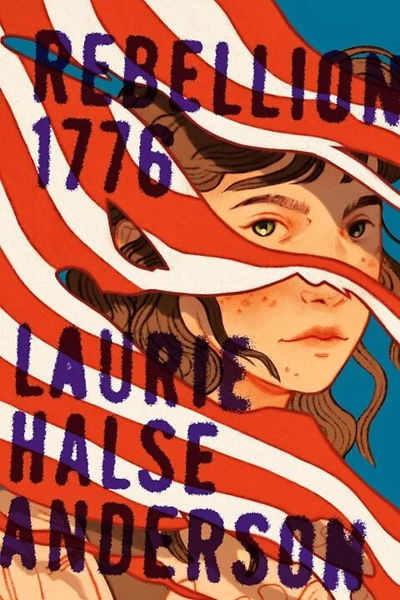
- 2.How does the author use the American flag imagery?
- 3.What choices do young people face during a revolution?
- 4.How does the title connect to the story's themes?
Classroom Activity
Revolutionary Speech
Write a persuasive speech from the perspective of a young person living in 1776, arguing for or against rebellion.
Lesson Plan
Learning Goals
- Analyze historical fiction
- Explore themes of revolution and identity
- Practice persuasive writing
Standards Connections
- ELA: RL.5.1 — Ask and answer questions about key details
- ELA: RL.5.2 — Retell stories, including key details
- ELA: RL.5.3 — Describe characters, setting, and events
- ELA: RL.8.6 — Acknowledge differences in characters' points of view
- ELA: SL.5.1 — Participate in collaborative conversations about the text
- ELA: W.5.3 — Write narratives recounting events with descriptive details
- SEL: Self-Awareness
- SEL: Social Awareness
Pace-Write-Read Study with Pace-Write It!
Focus question: How does an author speed up and slow down a story to show a character caught between public rebellion and private identity? In Rebellion 1776 by Laurie Halse Anderson, the American Revolution is not just a backdrop—it shapes every choice, fear, and act of courage the young protagonist faces. Anderson uses pacing by moving between tense, high-stakes moments and quieter reflections so readers can feel both the urgency of revolution and the inner struggle over loyalty, freedom, and selfhood.
| Element | How to notice or teach it in the novel |
|---|---|
| Pace | Read: Notice how Laurie Halse Anderson speeds up scenes when danger, conflict, or divided loyalties press in on the young protagonist, then slows down for reflection about freedom, identity, and belonging during the Revolution. Classroom Activity: Write two short paragraphs about the same moment—one fast-paced during a public conflict and one slower-paced during private reflection. |
| Plot | Read: Track how the plot in Rebellion 1776 ties large historical events to the protagonist’s personal decisions about loyalty, family, and conviction. Notice how each event raises the stakes of both the Revolution and the character’s sense of self. Classroom Activity: Create a 5-step plot ladder showing how one outside event changes one inside belief for the protagonist. |
| Prosody | Read: Listen to the flow of Anderson’s sentences—where they feel clipped in tense moments and fuller in thoughtful ones—as the protagonist weighs what freedom really means. Classroom Activity: Rewrite a calm scene and a tense scene using sentence length to match the emotion of each moment. |
| Word pause | Read: Notice how individual words, especially words linked to liberty, fear, duty, and identity, make you stop and think during key moments in Rebellion 1776. Classroom Activity: Choose 5 powerful words from your own Revolution-themed scene and explain why each deserves a pause from the reader. |
| Concept | Read: Pay attention to how the central concept of freedom becomes more complicated as the protagonist sees that revolution in a nation does not automatically create freedom in every life. Classroom Activity: Write a paragraph beginning, “At first, freedom seems like…, but later it means…” using a fictional character in 1776. |
| Voice & World View | Read: Notice the voice Anderson builds for the young protagonist—observant, conflicted, and shaped by living inside a divided society during wartime. Think about how the character’s worldview changes as public slogans and private truths collide. Classroom Activity: Write a diary entry in the voice of a young person whose view of the Revolution changes over one day. |
| Setting & Place | Read: Study how streets, homes, meeting spaces, and wartime surroundings in Rebellion 1776 create pressure on the protagonist and influence choices about safety and loyalty. Classroom Activity: Describe one Revolutionary-era place twice—once as a place of hope and once as a place of danger. |
| Point of View | Read: Notice how the point of view keeps readers close to the protagonist’s uncertainty, helping us experience divided loyalties from the inside rather than from a distant history-book view. Classroom Activity: Rewrite a scene from the perspective of another young witness who disagrees with the protagonist. |
| Original Characters | Read: Pay attention to how Anderson shapes characters who are not simple heroes or villains; instead, they reflect different beliefs about rebellion, duty, identity, and survival. Classroom Activity: Invent an original character in 1776 who supports one side in public but doubts it in private, and write a short character sketch. |
| Dialogue | Read: Notice how dialogue in Rebellion 1776 can reveal tension without long explanation, especially when characters avoid saying exactly what they fear or believe. Classroom Activity: Write 8 lines of dialogue between two characters on opposite sides of the Revolution, with hidden feelings under the words. |
| Details | Read: Observe how small historical and emotional details make the Revolution feel immediate while also showing the protagonist’s inner conflict. Classroom Activity: Write a scene using 6 specific details—2 visual, 2 sound, 1 object, and 1 emotional gesture—to show divided loyalty. |
| Descriptions | Read: Notice how descriptions in Rebellion 1776 do more than paint a picture; they often mirror the protagonist’s fear, uncertainty, or growing conviction. Classroom Activity: Describe a crowd scene during the Revolution so the setting reflects your character’s inner feelings. |
| Strong First Lines | Read: Examine how an opening line can quickly establish conflict, voice, and urgency in a historical fiction story like Rebellion 1776. Classroom Activity: Write 3 possible first lines for a chapter about a young person facing a dangerous choice in 1776. |
| Immediacy & Engagement | Read: Notice how Anderson creates immediacy by placing readers close to choices that must be made quickly, even while larger historical forces close in. Classroom Activity: Write a 6-sentence scene in which your character must choose whom to trust before the paragraph ends. |
| Story Scenes & Summaries & Unique Structures | Read: Track where Rebellion 1776 uses full scenes for major emotional or political turning points and where summary helps move time, war events, or changing relationships forward. Classroom Activity: Write one full scene of a confrontation, then add a 3-sentence summary that jumps ahead to the next major change. |
| Flashback & Flash Forward & Cliffhangers | Read: Notice how references to earlier memories or hints of coming danger deepen the protagonist’s identity struggle and keep readers asking what choice will come next. Classroom Activity: End a paragraph with a cliffhanger tied to a secret from your character’s past. |
| Tension & Suspense & Surprise | Read: Pay attention to how tension grows when the protagonist cannot safely reveal every belief, loyalty, or fear during the Revolution. Notice also how surprises may come from people’s choices, not just from battle or action. Classroom Activity: Write a suspenseful moment in which a trusted person says or does something unexpected. |
| Page Turns and Chapter Breaks | Read: Notice how chapter endings in Rebellion 1776 likely leave a question, danger, or emotional shift hanging so readers must keep going. Classroom Activity: Write a chapter ending in 3-4 sentences that makes the reader need to know the protagonist’s next choice. |
| Performance | Read: Consider how scenes in Rebellion 1776 could be read aloud with changing pace, volume, and pauses to show fear, secrecy, and conviction. Classroom Activity: Mark up a short paragraph from your own writing with slash marks for pauses and arrows for where your voice should speed up or slow down. |
| Personality | Read: Notice how the protagonist’s personality affects pacing—hesitation may slow a moment, while courage or panic may speed it up. Classroom Activity: Write the same Revolutionary-era event twice, once through a cautious personality and once through a bold personality. |
| Humor | Read: Even in a serious story about rebellion and identity, look for moments when wit, irony, or small human observations give readers relief and reveal character. Classroom Activity: Add one brief line of humor to a tense historical scene without breaking the mood. |
| Pause | Read: Notice where Anderson allows a pause after conflict so readers can absorb what the protagonist has lost, learned, or begun to question about freedom. Classroom Activity: Write a 4-sentence pause scene after an argument, focusing on silence, body language, and thought. |
| Poetry and Poetic Devices | Read: Look for poetic language such as imagery, symbolism, or metaphor that deepens themes of liberty, identity, and divided belonging in Rebellion 1776. Classroom Activity: Write 3 metaphor-rich sentences comparing the Revolution to something personal your character feels inside. |
| Repetition | Read: Notice whether repeated ideas, images, or words—such as freedom, choice, home, or loyalty—build emotional pressure across the story. Classroom Activity: Write a paragraph that repeats one key phrase three times, changing its meaning each time. |
| Rhythm | Read: Listen for the rhythm created by sentence variety as the story moves between marching public events and private emotional reckoning. Classroom Activity: Draft a paragraph with a pattern of short-short-long sentences to create a rising sense of urgency. |
| Punctuation | Read: Notice how punctuation in Rebellion 1776 can sharpen pace: dashes for interruption, commas for thinking, question marks for uncertainty, and periods for hard finality. Classroom Activity: Rewrite a short scene twice, changing punctuation to make one version feel more anxious and one feel more controlled. |
| Questions | Read: Track the questions the protagonist asks—about loyalty, truth, and freedom—and how those unanswered questions keep readers engaged. Classroom Activity: Write 5 questions your character would ask on the night before making a dangerous political choice. |
| Compare-Contrast | Read: Notice how Anderson may compare public speeches about liberty with private limits on people’s lives, or contrast one character’s loyalty with another’s. Classroom Activity: Write a compare-contrast paragraph about what freedom means to two different characters in 1776. |
| Objects | Read: Pay attention to objects that may carry emotional or political meaning in Rebellion 1776—a letter, garment, tool, book, token, or household item tied to identity and choice. Classroom Activity: Choose one object from the Revolutionary era and write how it becomes a symbol of your character’s conflict. |
| Threes | Read: Notice places where ideas or details can be grouped in threes to build emphasis, especially around the protagonist’s fears, hopes, or choices. Classroom Activity: Write a sentence or short paragraph using a powerful set of three to show rising pressure. |
| Whitespace & Negative Space | Read: Consider where short paragraphs, line breaks, or brief sections in a novel like Rebellion 1776 might create silence, urgency, or emotional weight. Classroom Activity: Format a short scene with intentional paragraph breaks to slow the reader before a big decision. |
| Art & Graphics | Read: Even though Rebellion 1776 is a fiction novel, imagine how a map, broadside, sketch, or timeline could help readers visualize the divided world around the protagonist. Classroom Activity: Create a simple graphic—map, poster, or timeline—to accompany a scene you write. |
| Interactives & Gamification | Read: Think about the decision points in Rebellion 1776: whom to trust, what to reveal, when to stay silent, and how to define freedom. These moments show how pacing can feel like a series of choices with consequences. Classroom Activity: Design a 4-step choose-your-path outline in which a young character’s choices during the Revolution lead to different outcomes. |
Pace-Write It!
20-Minute Classroom Flow\nRead (5 min): Read a short passage or teacher-selected excerpt from Rebellion 1776 by Laurie Halse Anderson that shows the protagonist under pressure during a moment of divided loyalty. Students listen for where the pacing speeds up and where it slows down for thought.\nNotice (5 min): Discuss: What words, sentence lengths, pauses, or chapter-style stopping points create urgency? How does Anderson connect the fast pace of Revolution events to the slower inner conflict about identity and freedom?\nWrite (7 min): Students write an original historical fiction paragraph about a young person in 1776 facing a loyalty choice. Writing frame: “When ___ happened, I felt ___. The street/room was ___. Everyone seemed to ___. I wanted to ___, but if I did, then ___. So I ___. Still, one question stayed with me: ___?” Challenge: include one short sentence for urgency, one longer sentence for reflection, and one meaningful object.\nShare (3 min): Students read one sentence that shows fast pacing and one sentence that shows slow pacing. Partners name the craft moves they hear.\nExit ticket: In one or two sentences, explain how changing pace can help show both a historical event and a character’s identity struggle.