
 PreK-2
P FINISON
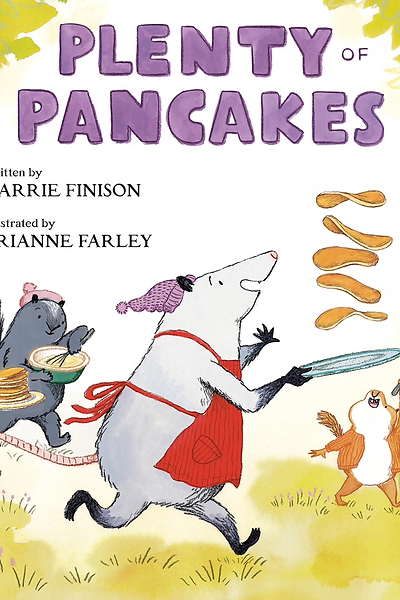
Plenty of Pancakes
by Carrie Finison
Pacing MaterialA farm family gathers ingredients for pancakes, discovering there is always enough when everyone contributes.
Big Idea
Generosity and working together create abundance — there is plenty when we share what we have.
Discussion Questions
- 1.How does the family gather each ingredient?
- 2.What does 'plenty' mean in this story?
- 3.How does sharing change the meal?
- 4.When have you shared and found there was enough?
Classroom Activity
Recipe for Sharing
Write a 'recipe' for something your family shares. List the ingredients, who helps, and what makes it special.
Lesson Plan
Learning Goals
- Identify how each family member contributes to a shared meal
- Explain what abundance means in their own words
- Write a sharing recipe listing ingredients, helpers, and a special ingredient
Activity Steps
- 1.Read the story, noting who gathers each ingredient and how.
- 2.Discuss: 'What does plenty mean? When have you shared and found there was enough?'
- 3.Model a 'recipe for sharing': ingredients, who helps, and one special ingredient (kindness, laughter, etc.).
- 4.Students write and illustrate their own family or class sharing recipe.
- 5.Share recipes and compile a 'Classroom Recipe Book' for sharing.
Standards Connections
- ELA: RL.K.1 — Ask and answer questions about key details
- ELA: RL.K.2 — Retell stories, including key details
- ELA: RL.K.3 — Describe characters, setting, and events
- ELA: RL.2.6 — Acknowledge differences in characters' points of view
- ELA: SL.K.1 — Participate in collaborative conversations about the text
- ELA: W.K.3 — Write narratives recounting events with descriptive details
- SEL: Social Awareness
- SEL: Relationship Skills
- Art: VA:Re7 — Perceive and analyze artistic work
Pace-Write-Read Study with Pace-Write It!
Focus question: How does a story about making pancakes move at just the right speed to show that everyone’s contribution matters? In Plenty of Pancakes by Carrie Finison, a farm family gathers ingredients from different places and helpers to make a big batch of pancakes. The pacing moves step by step through the family’s search, then slows at key moments so readers can notice the growing abundance, the teamwork, and the joyful payoff.
| Element | How to notice or teach it in the novel |
|---|---|
| Pace | Read: Notice how Plenty of Pancakes moves in a steady, comforting sequence as the farm family collects flour, eggs, milk, and other ingredients, showing abundance one contribution at a time. Classroom Activity: Write 3-4 sentences about making a class snack, using one sentence for each step so the pace feels orderly and calm. |
| Plot | Read: Notice the clear beginning, middle, and end in Plenty of Pancakes: the family wants pancakes, gathers what is needed, and discovers there is enough when everyone helps. Classroom Activity: Write a beginning-middle-end plan for a story in which a family or class works together to make or build something. |
| Prosody | Read: Listen for how the language in Plenty of Pancakes sounds warm, rhythmic, and easy to read aloud, matching the cozy farm setting and shared work. Classroom Activity: Write two read-aloud lines about stirring batter that sound smooth and musical when spoken. |
| Word pause | Read: Notice where you naturally pause while reading Plenty of Pancakes aloud, especially after each ingredient or helper is introduced, giving readers time to picture the growing pile of food. Classroom Activity: Write a short list sentence about ingredients and add slash marks where a reader should pause. |
| Concept | Read: Notice that the big idea in Plenty of Pancakes is abundance: there is enough when people share, gather, and contribute together. Classroom Activity: Write one sentence that teaches the idea of abundance using an example from home, school, or a garden. |
| Voice & World View | Read: Notice how Plenty of Pancakes presents a generous, community-minded world view, where work on the farm and sharing with others feel natural and joyful. Classroom Activity: Write 2-3 sentences in a kind, welcoming voice about inviting others to help with a job. |
| Setting & Place | Read: Notice how the farm setting shapes the story in Plenty of Pancakes, since the family can gather eggs, milk, and other ingredients from the land and animals around them. Classroom Activity: Write 3 setting details for a farm, kitchen, or garden that could be part of a food story. |
| Point of View | Read: Notice that Plenty of Pancakes is told from an outside narrator’s point of view, letting readers watch the whole family work together. Classroom Activity: Rewrite one moment from the story from the point of view of a child in the family saying, “I helped by…”. |
| Original Characters | Read: Notice how the farm family and helpers in Plenty of Pancakes feel memorable because each one contributes to the shared goal of making pancakes. Classroom Activity: Invent one new helper for the story, such as a neighbor or sibling, and write what that character brings. |
| Dialogue | Read: Notice how any spoken moments in Plenty of Pancakes would help show cooperation, encouragement, and excitement as ingredients come together. Classroom Activity: Write two lines of dialogue between family members deciding who will bring the next ingredient. |
| Details | Read: Notice the small, concrete details in Plenty of Pancakes that help readers see the ingredients, the farm, and the making of breakfast. Classroom Activity: Make a list of five exact details you could include in a pancake scene, such as bowl, whisk, eggshell, butter, or syrup. |
| Descriptions | Read: Notice how descriptions in Plenty of Pancakes help readers imagine the food and the busy farm with warmth and plenty. Classroom Activity: Write one describing sentence about a stack of pancakes using color, smell, or taste words. |
| Strong First Lines | Read: Notice how the opening of Plenty of Pancakes quickly introduces the family’s purpose and invites readers into the action of getting ready to cook. Classroom Activity: Write a first line for a story about making breakfast that tells what the characters want right away. |
| Immediacy & Engagement | Read: Notice how Plenty of Pancakes keeps readers engaged by moving from one needed ingredient to the next, creating a feeling of “What will they gather now?” Classroom Activity: Write 3 connected sentences in which each sentence adds one more needed item to a plan. |
| Story Scenes & Summaries & Unique Structures | Read: Notice how Plenty of Pancakes likely mixes scene-like moments of gathering ingredients with summary-like movement across the whole farm day, keeping the story flowing. Classroom Activity: Write one scene sentence about cracking an egg and one summary sentence about everything the family did that morning. |
| Flashback & Flash Forward & Cliffhangers | Read: Notice that Plenty of Pancakes stays mostly in the present instead of using flashbacks or cliffhangers, which helps very young readers follow the sequence easily. Classroom Activity: Write one simple “next” sentence that keeps a story moving forward without jumping in time. |
| Tension & Suspense & Surprise | Read: Notice the gentle tension in Plenty of Pancakes as readers wonder whether the family will have enough ingredients, and the happy surprise is that everyone’s contributions create plenty. Classroom Activity: Write two sentences: one asking if there will be enough for everyone, and one revealing the happy answer. |
| Page Turns and Chapter Breaks | Read: Notice how page turns in a picture book like Plenty of Pancakes can reveal the next ingredient, helper, or bigger view of abundance; there are no chapter breaks because the story is brief and continuous. Classroom Activity: Plan a 4-page picture-book mini story and decide what surprise or new item appears after each page turn. |
| Performance | Read: Notice how Plenty of Pancakes invites performance through repeated actions like gathering, pouring, mixing, and serving, which children can act out. Classroom Activity: Write 4 action words from the story and use them in a mini script for pantomime. |
| Personality | Read: Notice how the family in Plenty of Pancakes shows personality through helpfulness, persistence, and delight in feeding others. Classroom Activity: Write 2-3 sentences about a character whose personality shows in the way they help cook. |
| Humor | Read: Notice whether the pleasure in Plenty of Pancakes comes from cheerful family activity and satisfying abundance, with any humor likely growing from busy farm-life moments. Classroom Activity: Add one funny but gentle moment to a food story, such as flour puffing into the air or batter dripping off a spoon. |
| Pause | Read: Notice where the story of Plenty of Pancakes slows down so readers can enjoy a key image, like the ingredients gathering or the finished pancakes ready to share. Classroom Activity: Write one short sentence and then one longer sentence after it to create a pause before an exciting food reveal. |
| Poetry and Poetic Devices | Read: Notice any poetic sound patterns in Plenty of Pancakes, such as repeated food words or pleasing alliteration that make the story fun to hear. Classroom Activity: Write an alliterative phrase about pancakes, such as “fluffy, flipping flapjacks,” and use it in a sentence. |
| Repetition | Read: Notice how repetition in Plenty of Pancakes can emphasize the family’s repeated gathering and adding, helping young readers predict the pattern. Classroom Activity: Write a repeating sentence frame for a class book, such as “We brought ___ for our feast.” |
| Rhythm | Read: Notice the rhythm created by the repeated steps in Plenty of Pancakes: find, bring, mix, cook, and share. Classroom Activity: Clap the rhythm of four action words, then write them in order in one sentence. |
| Punctuation | Read: Notice how punctuation in Plenty of Pancakes helps the story sound friendly and clear, and how exclamation marks could highlight excitement when the pancakes are ready. Classroom Activity: Write one sentence about breakfast with a period and one with an exclamation mark, then read how each sounds different. |
| Questions | Read: Notice the questions readers may ask during Plenty of Pancakes, like “Will there be enough?” or “Who will help next?” which keep the story moving. Classroom Activity: Write two questions a reader might ask during a story about preparing food together. |
| Compare-Contrast | Read: Notice the contrast between not yet having all the ingredients at the start and having plenty by the end, and compare the different ways each helper contributes. Classroom Activity: Write two sentences comparing one ingredient or helper to another using “both,” “but,” or “different.” |
| Objects | Read: Notice how important objects in Plenty of Pancakes, like eggs, milk, flour, bowls, and pans, help drive the action forward. Classroom Activity: Choose one cooking object and write 2 sentences telling how it helps solve the story problem. |
| Threes | Read: Notice places where a writer could group actions or ingredients in threes to make Plenty of Pancakes sound satisfying and memorable. Classroom Activity: Write a sentence with three food or cooking words in a row, such as “mixing, pouring, flipping.” |
| Whitespace & Negative Space | Read: Notice how a picture book like Plenty of Pancakes may use open space on the page so the family, ingredients, and finished meal stand out clearly to young readers. Classroom Activity: Sketch a page plan for your own food story and decide where to leave space so one important object stands out. |
| Art & Graphics | Read: Notice how the illustrations in Plenty of Pancakes likely help show the growing abundance of ingredients, the farm setting, and the shared emotions of the family. Classroom Activity: Draw and label a pancake-making scene, then write one caption that matches the illustration. |
| Interactives & Gamification | Read: Notice how Plenty of Pancakes can become interactive when children predict the next ingredient, count the helpers, or act out each step in the recipe-like sequence. Classroom Activity: Create a “guess the next ingredient” page for a class book with one clue sentence and one answer sentence. |
Pace-Write It!
20-Minute Classroom Flow\nRead (5 min): Read Plenty of Pancakes by Carrie Finison aloud. Pause briefly after each new ingredient or helper appears so students can feel the step-by-step pacing and notice how the family keeps getting closer to pancakes for everyone.\nNotice (5 min): Ask: “How did the story move?” Chart student observations: first they wanted pancakes, then they gathered ingredients, then they made and shared them. Point out how the pacing is steady and how repetition and page turns help build the feeling of abundance.\nWrite (7 min): Students write their own short abundance story about making or collecting something together. Writing frame: “We wanted to make ____. First, ____ brought ____. Next, ____ found ____. Then, ____ added ____. At last, we had enough to ____.” Encourage students to include one sensory detail and one line that shows everyone helped.\nShare (3 min): Students read their writing to a partner or the class. Listeners say which part showed pacing clearly and which part showed abundance.\nExit ticket: Complete this sentence: “The story felt just right because the author showed ____ one step at a time.”
Pace-Write-Read Connection
Teach this book using the Pace-Write-Read method — Tool 26: Repetition.
Open the Mastery Manual