 K-3
K-3P SAUER
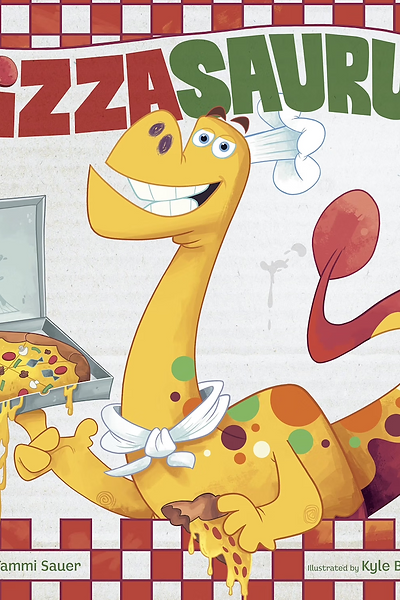
Pizzasaurus
by Tammi Sauer
Pacing MaterialA dinosaur made of pizza stomps through town, and everyone wants a slice — but Pizzasaurus just wants a friend who likes him for who he is.
Big Idea
Being yourself is more important than being everyone's favorite snack.
Discussion Questions
- 1.Why does everyone want a piece of Pizzasaurus?
- 2.What does Pizzasaurus really want?
- 3.How is Pizzasaurus like someone who feels different?
- 4.What makes a good friend?
Classroom Activity
Foodimal Friend
Invent a creature made entirely of one food. Draw it, name it, and describe its personality.
Lesson Plan
Learning Goals
- Identify what Pizzasaurus wants and explain how his wish for friendship differs from the townspeople’s desire for a slice.
- Use details from the story and illustrations to discuss why friends should value one another’s personalities.
- Invent, draw, and name a creature made entirely of one food.
- Describe the creature’s personality and explain what makes it a good friend.
Activity Steps
- 1.Read Pizzasaurus aloud. Pause to ask: “What do the people want from Pizzasaurus? What does he want from them?” Use story details and illustrations to compare their wishes.
- 2.Discuss the big idea: being yourself matters more than being someone’s favorite snack. Ask: “How could someone show Pizzasaurus that they like him for who he is?” List friendship qualities such as kindness, humor, and generosity.
- 3.Introduce “Foodimal Friend.” Each student chooses one food and imagines a creature made entirely from it. Model brainstorming a creature’s name, appearance, and personality without focusing only on how tasty it might be.
- 4.Have students draw and name their foodimal. Encourage them to use their chosen food for every body part and add details that show its personality, such as a welcoming smile or playful pose.
- 5.Ask students to dictate or write two to four sentences using prompts: “My foodimal is named…,” “It is…,” and “It would be a good friend because….” Kindergarten students may use labels and oral descriptions; older students can add a specific example of friendly behavior.
- 6.Invite partners to introduce their foodimals and name a personality trait they appreciate in each other’s creatures. Close by asking: “What would your foodimal say to Pizzasaurus to help him feel valued as a friend?”
Standards Connections
- ELA: RL.K.3–RL.3.3 — Discuss characters and their wants, feelings, and actions, with grade-appropriate support and reference to story details.
- ELA: SL.K.1–SL.3.1 — Participate in collaborative discussions about the story and classmates’ creations.
- ELA: SL.K.5–SL.3.5 — Use drawings or visual displays to support descriptions and presentations.
- Visual Arts: Creating — Generate an original food-based creature and use visual details to communicate its personality.
- SEL: Self-awareness and relationship skills — Recognize personal qualities and practice valuing friends for who they are.
Pace-Write-Read Study with Pace-Write It!
Focus question: How does an author speed up and slow down a funny story so readers laugh, worry, and care about the character? In Pizzasaurus by Tammi Sauer, a walking pizza-dinosaur stomps through town while people chase him for a slice, creating fast, silly action. The pacing also slows at key moments to show that Pizzasaurus is not just food or a joke—he wants a real friend who likes him for who he is.
| Element | How to notice or teach it in the novel |
|---|---|
| Pace | Read: Notice how the story races when Pizzasaurus stomps through town and everyone reacts to him as food, then slows when his feelings and wish for friendship become clearer. Classroom Activity: Write 4 short sentences about a silly creature being chased, then add 2 slower feeling sentences that reveal what the creature really wants. |
| Plot | Read: Follow the clear plot line: Pizzasaurus appears, people want slices, the problem grows, and the story moves toward finding someone who sees him as a friend instead of lunch. Classroom Activity: Make a beginning-middle-end chart for Pizzasaurus, then plan your own humorous plot about a character whose outside causes a big misunderstanding. |
| Prosody | Read: Listen to how the words can be read with big, stompy, dramatic expression when Pizzasaurus moves and with gentler expression when the story hints at identity and belonging. Classroom Activity: Mark one imagined page of your writing with performance notes such as STOMP, whisper, pause, and stretch to show how it should sound aloud. |
| Word pause | Read: Notice where a reader naturally pauses after a surprising idea, a funny reveal, or a line about people wanting a slice of Pizzasaurus. Classroom Activity: Write 3 humorous lines about your own food-creature and place a slash / where a reader should pause for effect. |
| Concept | Read: The central concept is funny and clever: a dinosaur made of pizza is treated like food, but inside he is a character with feelings and identity. Classroom Activity: Invent a mash-up character like Pizzasaurus and write 2 sentences explaining the joke on the outside and the true feeling on the inside. |
| Voice & World View | Read: Notice the playful, exaggerated voice that treats the world as a place where absurd things can happen, while still making space for the idea that everyone wants to be accepted for who they are. Classroom Activity: Write in a humorous voice about a strange character entering town, and include one line that shows the character's own point of view about being misunderstood. |
| Setting & Place | Read: Pay attention to how the town setting matters—Pizzasaurus moves through public places where many people can see him, react fast, and chase him, which keeps the pacing lively. Classroom Activity: Draw and label a setting map for your character's path through town, then write one sentence for each place showing how the setting changes the action. |
| Point of View | Read: Think about how the story lets readers stay close to Pizzasaurus's experience even while showing the crowd's hungry reactions. Classroom Activity: Rewrite one scene from the point of view of a kid in the crowd, then rewrite it from Pizzasaurus's point of view to compare how pacing and feelings change. |
| Original Characters | Read: Pizzasaurus is memorable because he is both ridiculous and lovable—a dinosaur made of pizza who is chased for what he is made of, not appreciated for who he is. Classroom Activity: Create an original character card for a humorous mash-up creature, including name, what people assume about it, and what it truly wants. |
| Dialogue | Read: Notice how any spoken reactions in a story like this can speed the action and heighten the joke because characters respond instantly to Pizzasaurus as food. Classroom Activity: Write a 6-line dialogue between your creature and townspeople, where the crowd says what they want and the creature reveals a different need. |
| Details | Read: Small details about pizza and dinosaur traits make Pizzasaurus vivid and funny, while details about the crowd's reactions make the problem feel bigger. Classroom Activity: List 5 outside details and 3 inside-feeling details for a character like Pizzasaurus, then use them in a short paragraph. |
| Descriptions | Read: The descriptions likely balance comic visual traits with action words, helping readers picture Pizzasaurus as both delicious-looking and dinosaur-large. Classroom Activity: Write a 3-sentence description of a food-animal character using one sentence about appearance, one about movement, and one about feelings. |
| Strong First Lines | Read: Think about how a strong opening for Pizzasaurus would quickly introduce the absurd character and pull readers into the joke right away. Classroom Activity: Write 3 different first lines for a story about a strange creature entering a town; choose the one that creates the strongest immediate laugh or question. |
| Immediacy & Engagement | Read: The story becomes engaging quickly because readers instantly understand the danger and humor: if you are made of pizza, people may want a slice. Classroom Activity: Write an opening that gives your character a problem in the very first sentence so readers care right away. |
| Story Scenes & Summaries & Unique Structures | Read: Notice how some moments would work as full scenes, like a chase or a funny encounter, while other parts move quickly in summary to keep the story from dragging. Classroom Activity: Write one full scene of your character being noticed by a crowd, then one summary sentence that skips ahead to the next place. |
| Flashback & Flash Forward & Cliffhangers | Read: Even in a simple picture book, authors can create mini-cliffhangers at page turns by making readers wonder what will happen next to Pizzasaurus. Classroom Activity: End 2 pages of your own picture-book draft with cliffhanger lines such as 'But then...' or 'Until someone shouted...'. |
| Tension & Suspense & Surprise | Read: Notice the tension between the silly idea and the real problem—Pizzasaurus is funny to see, but readers also wonder whether anyone will treat him kindly. Classroom Activity: Write 3 sentences that build tension as others chase your character, then add 1 surprise sentence that changes the scene. |
| Page Turns and Chapter Breaks | Read: In a picture book like Pizzasaurus, page turns matter because they can hide the next joke, the next crowd reaction, or the next emotional beat. Classroom Activity: Fold a paper into 4 pages and plan what readers see before and after each page turn in your own mini story. |
| Performance | Read: This story invites dramatic reading with stomps, gasps, and hungry exclamations, which helps students feel how pacing works physically. Classroom Activity: Choose 4 lines from your writing and rehearse how you would perform them with volume, facial expression, and a pause. |
| Personality | Read: Pizzasaurus is not only a concept; he has personality because he wants friendship and likely reacts to the town with feelings, not just toppings and teeth. Classroom Activity: Write a 'My name is...' speech for your creature that shows its personality in 4 lines. |
| Humor | Read: The humor comes from the ridiculous mismatch: a dinosaur should be scary, pizza should be eaten, and Pizzasaurus is both at once. Classroom Activity: Make a T-chart labeled 'Scary like a dinosaur' and 'Tasty like a pizza,' then write a funny scene using one idea from each side. |
| Pause | Read: Pauses help the story land a joke or an emotional moment, especially when readers need time to realize why Pizzasaurus feels hurt by being seen as food. Classroom Activity: Add ellipses or a line break to one sentence in your draft to create a pause before the funniest or most heartfelt word. |
| Poetry and Poetic Devices | Read: Listen for playful sound patterns, vivid images, or repeated phrasing that make Pizzasaurus feel fun to say and easy to remember. Classroom Activity: Write a 4-line chant about your creature using alliteration, such as 'Cheesy, chompy, cheerful...'. |
| Repetition | Read: Repeated reactions, repeated chase patterns, or repeated reminders that everyone wants a slice can build humor and momentum in Pizzasaurus. Classroom Activity: Write a repeating line for your story, such as 'Everybody wanted a bite,' and use it 3 times in different places. |
| Rhythm | Read: The rhythm of short action lines can feel stompy and quick, matching Pizzasaurus's movement through town. Classroom Activity: Write 6 short lines with a beat you can clap, showing your character moving while others react. |
| Punctuation | Read: Exclamation points, commas, and dashes can shape how excited, hungry, or alarmed the townspeople sound when they see Pizzasaurus. Classroom Activity: Write the same line 3 ways using different punctuation to change the pace and feeling. |
| Questions | Read: Readers naturally ask questions: Will Pizzasaurus escape? Will anyone like him for himself? Those questions keep the pages turning. Classroom Activity: Write 3 reader questions your story should make someone ask by the middle of the book. |
| Compare-Contrast | Read: Compare how others see Pizzasaurus with how he sees himself; contrast being wanted as food with being wanted as a friend. Classroom Activity: Complete the frame 'Others think I am ___, but really I am ___' for your own character, then expand it into 3 sentences. |
| Objects | Read: Pizza slices, toppings, and dinosaur features act like important objects and visual cues that drive the humor and conflict in Pizzasaurus. Classroom Activity: Choose 3 objects connected to your character and write how each object causes a problem or helps solve one. |
| Threes | Read: Funny stories often use sets of three, such as three reactions, three places, or three attempts before a change happens. Classroom Activity: Plan 3 escalating encounters for your character before the story reaches its turning point. |
| Whitespace & Negative Space | Read: In picture books, open space can make a big character like Pizzasaurus stand out and can slow readers down to notice a joke or feeling. Classroom Activity: Sketch one page of your story and decide where blank space should go to make your creature seem lonely, huge, or dramatic. |
| Art & Graphics | Read: The illustrations in a humorous picture book do major pacing work by showing crowd reactions, giant movement, and visual jokes that words do not need to explain. Classroom Activity: Storyboard 3 panels for your creature story and label what the picture shows that the words do not need to say. |
| Interactives & Gamification | Read: Pizzasaurus invites playful participation because students can predict reactions, act out stomps, and guess what people will want next. Classroom Activity: Create a class 'Would you chase or befriend?' response game for 4 imaginary creatures, then write one sentence explaining why your best character deserves friendship, like Pizzasaurus does. |
Pace-Write It!
20-Minute Classroom Flow\nRead (5 min): Read Pizzasaurus by Tammi Sauer aloud. Pause briefly to emphasize the fast stomping chase moments and the slower moments that show Pizzasaurus's wish for a friend. Ask students to listen for when the story feels fast and when it feels slow.\n\nNotice (5 min): On chart paper, make two columns: 'Fast Parts' and 'Slow Parts.' Students name moments when the crowd wants a slice and moments when Pizzasaurus's identity and feelings matter more. Discuss: How does the author use humor first, then heart, to keep us turning pages?\n\nWrite (7 min): Students write a mini picture-book scene about a silly mash-up character who is misunderstood. Writing frame: 'Meet my ________. Everyone thinks ________ because ________. So they ________! But really, my character wants ________. Then someone ________, and my character feels ________.' Encourage students to include one repeated line and one pause mark such as an ellipsis or dash.\n\nShare (3 min): Partners read their scenes aloud with expression. Listeners identify one fast-paced part and one slower feeling part. Invite 2-3 students to share how they showed the difference.\n\nExit ticket: Complete this sentence on a sticky note: 'Pacing helps readers feel ________ when ________, and it slows down so we understand ________.'
Pace-Write-Read Connection
Teach this book using the Pace-Write-Read method — Tool 20: Play.
Open the Mastery Manual