
 1-4
1-4GN JENNINGS
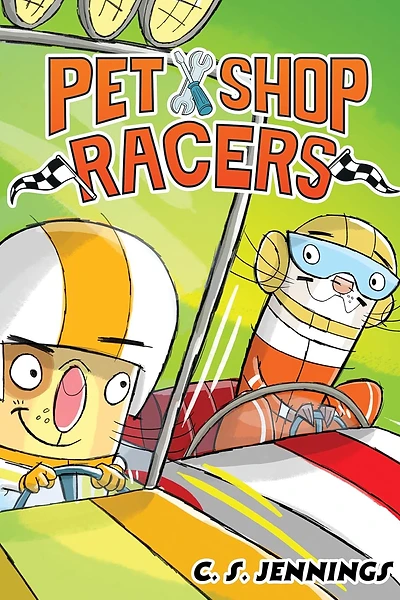
Pet Shop Racers
by C.S. Jennings
Pacing MaterialA team of animal friends from the pet shop build their dream race cars and compete in the ultimate high-speed championship.
Big Idea
Speed, teamwork, and a little creativity can take you across any finish line.
Discussion Questions
- 1.How do the racers work together as a team?
- 2.What challenges do the characters face during the race?
- 3.How does the author use illustrations to show speed and action?
- 4.What kind of vehicle would you design for a race?
Classroom Activity
Race Car Build & Story
Design and build a toy race car from recycled materials, then write a racing story about its first competition.
Lesson Plan
Learning Goals
- Analyze graphic novel storytelling and visual techniques
- Explore themes of teamwork and competition
- Practice design and storytelling
Standards Connections
- ELA: RL.1.1 — Ask and answer questions about key details
- ELA: RL.1.2 — Retell stories, including key details
- ELA: RL.1.3 — Describe characters, setting, and events
- ELA: RL.4.6 — Acknowledge differences in characters' points of view
- ELA: SL.1.1 — Participate in collaborative conversations about the text
- ELA: W.1.3 — Write narratives recounting events with descriptive details
- SEL: Social Awareness
- SEL: Relationship Skills
- Art: VA:Re7 — Perceive and analyze artistic work
Pace-Write-Read Study with Pace-Write It!
Focus question: How does an author and illustrator speed up or slow down a story to make a race feel exciting? In Pet Shop Racers by C.S. Jennings, a team of animal friends from a pet shop designs race cars and works together in a fast, funny championship. The graphic novel uses quick panels, energetic dialogue, page turns, and action-filled art to create pacing that matches the thrill of racing and the determination of the team.
| Element | How to notice or teach it in the novel |
|---|---|
| Pace | Read: Notice how Pet Shop Racers moves quickly during races and slows down when the animal friends build, plan, and encourage one another. The pacing helps show both speed and teamwork. Classroom Activity: Write 4 sentences about a race moment, making the first 2 slower with planning details and the last 2 faster with action words. |
| Plot | Read: Notice the clear plot arc in Pet Shop Racers: the pet shop friends dream, design, practice, compete, and push through challenges in the championship. Each part builds determination. Classroom Activity: Make a 5-box plot map for the racers and then write one new scene that could fit between practice and the big race. |
| Prosody | Read: Listen to how the words in Pet Shop Racers would sound aloud during exciting race scenes versus calm team huddles. The rhythm of the language can feel bouncy, fast, or dramatic. Classroom Activity: Choose one race panel idea and write 3 read-aloud lines that sound fast and exciting when spoken. |
| Word pause | Read: Notice where Pet Shop Racers may use short pauses before a race starts, before a problem is solved, or right before a car zooms ahead. Those tiny pauses build excitement. Classroom Activity: Write 3 short lines for a starting-line scene, using dashes or line breaks to create a pause before 'Go!' |
| Concept | Read: The big concept in Pet Shop Racers is that teamwork and determination matter as much as speed. The race is not just about winning; it is about building something together and not giving up. Classroom Activity: Write 2-3 sentences explaining how a racing scene can also teach a lesson about teamwork. |
| Voice & World View | Read: Notice the upbeat, playful voice of Pet Shop Racers and how the story sees competition as exciting but friendly. The world view values creativity, practice, and helping teammates. Classroom Activity: Write a short pep talk from one animal racer that shows a positive team-centered voice. |
| Setting & Place | Read: Notice how the pet shop, workshop spaces, practice areas, and race track each create different feelings in Pet Shop Racers. The setting affects whether the pacing feels calm, busy, or intense. Classroom Activity: Describe the race track in 4 vivid details that make it feel fast and crowded. |
| Point of View | Read: Notice how Pet Shop Racers may show action through what the team sees, feels, and experiences during the championship. Point of view helps readers feel close to the racers. Classroom Activity: Write 5 sentences from the point of view of one animal teammate during a sharp turn in the race. |
| Original Characters | Read: Notice how the animal friends in Pet Shop Racers stand out because they each bring different talents, reactions, and racing ideas to the team. Their differences help the story move. Classroom Activity: Invent one new pet shop racer, name the animal, and write 3 traits plus one special job on the team. |
| Dialogue | Read: Notice how the dialogue in Pet Shop Racers can be short and lively, especially during building scenes and race scenes. Quick talk can speed pacing and reveal teamwork. Classroom Activity: Write 6 lines of dialogue between two animal teammates as they fix a race car problem together. |
| Details | Read: Notice the small details in Pet Shop Racers, such as tools, wheels, helmets, cheering, and movement around the track. These details make the race world believable. Classroom Activity: Write a sentence set with at least 5 specific details from a pit-stop scene. |
| Descriptions | Read: Notice how Pet Shop Racers likely describes race cars, sounds, and movements in a way that feels bright and energetic. Strong description helps readers picture motion. Classroom Activity: Describe one dream race car using color, shape, sound, and speed words. |
| Strong First Lines | Read: Think about how a strong opening in Pet Shop Racers would quickly pull readers into a world of pets, engines, and big dreams. A strong first line sets the pace right away. Classroom Activity: Write 3 possible first lines for a new pet racing story, and make one funny, one dramatic, and one action-filled. |
| Immediacy & Engagement | Read: Notice how Pet Shop Racers keeps readers close to the action with urgent moments, bold reactions, and fast-moving scenes. Readers want to know if the team can solve each problem. Classroom Activity: Write 4 sentences that begin in the middle of a race so the reader feels instantly pulled in. |
| Story Scenes & Summaries & Unique Structures | Read: Notice how Pet Shop Racers may zoom in on important scenes like the championship while moving quickly through practice or preparation with short summaries. Graphic novels also use panel structure to shape pacing. Classroom Activity: Write one detailed scene about a near-crash and one 2-sentence summary of a whole practice day. |
| Flashback & Flash Forward & Cliffhangers | Read: Notice places where Pet Shop Racers could remind readers of earlier planning, imagine the finish line ahead, or end a page with a problem that makes you keep reading. These choices build momentum. Classroom Activity: Write a 3-sentence mini-scene that ends with a cliffhanger just before the next lap. |
| Tension & Suspense & Surprise | Read: Notice how Pet Shop Racers creates tension when a car wobbles, a part breaks, or another racer pulls ahead. Surprise makes the championship more exciting and highlights determination. Classroom Activity: Write a short scene where the team faces a sudden race problem and solves it with teamwork. |
| Page Turns and Chapter Breaks | Read: Notice how a graphic novel like Pet Shop Racers can place a big moment right before a page turn or chapter break, such as a lead change or a mechanical problem. That placement controls pacing. Classroom Activity: Plan 2 pages of a race and decide what surprise should happen right before the page turn. |
| Performance | Read: Notice how reading Pet Shop Racers aloud could sound like a performance, with announcer voices, cheering, and dramatic race calls. Performance adds speed and excitement. Classroom Activity: Write a 5-line race announcer script for the animal team’s final lap. |
| Personality | Read: Notice how each animal friend in Pet Shop Racers likely shows personality through speech, reactions, and how they handle pressure. Personality makes pacing more fun because different characters respond differently to the same event. Classroom Activity: Write 3 lines showing how one calm teammate and one nervous teammate react to the same race delay. |
| Humor | Read: Notice how Pet Shop Racers can use funny expressions, playful animal behavior, and silly racing mishaps to balance the fast action. Humor gives readers a pause from tension. Classroom Activity: Write a humorous 4-panel idea about an animal racer making a silly mistake before the race starts. |
| Pause | Read: Notice the important pauses in Pet Shop Racers, such as a deep breath before the starting signal or a quiet moment when teammates encourage one another. Slower moments make fast moments stronger. Classroom Activity: Write a short quiet scene where the team pauses in the pit area and remembers to work together. |
| Poetry and Poetic Devices | Read: Notice how Pet Shop Racers may use sound-rich language, repetition, or comparisons that feel poetic, especially in race scenes. Even sports stories can have musical language. Classroom Activity: Write 3 lines about the cars using alliteration, such as words that begin with the same sound. |
| Repetition | Read: Notice whether Pet Shop Racers repeats key ideas, sounds, or phrases about trying again, sticking together, or racing ahead. Repetition strengthens theme and pacing. Classroom Activity: Write a short chant the animal team says before each race to build determination. |
| Rhythm | Read: Notice the beat of Pet Shop Racers in quick race moments: build, rev, zoom, turn, cheer. Rhythm can make the story feel like it is moving. Classroom Activity: Write a 5-line action sequence with a strong beat, using short phrases to sound like racing. |
| Punctuation | Read: Notice how Pet Shop Racers can use exclamation marks, ellipses, question marks, and dashes to control excitement, delay, or surprise. Punctuation helps pace action. Classroom Activity: Rewrite one simple race sentence 3 ways using different punctuation to make it sound excited, nervous, and suspenseful. |
| Questions | Read: Notice the questions readers may ask in Pet Shop Racers: Will the team finish the car? Can they catch up? Will teamwork help them win? Questions keep pages turning. Classroom Activity: Write 4 questions a reader might ask during the championship, then answer one in a new scene. |
| Compare-Contrast | Read: Notice how Pet Shop Racers can compare practice and competition, slow planning and fast racing, or solo talent and teamwork. These contrasts shape meaning and pace. Classroom Activity: Make a T-chart comparing the workshop scenes and the race scenes, then write 2 sentences about the biggest difference. |
| Objects | Read: Notice how important objects in Pet Shop Racers, such as tools, tires, blueprints, helmets, or a lucky gadget, help move the plot forward. Objects can signal problem solving. Classroom Activity: Choose one racing object and write how it helps the team during a difficult moment. |
| Threes | Read: Notice how groups of three can make events in Pet Shop Racers feel satisfying, such as three tries, three tools, or three teammates working together. Threes create a strong story rhythm. Classroom Activity: Write a sequence in which the team tries 3 different ideas before one works. |
| Whitespace & Negative Space | Read: Notice how blank space in a graphic novel like Pet Shop Racers can slow readers down, spotlight a reaction, or make a dramatic moment stand out before the action continues. Space is part of pacing. Classroom Activity: Sketch or plan a 3-panel page and decide where extra blank space should go to make one moment feel important. |
| Art & Graphics | Read: Notice how the art in Pet Shop Racers likely shows speed with motion lines, big facial expressions, bold sound effects, and exciting panel sizes. Pictures help create fast pacing as much as words do. Classroom Activity: Design one comic panel of the animal team speeding around a turn and add 3 labels for visual details that show motion. |
| Interactives & Gamification | Read: Notice how Pet Shop Racers connects to game-like thinking because readers can track laps, setbacks, and team strategies almost like levels or challenges. This structure keeps students engaged. Classroom Activity: Create a simple 'Race Challenge Card' with 3 checkpoints for a team story: build, fix, finish, then write one sentence for each checkpoint. |
Pace-Write It!
20-Minute Classroom Flow\nRead (5 min): Read a short section from Pet Shop Racers by C.S. Jennings that includes both a preparation moment and a race moment. Ask students to listen for places where the story feels slow, quick, exciting, or dramatic.\nNotice (5 min): Discuss: Where did the pacing speed up? Where did it slow down? What did the words and pictures do to create that feeling? Chart student ideas such as short dialogue, action sounds, page turns, close-up reactions, and teamwork moments.\nWrite (7 min): Students write a short comic-style racing scene about a team of animal friends facing a problem during a race. They should include one slow moment, one fast moment, and one line that shows teamwork or determination. Writing frame: 'At the starting line, ___ felt ___. The team checked __, __, and __. Suddenly, __! "___!" shouted __. Then the car __, __, and __. At last, the team worked together by __, and they learned __.'\nShare (3 min): Partners read their scenes aloud with expression. Listeners name one place where the pacing was slow and one place where it became fast.\nExit ticket: Write one sentence answering: How did you change the pace in your writing to make the race more exciting?
Pace-Write-Read Connection
Teach this book using the Pace-Write-Read method — Tool 20: Play.
Open the Mastery Manual