
 K-4
K-4R LAVELLE
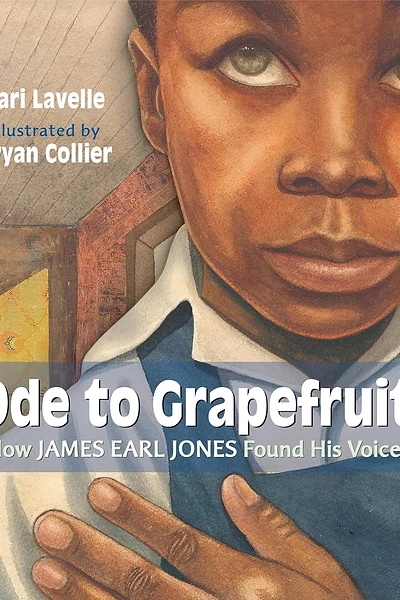
Ode to Grapefruit: How James Earl Jones Found His Voice
by Kari Lavelle
Pacing MaterialThe inspiring true story of James Earl Jones — from a boy with a stutter so severe he barely spoke, to the iconic voice behind Darth Vader and Mufasa, thanks to the power of poetry and perseverance.
Big Idea
Your voice is a gift — and even when it feels impossible, poetry, patience, and courage can help you find it.
Discussion Questions
- 1.What challenge did James Earl Jones face as a child?
- 2.How did poetry help him find his voice?
- 3.Why do you think he became known for his powerful voice?
- 4.What is something that feels hard for you? What might help you overcome it?
Classroom Activity
Find Your Voice Poem
Write a short poem about something you care about. Read it aloud, just as James Earl Jones did with grapefruit poetry.
Lesson Plan
Learning Goals
- Identify key events in James Earl Jones’s true story and explain how poetry, encouragement, and perseverance helped him express himself.
- Write or dictate a short poem about a favorite food, object, place, or activity using descriptive words and sensory details.
- Practice sharing a poem in a comfortable way while recognizing that every voice deserves patience and respect.
- Describe how James showed courage and identify one supportive action classmates can take when someone shares.
Activity Steps
- 1.Introduce “Ode to Grapefruit: How James Earl Jones Found His Voice” by Kari Lavelle. Explain that it tells a true story about a boy who stuttered and later became the voice of Darth Vader and Mufasa. Establish that listeners give everyone time to communicate without interrupting or finishing their words.
- 2.Read the book aloud, pausing to discuss James’s feelings, his interest in poetry, and the encouragement he received. Ask: “What helped James feel ready to share his grapefruit poem?” Clarify that courage does not require fluent speech and that stuttering is not a failure.
- 3.Invite students to choose something they care about, just as James wrote about grapefruit. Have them sketch it and brainstorm what it looks, smells, sounds, tastes, or feels like, choosing only senses that fit their topic.
- 4.Model a short poem beginning “Ode to…” with specific details. Students in K–1 draw and dictate or write 2–3 lines; students in grades 2–4 write 4–6 lines. Offer starters such as “I love…,” “You remind me of…,” and “When I see you….” Explain that poems do not have to rhyme.
- 5.Give students time to rehearse, then invite them to read aloud to a partner or the class. Offer equally valued options: reading together, asking someone else to read, using a communication device, or displaying the poem. Listeners respond with one detail they enjoyed, rather than comments about speech fluency.
- 6.Close with a reflection: “What helped you express your ideas?” and “How did we help each other feel heard?” Connect students’ answers to the poetry, patience, encouragement, and courage in James’s story.
Standards Connections
- ELA: RI.K.3 / RI.1.3 — Describe connections among individuals and events in a nonfiction text, including James’s experiences with poetry and speaking.
- ELA: W.K.5 / W.1.5 / W.2.5 — Strengthen writing with adult or peer support by adding descriptive details to a poem.
- ELA: W.3.4 / W.4.4 — Produce writing appropriate to the task, purpose, and audience.
- ELA: SL.K.1–SL.4.1 — Participate in collaborative conversations and listen respectfully to classmates’ ideas.
- SEL: Self-awareness and relationship skills — Recognize feelings about self-expression and practice patient, supportive listening.
Pace-Write-Read Study with Pace-Write It!
Focus question: How can a writer slow down or speed up a true story to show courage growing over time? In Ode to Grapefruit: How James Earl Jones Found His Voice by Kari Lavelle, readers follow James Earl Jones from a quiet boy with a severe stutter to a powerful performer whose voice became famous. Lavelle uses pacing by lingering on hard, emotional moments and then moving briskly through time to show how poetry, practice, and perseverance helped James find his voice.
| Element | How to notice or teach it in the novel |
|---|---|
| Pace | Read: Notice how Kari Lavelle slows down the most important moments in James Earl Jones’s journey, especially when he struggles to speak and when poetry begins to unlock his voice. The faster parts move through years of growth, while the slower parts help us feel his fear, effort, and courage. Classroom Activity: Write 4-5 sentences about a time a character learned something hard, slowing down one important moment and speeding through the less important parts. |
| Plot | Read: Track the true-story sequence from James’s silence and stutter to the turning point when words, poems, and encouragement help him speak with strength. The plot shows resilience because each challenge leads to a new step forward. Classroom Activity: Make a beginning-middle-end chart for James’s story, then write one sentence for each part using transition words like first, next, and finally. |
| Prosody | Read: Listen to the flow of the language and how the book’s read-aloud quality matches a story about finding a voice. The sentences often sound thoughtful and musical, helping readers hear the power of speech and poetry in James Earl Jones’s life. Classroom Activity: Choose one key moment from James’s story and write 3 lines that sound smooth and strong when read aloud. |
| Word pause | Read: Notice where a reader naturally pauses on important words about fear, silence, voice, and poetry. These pauses help big feelings stand out and give weight to James’s bravery. Classroom Activity: Write 2-3 sentences about James using dashes or line breaks to create a pause before an important word, such as voice or courage. |
| Concept | Read: Think about the big idea that a person’s struggle can become a strength. James Earl Jones’s severe stutter, once a source of pain, becomes part of a story about resilience, courage, and the power of expression. Classroom Activity: Write a sentence frame and finish it: 'At first, James thought ____. Later, he learned ____.' Then add one more sentence explaining the lesson. |
| Voice & World View | Read: Notice that the author tells James’s story with respect, warmth, and admiration, helping readers see the world as a place where patience and art can change a life. The book values persistence, creativity, and inner strength. Classroom Activity: Write 3 sentences in a hopeful tone about James’s journey, showing that hard times can lead to growth. |
| Setting & Place | Read: Pay attention to the places in James Earl Jones’s life that shape his experience, such as home, school, and spaces where reading or performing happen. These places help show where he felt quiet, challenged, and finally more confident. Classroom Activity: Pick one place from James’s story and write a description of how that setting felt to him using at least 3 sensory details. |
| Point of View | Read: Notice that this biography is told by a narrator outside the story, but it stays close to James’s feelings and experiences. That choice helps readers understand his struggle while also seeing the larger arc of his life. Classroom Activity: Rewrite one moment from the book in first person, starting with 'I was James, and I...' |
| Original Characters | Read: Even though this is a real story, James Earl Jones stands out as a memorable main character because of his quiet pain, determination, and eventual power as a speaker. The supporting people in his life matter because they help shape his path toward courage. Classroom Activity: Write a character sketch of James using 4 traits and one example from the story for each trait. |
| Dialogue | Read: Notice any spoken words or moments when the idea of speaking matters, because dialogue in this story carries extra meaning for a child who struggles to talk. Every spoken moment can feel brave and important. Classroom Activity: Write a short dialogue of 4 lines between James and a supportive adult or teacher, showing encouragement about poetry or speaking. |
| Details | Read: Look for specific details that make James Earl Jones’s real experience vivid, such as his silence, his stutter, and the careful steps that helped him gain confidence. These details make the theme of resilience believable and powerful. Classroom Activity: List 5 specific details about James from the book, then use 3 of them in a short paragraph. |
| Descriptions | Read: Notice how the descriptions help readers picture James’s emotions and changes over time, from embarrassment or frustration to pride and strength. Strong descriptions help a true story feel alive. Classroom Activity: Write 3 descriptive sentences about James at two different points in the story: once when he feels stuck and once when he feels stronger. |
| Strong First Lines | Read: Study how the beginning quickly introduces James Earl Jones’s challenge and makes readers want to know how he will overcome it. A strong opening sets the emotional pace right away. Classroom Activity: Write your own opening line for a biography about a brave child, making readers curious in one sentence. |
| Immediacy & Engagement | Read: Notice how the author makes readers care right away by focusing on a child’s struggle to speak, something that feels personal and urgent. James’s challenge invites empathy and keeps readers engaged as they root for him. Classroom Activity: Write 2-3 sentences that make a reader care immediately about a character facing a hard problem. |
| Story Scenes & Summaries & Unique Structures | Read: Notice how some parts of James Earl Jones’s life are shown as important scenes, while other parts are summarized to move time forward. This structure helps the story spotlight key turning points without telling every detail from every year. Classroom Activity: Write one scene sentence about James in a key moment and one summary sentence that moves time ahead. |
| Flashback & Flash Forward & Cliffhangers | Read: Think about how a writer could look back on James’s silent childhood or hint ahead to his future famous voice to build interest. In this book, readers may feel the power of knowing that the quiet boy will someday become a legendary speaker. Classroom Activity: Write 2 sentences: one flashback to James as a younger child and one flash forward hinting at the amazing voice he will have later. |
| Tension & Suspense & Surprise | Read: Notice the tension in whether James will be able to speak freely and be heard. The surprise is that the child who struggled so much with speech became one of the most recognizable voices in the world. Classroom Activity: Write 3-4 sentences building suspense before a character does something brave for the first time. |
| Page Turns and Chapter Breaks | Read: As you read, notice where you want to turn the page because you are wondering what will happen next for James Earl Jones. The pacing invites curiosity about how he will move from silence to confidence. Classroom Activity: Write a page-turn sentence that ends with a question or a big feeling, such as 'But could James make the words come out?' |
| Performance | Read: Performance is central to this book because James’s voice eventually becomes his gift. Notice how the story connects practice, poetry, speaking, and performing to courage. Classroom Activity: Write a 4-line mini performance poem about finding your voice, and read it aloud with expression. |
| Personality | Read: Notice how James’s personality is shown through his quietness, persistence, and growing confidence. His inner strength matters as much as his famous voice. Classroom Activity: Write a paragraph explaining how James’s personality helps him overcome his struggle. |
| Humor | Read: This story is mostly inspiring and serious, but think about whether light moments or warmth help balance the harder parts. Even in a story about struggle, a gentle smile or hopeful moment can change pacing. Classroom Activity: Write one warm or lighthearted sentence that could fit into a true story about a child learning something difficult. |
| Pause | Read: Notice how emotional moments in James Earl Jones’s journey call for a pause so readers can think about how hard it was to live with a severe stutter. A pause can honor bravery and make the message stronger. Classroom Activity: Write a short paragraph about James and add one intentional short sentence by itself for emphasis. |
| Poetry and Poetic Devices | Read: Poetry is a key part of James’s story, so notice lyrical language, repeated sounds, and vivid images that connect to speaking and self-expression. The book shows poetry not just as art, but as a path to courage. Classroom Activity: Write 3 lines of poetry about words growing stronger, using alliteration or imagery. |
| Repetition | Read: Look for repeated ideas, words, or sentence patterns about silence, speaking, practice, or voice. Repetition can mirror James’s effort as he keeps trying again and again. Classroom Activity: Write a 3-sentence piece where each sentence begins with 'He kept...' to show persistence. |
| Rhythm | Read: Listen for the beat of the language, especially in parts connected to poetry and speaking aloud. Rhythm helps readers feel the steady movement from struggle to strength in James Earl Jones’s life. Classroom Activity: Clap out the rhythm of a sentence you write about James, then revise it so it sounds smoother when read aloud. |
| Punctuation | Read: Notice how punctuation can shape pacing by slowing readers down, adding emphasis, or marking strong emotion in a biography like this one. Careful punctuation helps important moments in James’s journey stand out. Classroom Activity: Write 3 sentences about James using a comma, a dash, and an exclamation point correctly. |
| Questions | Read: As you read, ask questions such as: How did James feel when speaking was hard? What changed when poetry entered his life? Questions help readers think deeply about resilience and courage. Classroom Activity: Write 3 thoughtful questions you would ask James Earl Jones about his childhood and his path to finding his voice. |
| Compare-Contrast | Read: Compare James at the beginning of the story with James later in life. The contrast between a child who barely spoke and a man known for an unforgettable voice makes the pacing and theme especially powerful. Classroom Activity: Write 4 sentences comparing early James and later James using words like both, but, unlike, and now. |
| Objects | Read: Notice important objects connected to words, poetry, school, or performance that may symbolize growth in James’s life. Objects in a biography can carry meaning when they connect to change. Classroom Activity: Choose one object from James’s story, such as a poem or paper, and write 3 sentences explaining what it represents. |
| Threes | Read: Writers often group ideas in threes to make them memorable, and this strategy fits a story about courage, practice, and voice. Notice places where three examples, three actions, or three feelings could help tell James’s journey clearly. Classroom Activity: Write a sentence about James using a list of three, such as 'He listened, practiced, and grew.' |
| Whitespace & Negative Space | Read: Notice how space on the page can slow readers down and give important ideas room to breathe, especially in a story about silence and voice. Empty space can echo the quiet parts of James Earl Jones’s childhood. Classroom Activity: Write a short free-verse poem about silence and leave a blank line where you want readers to pause. |
| Art & Graphics | Read: Study how the illustrations support the pacing by showing James’s emotions, the weight of silence, and the expansion of confidence over time. The art helps young readers understand feelings that may not be stated in many words. Classroom Activity: Draw two quick sketches of James—one from early in the story and one from later—and write a caption for each showing the change. |
| Interactives & Gamification | Read: Think about how readers could interact with James’s journey by noticing turning points, brave choices, and moments when words mattered most. Turning the biography into a simple challenge or sequence can help students track pacing and growth. Classroom Activity: Create a 5-step 'Find Your Voice' ladder based on James Earl Jones’s story, labeling each step from struggle to success. |
Pace-Write It!
20-Minute Classroom Flow\nRead (5 min): Read aloud a key section of Ode to Grapefruit: How James Earl Jones Found His Voice by Kari Lavelle that shows James struggling with speech and then encountering the power of poetry. Ask students to listen for places where the story slows down and places where time moves quickly.\nNotice (5 min): Discuss: Where did the author stretch out a moment? Where did the author skip ahead? How did that help us feel James’s resilience and courage? Chart student noticings under two headings: 'Slow moment' and 'Fast time jump.'\nWrite (7 min): Students write a short true-story-inspired paragraph about a person learning to be brave. Writing frame: 'At first, ____ was hard for ____. One important moment happened when ____. Time passed, and ____. In the end, ____ found courage by ____.' Encourage students to slow down the important moment with extra detail and speed up the less important parts.\nShare (3 min): Partners read their writing aloud and identify one sentence that was slowed down on purpose. Invite 1-2 volunteers to share how pacing helped show courage.\nExit ticket: Write one sentence answering: 'How did Kari Lavelle use pacing to help readers understand James Earl Jones’s journey?'
Pace-Write-Read Connection
Teach this book using the Pace-Write-Read method — Tool 1: Pacing.
Open the Mastery Manual